
TL;DR: Homework was invented to make practice happen at home, to sync what teachers taught with what students remembered, to prepare kids for tests, and to keep learning going after class. Over time, people added new reasons (like building study habits for teens), but the idea wasn’t born in one moment or by one person.
Homework invention: a quick timeline

Homework has been around for centuries, though it rose and fell in popularity. In the late 1800s and early 1900s, U.S. parents and doctors pushed back hard. That wave led to a famous change: in 1901, California banned homework for children under 15, part of a national anti-homework crusade that lasted for years. You can read a balanced overview of that period in a Brookings history of homework, which tracks how opinion swung across the 20th century, including the 1901 ban for under-15s and later rebounds in support. For a period news account of the ban and its rollback in 1917, see this report from the Los Angeles Times archive.
Decades later, the 1983 report “A Nation at Risk” argued U.S. schools needed higher standards and more time on task. That call helped bring back tougher workloads in many places, including more homework for older students. You can skim the original report summary on ERIC.
Research then grew fast. Some studies found links between homework and test scores for teens, while others warned that too much work can harm sleep, stress, and family time. Stanford’s summary of those health risks, especially when homework hours get high, is clear and readable.
The 5 reasons homework was invented
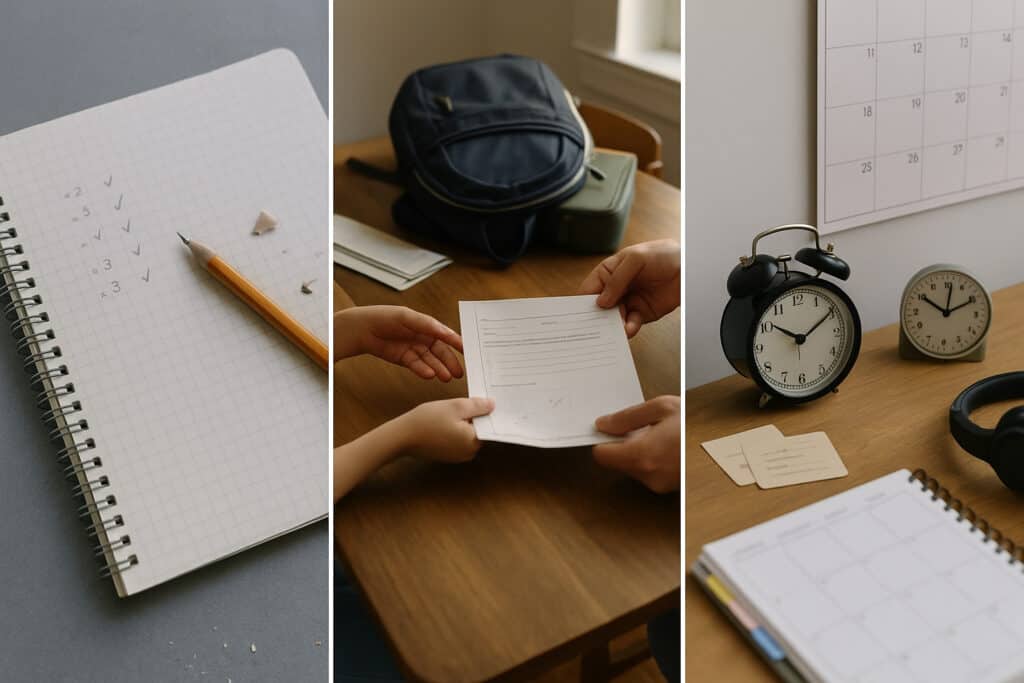
Let’s answer it straight. There isn’t a single “inventor.” Homework evolved as schools tried to solve a few simple problems.
Practice makes skills stick
Teachers wanted kids to review reading, math, and facts after class so the next lesson didn’t start from zero. For teenagers, Duke research and a SAGE-published synthesis show moderate homework often links with better grades and test scores; for young children, gains are small or none.
Keep class and home connected
Homework brought parents into the loop and gave teachers feedback about what students could do on their own.
Prepare for quizzes and exams
Regular, spaced work can help later recall. Schools used homework to stretch learning across the week, not only during class periods.
Build habits for older students
Planning, self-control, and time-management matter more in middle and high school. Thoughtful assignments can train those skills; busywork cannot.
Signal higher expectations
In reform waves (like post-1983), districts leaned on homework as a visible way to raise standards. Whether it actually lifts learning depends on the amount and quality of the work.
Put simply, homework was invented to extend practice, tighten the home-school link, and prepare students for assessments—especially as mass schooling grew. Over time, the purpose shifted with new research and public pressure.
Homework invention FAQs
Who invented homework?

No one person. The internet often claims an Italian teacher named Roberto Nevilis “invented” homework in 1905 (sometimes even 1095!). There’s no credible evidence for that story, and many historians call it a myth.
What was the original purpose?
Early reasons were simple: practice outside class and proof of effort. As schools standardized and testing grew, homework also became a tool for exam prep and study habits—mostly for teens. Academic reviews note stronger benefits in grades 7–12 than in K–6.
Does homework actually help?
It depends on age and load. For younger kids, extra worksheets rarely boost achievement. For teens, moderate homework is linked with better outcomes, but too much backfires—hurting sleep, mood, and family time. Stanford summarizes these health costs clearly.
Why do countries handle homework so differently?
Culture, policy, and school time all matter. The OECD finds that more quality learning time in class tends to help, while piling on out-of-school study isn’t always productive. In short, how time is used beats how much time is assigned.
Didn’t the U.S. once ban homework?
Yes, for some kids, in one state, for a while. California banned homework for students under 15 in 1901, then rolled it back in 1917. The broader anti-homework movement faded, then returned in new forms later.
Bonus: quick homework facts

- Homework has cycles. When national anxiety rises (think the Cold War), homework tends to go up. When health and childhood well-being lead the conversation, calls to cut or rethink homework grow louder. You can see these swings before and after 1983’s reform wave.
- Quality beats quantity. Reviews and policy briefs repeatedly warn that long, repetitive tasks do little. Short, purposeful assignments with feedback make the biggest difference for teens.
- Health matters. When nightly time goes too high, stress rises and sleep drops. That’s one reason many districts now set time caps by grade. Stanford’s summary is a quick read for parents.
- Not all “home learning” is homework. Some systems invest more in strong classroom time and less in after-school tasks (and still perform well) because lesson quality and discipline climate inside school are key drivers.
Final word on why homework was invented
Homework grew as a practical tool: make practice happen, keep home and school in sync, and get teens ready for tests and later study. Today, the best rule is simple: assign a little, make it meaningful, and match it to age. That way, homework helps without taking over life.
Interested in exploring similar posts? Visit the Hidden Histories & Origins hub for more!