
Most people think the seafood rule is a leftover health precaution; an old warning about spoiled shellfish that stuck around as tradition. However, the real reason lives inside the architecture of kashrut, where a simple system of simanim (identifying “signs”) sorts what’s in and what’s out, first laid down in Leviticus 11 and Deuteronomy 14.
Once you grasp that simple sign-test, everyday choices, from what you buy to what you order, line up with purpose. It stops feeling like a ban and starts reading like a blueprint for living with meaning.
From Scripture to Supper

Right from the start, Jewish food rules (called kashrut) come from the Torah. The laws list what land animals, birds, and water creatures are allowed. For the sea, the line is simple: if it has fins and scales, it’s in; if not, it’s out. Therefore, shrimp, crab, lobster, oysters, clams, squid, and octopus don’t make the cut.
Later Jewish teachers kept that rule and explained how to use it in day-to-day life. Over many centuries, Jewish communities around the world built food traditions around the rule, so fish with fins and scales (like salmon, carp, and herring) became staples, while shellfish never appeared on kosher menus.
The Simanim Filter
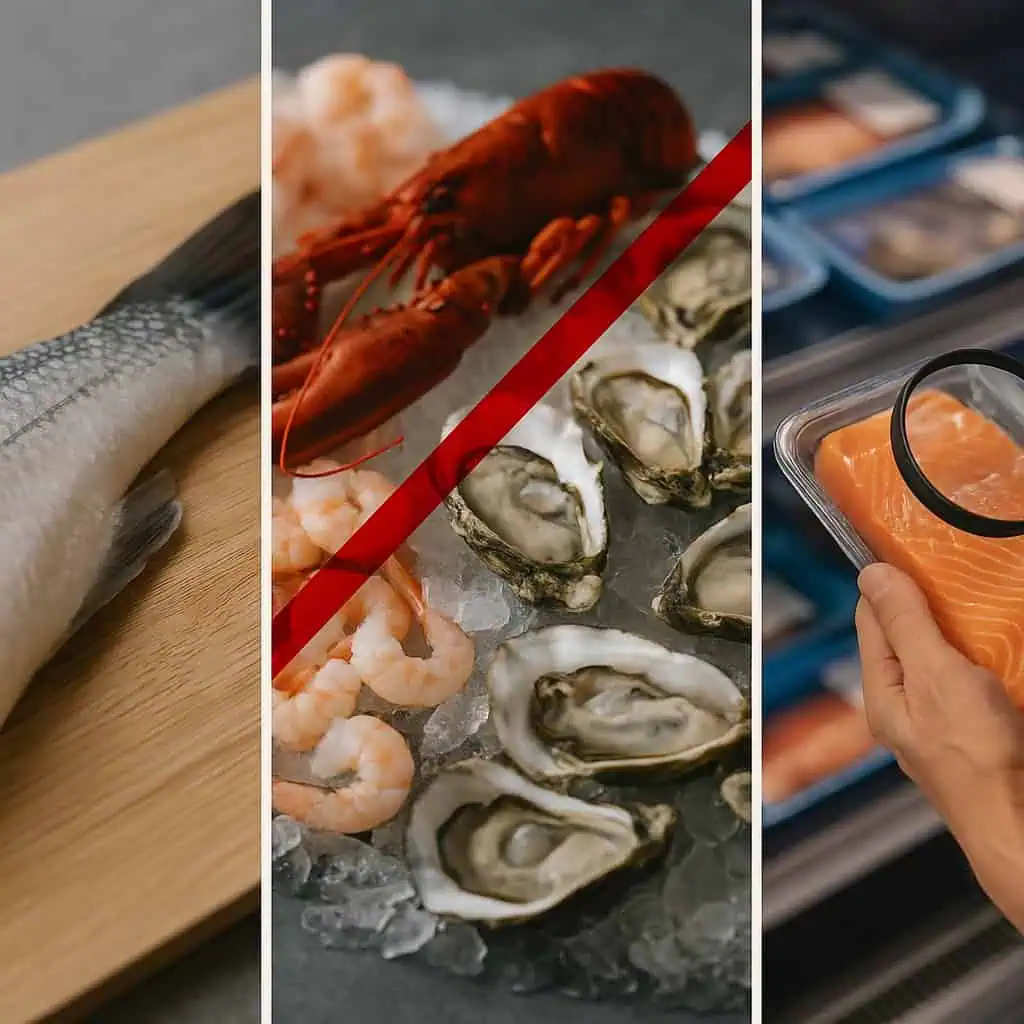
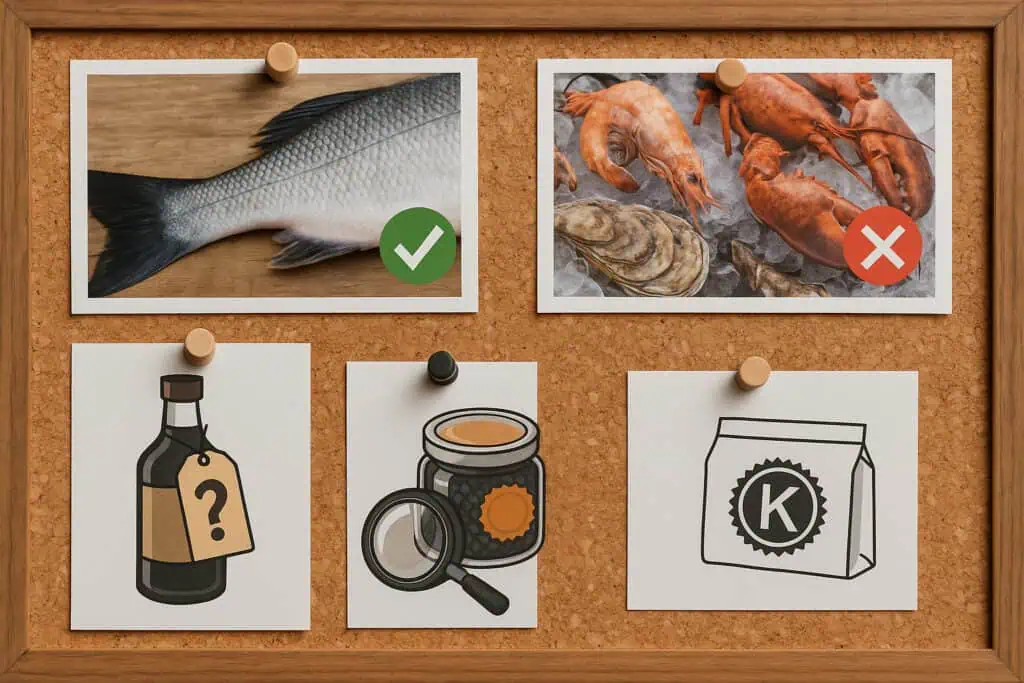
The rule actually comes down to a simple visual check called Simanim (signs). The ancient texts require two specific features on the body for any fish to be considered food. To make the cut, the creature must have both fins and scales. Since lobster, shrimp, and clams are missing those exact parts, they are automatically out. Meanwhile, tuna and salmon are totally fine because they pass that visual test
This isn’t about taste or status; it’s about following a clear line in the text. For many Jews, keeping that line is a way to practice faith every day, even while grocery shopping. Moreover, it creates a shared rhythm in homes and communities, which is part of the point.
Frequently Asked Questions
Is the ban on shellfish about health or hygiene?
Kashrut frames the rule as a sign test, not a safety test: water creatures must have fins and (removable) scales. Even shellfish handled perfectly still fail the signs, so the reason is religious law rather than food safety.
What about fish sauce, fish stock, or Worcestershire?
Ingredient lists and kosher supervision determine status. Products made only from kosher fish (with fins and scales) can be acceptable, but mixed sources, flavorings, or shared equipment often complicate things. In practice, observant shoppers look for a reliable hechsher (kosher certification) on the label.
Is caviar kosher?
Roe qualifies only when it comes from a kosher-sign fish and is produced under supervision. Classic sturgeon caviar is treated as non-kosher by most authorities, while salmon roe (and other kosher-fish roes) can be kosher when properly certified.
Is there any Jewish group that allows shellfish?
Descriptions of kashrut across Orthodox, Conservative, and Reform sources list shellfish as non-kosher. Levels of personal observance vary, but the rule itself is consistent in mainstream Jewish law.
Are shrimp, crab, and lobster treated differently under kosher law?
All three lack the required fins and scales, placing them in the same non-kosher category—regardless of how they’re sourced or prepared.
How do “fins and scales” work in practice?
Halachic scales are those that can be removed without tearing the skin. Species like salmon, herring, and carp meet this; species such as catfish and shark do not. Sturgeon has been debated historically, but most contemporary authorities treat it as non-kosher.
What about tuna and swordfish, aren’t their scales hard to see?
Tuna has halachically valid scales even if they aren’t obvious on fillets, so it’s widely accepted as kosher. Swordfish was permitted by some in the past, but most current Orthodox authorities do not accept it; policies can differ by community and certifier.
Do farmed shellfish change the rule?
Farming doesn’t alter species status. Even when raised in controlled environments, shellfish remain non-kosher because they lack the signs.
Can a kosher fish become non-kosher through cooking equipment?
Shared fryers, oils, or utensils used for shellfish can render otherwise kosher fish problematic. Certified facilities rely on dedicated equipment and procedures to avoid cross-contact.
Are seaweed, fish oil, or supplements an issue?
Sea vegetables (like nori or kelp) are generally kosher but must be checked for insects. Fish-oil capsules can be kosher if from kosher fish and under supervision; some glucosamine and other supplements derive from shellfish and require certification to avoid non-kosher sources.
Beyond the Menu
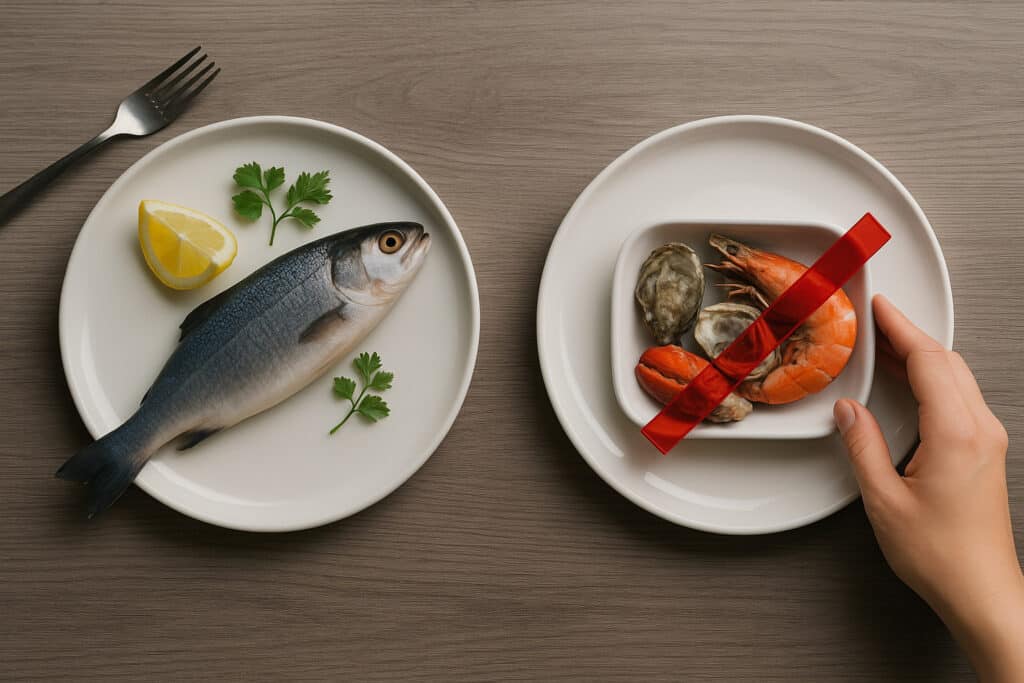
This isn’t really a story about seafood; it’s a story about how a small boundary can anchor a big identity. Once you notice the pattern, the grocery aisle turns into a map of belonging, each choice a quiet rehearsal of who you are with your people. The next time a menu nudges you toward “just a bite,” you’ll recognize the deeper choreography: not deprivation, but intention. And that intention travels well, across kitchens, holidays, and generations, reminding you that meaning is something we practice, not just something we believe.
Interested in exploring similar posts? Visit the Cultural Rituals & Society hub for more!