
TL;DR: Why do tennis players blow on their hands? Mainly to keep or fix their grip fast: a warm breath can restore finger feel in cold air, moving air can help dry sweat, and the tiny ritual itself helps players reset their focus between points. Lab and sport studies show warmer hands improve dexterity, moisture levels change friction, and simple routines calm nerves—all of which protect the shot.
A short history of hand habits in tennis

Players have always fussed with their hands and grips between points—think towelling, swapping overgrips, or rubbing the ball. Rules also shape these habits. Modern tennis enforces a 25-second shot clock between points, which means any hand fix has to be quick. That’s why small actions—like a quick blow on the fingers—fit the time window, especially now that pace-of-play is policed closely at top events.
Towel use has even swung with health policies. During the pandemic, players fetched their own towels; later, tours moved back toward ball kids handing towels to keep matches moving—a small change that again affects what players squeeze into those few seconds.
Coaches also teach “between-point” routines to control nerves and keep attention on the next ball. These routines can be tiny (string straightening, one breath on the fingers) or more involved, but the point is the same: reset and refocus.
Why do tennis players blow on their hands? 4 reasons
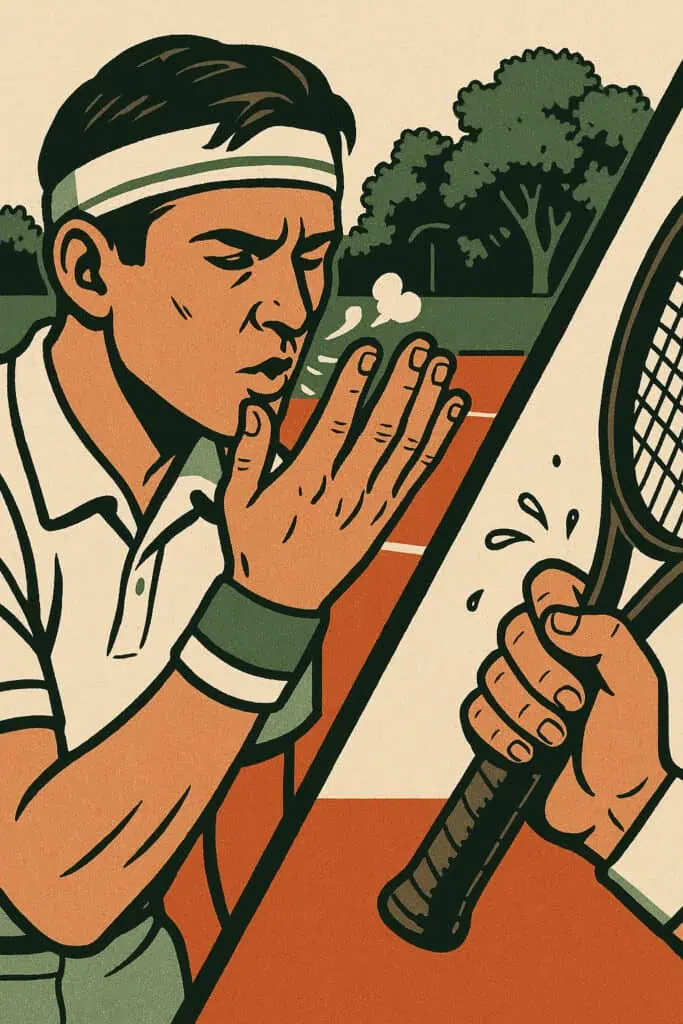
In plain terms, players do it for three fast wins: feel, friction, and focus.
Warmth and feel
Cold fingers go numb, and numb fingers miss sweet spots. Research shows dexterity and grip strength rise as skin temperature rises. A warm exhale over the fingertips briefly boosts surface temperature and sensation, which can steady the next swing on a chilly day.
moisture and grip
Grip depends on moisture. If the hand is too dry, friction can drop; if it’s too wet, sweat can act like a film and the racquet can slip. Moving air can evaporate sweat when it’s humid, while a light warm breath can add just a touch of moisture when skin is overly dry—both push the finger pad back toward a “just right” zone for friction. Studies of finger-pad friction and fingerprints back this moisture-friction link.
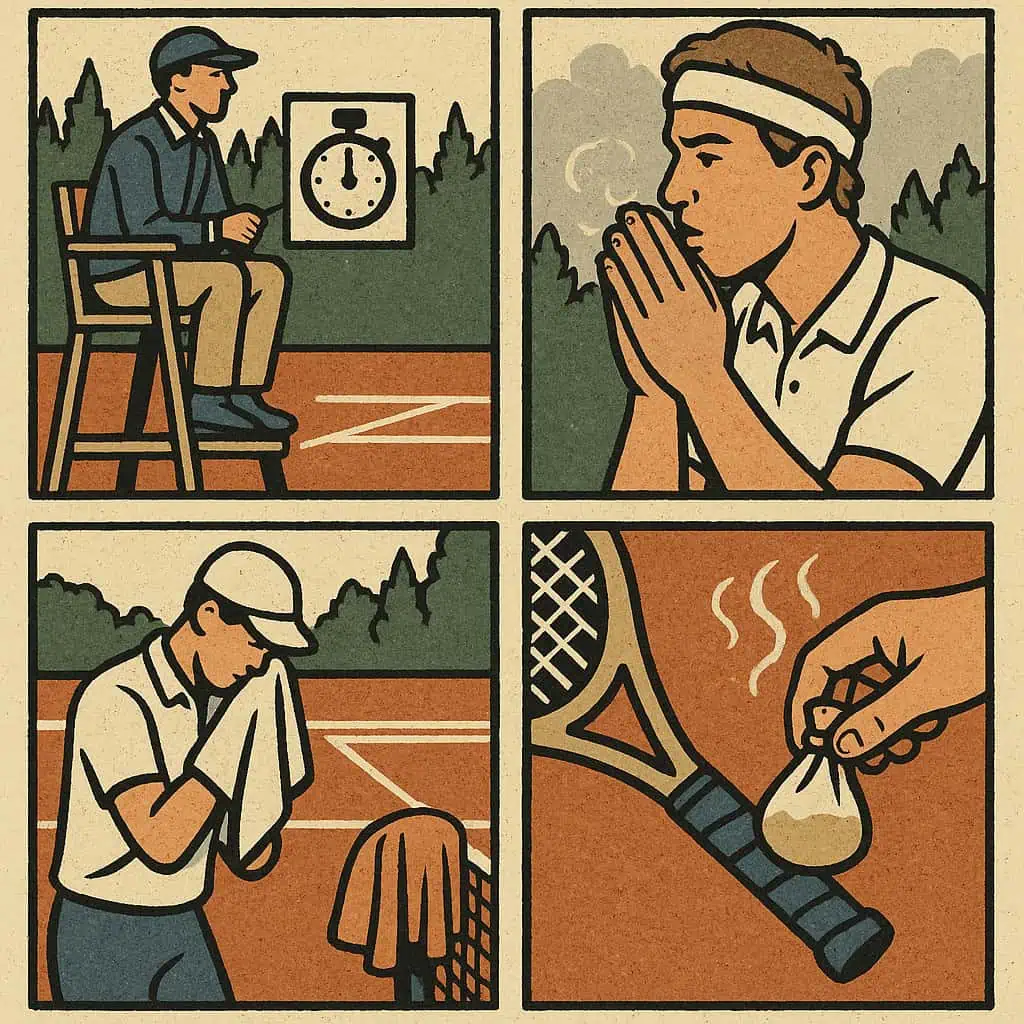
Coaches and players also combine this with towels, absorbent overgrips, or rosin to keep hands in that sweet spot. The quick breath is simply the fastest fix you can do before the next serve.
Routine and focus between points
Finally, blowing on the hands can be part of an athlete’s pre-performance routine—a tiny cue that says, “reset.” Meta-analyses and lab work on routines and rituals show they lower anxiety and improve task focus, which matters when a match hangs on one swing.
A small soothe for small stings (and what it’s not)
Sometimes a mishit or fresh overgrip can sting. A brief puff can soothe the skin—players report this anecdotally. But it’s not magic, and it won’t dry a soaked hand like a towel or overgrip will. Use it as a quick helper, not a cure-all.
FAQs and myth busters: tennis players blowing on their hands
Is it legal to blow on your hands between points?
Yes. You just have to serve within 25 seconds (and respect the other timing limits at changeovers and set breaks). There’s no rule against warming or drying your hands.
Does it really help, or is it just a habit?
Both. Studies show warmer hands = better dexterity, and moisture levels = different friction. Plus, routines help attention. So while it looks like a quirk, it has real effects—especially in cold or sticky weather.
In hot, humid conditions, wouldn’t blowing add more moisture?
If you exhale onto sweaty skin, you can add a little humidity. But the moving air you create also speeds evaporation; players pair it with a towel or dry grip to finish the job. Practical guides for sweaty-hand players stress towels, absorbent grips, and—if needed—rosin. The quick breath is just the fastest step you can do right there on the baseline.
Do pros use rosin or chalk instead of blowing?
Some do, especially in muggy conditions, but these are supplements, not replacements. You still see the quick puff between points because it takes a split second and costs nothing.
Can cold hands really hurt touch shots that much?
Yes. Cold exposure research shows manual dexterity drops as skin cools; even modest finger cooling can make fine control worse. That’s why you’ll see more hand-warming habits in cold night sessions.
Bonus facts related to why do tennis players blow on their hands
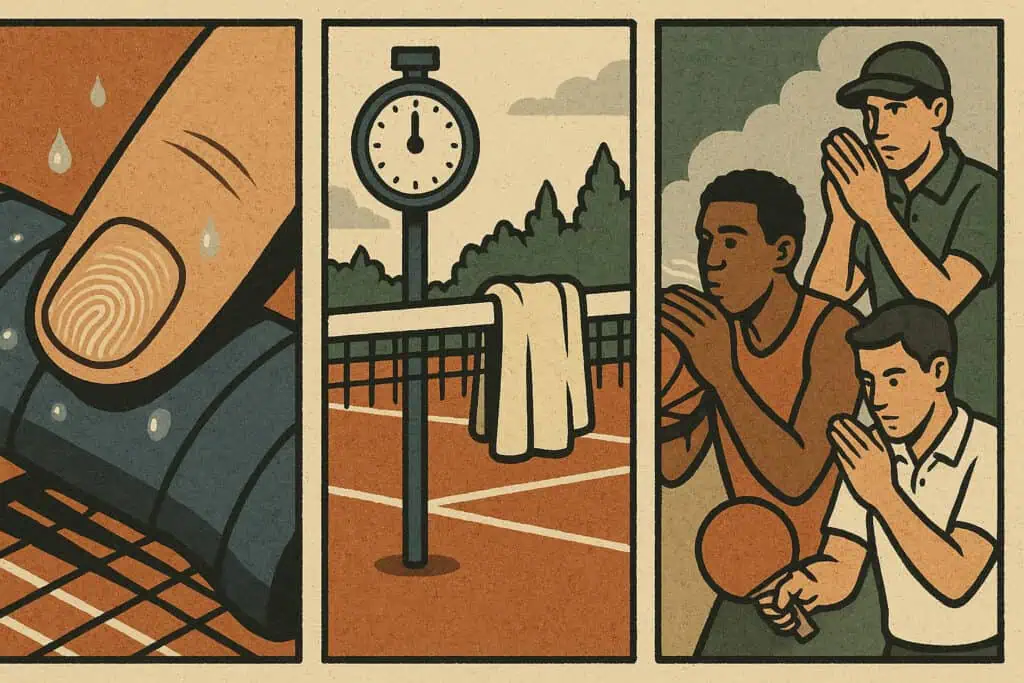
- Fingerprint design and grip: Scientists still debate exactly how fingerprints boost grip. Ridges may increase friction by interlocking with surfaces, but they can also reduce friction by reducing contact area. Either way, moisture is central—which is why tiny moisture tweaks (like a quick breath) matter.
- Towels and the shot clock: Tours have re-tuned towel rules and leaned on the shot clock to keep play moving. Because time is tight, players favour micro-fixes—like blowing on the hands—over longer trips to the towel after every rally.
- Cross-sport echo: The same trio—feel, friction, focus—shows up in many sports. For example, studies of pre-performance rituals across tasks find they reduce anxiety and steady performance, which explains similar small resets you see in basketball, golf, and table tennis.
Final word
In short, a quick breath is cheap, fast, and allowed. It can warm cold fingers, nudge moisture toward better grip, and flip the mental switch to focus. Put together, those tiny gains add up to one safer swing under pressure.
Interested in exploring similar posts? Visit The Science of Everyday Life hub for more!