
TL;DR: Why do spiders come out at night? Because night is cooler, darker, and safer. After sunset, the air dries them out less, daytime predators rest, and insects flock to lights—so spiders can hunt, fix webs, and look for mates with better odds and lower risk.
Background: Why Do Spiders Come Out At Night?
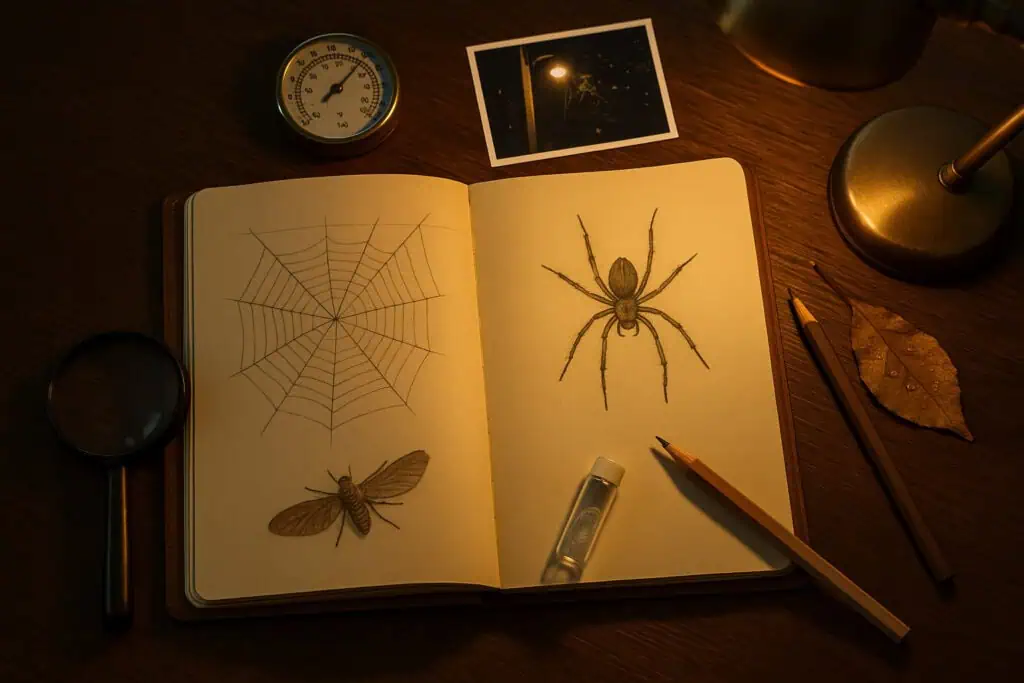
Early naturalists noticed more webs and wandering males at dusk, and modern researchers have filled in the “why.” First, spiders lose water easily through their thin skins; cooler, moister night air slows that loss.
Second, many spider-eaters—especially birds—hunt by day, so hiding in daylight and moving at night reduces the chance of being eaten.
Third, insects surge at dusk and around porch lights, which means more food after dark. Together, these simple pressures help explain why so many species skew nocturnal, even though some hunt by day.
From field notes to lab findings
For decades, field guides described dusk web-building and nighttime hunting. Later, controlled studies on spider physiology and behavior backed up those notes: temperature and humidity shape activity, while predation risk nudges spiders toward darker hours. Although every species is different, the pattern repeats across forests, deserts, and our living rooms.
What changed—and what didn’t
Urban lights altered where insects gather, so spiders often shift to lit walls and windows. However, the basic logic remains that cooler air, fewer daytime predators, and more prey around lights make it a good night to be a spider.
Why Spiders Come Out at Night: Top 5 Reasons
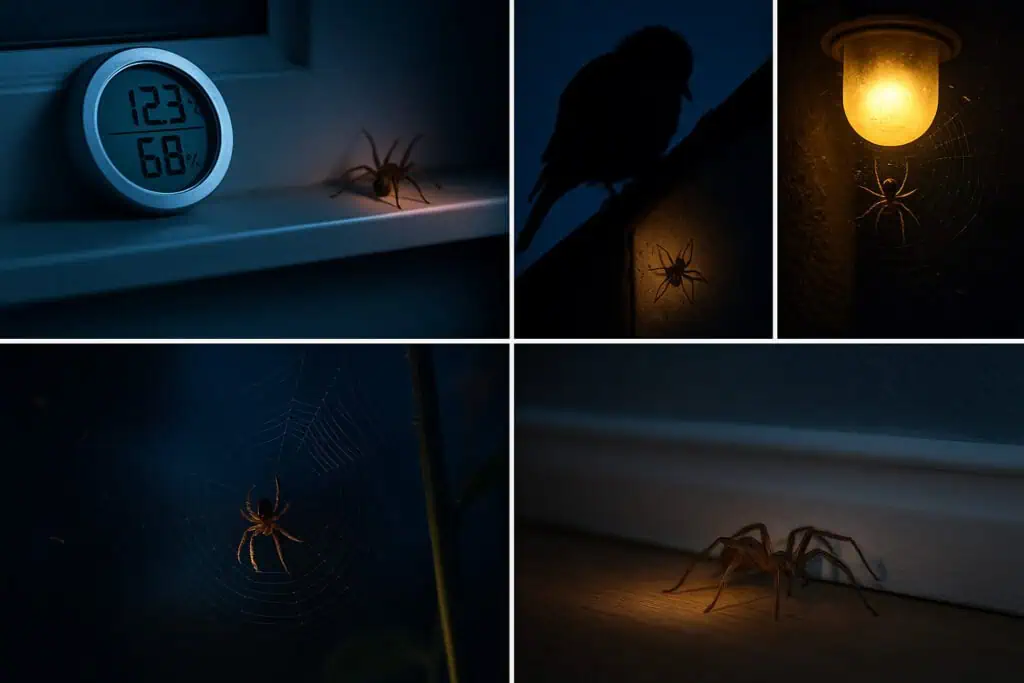
Cooler air, less drying (and more energy saved)
Because spiders are tiny and soft-skinned, hot, dry air saps their water fast. Nighttime tends to be cooler and slightly more humid, so it’s easier to move and hunt without drying out. Therefore, activity after dark costs less water and energy.
Fewer daytime predators
Many of the animals that eat spiders—especially birds—are busiest in daylight. Consequently, moving under cover of darkness lowers the odds of being seen or snatched. In short, the night is a safer window to roam, hunt, or court.
Their prey shows up at night (hello, porch lights)
Moths, midges, and many other insects surge around dusk and gather at lamps. As a result, insects are easier to catch after dark, whether a spider throws a web in that flyway or stalks along a wall.
Web building and repairs are a nightly routine
Orb-weavers often spin new webs around dusk and recycle damaged silk by morning. This timing lines up with the nightly insect rush, so the web is fresh exactly when dinner arrives.
Mating season makes males wander at night
When nights get cooler—often late summer into autumn—males of several common house spiders leave their hideouts and roam in search of females. That’s when you’re more likely to spot one crossing a floor or wall.
The Exception to the Rule: When Spiders Don’t Come Out at Night
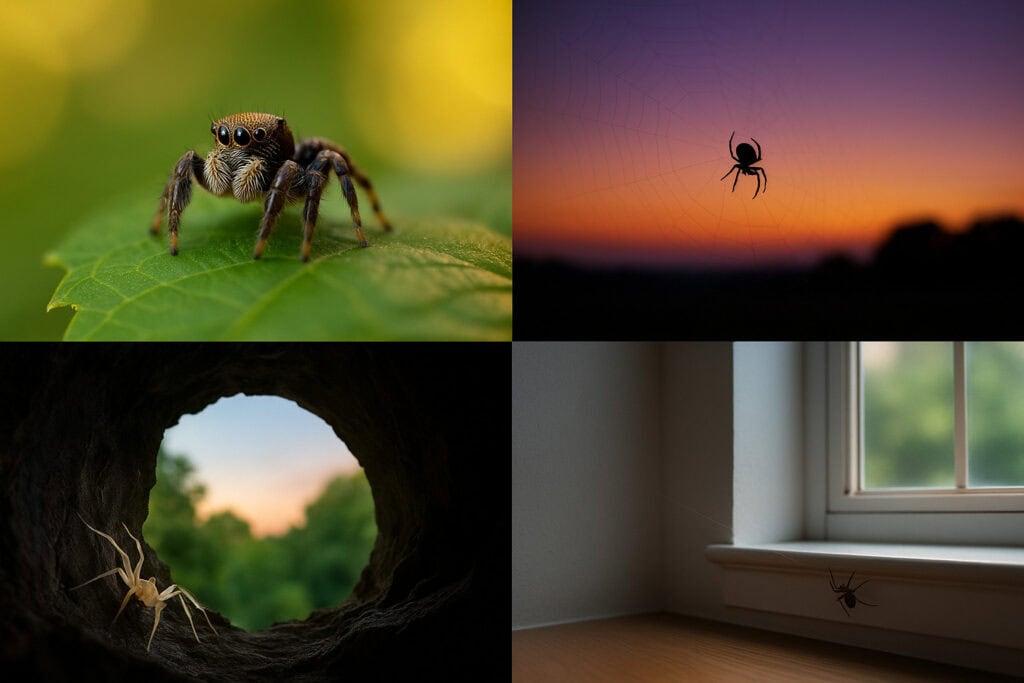
Although many spider species favor the dark, others are daytime specialists.
Jumping spiders prefer daylight
Jumping spiders rely on sharp vision to stalk prey. Therefore, they’re usually active in bright hours and rest at night, sometimes dangling from a silk line to stay safe.
Crepuscular and cave life
Some species peak at dawn or dusk, and a few cave-dwellers live where “day vs. night” barely matters. Even so, their schedules still balance moisture, temperature, food, and safety.
Indoors vs. outdoors
Indoors, climate is steady and predators are few. Nonetheless, many house spiders still follow a dusk-to-dawn rhythm simply because that’s when insects slip in, settle near windows, or gather by lamps.
Spiders Coming Out at Night: FAQs
Do house lights attract spiders—or just their food?
Mostly their food. Insects swarm lights, and spiders set up shop nearby. So it looks like the light “pulls” spiders in, but it’s the buffet that does the real pulling.
Are spiders active at night because they like the dark?
Not exactly. The dark itself isn’t the goal. Instead, darkness usually comes with cooler air, higher humidity, and fewer daytime predators—conditions that make night the better bet.
Why do I see more spiders in late summer and autumn nights?
That’s prime mating season for many common species. Males roam more, and cooler evenings also help them avoid drying out. Meanwhile, insects are still plentiful, so activity stays high.
If spiders are “nocturnal,” why do I see webs in the morning?
Because many webs are spun at dusk and left up overnight. By morning, you finally notice them in good light—especially if dew makes the threads sparkle.
Bonus: Surprising Facts Related to Spiders At Night

Some spiders keep unusual internal clocks
A few orb-weavers run short daily cycles (under 24 hours). Although they still line up activity with local light and food, their “body time” can be a little quirky.
Spiders rest…and some show sleep-like twitching
Jumping spiders have been filmed resting at night with leg twitches, a bit like dream sleep in mammals. While scientists still debate what that means, it fits the broader pattern: active by day, restful by night for these visual hunters.
Night web-work is serious recycling
Many orb-weavers eat parts of their old webs to reclaim silk proteins, then rebuild at dusk. Consequently, a web can be brand new each evening, tuned to the nightly insect rush.
Light at night reshapes tiny ecosystems
Where lights burn bright, insects gather in odd places and at odd times. Therefore, spiders often shift their hunting spots to match the new “insect highways,” which is one reason you’ll find tidy orb webs near porch lamps.
The Takeaway: Spiders Come Out at Night Because of odds, not Mystery
When you put it all together, nighttime simply stacks the deck: cooler, moister air protects spiders from drying; daytime predators stand down; and insect prey surges around dusk and lights. So spiders follow the food and safety, just like any smart hunter. The details vary by species and setting, but the night generally offers the best return for the least risk—especially around our homes.
Interested in exploring similar posts? Visit The Science of Everyday Life hub for more!