
TL;DR: Why do rabbits poop so much? Because their bodies are built to keep food moving nonstop. Rabbits eat lots of hay, which is very high in fibre. Fibre has to flow through their gut all day, so they make many dry pellets. They also make cecotropes—soft, nutrient-rich droppings they eat on purpose for vitamins and protein. Lots of clean, round pellets are normal; sudden changes in size, number, or mushy droppings can signal a problem.
A short background on rabbit poop
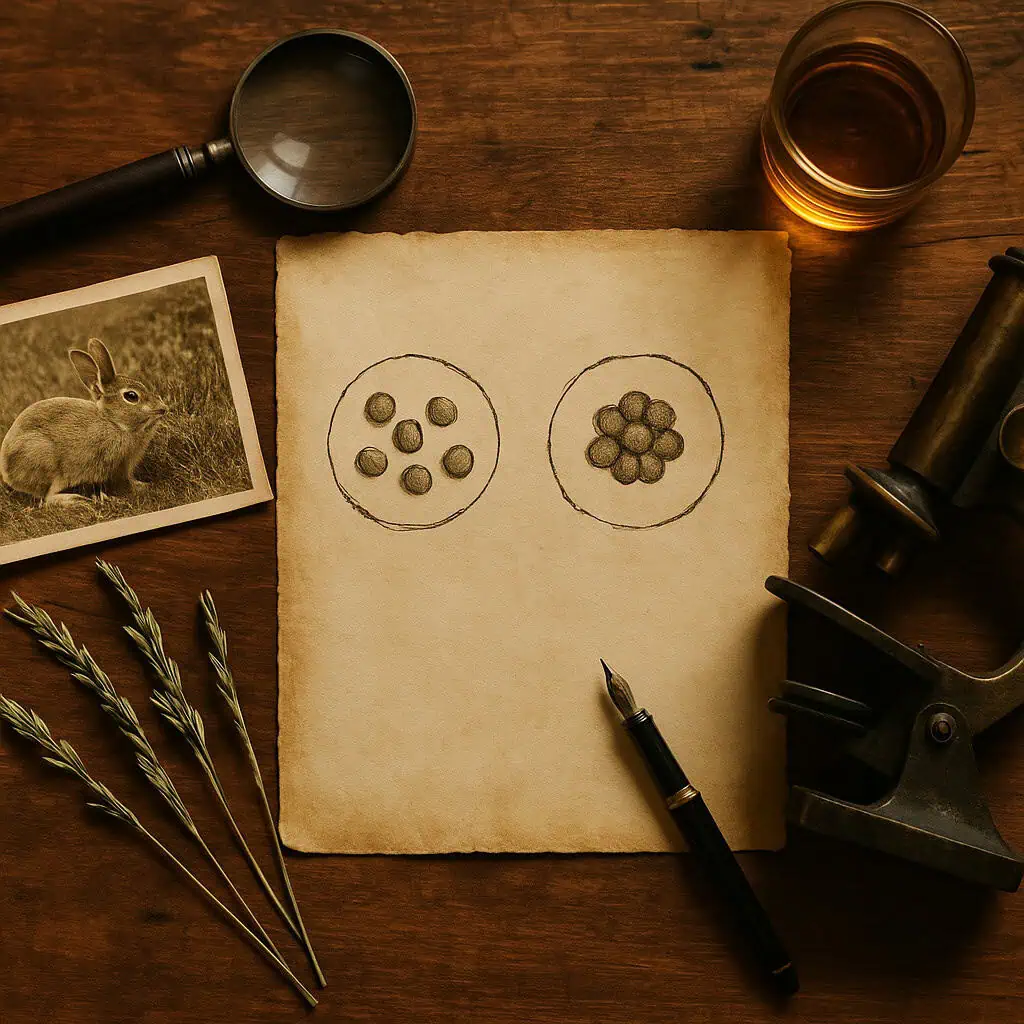
For as long as people have kept bunnies, they’ve noticed two kinds of “poop.” One kind is the neat, dry pellets you sweep from the litter tray. The other is a soft, grape-like cluster that most people rarely see because rabbits usually eat it right away. Over time, caretakers and vets gave these soft clusters a name—cecotropes—and wrote simple guides so owners wouldn’t confuse them with diarrhoea.
Today, university extensions and rescue organisations explain how this two-product system shows a rabbit’s gut is working as designed, and why consistent hay eating is central to that design.
Why do rabbits poop so much? 5 reasons
A “keep-moving” gut that runs on fibre
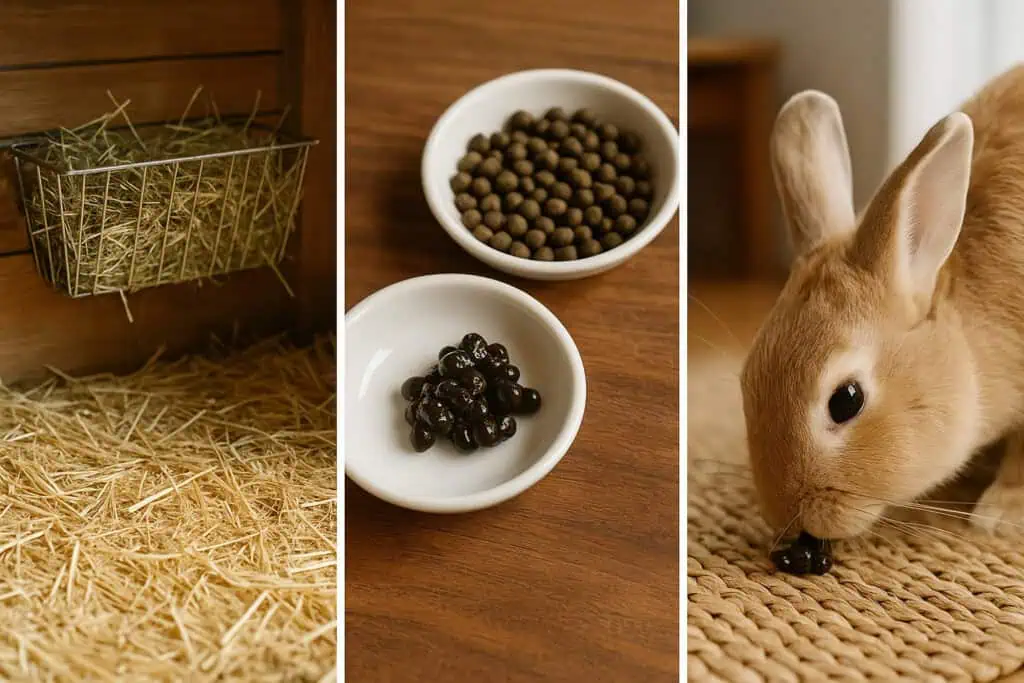
Rabbits are hind-gut fermenters. That means they rely on a big pouch called the cecum to ferment plant fibre. For the cecum to stay healthy, food needs to move through steadily. Hay provides the indigestible fibre that keeps everything flowing; therefore, lots of hay in = lots of pellets out. When flow slows, gas and pain can build.
Two droppings, two jobs
Rabbits make:
- Fecal pellets: dry, round waste—mostly indigestible fibre—meant to exit and be cleaned up.
- Cecotropes: soft, shiny clusters packed with helpful microbes, B-vitamins, vitamin K, and amino acids.
These are not waste; your rabbit bends around and eats them straight away. This is normal and important for nutrition.
Eating cecotropes is part of the plan
Because grass and hay are low-calorie and tough to digest, rabbits run the “best bits” twice. They ferment fibre in the cecum, package nutrients into cecotropes, then eat those cecotropes to absorb vitamins and proteins on a second pass. It sounds odd, but it’s a smart survival trick that keeps them well nourished even on rough plants (the extension overview above explains this cycle in simple terms).
High output usually means the system is healthy
Healthy rabbits often produce hundreds of pellets per day. Numbers vary by size, age, and diet, but steady, uniform pellets generally show the gut is moving and the rabbit is eating well. If pellets shrink, slow down, or stop, that’s a red flag. One of the main emergencies is GI stasis, when the gut movement drops and the rabbit becomes painful and may stop eating—this needs urgent vet care.
Diet quality shapes what you see
Plenty of grass hay (timothy, orchard, meadow) helps produce many dry, clean pellets. Too many pellets, sugary treats, or muesli-style mixes can lead to soft, messy cecotropes left around, because the diet is too rich and the rabbit doesn’t want to eat them. Balanced diets and daily hay usually fix this pattern (the House Rabbit Society’s explainer on poop patterns offers some insights).
FAQs about why do rabbits poop so much
Is it normal that my rabbit poops everywhere even if there’s a litter box?
Some scatter-pooping can be territorial—especially in new spaces, around other rabbits, or during puberty. Good litter training, fixed rabbits, and clear “toilet zones” help.
What’s the difference between cecotropes and regular poop?
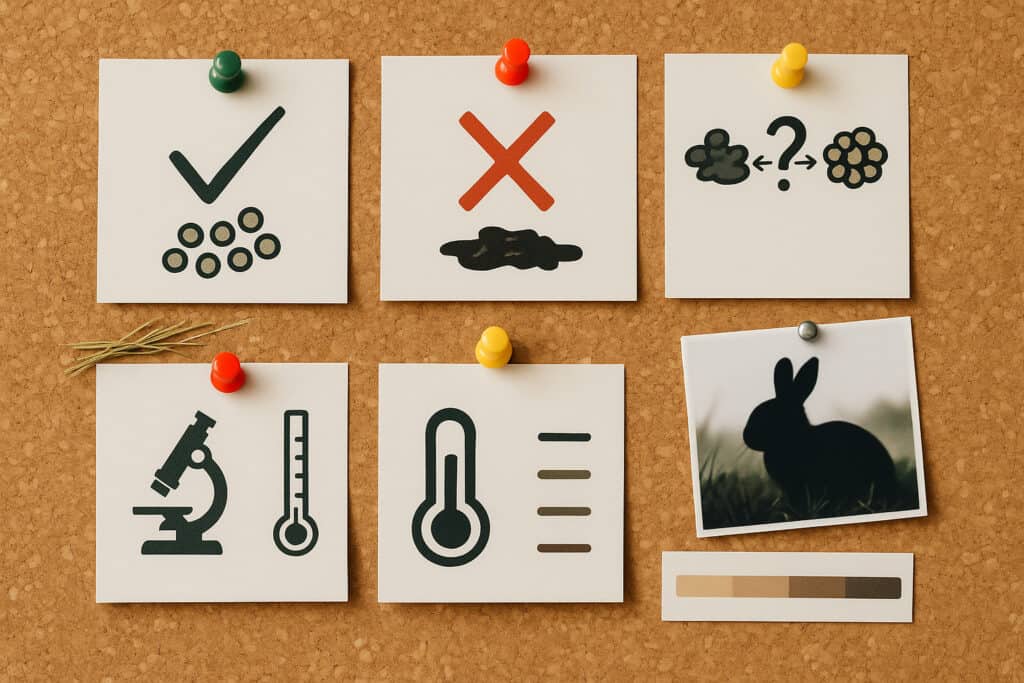
Regular pellets are dry and crumbly; cecotropes are soft, shiny clusters that smell stronger and are meant to be eaten. Finding a lot of uneaten cecotropes often means the diet is too rich or the rabbit is uncomfortable reaching them.
Do rabbits really need to eat cecotropes?
Yes. This is cecotrophy. It delivers vitamins and amino acids the first pass could not absorb.
When is “a lot of poop” actually a problem?
“Lots” is usually fine if pellets are normal (many owners report 200–300 dry pellets per day for an average rabbit). Worry about sudden changes: fewer/smaller pellets, strings of pellets held together by hair, watery output, or no output. These can signal GI stasis or other issues and need a vet quickly.
Will more hay really change how much my rabbit poops?
Yes. More hay usually means more, better-formed pellets, because hay drives gut movement and balances cecotropes. Conversely, heavy pellets/treats can mean fewer hay fibres and messier cecotropes left behind. A consistent hay-first routine is the simplest fix.
Bonus: cool facts related to why rabbits poop so much
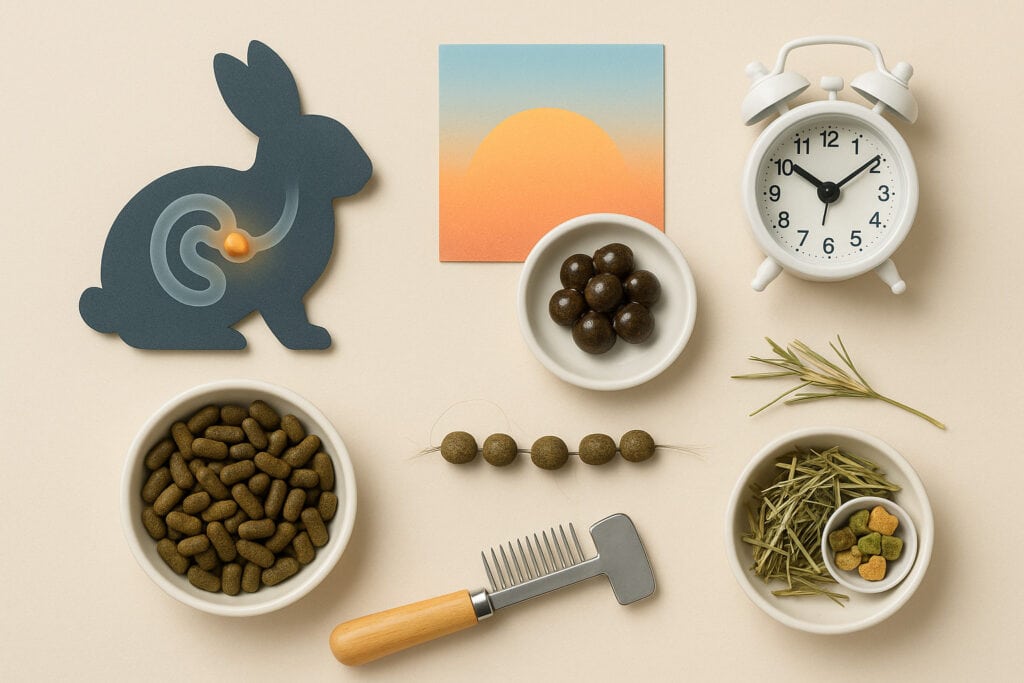
- Rabbits have a “traffic controller” section in the colon (the fusus coli) that helps sort fibre into either waste pellets or soft cecotropes.
- Many rabbits time their cecotropes for parts of the day when you’re not looking, which is why people used to call them “night droppings.” A rescue explainer walks through this neat timing quirk.
- Pellets that look like dry “cocoa puffs” are normal; uniform size tells you the rabbit is eating enough hay.
- Strings of pellets connected by hair are common during shedding—extra grooming and more hay usually help the clumps pass smoothly.
- Because diet and stress change cecotropes, keeping routine calm and offering steady hay can reduce “mystery messes” left in the enclosure.
Final Word: rabbit poop takeaways
Rabbits make many pellets because fibre must keep moving through their gut all day, every day. They also make nutrient-rich cecotropes and eat them on purpose. Therefore, lots of dry, round pellets are a good sign. But if the number drops, pellets shrink, or droppings get mushy, call a rabbit-savvy vet.
Interested in exploring similar posts? Visit The Science of Everyday Life hub for more!
Rabbits produce Nesquick and sometimes they want to eat it too!