
TL;DR: Why do people wear thongs? Mainly to avoid visible panty lines under tight clothes, to feel comfortable and free to move, and to match personal style or confidence goals. Some people also choose them for workouts or hot weather. If you’re prone to irritation or infections, choose a soft cotton gusset, change out of sweaty clothes, and skip thongs during flare-ups. Most folks can wear them safely when they feel good.
Why people wear thongs: a short history

The thong, as modern underwear, grew alongside changing fashion and ideas about the body. In the 1970s, designers and lingerie brands began selling minimal-coverage cuts to match swimwear trends and body-hugging clothes. Museums and fashion archives note how lingerie makers soon offered thongs as everyday underwear, not just beachwear or stagewear. For example, the Victoria & Albert Museum records that a major U.S. company began producing thong underwear in the mid-1970s, reflecting a broader shift toward slimmer silhouettes and “no-show” finishes in garments.
As pop culture moved into the 1990s and 2000s, low-rise jeans, stretchy fabrics, and celebrity styling pushed the look into the mainstream. Retailers answered with many cuts (G-string, T-back, V-string, and “cheeky”), each balancing coverage, comfort, and a smooth line under clothes. This set the stage for today’s norm: thongs are just one more tool in a big underwear toolbox.
Why people wear thongs: the 5 reasons
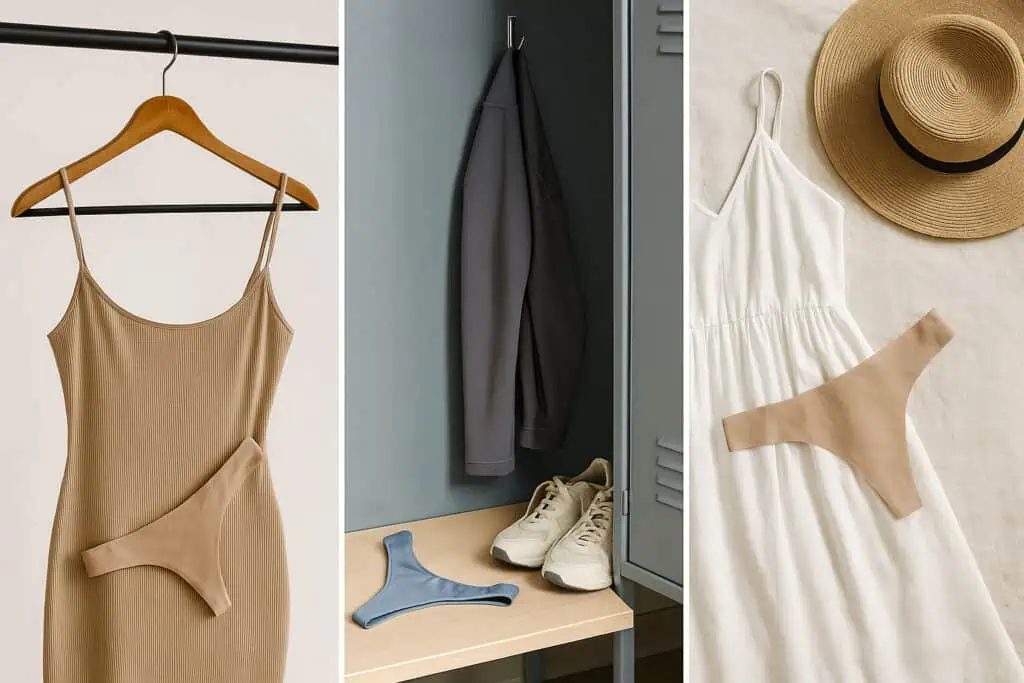
People pick thongs for simple, practical, and personal reasons. None of these apply to everyone, and that’s fine. Comfort and fit are personal.
No-show lines
Tight leggings, pencil skirts, gym shorts, and bodycon dresses can show seams and edges. A thong removes most seat coverage, so there’s little or no outline. If you like a clean look, a thong is an easy fix.
Comfort and movement
Many find that less fabric means less bunching. With fewer seams and less material, there’s less rubbing during walking, sitting, and bending. For some bodies, this simply feels better. For others, it doesn’t, so try different cuts and fabrics to see what your skin likes.
Sport or dance
During workouts or dance, smooth coverage can stop wedgies and cut down on friction. Still, your skin needs to breathe. A soft cotton-lined gusset helps, and changing out of sweaty gear right after practice keeps things calm. Medical sources note that breathable fabrics and dry skin lower irritation risk; wearing thongs by itself is not automatically “bad,” especially if you’ve had no issues, and a 2019 study finding no link between thong use and urogenital infections.
Style, confidence, and intimacy
Underwear is part of style. Some people feel more confident in a sleek, minimal cut. Others prefer fuller coverage. There is no “right” choice; the “right” one is the one you reach for without thinking twice.
Heat and wardrobe flexibility
In hot weather, less fabric can feel cooler. Also, when your closet ranges from yoga tights to silk dresses, a thong can play nice with many outfits. That said, listen to your body. If a certain material or elastic rubs, switch it up.
Frequently asked questions about thongs
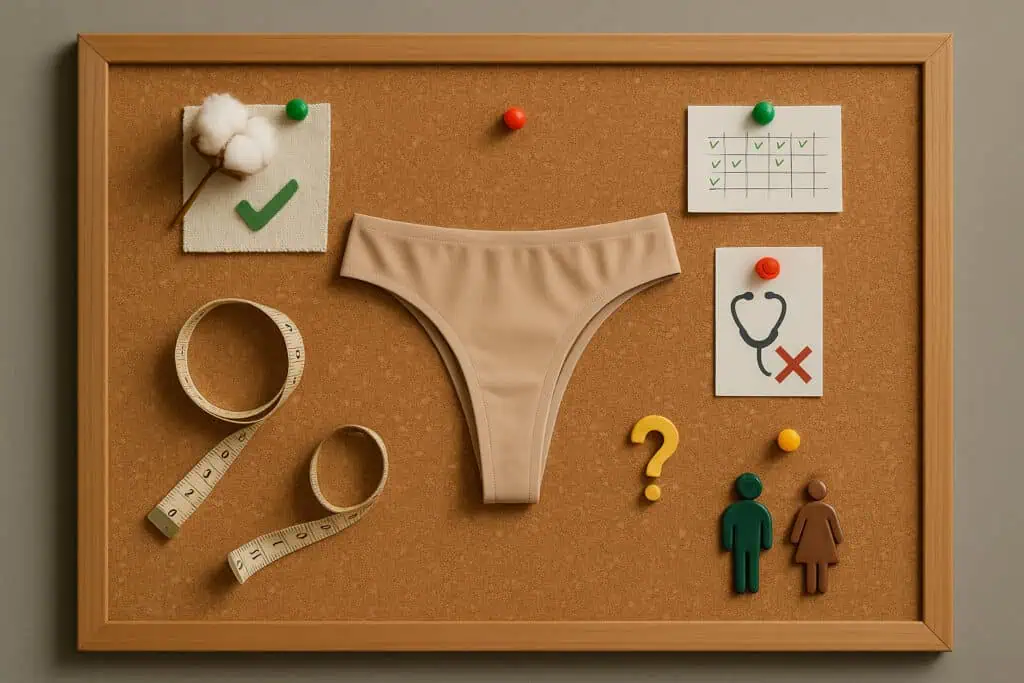
Do thongs cause UTIs or yeast infections?
Short answer: not by themselves. A large cross-sectional study did not find a link between thong use and urogenital infections. However, irritation rises when skin stays warm and damp, no matter what you wear. Good habits help: choose breathable fabrics and change out of sweaty clothes. If you frequently get infections or irritation, a clinician may suggest cotton gussets and looser fits for a while; standard women’s-health guidance stresses gentle care and airflow.
Do thongs cause hemorrhoids?
No. Hemorrhoids come from pressure and strain, not from a specific underwear cut. Medical groups list causes like constipation, pregnancy, and long toilet time, not thongs. If a thong’s string rubs a sore area, it may feel uncomfortable, so switch to something softer until you heal.
Is it okay to wear a thong every day?
If you feel fine, many people do. Still, pay attention to fabric and fit. A 100% cotton or at least cotton-lined gusset is kinder to skin, and looser clothes or a brief at night can help your skin breathe. Leading clinics also suggest changing damp gear quickly and skipping tight synthetics if you’re irritated.
Are thongs only for women?
No. Men’s thongs exist and are used for the same reasons: no lines, support, or style preference. As always, comfort rules.
How do I pick the right size?
Go by the brand’s size guide and your hip measurement. If the waistband digs in or the string rides up, size up or try a different cut. If the gusset is too narrow, look for a design with a wider, soft cotton liner.
Bonus: fun facts about wearing thongs
- The swimwear link. A famous designer pushed a thong bikini into the spotlight in 1974; fashion trades still track how that moment changed both swim and underwear design.
- Cuts aren’t all the same. “Thong” is a family of shapes: classic thong, T-back, V-string, G-string, and “cheeky.” Each feels different on the body.
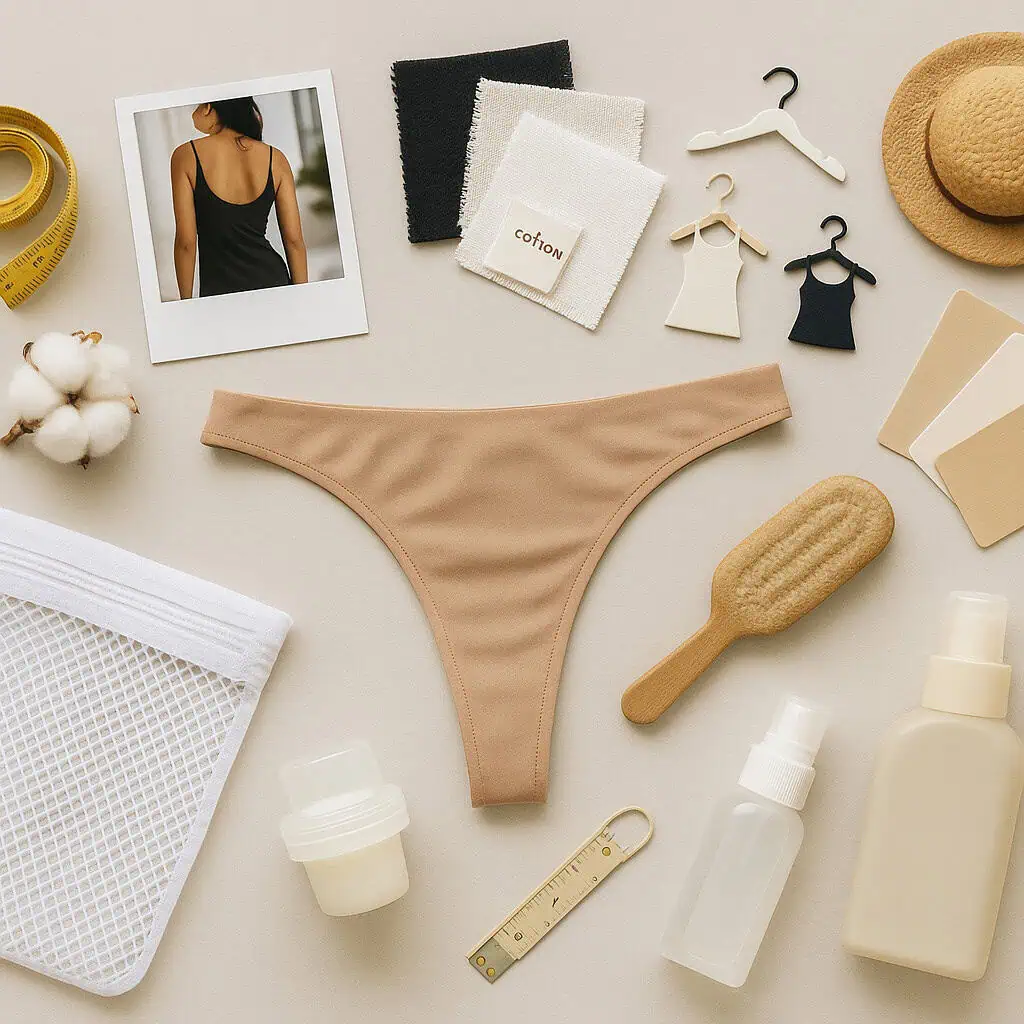
- Fabric matters. A soft, breathable gusset (often cotton) helps moisture move away from skin. If lace or mesh scratches, swap to smoother knits.
- Laundry helps comfort. Use mild detergent, skip heavy fragrance, and consider a mesh bag so delicate straps don’t snag. Air-dry to protect elastic.
- Outfit planning. Neutral colors blend under light fabrics; darker colors can show through thin clothes. Seamless edges reduce lines even more.
- Hot-day tip. If you’ll sweat a lot, pack a spare. A quick change keeps skin calm and lowers chafing.
Recap: why do people wear thongs?
People wear thongs because they want smooth lines, easy movement, and a style that feels right for their body. If the fabric is breathable and the fit is kind to your skin, a thong can be a simple, safe, and practical choice. And if it doesn’t feel good on you, that’s okay—wear what does.
Interested in exploring similar posts? Visit the Cultural Rituals & Society hub for more!