
TL;DR: Why do people wear durags? Mainly to keep textured hair healthy and in place (waves, braids, locs), to cut down on friction and moisture loss while sleeping, to fit hair neatly under hats or helmets, and, just as importantly, to make a style and culture statement. In short, a durag protects the work you put into your hair and also says something about who you are.
A short history of people wearing durags
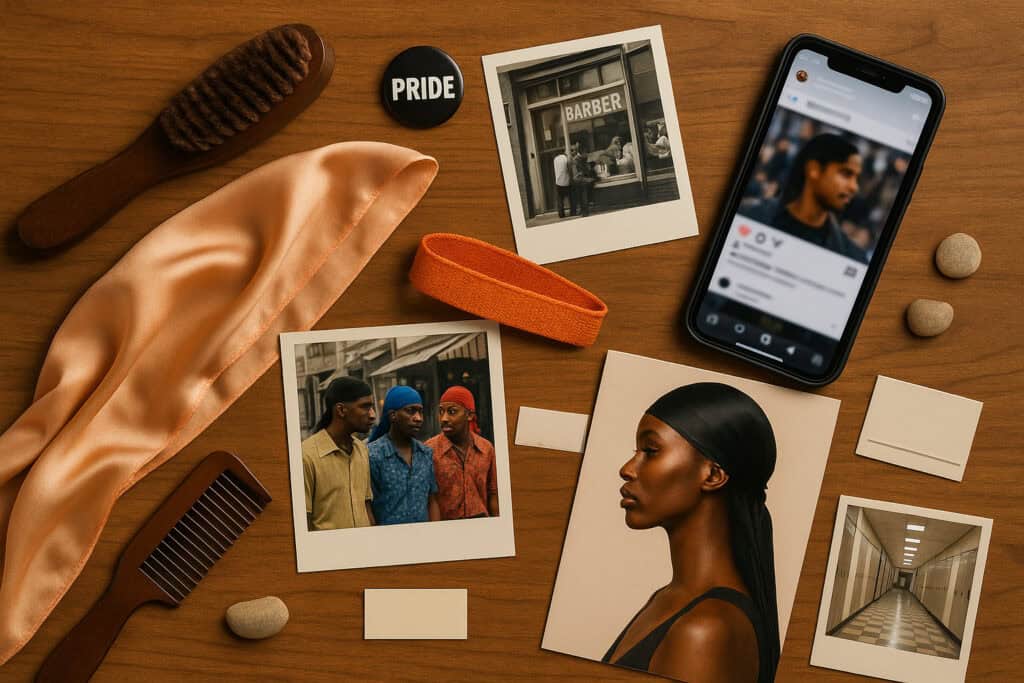
Before we answer why people wear durags, it helps to see where they came from and how people viewed them over time. The word appears in mainstream dictionaries like Merriam-Webster, and the headwear has been worn through many eras of Black life in the United States, often reflecting both cultural expression and resistance. During the 1960s and 1970s, Black pride and new style choices made the durag part of daily outfits and photos, symbolizing cultural identity and empowerment. Later, hip-hop made the look familiar to the wider public, further highlighting its roots in Black culture.
Public rules also shaped how people saw durags. In 2005, the NBA announced a stricter dress code off the court, and reports at the time noted that items like durags were on the “not allowed” list, which sparked debate about race and image. Schools sometimes tried to ban them too; for example, students at John Muir High School in Pasadena staged a walkout in 2019 over a durag policy. At the same time, high fashion began to embrace the piece—Rihanna even wore a durag on the cover of British Vogue and later echoed it in her own campaign images.
These contrasting moments—debate and restriction in some places, admiration and celebration in others—show that the durag holds a unique place, shaped by its cultural context, in both grooming routines and broader cultural identity.
Why do people wear durags? The 4 reasons
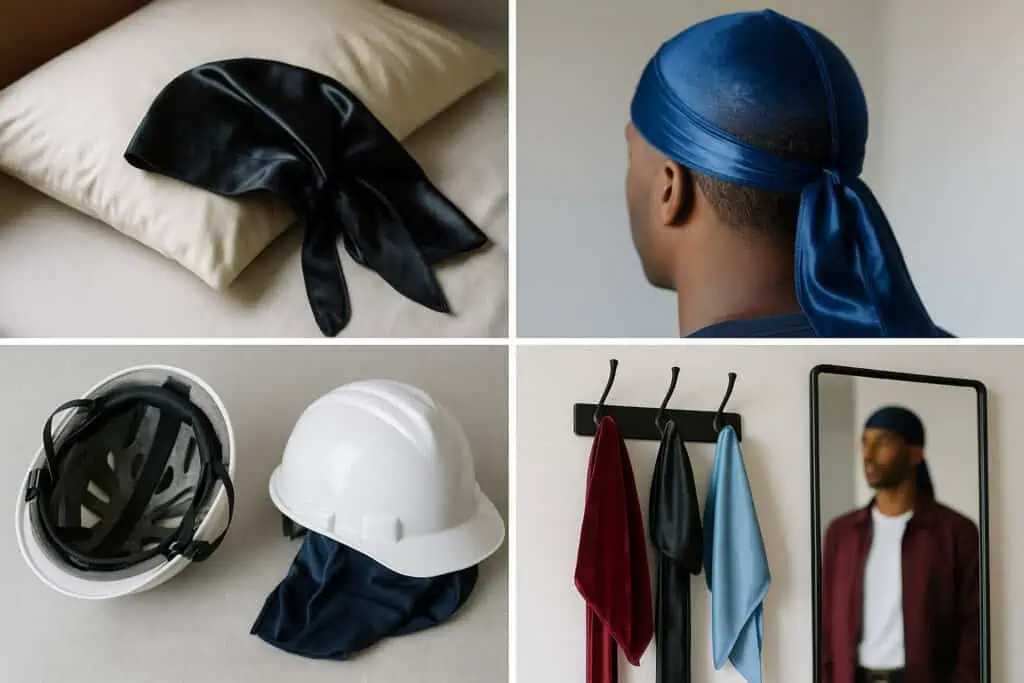
People wear durags for clear, everyday reasons:
Hair care and protection
Textured hair loves moisture, but cotton pillowcases and rough fabrics pull oil away and create friction. A durag acts like a soft cover. It helps keep hair products where they belong and reduces frizz and breakage. Because it ties down smoothly, it also prevents flyaways. As a result, hair looks neater in the morning, and styles last longer.
Creating and keeping waves, braids, and locs
If you brush for 360, 540, or 720 waves, you already know the drill: consistency plus compression. A durag gently presses hair into the pattern you brushed, so the pattern sets instead of puffing up. The same idea helps with fresh braids or retwists on locs—everything stays laid while you sleep or move through the day.
Sleep, sports, and work
At night, a durag keeps hair from rubbing on your pillow. During the day, it fits under a hat, hard hat, or helmet, which can lower friction and keep pads from tugging at roots. For people who sweat a lot on the job, the fabric can also act as a simple barrier between hair and the inside of a cap or helmet. Therefore, you save time on redos and protect your scalp from needless pulling.
Style, identity, and confidence
Yes, it’s practical, but it’s also a look. Color, fabric—like silk-like satin or velvet—and long ties all influence the overall vibe. Many people wear a durag as part of an outfit to express pride in their roots or to coordinate with their style. It serves both as grooming and as a statement.
FAQs about people and durags
People ask similar questions again and again. Here are direct answers.
What does a durag do for waves?
It holds the pattern you brush into your hair and reduces frizz while the wave pattern sets. The gentle, even pressure keeps hair flat rather than puffing it up. If you’re learning the basics, this guide on tying technique is a handy starting point.
Are silk or satin durags better?
Both can work. What matters is a smooth surface that reduces friction and doesn’t soak up your products. Many people prefer satin blends because they’re soft, light, and affordable; others prefer the feel of silk. Choose what fits your season, comfort, and budget. For care tips and comparisons to wave caps, see this breakdown from Evan Alexander Grooming.
Can women wear durags?
Absolutely. Anyone whose hair benefits from less friction and more moisture can use a durag. Beyond that, it’s a style choice. Women and non-binary folks wear them for waves, under wigs, with braids, and as part of an outfit.
Is it rude to wear a durag in public?
It depends on the place and purpose. Some settings (certain schools or jobs) may have dress codes, while many public spaces are fine. If you’re unsure, check the rules and read the room. Remember, attitudes have shifted as fashion and culture have changed; coverage like Vogue’s shows how common the look has become in high-profile settings.
How do I tie a durag without leaving lines?
Loosen and spread the ties so they don’t dig in. Don’t knot them too tightly. If marks appear, wear the ties for shorter periods during the day and put them on just before bed.
Durag vs wave cap: what’s the difference?
A durag ties at the back for better control. A wave cap is stretchy, slips on, and has no ties. Both flatten hair.
Bonus: Intriguing facts about durag wear

To round things out, here are useful extras that don’t repeat the points above:
- Spelling varies. You’ll see “durag,” “do-rag,” and “doo-rag.” Mainstream dictionaries such as Merriam-Webster list multiple forms, so don’t be surprised by different spellings.
- From protest to the museum. Artists have used durags in serious art shows; for instance, the Smithsonian Folklife Festival has featured button-covered durags by artist Beau McCall and explored the broader cultural meaning of the piece in a feature essay at the Center for Folklife and Cultural Heritage.
- Dress-code debates changed the story. Media coverage of the 2005 NBA dress code helped more people learn what a durag actually is and why it matters to those who wear it, shifting the conversation from stereotypes to understanding.
- Runway to street to red carpet. High fashion moments like Rihanna’s British Vogue cover show how the durag moved beyond “just sleepwear” into a celebrated style element.
Recap: Why do people wear durags?
People wear durags to protect textured hair, keep styles neat, and express personal or cultural identity. Put simply, a durag saves your hair and speaks your style.
Interested in exploring similar posts? Visit the Cultural Rituals & Society hub for more!