
TL;DR: Why do people wear costumes on Halloween? Because it’s a mix of old beliefs, play, and community. Long ago, people used disguises during autumn festivals when the world felt “thin” between the living and the dead. Today, folks dress up for fun, creativity, parties, and trick-or-treating; stores and pop culture keep the trend alive.
A short history of Halloween costumes
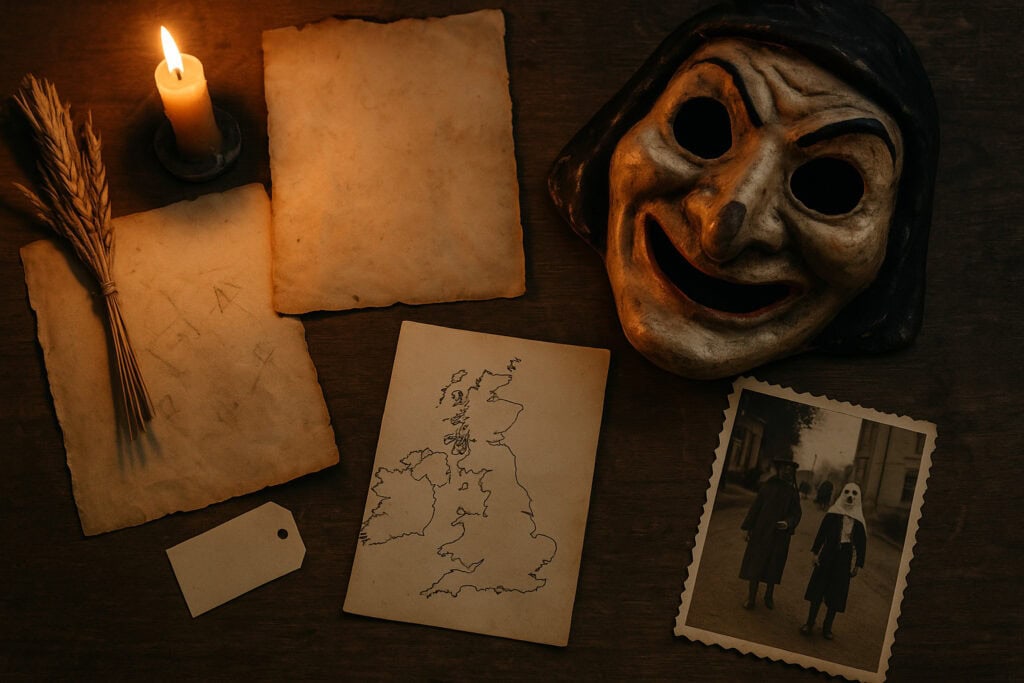
Before we answer the main question, it helps to see where Halloween came from. In old Celtic lands, people marked the end of harvest with festivals and night fires. Over centuries, church holy days and local customs blended with those older autumn rites. Records mention fires, masks, door-to-door visits, and playful mischief. However, we’ll save the “why” behind those disguises for the next section.
Meanwhile, newspapers and books from the 1800s and early 1900s show Halloween spreading and changing, especially in North America. Community parties grew. Door-knocking games and “guising” showed up in cities and small towns. Later, the holiday turned into a family night with costumes for kids and, eventually, for adults too. If you want a quick museum-style overview of these steps, the Library of Congress has a clear timeline of Halloween traditions, including dressing up and going door-to-door. For a broad, readable summary of Halloween’s background and how customs moved across the Atlantic, Smithsonian Magazine also traces trick-or-treating’s rise in the 1920s–30s.
Just as important, historians note that early fall festivals often involved animal hides, masks, and role-playing. National Geographic summarizes these early costume ideas from folklife sources and reminds us that costumes didn’t always look like movie characters; they were crude, homemade, and tied to the season. And for the door-to-door angle, you can see how “souling” and “guising” led toward modern trick-or-treating in a recent reference round-up.
The 6 reasons people wear costumes on Halloween
Now to the point. People wear costumes on Halloween for a few simple reasons that build on one another.
Old beliefs and seasonal storytelling
In many places, autumn once felt spiritually “thin.” People imagined spirits near, harvest ending, and winter coming. Costumes fit those stories. They let people play with fear in a safe way, copy old tales, and act out the season’s mood. As background, cultural overviews highlight how those early outfits were rough and meant for nighttime gatherings, not just candy runs.
Play, pretend, and identity
Costumes give us permission to be someone else (brave, silly, spooky, or cool) without judgment. Psych writers often point to enjoyment, freedom, and social play as the biggest draws. In short, it feels good to dress up, and it’s a shared social game.
Community rituals
Trick-or-treating and school or neighborhood events work better when everyone joins in. Costumes signal, “I’m part of tonight.” They also make door-knocking more fun for kids and help parents and neighbors lean into the theme. Over time, communities turned small pranks into structured fun nights.
Pop culture and easy shopping
Movies, TV, games, and comics feed costume ideas. And because stores sell ready-to-wear outfits, there’s little friction. Each year, the National Retail Federation (NRF) surveys Americans and finds that costumes remain a top activity and a big slice of spending.
Parties for all ages
It’s not just a kids’ thing. Adults go to theme parties and work events, and many even dress up their pets. That wider participation keeps the costume habit strong year after year, especially when friends post photos and swap ideas online.
A safe way to handle fear
Finally, facing “monsters” with a wink—by becoming one—turns fear into laughter. Costumes let us hold darkness at arm’s length and turn it into play.
FAQs about Halloween costumes
When did people start dressing up?
Homemade masks and disguises show up in autumn festivals and later in newspaper reports from the 1800s–early 1900s. Door-to-door customs like “guising” and “souling” helped lock in the habit, which grew fast in the U.S. during the 1920s–30s.
Why are so many costumes scary?
Because the season’s stories are spooky—witches, ghosts, skeletons, and long nights. Even so, early outfits were often simple and rough. Cultural round-ups note animal skins, face coverings, and makeshift masks used at night gatherings.
Why do adults wear costumes now?
Parties, social media, and easy shopping made dressing up normal for grown-ups. Each year, the NRF reports strong adult participation and billions spent on costumes, decorations, and candy.
Did trick-or-treating cause the costume boom?
It helped. Door-to-door visiting gave kids a reason to dress up, and communities preferred organized fun to random pranks. Histories link those older door-knocking customs to modern trick-or-treating, where a costume is part of the deal.
Are costumes safe for kids?
Yes, if you follow simple rules. U.S. safety agencies suggest flame-resistant fabrics, good fit to avoid trips, and face paint instead of vision-blocking masks. Reflective tape and small flashlights help after dark.
Bonus: quick facts related to Halloween costumes
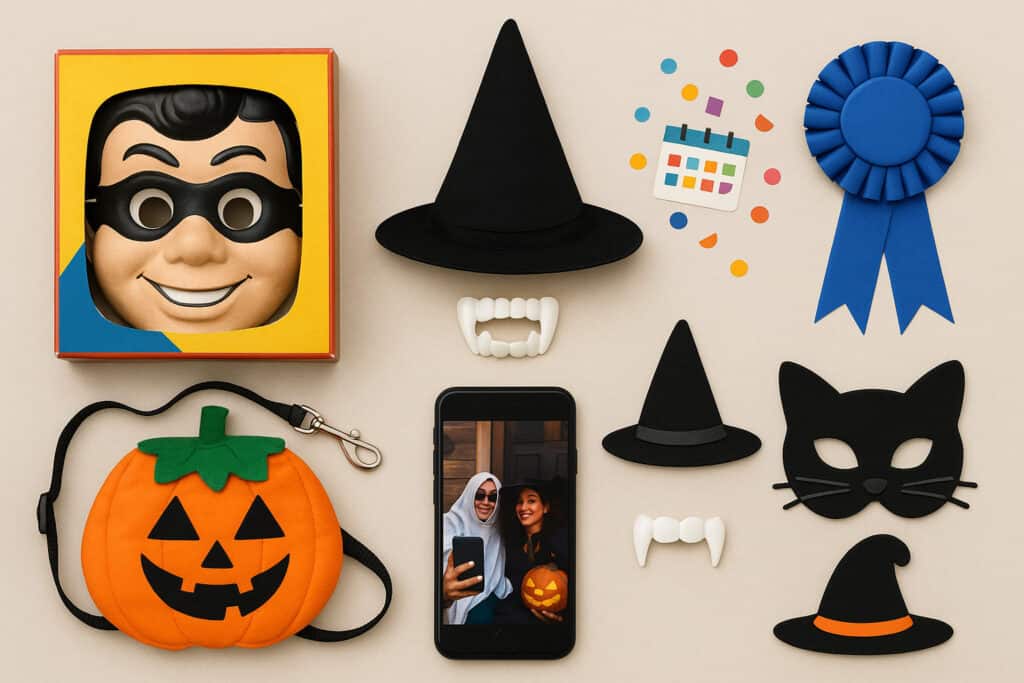
- Mass-market costumes changed everything. In the mid-20th century, companies turned licensed characters into easy, boxed outfits, pushing the habit into nearly every household. A 2025 feature tells how the Ben Cooper and Collegeville families made this a big business long before pop-up Halloween chains.
- Top picks shift but classics stay. Witches, vampires, and black cats stick around because they match the season’s mood. Yet every year, new movie and game characters rise fast.
- Pets join the fun. Many Americans now buy or make pet costumes, which turns Halloween into a full family event.
- Photo-ready culture matters. Because friends share pictures, people lean into bigger makeup, better props, and clever DIY touches.
- Local flavor lives on. Some towns still run parades or costume contests, and schools host “book character day” close to Halloween, keeping dressing up tied to community, not just candy.
Final word: why people wear costumes on Halloween
In short, an old autumn habit met modern fun. Costumes carry bits of past belief, but they also give us play, connection, and a creative break from normal life. That’s why kids, adults, and even pets dress up—because it feels good to join the night together and make a little magic out of the dark.
Interested in exploring similar posts? Visit the Cultural Rituals & Society hub for more!