
Most people think the 24-hour clock is just for soldiers who like things precise and stern. However, the real reason stretches beyond uniforms and bases, into how we prevent mistakes when minutes matter. Watch for three anchors as you read (ISO 8601, incident command, and Zulu/UTC) and see how they quietly drive the way time is written and read.
Roads, radios, and shifts

Before smartphones synced our calendars, trains, ships, and later airplanes stitched far-flung places together. Conductors and captains had to coordinate across long distances, so they leaned on a time format that didn’t repeat numbers twice a day. As radio grew, dispatchers and operators learned a hard truth: the air gets noisy, and “six” sounds a lot like “sixteen” when the signal is bad. A single format with no a.m./p.m. tags took less explaining and trimmed room for error.
Meanwhile, software and databases needed time stamps that sort correctly and travel safely across countries. That push helped a global format, ISO 8601, become common for dates and times because it’s unambiguous and machine-friendly. If you’ve ever seen something like 2025-11-26T18:00, you’ve met the standard behind so much modern scheduling and logging.
Emergency managers discovered the same thing on paper. Forms used during wildfires, storms, or large events tell people to record every entry in 24-hour time. It keeps the timeline clean when teams swap shifts at midnight or run around the clock. Hospitals followed suit: medication charts and handoffs need a clock that can’t be read two ways, so clinical training materials regularly show orders at 2300 or 0700 to cut guesswork.
Around the same time, world timekeeping aligned around UTC, often tagged “Zulu” in aviation, so pilots and controllers don’t juggle time zones mid-flight. That standard displays as a 24-hour clock by default. If you’ve ever wondered why people use military time outside the military, much of the story begins with these practical pressures, not tradition.
Built for zero ambiguity
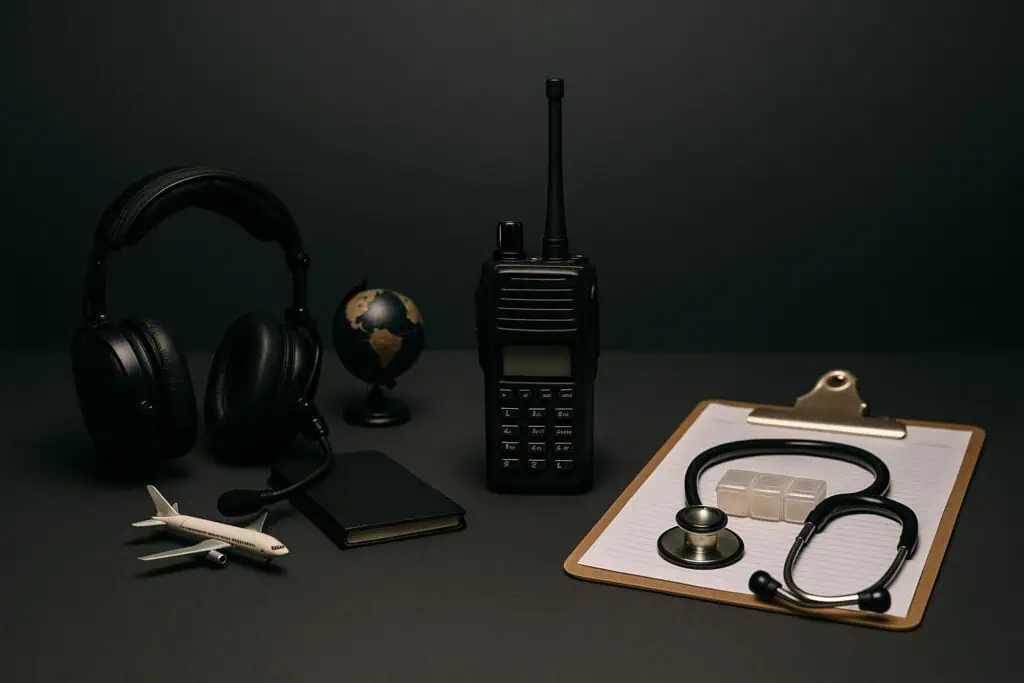
Ambiguity kills accuracy
In any system where 12 numbers repeat daily, the same “6:30” exists twice. Radios clip, handwriting varies, and screens glare; therefore, error creeps in at the worst moments—shift changes, overnight dispatches, long routes. By forcing every hour to be unique and leaving nothing for a.m./p.m. tags to clarify, the 24-hour clock lowers the odds of reading or hearing the wrong time, which is ultimately why people use military time in operations that demand crisp communication.
Global consistency at scale
When calendars jump across time zones, meetings and missions rely on one common reference. UTC provides that anchor, and systems convert locally as needed. Because the 24-hour format pairs naturally with this standard and sorts cleanly in databases (18:00 always follows 17:59), teams avoid “Which 7:00 do you mean?” loops. Consequently, why people use military time often boils down to running global schedules without translation errors, a goal that standards like ISO 8601 were built to serve.
Safety-critical communication
Dispatch logs, disaster reports, and field notes are written under pressure. Instruction lines on incident forms literally say “use the 24-hour clock,” so every handoff, entry, and approval stays in sequence during long operations. In aircraft and control towers, UTC (Zulu) keeps pilots and controllers on the same second, even when crossing states or oceans. When lives depend on accurate logs, the reason people use military time becomes obvious. It isn’t about tradition; it is the only way to strip out preventable confusion.
Machines and timestamps
Computers file events to the millisecond, and they need a way to store and compare times that won’t break across languages or regions. A coloned 24-hour time (and ISO-style date) sorts correctly as plain text and stays unambiguous when exported, parsed, or graphed. Government data standards even recommend ISO formats for this reason, so systems talk the same language across agencies and vendors. Because of that underlying mechanism, the reason people use military time in tech is simple: it’s the least fragile format for humans and machines.
Shift work and memory load
Hospitals, police, transit, and factories don’t sleep. When shifts roll past midnight, a repeated “12:00” forces everyone to remember extra labels and context. A single stream from 0000 to 2359 removes mental detours, reduces back-and-forth, and clarifies “start” versus “end” on forms. In short, fewer mental steps mean fewer chances to stumble, so why people use military time often comes down to reducing cognitive load on busy people.
Frequently Asked Questions

Is this just a military tradition?
Uniforms didn’t create the format; the format solves a communication problem that the military also faces. Because the 24-hour clock eliminates duplicate hours and pairs easily with UTC, it was forced early and consistently, but many civilian fields adopted it for the very same reasons.
Does the 24-hour clock make mistakes less likely?
Operational precision relies on removing duplicate data points. In emergencies, forms and protocols explicitly require 24-hour entries so timelines don’t break during night operations or shift handoffs, which is why you see 2300 on incident logs and patient charts.
Is “Zulu time” the same thing?
Zulu refers to UTC—the zero-offset time used in aviation and other global ops—while the 24-hour clock is the way that time is written and spoken. They pair together naturally, which is why you often hear them in the same breath in pilot training and procedures.
Do regular people need to learn it?
Phones and apps convert easily, but knowing the format pays off when reading travel itineraries, medical instructions, or international schedules. Because many public systems default to 24-hour time, recognizing “18:45” removes doubt in places where a wrong turn costs money or safety.
Is this only about machines and code?
Computers love ISO-style time stamps, but humans benefit too. The same properties—sorting order, clear comparisons, no repeats—help dispatchers, nurses, and supervisors coordinate cleanly even without a screen in sight.
Bonus: Short fun facts
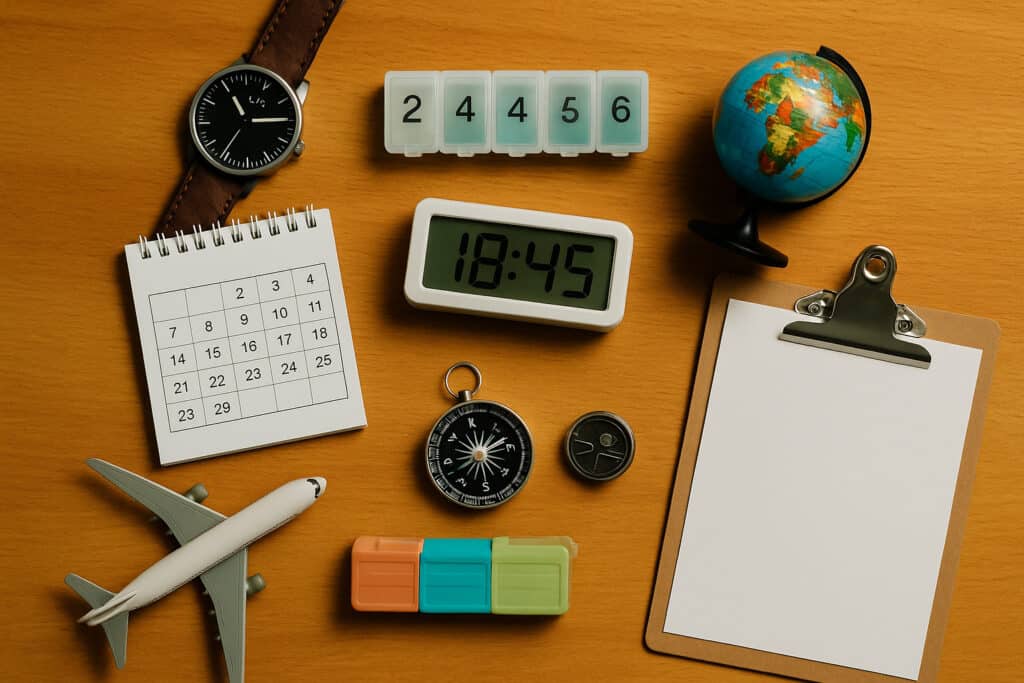
- UTC always shows in 24-hour format. Check the national clock site, and you’ll see UTC presented without a.m./p.m.—that’s by design for clarity.
- Some style guides drop the colon. You’ll see 1800 instead of 18:00 in certain operations or style manuals; the mechanism is the same—no repetition, no ambiguity.
- Leading zeros matter in speech. To avoid “fifteen” vs. “fifty,” radios often say “zero five four three” instead of “five forty-three.”
- Air and sea speak UTC. Pilots and mariners plan in Zulu to dodge time-zone traps, then convert locally for passengers.
- Public data likes ISO 8601. Open-data portals and APIs favor the standard, so files sort and merge cleanly across systems.
- Curious where it’s common? Many countries default to the 24-hour clock in everyday life; U.S. usage is more specialized, which is why travel, medicine, and logistics are where you’ll meet it most.
Final word
Switching the way we write hours isn’t about being “more official”; it’s about removing places where errors hide. When a clock stops repeating itself, coordination gets simpler, handoffs get cleaner, and machines and people read the same story. Now that you’ve seen the hidden scaffolding, ask yourself where a single, unambiguous clock would save you a second thought tomorrow.
Interested in exploring similar posts? Visit the Cultural Rituals & Society hub for more!