
Most people assume we scream because we “lose control.” In reality, screaming when scared is a fast, automatic response wired into our bodies to protect us and coordinate groups. It’s less a sign of weakness and more a survival tool. If you’ve ever heard of the startle reflex, the periaqueductal gray, or acoustic roughness, you’ve already brushed against the mechanism—without naming it.
Threads through time

Long before horror movies and roller coasters, people noticed that sudden fear brought sound. Early naturalists cataloged gasping, eye-widening, flinching—alongside vocal bursts. Charles Darwin even devoted a book to how emotion shows on the body, including fear and alarm, in his classic The Expression of the Emotions in Man and Animals. Animal watchers then documented alarm calls across species—from meerkats to birds—because those signals alter the behavior of nearby creatures.
Across cultures, people also learned where and when yelling mattered. Rituals, war cries, and stage screams evolved because sound travels farther than a raised hand. Yet all this history still leaves a modern reader wondering why people scream when scared in the first place.
What bodies choose fast

The “Startle” Circuit
A sudden threat first snaps the body into an automatic defensive sequence. Sensory input shoots through rapid circuits that prepare muscles, widen airways, and prime attention. Researchers have shown that scary, “rough” sounds occupy a unique acoustic zone that our brains prioritize; in other words, screams are built to slice through noise. Because these pathways act before careful thinking, the voice system can fire off a sharp, high-impact signal—and that fast broadcast ensures the warning cuts through ambient noise before the conscious mind even registers the threat.
The Midbrain Switchboard
Deep in the midbrain, a hub known as the periaqueductal gray (PAG) helps trigger defensive vocalizations. It does not write full sentences; it flips the “go loud” switch when danger demands speed. Reviews of vocal control argue that the PAG helps initiate and scale urgent calls rather than fine-tuning syllables, which aligns with the blunt force of a scream. Because this switchboard links threat detection directly to sound output, the body can shout first and analyze later, effectively bypassing the thinking brain entirely.
The Acoustic Siren
Sound beats sight when you need to warn people who can’t see you. A sudden cry spreads in all directions, leaps walls, and reaches strangers. In nature, alarm signals trigger quick decisions—freeze, flee, or look—and human screams ride the same rulebook. When your shout helps others orient, more bodies move out of harm’s way, which loops back to protect you. Consequently, a scream functions as a social siren, turning one person’s fear into a radar signal for the whole group.
Freeze vs. Broadcast Dynamics
Threat responses come in stages: orient, freeze, then fight or flee if needed. Freezing helps you gather information; broadcasting helps others gather, too. Which one shows up depends on distance, escape routes, and learned rules. In close-quarters danger, silence may help you hide; at a distance, loudness may summon help. Because the system flexes with context, the same person can stay quiet one day and cry out the next—yet the capacity to scream remains built-in for situations where broadcasting is safer than hiding.
Contagious Vigilance
Humans are contagious creatures. Hearing a scream tightens your muscles, raises your heart rate, and draws your attention to the source. That contagious snap helps crowds coordinate without a plan. When one voice breaks the air, others reorient in milliseconds, creating a ripple of vigilance. Therefore, a single scream can mobilize a group faster than any spoken instruction ever could.
The “Culture Override” Limit
Experience can dampen or shape the output. Actors, soldiers, and emergency responders train their breathing and voice so loudness becomes a tool rather than a reflex. Families and cultures also teach when a shout is “acceptable.” Even so, the wiring stays ready. Under stress, the body may still channel breath and muscle tension into a quick cry, especially if help is nearby, because the instinct serves as a safety-first override that training can dampen but never fully delete.
Frequently Asked Questions
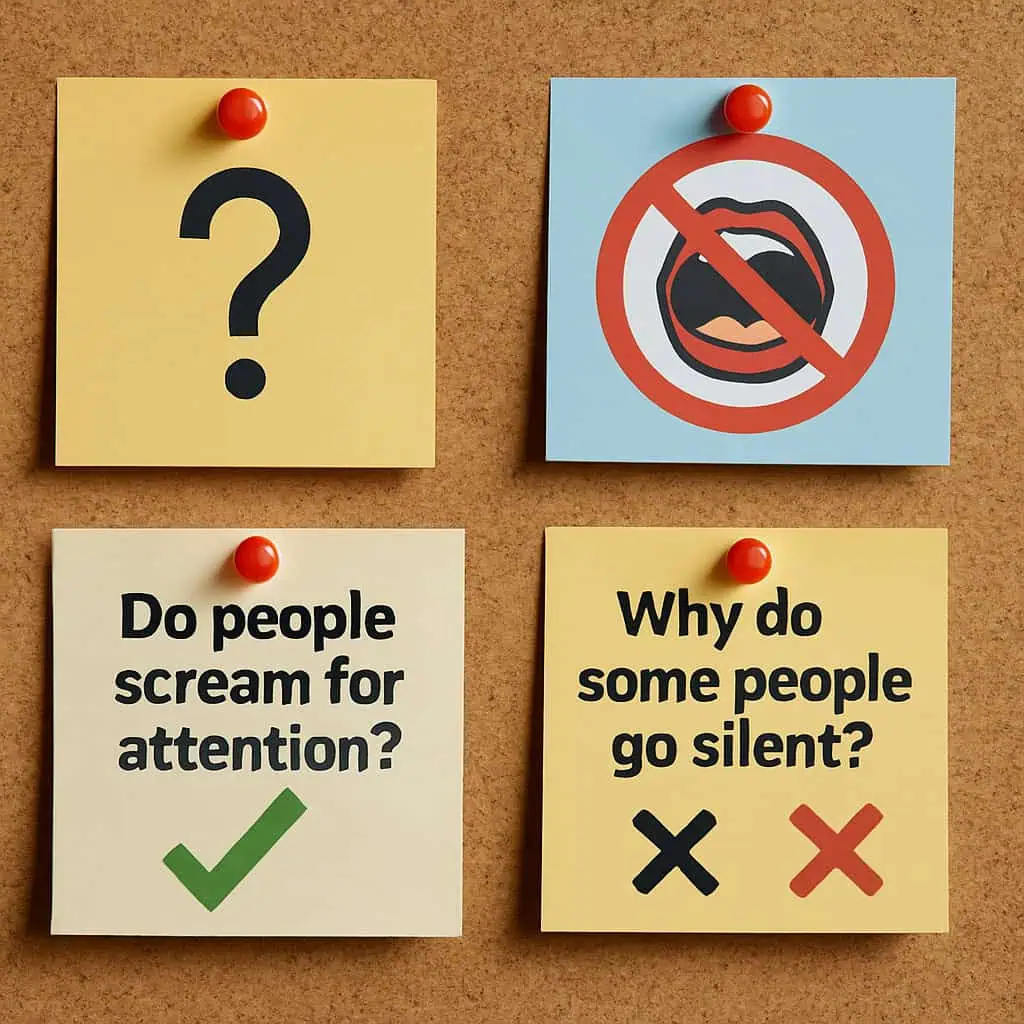
Do people scream because they want attention?
Attention often follows sound, but the timing tells the story: the reflex circuit fires before social strategy. Defensive systems jolt the lungs and larynx into action, building a sound that cuts through space. Only afterward does the thinking brain catch up. That’s why the outburst can feel involuntary, not planned.
Is the amygdala the whole story?
Threat processing is a network job. The amygdala tags danger and boosts arousal, but midbrain and brainstem circuits help route action to the voice and body. Because multiple hubs cooperate, screams can launch even when thoughtful control is busy—or offline.
Why do some people go silent instead?
Freeze is part of the same defensive “cascade.” In some contexts, staying still buys time to assess, and muscles lock rather than shout. Clinical reviews describe how arousal, freeze, fight, and flight unfold in sequence. Silence, then, is not failure; it’s one branch of a survival tree that also includes yelling when that branch works better.
Are screams just loud talking?
Mechanically, the two actions rely on completely different vocal physics. While shouting is just amplified speech using fine motor control, a true scream bypasses those filters to recruit raw airflow and acoustic roughness. That specific ‘rough’ quality pushes the sound into a biological warning zone that the human brain finds impossible to ignore.
Bonus: fun facts
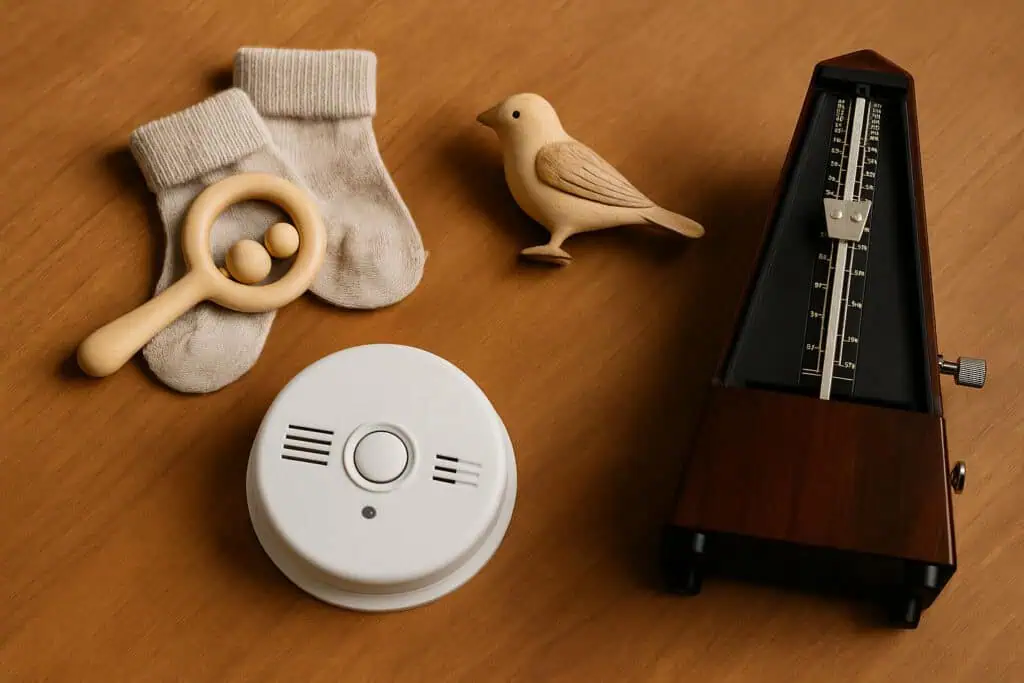
Beyond the immediate reflex, the biology of alarm calls reveals a few strange connections across species and age groups.
- Infants show a primitive startle that yanks limbs and breath in a split second; as we grow, pieces of that template remain available for adult alarm calls. The APA’s concise definition of the startle response sketches this reflex foundation.
- Animal alarm systems cover more than sound. Some species flash colors; others release chemicals; still others thump the ground. Humans mainly broadcast with voice, but the logic—warn, orient, survive—is the same.
- Acoustic “roughness” in sirens and smoke alarms mimics qualities of human screams, which is why those devices feel impossible to ignore.
- Breath control changes everything. Long exhales and slow pacing lower arousal; short, high-pressure bursts favor volume. That physiological sequence explains why the sound often starts with a sharp intake of breath before exploding outward.
Final word
Next time the room jumps at a sudden bang, notice what comes before words: bodies align, eyes search for the source, and a quick signal organizes the group. Seeing the hidden mechanics reveals a survival feature rather than a loss of control—and prompts a new question: where in your life could a quick, simple signal help your group move safely, more quickly?
Interested in exploring similar posts? Visit The Science of Everyday Life hub for more!