
Most folks assume this quirky phrase is just a cute way to warn that a swear word is coming. However, the real reason is knottier than a simple apology. Buried inside it are pieces of class history and a social trick from politeness theory—with a dash of a linguistic device sometimes called a “minced oath.” If you’ve ever wondered why people say excuse my French, keep that mix in mind.
Borrowed tongue origins
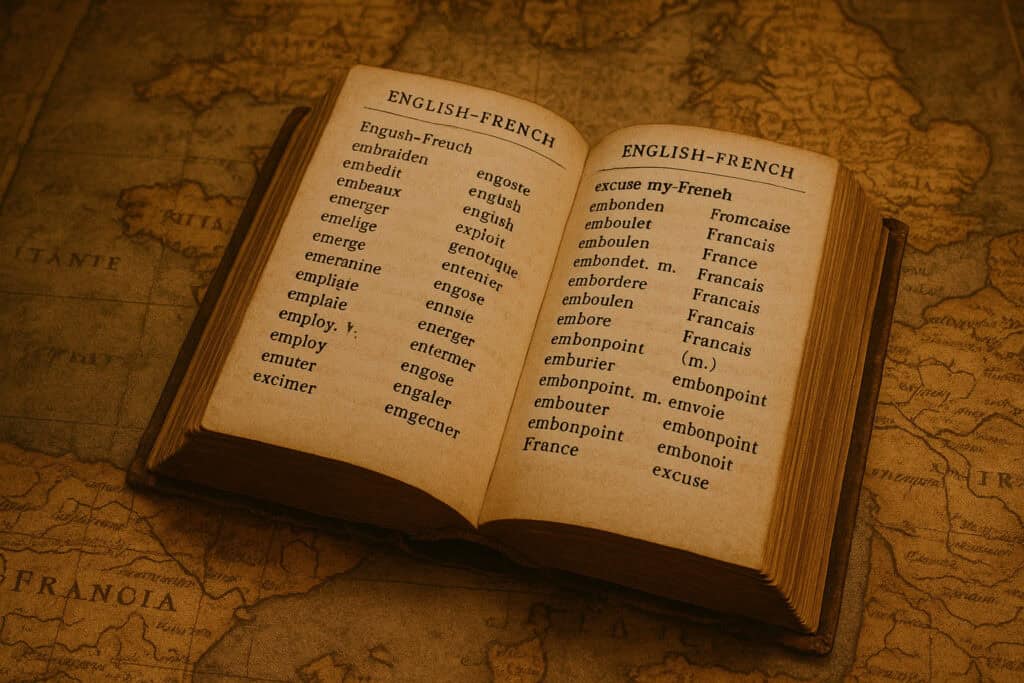
Before movies and memes spread slang overnight, English speakers sometimes dropped actual French words into conversation. Not everyone could follow, and, for courtesy’s sake, people would briefly apologize after the foreign bit. That habit shows up in early print; one 1830 example excuses the French word embonpoint—“excuse my French”—so listeners wouldn’t feel left behind. Historians regularly point to those moments as the seed of the phrase’s later life, when it drifted from real French toward cheeky cover for racy talk.
As English and French rubbed shoulders for centuries, the apology changed jobs. By the late 1800s, writers were already using the line as a wink before or after “strong language,” treating the foreign label as a playful fig leaf—an idea linguists trace to an 1895 note that ties “French” to “bad language” in English. That evolution is the doorway into the real mechanics behind why people say excuse my French today.
Social airbag mechanics
Face-saving ritual
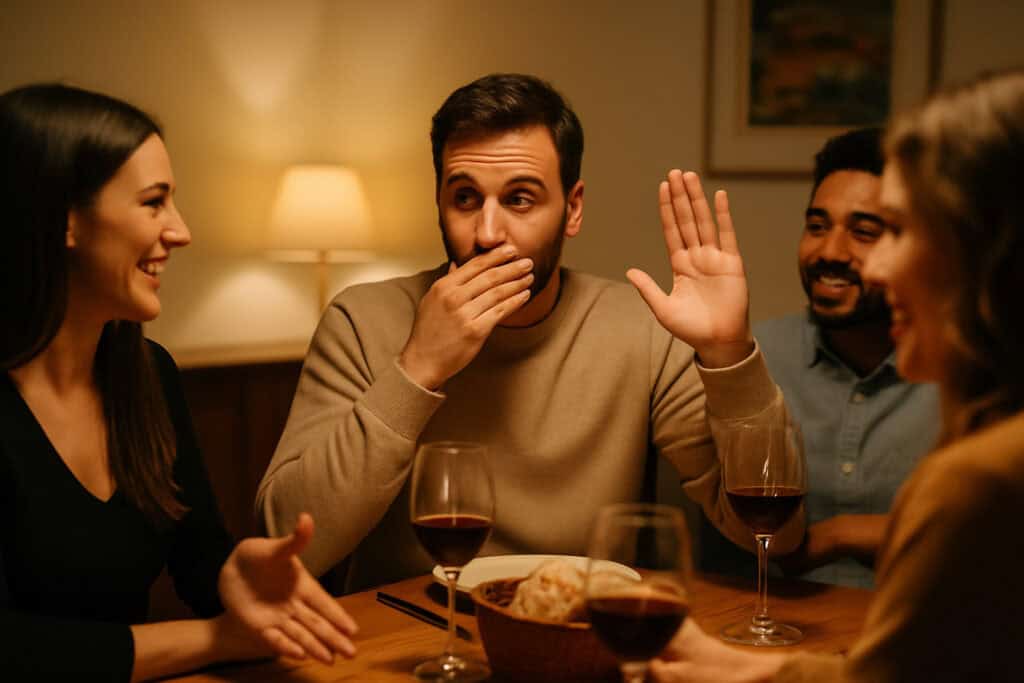
In conversation, blunt words can bruise someone’s “face”—their sense of dignity or social comfort. Because of that, speakers often add little pads around risky phrases. This is exactly what the line does: it flags that a “face-threatening act” is coming and offers a softener in the same breath. In classic politeness theory, it’s a way to reduce the shock while still saying the thing you want to say. The phrase often lands near the end of the exchange to signal respect, acting as a cushion even as a sharp word slides across the table
Taboo buffer effect
Strong words carry social cost. However, if you momentarily pretend the word belongs to a “different code,” the brain treats it as slightly less direct. The phrase works like a tiny shield: it flips the channel for a second, gives the listener time to brace, then drops the punch. Modern dictionaries even define the idiom as a set apology for offensive language, which shows the buffer has become part of the meaning itself. That buffer explains why the phrase persists in both heated stories and office whispers—it buys just enough social grace.
Class code wink
Centuries ago, sprinkling French hinted at schooling or travel. Meanwhile, many listeners weren’t fluent, so a quick apology felt polite. Over time, that class-flavored habit morphed into a knowing stage whisper before naughty talk. This is when the phrase shifted from a literal apology to a social wink, hiding class and courtesy inside what looks like a simple joke.
Rivalry and borrowed blame
English has a long tradition of pinning risqué or improper things on a neighbor’s culture: “French leave,” “French disease,” and more. Whether fair or not, the pattern created a safe way to hint at indecency without naming it outright. Labeling a future swear as “French” fits the same playbook—blame the spice on someone else’s kitchen so the dinner stays civil (see related terms like “French leave” for flavor and context). That’s why ”excuse my French” often has a smirk built in; the joke is part of the mechanism.
Media echo loop
Films and TV gave the line a megaphone. Once characters could toss “excuse my French” around prime-time, people copied the rhythm: warn, drop the word, move on. The screen timing taught millions how to use the phrase as a quick reset. By the end of the gag, the audience—and your dinner guests—know exactly what you did and why.
Frequently Asked Questions
Is the phrase rude or harmless?
Context usually decides. In casual settings, it lands as a light “heads-up” and is rarely taken as a real slur against France. In formal rooms, though, even playful excuses around profanity can backfire. Because it functions as a politeness move, the safest read is “soft comedy,” not an actual insult.
Do French speakers say anything similar?
French has its own politeness tricks, but not this exact English joke. The point here isn’t real French; it’s an English cue that frames what follows as slightly less direct. Modern learner dictionaries spell out that it’s a staged apology for offensive words, not a real language switch.
Did it begin in the United States?
Print evidence leans British for the early, literal usage (apologizing after real French), with American writers quickly adopting the cheeky version. As it spread, both sides of the Atlantic used it in the same way for comedy.
Is there a better alternative at work?
Safer options exist. If a word may land wrong, try replacing it, pausing, or naming your feeling instead of the expletive. The politeness “airbag” still deploys, and you keep the meeting clean.
Is the phrase only about cursing?
Not always. People also drop it before blunt or spicy topics, treating the line as a general “here comes something sharp” warning. Ultimately, saying ‘excuse my French’ is about managing social heat, not grammar.
Bonus: quick fun facts
Beyond the main apology, the expression has a few historical quirks that don’t fit the usual definition.
- Writers were using a printed apology after French words in the early 1800s, and by the 1930s, you could find the phrase cushioning “bloody” and similar terms in fiction.
- The habit belongs to a larger family of polite fictions—verbal tricks that let people keep harmony when the content is rough. Once you notice the pattern, you’ll hear cousins everywhere: “pardon my language,” “cover your ears,” “earmuffs,” and so on.
- A small but real reason people say ‘excuse my French’ is timing: the phrase gives everyone a slice of a second to prepare. That beat often matters more than the words themselves.
Final Word
Hearing the line as just a joke misses its cleverness. It lets two people keep the conversation intact while touching something hot. Once you see the mechanism—apology as airbag—you can decide when to deploy it, when to swap it for quieter tools, and when to skip spice entirely. And if you start listening for the tiny pauses we place around risky words, you might catch a larger question humming underneath: in a world that moves fast, what other micro-habits help us stay honest and kind?
Interested in exploring similar posts? Visit the Hidden Histories & Origins hub for more!