
TL;DR: Why do people sag their pants? Mostly for style, identity, and belonging. The look grew in certain music and street scenes, then spread through pop culture. Some wear it to feel relaxed or to push back against strict dress rules, while others simply copy what friends or artists wear. In short, it’s about fashion, signaling, and comfort—often all at once.
A short history on sagging pants
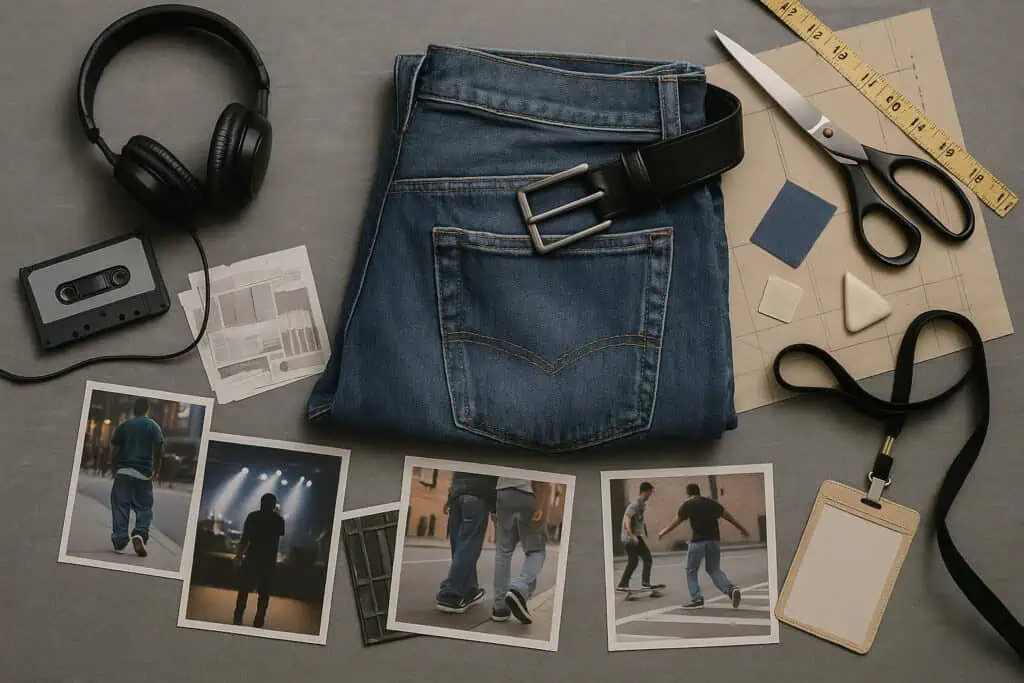
Fashion moves in waves. One style starts in a small group, gains attention, and then shows up everywhere. Baggy silhouettes were common in the 1990s and 2000s, especially in hip-hop and skate scenes, and oversized fits made room for pants to sit lower on the hips. Because clothes are also symbols, the look carried meanings that went beyond fabric and fit—music tastes, local culture, and a sense of being part of something.
Writers and historians have tracked how hip-hop shaped clothes far beyond music charts, pulling in everything from sneakers to loose jeans. Meanwhile, streetwear (mixing sportswear, skate influence, and casual luxury) helped keep roomy shapes in rotation.
There are also many articles that try to date when low-sitting pants first started showing up in public life and in videos. For a neutral outline of timelines and claims (some agreed on, others debated), see the summary page on sagging in fashion.
Why do people sag their pants? 7 reasons
Style and trend
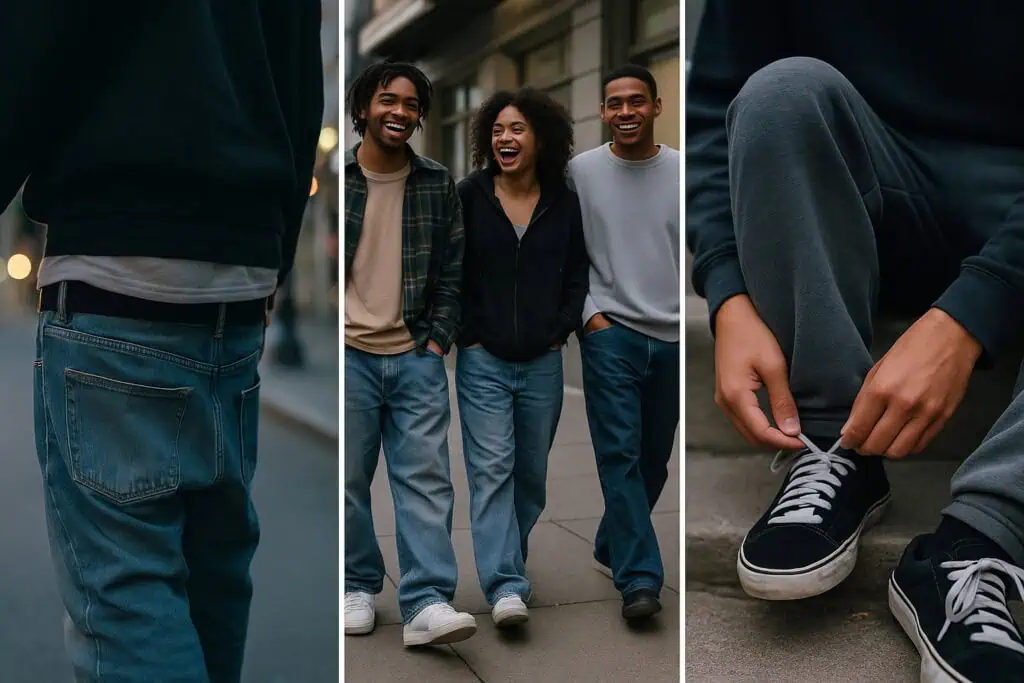
First and simplest: people copy what looks cool to them. If your favorite artists, athletes, or local trendsetters wear pants lower on the hips, you might try it too. Trends also cycle. When wider jeans return, looser waists return as well, and pants naturally ride lower. Therefore, “why do people sag their pants” often comes down to keeping up with a look they like.
Identity and belonging
Clothes signal who we are with just a glance. Wearing pants low can say, “I’m part of this scene,” whether that scene is tied to a genre, a neighborhood, or a friend group. Because humans are social, we often dress to match our people. So, “why do people sag their pants” is partly about belonging: it shows loyalty and shared taste.
Influence from music and street culture
Music videos, tours, and social media push looks into the mainstream. Hip-hop and streetwear popularized roomy silhouettes that made sagging common. Even if the exact origin is debated, the broadcast effect is clear: fans mirror icons. As a result, “why do people sag their pants?” is also “why do stars shape style?”—because eyes follow celebrities, and closets follow eyes.
Rebellion and attitude
Clothes can be a quiet “no.” Dropping the waistband can be a small way to resist rules from parents, schools, or dress codes. Young people, especially, test limits; a low waist might say “I don’t play by your rules,” without saying a word. This doesn’t mean everyone who sags is trying to provoke; however, for some, that edge matters.
Comfort and fit
Some folks just find a low seat comfy, especially with soft waistbands and drawstrings. If a pair fits loose in the rise, it will settle lower as the day goes on, so the look can be more about how the garment drapes than about making a statement. Because comfort is personal, the same jeans that one person yanks up, another person lets sit low.
Local norms and timing
Style is regional and generational. In one city or age group, sagging may be everywhere; elsewhere it may feel dated. Plus, trends fade, then come back. If your circle wears it, you’re more likely to wear it. Consequently, “why do people sag their pants” sometimes boils down to where and when you’re looking.
Mixed meanings and myths
Finally, the look collects stories: some true, some not. Over time, people attach different meanings to the same style. Two friends might sag for totally different reasons: one for comfort, the other for music influence. That’s why you can’t assume one single message from a single outfit.
FAQs about pants sagging
Is sagging only a “prison thing”?
No. You’ll hear claims that sagging came from prisons where belts were restricted. While belt policies exist in many systems, the fashion look we see on the street spread through music, videos, and youth culture. For context on corrections uniforms in general, you can read about prison uniforms, but linking the entire style only to prisons is too simple. Pop culture is a much stronger driver.
Is sagging a sign of gangs?
Usually not. People across many scenes (skate, hip-hop, streetwear, and beyond) have worn pants low without any gang tie. Because fashion signals vary, it’s risky to “read” criminal meaning from a waistline. Trends jump across groups, and most wearers are just following style.
Is sagging illegal?
In most places, no. Some towns have tried rules against very low pants over the years, often stirred by debates about decency or student behavior, but such rules are controversial and change over time. Local laws shift, so if it matters for you, check city and school rules directly.
Is sagging disrespectful?
It depends on the setting. In casual spaces, many won’t care; in formal or workplace settings, supervisors might see it as sloppy. Because respect is contextual, it helps to read the room. If an event has a dress code, following it avoids friction.
Is sagging still in style?
Trends keep cycling. Wide-leg fits are back, and relaxed rises make lower waists more common again. That said, style is personal. Some people never stopped; others moved on.
Bonus: extra facts related to sagging pants
- Fashion spreads by visibility. Once a look appears in videos and on tour, it travels. Overviews of hip-hop’s influence beyond music show how shirts, jeans, and sneakers all rode that wave.
- Baggy cuts change how pants sit. When the rise is long and the fabric is heavy, gravity does some of the work. That’s why a belt can be the difference between a mid-rise and a low-slung look.
- Dress codes and backlash go together. After a style gets loud, institutions respond. School rules are one arena; historical backgrounds on school dress codes show recurring cycles of “new look → debate → policy → pushback.”
- Streetwear blurred lines. As sportswear became everyday wear, roomy shorts and pants felt normal in many places, keeping the door open for low waists.
- Meanings are layered. One person may see rebellion; another sees comfort; a third sees nostalgia for the 2000s. Clothing often carries multiple messages at once, and those messages change with audience and context.
Final Word (recap)
People sag their pants because clothes do more than cover the body: they speak. For some, the low waist says “this is my scene”; for others, it’s just how the pants fit. Trends, identity, comfort, and a bit of pushback all play a role. If you understand that mix, you understand the look.
Interested in exploring similar posts? Visit the Cultural Rituals & Society hub for more!