
Most people think couples renew their vows just to relive the wedding day. However, the real reason lies in how rituals change feelings and behavior. Watch for one idea as you read: rituals of connection—a phrase you’ll see again after we build the full picture.
Old Paths, New Ceremonies
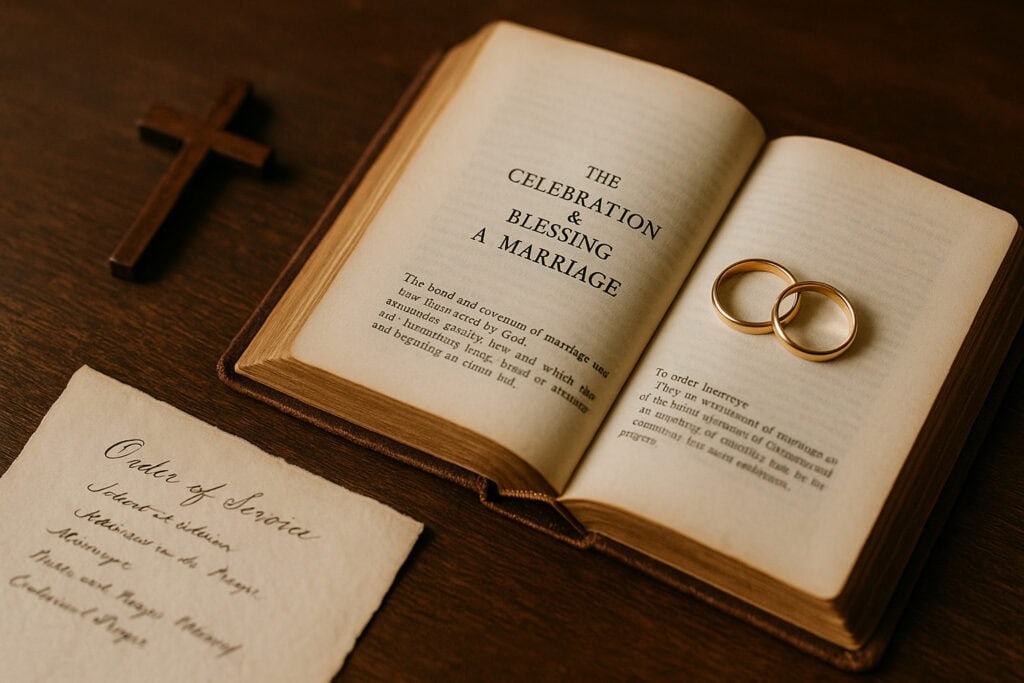
Before vow parties and destination photo shoots, faith communities already had ways to mark a marriage’s journey. Churches kept prayers and blessings for anniversaries, not to make a new marriage, but to recognize a living one. You can still find simple anniversary prayers used in Catholic parishes today, and they sit beside blessings written for long-married couples. These aren’t second weddings; they are public moments that say, “We’re still in this.”
Mainline Protestant churches also keep brief rites for couples who want a short, honest service without the pressure of a full wedding remake. The Episcopal Church, for example, includes anniversary blessings and related rites in its service books, making space for a couple to stand, speak, and be blessed in front of their people. Again, it’s not a new license—just a marked moment.
Through the 20th century, as travel and tourism grew, “vow renewals” moved into hotels, beaches, and backyards. The setting changed, but the point stayed the same: gather a few people, say a few words, and notice the life you’ve built. None of these answers our main question yet; it just shows how normal it has become to pause, speak aloud, and keep going.
Mechanisms Behind the Ritual
Pressure Turns to Bond
Stress pulls couples apart when it piles up with no release. Rituals work like valves: they slow time, invite eye contact, and make people speak in complete sentences again. Family research has long found that routines and rituals bring order and calm when life is messy, and they help people feel connected during change. That predictable structure—stand here, hold hands, say lines—can lower tension and lift warmth, which is why, after a rough season, the ceremony acts as a deliberate pivot, turning ambient pressure into a shared, spoken promise.
Milestones Anchor Memory
Brains remember peaks, pits, and transitions. A 10th anniversary, a return from deployment, or recovery after illness becomes a “chapter break.” When couples add a small ceremony to a milestone, they tag that page with a bright marker. The story of “us” feels clearer, and the next chapter starts cleaner. Since memory shapes motivation, anchoring the day to a major milestone creates a hopeful narrative going forward.
Public Signal, Private Shift
Identity is social. When a pair stands up in front of family and friends, they send a signal—“we are still choosing each other”—and the group reflects it back. That feedback changes how partners act at home; people tend to live up to what they’ve just said out loud. Relationship experts call these “rituals of connection,” and they help couples build shared meaning and daily habits that keep love steady. Public moments possess a unique ability to reset private behavior, nudging partners toward the marriage they want to live tomorrow.
Families Join the Circle
Marriage is never only two people—it touches kids, step-kids, and even aging parents. A simple reading, a ring blessing, or letting a child hold the flowers can pull the whole household into the promise. When the circle widens, support widens too. That social net is part of the “how” behind the choice, making the ceremony especially powerful for blended families who want to show everyone exactly where they belong.
Faith Shapes the Moment
For some couples, a vow renewal is more of a prayer than a party. The form is short, the language plain, and the blessing frames the promise in something bigger than feelings. That religious frame changes how the day is understood: not a reboot, but a reaffirmation. With words already provided by faith communities, the ceremony places the next few years inside a shared belief and practice.
Fresh Places, Fresh Energy
Novelty wakes up attention. A beach at sunrise or a rented hall with a modest playlist feels different from the couch on a Tuesday night. New locations and planned moments give the brain a reason to notice the partner again. Since novelty boosts focus and emotion, choosing a special place adds instant energy to the bond they already have.
Frequently Asked Questions
“Do We Need a License?”
Paperwork controls legal marriage, not a vow renewal. The ceremony doesn’t change your legal status, and no new license is issued. Think of it as a promise you repeat, not a contract you rewrite. For event etiquette—like guest lists, gifts, and who speaks when—standard wedding etiquette guides offer simple guardrails without turning it into a second wedding.
“Is It Only for Troubled Couples?”
A renewal after a hard stretch makes sense, but many couples do it after good seasons, too. The mechanism is the same either way: a small ritual that strengthens attention, warmth, and shared meaning. That’s why you’ll see renewals at five years, twenty-five years, or after a big move—because the act itself supports the bond.
“Must We Repeat the Exact Words?”
Meaning beats memory. Some couples repeat old vows word-for-word; others write short, present-tense promises that fit who they are now. The effect comes from standing together and speaking aloud, not from perfect recall. Short, honest lines usually work best.
“Do We Need an Officiant or a Church?”
You can keep it secular with a friend leading, or you can ask a faith leader to offer a blessing if that’s your world. Since it’s not a new marriage under the law, the rules are lighter. The fit should match your values, your space, and your people.
“Is It Tacky to Invite Guests?”
Guests change the meaning. A tiny circle says “intimate promise”; a backyard group says “community support.” Either is fine if you set expectations and keep the tone respectful. Use clear invites, simple dress guidance, and no gift pressure.
Bonus: Extra fun facts
- In the U.S., marriage patterns shift year to year, but the cultural value of marriage stays strong in many communities. Renewals ride along with that value because they are easy, personal, and low-cost. You can scan current snapshots of American marriage attitudes and trends to see how couples continue to mark their bonds in public ways.
- If you want meaning without a big event, borrow a tiny ritual from relationship science: plan a weekly “us” check-in, a short appreciation moment, or a goodbye/hello routine. These small, repeated acts build the same muscles a vow renewal flexes, just in everyday life.
Final Word
Look at vow renewals less like a second wedding and more like a tune-up. When you view the event through the lens of ritual, the day stops being a show and becomes a tool. The “so what” is simple: if you can shape feelings by shaping moments, then you can design your next chapter, not wait for it. What small promise would you speak out loud if the people you love were listening?
Interested in exploring similar posts? Visit the Cultural Rituals & Society hub for more!