
Throwing rubber on a roof isn’t just about weighing it down. People do this because lightweight roofs behave differently under wind and vibration. Keep the following concepts in mind as you go through the post: wind uplift and suction, ballasted roofing, and mass-loaded damping. They are the key players in explaining the practice.
Patchwork traditions
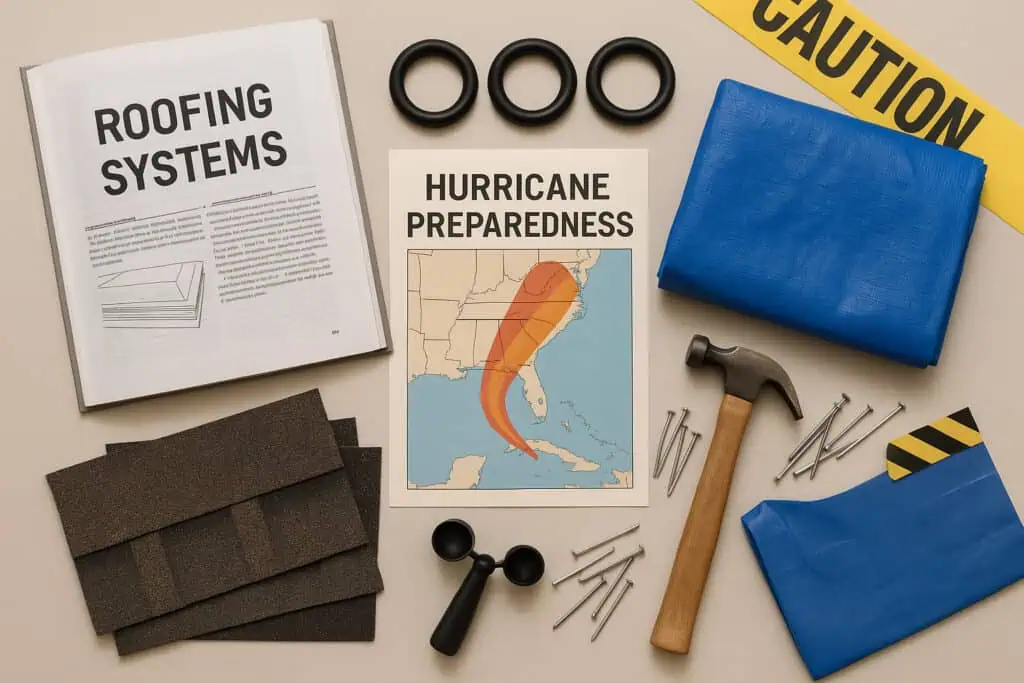
Across storm-prone towns and trailer parks, you can find blue plastic sheeting stretched over damaged roofs after a hurricane or hailstorm. That is not a backyard hack; it is an organized stopgap: the U.S. Army Corps of Engineers runs Operation Blue Roof, which installs reinforced sheeting so families can stay in their homes while waiting for permanent repairs. If you have ever wondered why people put tires on their roof, scenes like these are part of the story. When official help is days away, and fasteners are missing, any handy weight becomes a clamp.
Long before the era of nail guns and peel-and-stick membranes, builders sometimes relied on “ballast,” meaning mass that presses a roof membrane flat so the wind cannot pry it up. Commercial flat roofs still use proper ballast systems—river rock or concrete pavers—designed and engineered for storms. The National Roofing Contractors Association even publishes a wind design guide for ballasted roofing systems. That history matters because some people see a pile of spare tires, remember that “weight holds things down,” and improvise.
Another thread in the story is temperature. Dark materials get hot in the sun and can make a building harder to cool, which is why energy programs promote high-reflectance “cool roofs.” The U.S. Department of Energy explains that cool roofs reflect more sunlight and absorb less heat, often keeping attics and upper rooms more comfortable. Rubber tires, being black and dense, soak up heat. So when friends assume the rubber is there for insulation, they are usually mixing up mass with thermal performance.
Forces and workarounds
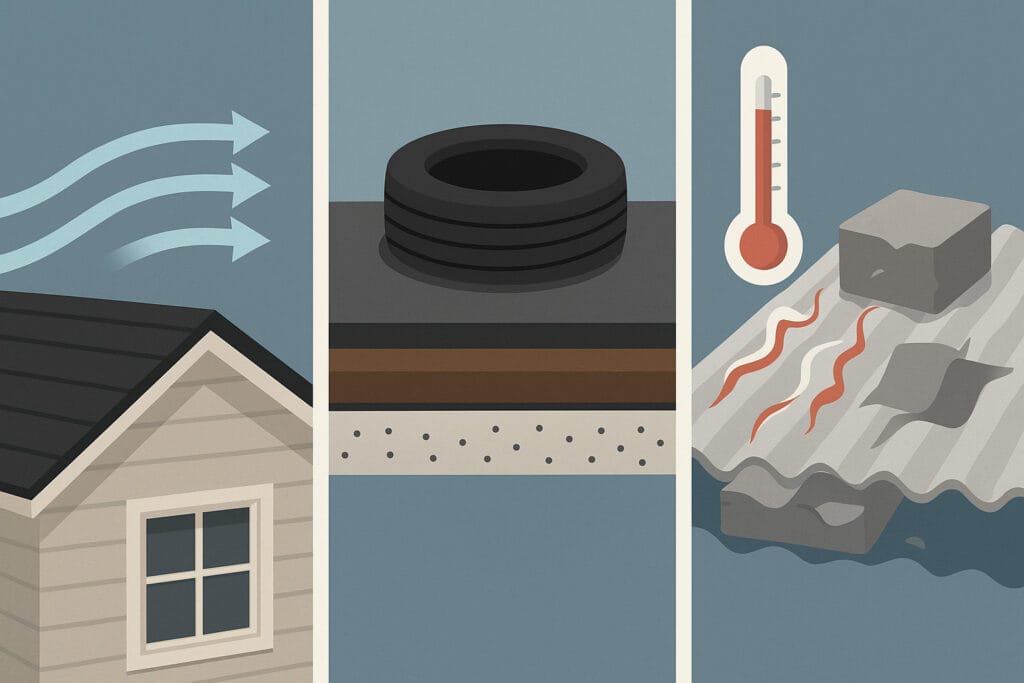
Aerodynamic Ballast
Air moving over a roof reduces pressure on top while higher pressure inside the building pushes up from below; that pressure difference tries to lift panels and peel membranes. Because wind also turns loose objects into missiles, safety agencies urge people to secure or remove items before high winds. Only after you understand that push-pull physics does the habit make sense: people set tires on light metal sheets or tarps so the extra mass resists that suction at the edges and seams. In plain terms, the rubber acts as a gravity clamp to counter the vacuum effect of a storm.
Damping the “Drum Effect”
Thin steel or aluminum can “drum” and flutter when gusts pass over it. Vibrations travel through the sheet like waves on a pond, and every gust restarts the rattle. Adding distributed mass to a vibrating panel changes how easily it moves, which is why mechanics stick mass-loaded mats to noisy metal. Out on a shed or an old trailer, a couple of cast-off tires become crude vibration dampers. The goal is not aesthetics; it is simply to buy a quiet night’s sleep when the wind picks up.
Emergency Triage
Roofs fail at seams, nail holes, and ridge caps long before the whole structure gives up. When water starts to sneak under a panel, a homeowner might throw a tarp over the trouble spot and weigh the edges so rain sheds away. That is a bandage, not a cure, but in a storm week it can keep ceilings dry. People copy the visual of the “weighted tarp” because it is a universally understood signal of a structure in waiting.
The Thermal Misconception
Heat moves three ways: by conduction through materials, by convection with air, and by radiation from the sun. A black tire absorbs sunlight, stores heat, and then passes some of that warmth into whatever it touches. That means a tire can make a hot roof hotter, not cooler. Real energy savings usually come from reflective surfaces and attic ventilation, not from piling heat-absorbing dark rubber on the skyline.
The Fire Load Risk
Rubber burns fiercely, producing thick, toxic smoke. Industrial insurers and fire codes treat tire storage as a special hazard because of that energy and smoke release; for example, FM Global’s data sheet on rubber tire storage explains why tire fires are unusually hard to control. While a few tires aren’t a landfill, adding combustible mass to a rooftop creates a fuel source exactly where you don’t want it during a stray spark event.
The “Continuous Path” Solution
Engineers do not rely on loose weight to hold roofs on houses. They tie the structure together from the roof deck to the walls and down into the foundation, using ring-shank nails, proper sheathing patterns, and metal straps so wind forces travel along a continuous path. The IBHS FORTIFIED program shows that simply upgrading to ring-shank nails and a sealed roof deck can nearly double the deck’s wind resistance. The professionally approved answer is to mechanically fasten and seal the system, not to ballast it with scraps.
Frequently Asked Questions
“Do tires really stop a roof from blowing off?”
Wind failure usually starts with panels or shingles lifting at the edges, fasteners withdrawing, or the roof-to-wall connection letting go. The mass on top does little once a corner peels, and in severe winds, those same tires can roll or even fly. A safer plan is to improve the fasteners, add edge metal where needed, and create a continuous load path with clips and straps, exactly what modern standards prescribe.
“Are people using them for insulation?”
What slows heat is insulation with a real R-value and a reflective or ventilated roof surface. Tires are dark, dense, and prone to heating up in the sun, so they tend to add heat to the assembly rather than remove it. If your aim is comfort and lower bills, think attic air sealing, batts or blown-in insulation, and a reflective or high-emittance roof surface, not piles of rubber.
“Is it safe to hold a tarp with tires until a roofer arrives?”
As a last-ditch, short-term patch, any weight can keep a tarp from flapping. But weights can slide, concentrate load on a small spot, and turn into debris in a gust. Official temporary-roof programs use reinforced sheeting that is mechanically fastened as a system rather than random objects. If you must tarp, think screws and battens into solid framing, not loose ballast.
“Could a few tires be a fire problem?”
Even a single tire adds fuel, and rubber burns hot and smoky. Guidance written for industrial sites, like FM Global’s tire-storage fire safety sheet, highlights how stubborn tire fires can be. On a house, adding combustible mass to the roof is moving in the wrong direction for safety.
“What should I do instead if wind rattles my metal roof?”
Rattle comes from movement. A roofer can add fasteners where patterns are sparse, use stitch-screws at seams, apply proper underlayments, and add real acoustic-damping membranes under panels. Many homeowners are surprised by how much quieter and sturdier a properly fastened, sealed, and flashed system feels.
Bonus: extra facts
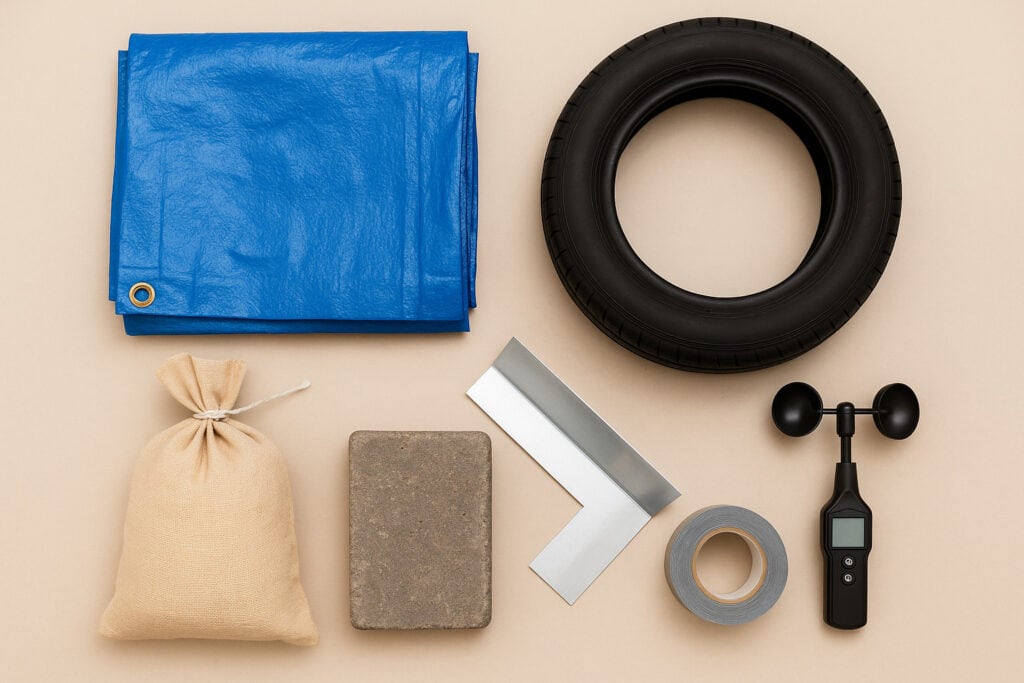
Beyond the rooftop, the tire’s chemistry creates a few hidden environmental footnotes.
- Old tires show up on roofs for other jobs, like cheap, heavy planters on flat decks. Before you copy that, know that tires contain additives like the antioxidant 6PPD.
- Rubber adds combustible fuel and produces thick smoke, which can worsen attic or wildfire events and create insurance or code issues.
- Loose tires can slide or become projectiles in gusts, abrade coatings, trap debris and moisture, and collect standing water that attracts pests.
- Secure tarps with screws and battens into framing, quiet rattles with proper fasteners and underlayment, and use fabric grow bags or food-safe pots for rooftop plants.
Final word
If you see a roof as something that steers wind, rain, and heat, tossing tires on top stops feeling like a clever fix. It starts to look like a shortcut with strings attached. A better way to think about it is to ask how you can help the roof work better, not what you can throw up there. Suddenly, a windy forecast becomes an opportunity to improve the setup.
Interested in exploring similar posts? Visit The Science of Everyday Life hub for more!