
Most people think tossing a pinch of salt in a beer is just an old bar trick to make more foam—or a quirky way to “fix” a bland lager. However, the real reason threads together how your taste buds talk to each other, how bubbles form and burst, and how certain drinking rituals spread. You’ll see three ideas pop up later—gustatory cross-suppression, CO₂ nucleation sites, and Leipziger Gose—but hold that thought for now; we’ll connect the dots once the full picture comes into focus. And yes, this will finally make sense of the question so many ask: why do people put salt in beer?
Old barroom habits
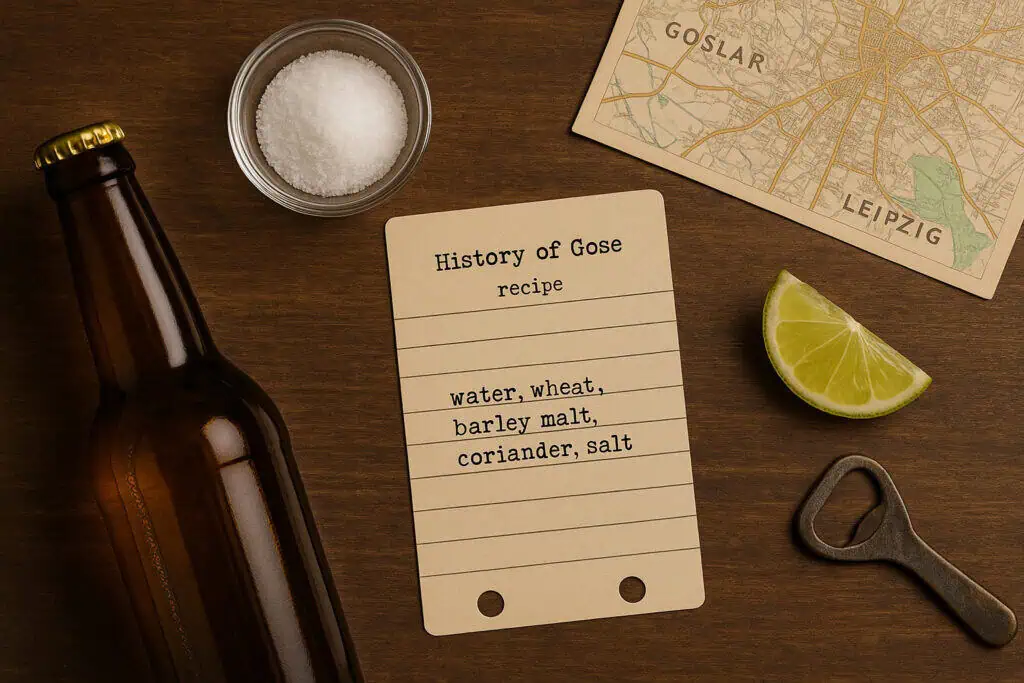
Long before internet debates, people were already salting their drinks in very different ways. In parts of Germany, brewers created a sour wheat ale that actually includes salt in the recipe; that historic style is called Gose and is associated with the town of Goslar and the city of Leipzig. Meanwhile, across Mexico, drinkers developed “cerveza preparada,” chilled lager dressed with lime and salt, which later branched into cheladas and micheladas.
In the American South and Southwest, salting beer grew into a small ritual of its own. Some folks dust the rim; others tap a few crystals straight into the can. In Texas, flavored “beer salts” even became a thing, with local companies pushing the habit into convenience stores and ballparks. None of these stories answers why people put salt in beer; they only show that the practice has roots—some brewed in, some sprinkled on, and some passed down over a bar counter.
Small grain, big effects
The “cross-suppression” trick
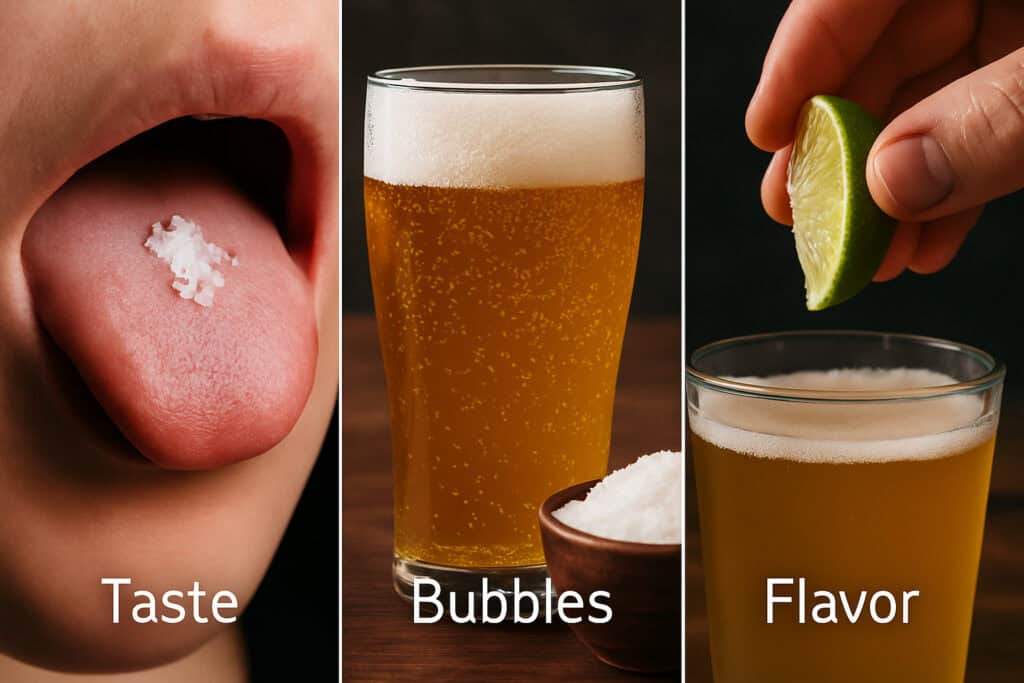
Taste isn’t five separate switches; it’s a small network. When sodium arrives on your tongue, it doesn’t just add “salty.” In low amounts, sodium can dampen the signal from certain bitter compounds while making sweetness and malt flavors easier to notice. Researchers call this cross-suppression. Because of that interaction, a metallic edge or sharp bitterness in some lagers seems to mellow after a tiny pinch. The result is a smoother profile that tricks the tongue without actually adding sugar.
Triggering nucleation
Open a beer, and you’ve got carbon dioxide trapped in liquid, looking for a place to become bubbles. Crystalline surfaces—like salt grains—act as tiny launchpads called nucleation sites. When those crystals touch beer, CO₂ races to them, forming quick foam that vents gas fast. The science isn’t mysterious; it’s the same principle that makes scratches in a champagne flute start the bubble stream. Because more CO₂ leaves the drink in a hurry, the mouthfeel can feel softer, and some people feel less bloated. This chain of events essentially ‘degasses’ the liquid, softening texture in the first few sips.
The “dressed” lager strategy
Add lime to light lager and your saliva spikes, acids brighten grainy notes, and the beer feels colder and crisper. If you also salt the rim (instead of dumping salt in the glass), the first contact is salt-acid-beer, a sequence that snaps flavors into place. In Mexico and beyond, that ritual evolved into a spectrum—from simple cheladas to complex micheladas—each using the same building blocks of acid, salt, and cold beer. In practical terms, that layered experience amplifies the chill, the snap, and the initial flavor hit.
Regional signaling
Habits spread because people like belonging. When a friend salts the rim at a cookout—or when a stadium vendor sells lime-salt shakers—new drinkers copy what they see. Over time, the move becomes a local accent, much like ordering a regional sandwich “the right way.” In places with strong beer-salt culture, the tradition isn’t about fixing the glass; it’s about marking you as part of the group.
Frequently Asked Questions

Does salt make stale beer taste fresh?
Foam can pop up when salt hits the surface because nucleation speeds CO₂ release, but freshness isn’t restored by bubbles alone. If hop aroma faded or oxidation set in, no amount of salt rebuilds those lost flavors. The head may look lively for a moment, but the underlying beer stays the same.
Does salt make the beer stronger or weaker?
Alcohol content doesn’t change when you add salt; ethanol doesn’t vanish, and nothing ferments in your glass. What can shift is pacing—some people sip faster when flavors feel smoother—so the experience changes, not the ABV.
Will salt ruin the foam?
Immediate foaming can look dramatic, yet longer-term head stability depends more on proteins and lipids than on a pinch of sodium. A heavy pour of salt will knock gas out and flatten the drink, but a light rim or a couple of crystals typically affect appearance more than lasting foam quality. If you care about your head, keep the salt on the rim instead of in the glass.
Is salting okay with all beers?
Bold stouts, hop-driven IPAs, and carefully balanced sours already rely on a tight flavor design. Extra sodium can tilt that balance or mask delicate bitterness. In contrast, very light lagers leave more room for salt-lime cues. The better the beer’s nuance, the more likely salt steps on it.
Isn’t salt already in some beer? Why add more?
Some recipes include sodium by design—Gose is the classic example. That measured brewing salt isn’t the same as adding table salt at the bar. The brewed-in version supports sourness and spice; the at-the-glass version changes taste and texture on the fly. If you’re chasing the Gose experience, buy the style rather than overseasoning a different beer.
Bonus: extra fun facts
Beyond the immediate fizz, the chemistry of sodium offers a few surprising footnotes.
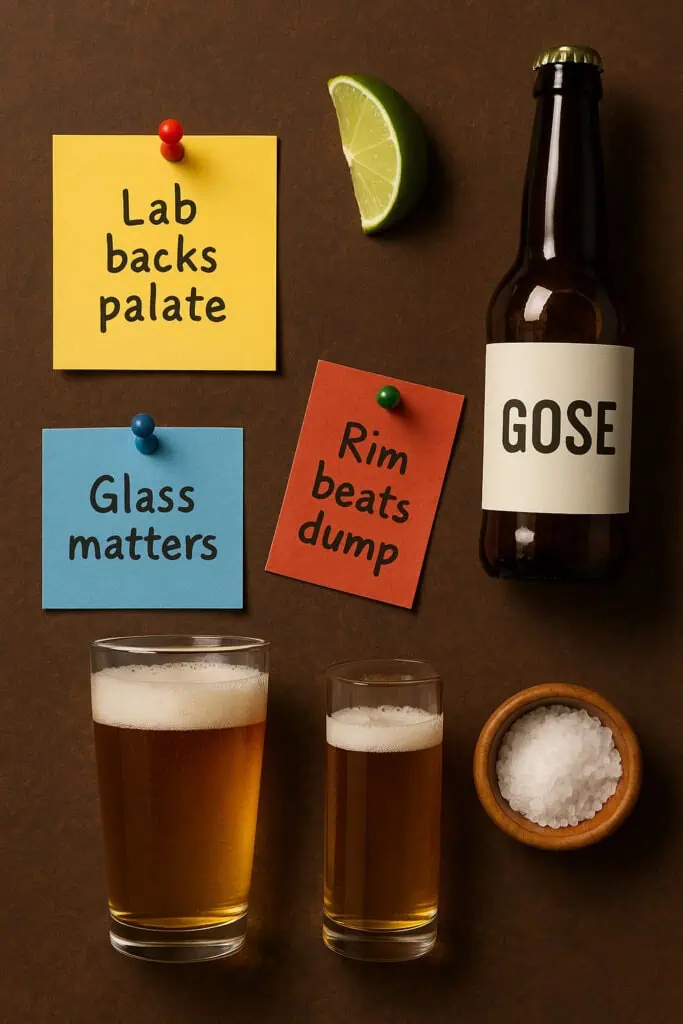
- The lab backs the palate. Decades of sensory research show sodium can blunt certain bitter signals while highlighting sweetness—exactly the shift many drinkers describe after a tiny pinch. If you want the scholarly take, the foundational study is summarized in Chemical Senses via Oxford Academic.
- The glass matters. Rough spots or etching in a glass are natural nucleation sites; that’s why a beer can look livelier in one glass than another, even with no salt. Salt just provides “portable” nucleation when you want it.
- Rim beats dump. If you enjoy the effect but hate the rush of foam, swipe a lime around the rim and touch it to salt instead of shaking crystals into the beer. You’ll taste the combo first without gushing the whole glass.
- Not all salts taste the same. Iodized table salt can add a faint “chemical” note for some palates. Many people prefer kosher salt or flaky sea salt for a cleaner taste and gentler crunch.
- Styles are already doing it. If you like the salty-bright profile but don’t want to season your drink, explore Gose (brewed saline on purpose) and compare it to your usual lager. The contrast is a simple way to feel the role sodium plays without asking why people put salt in beer every time you reach for the shaker.
Final Word
Once you see the chain—salt nudges taste signals, crystals kick bubbles loose, and rituals carry flavor habits across borders—the move stops looking like a gimmick and starts looking like a tiny tool. You can tune bitterness, tweak texture, or join a local tradition in two seconds with what’s already on the table. The next time someone asks why people put salt in beer, the better question might be: What are they trying to change (flavor, feel, or belonging), and what would you change in your own glass?
Interested in exploring similar posts? Visit The Science of Everyday Life hub for more!