
TL;DR: People put rocks on graves mostly to show “I was here,” to honor the dead with something that lasts, and to keep memory present between visits. In many Jewish communities, the small stone (often called a visitation stone) is a respectful sign of remembrance. Flowers fade fast; a rock endures. While the meaning can vary by family, place, and faith, the basic idea is simple: a quiet, lasting mark of love.
Putting rocks on graves: a short history
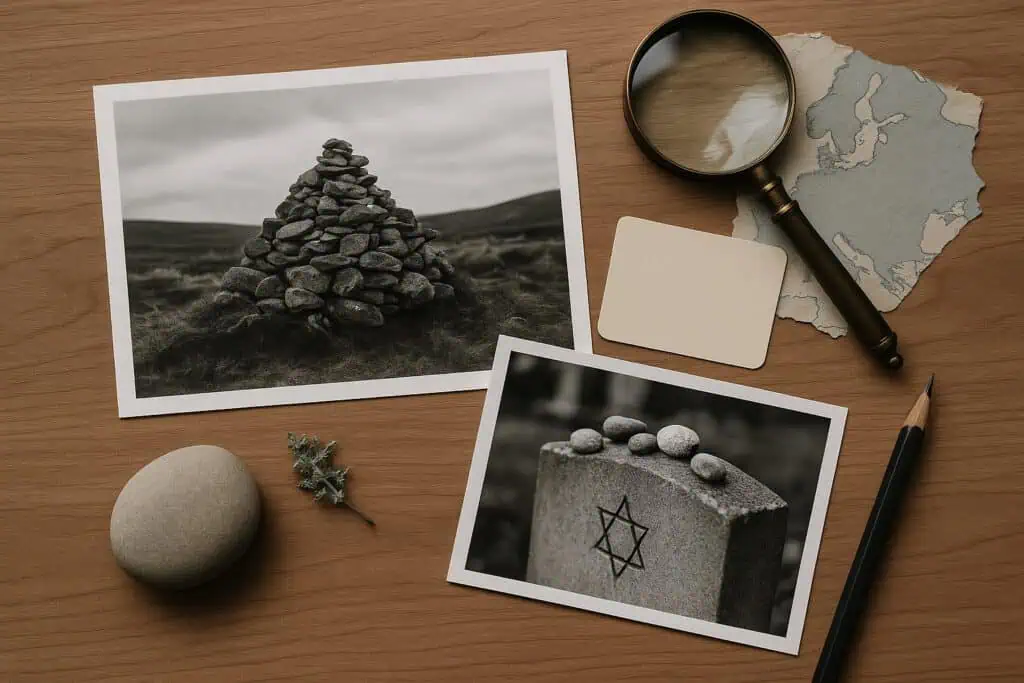
Before we answer the “why,” it helps to see where this habit shows up. Across many cultures, stones have long marked burial places. In prehistoric Europe, people built stone mounds called cairns over graves, creating sturdy markers that stood against weather and time; you can read a plain-English overview of cairns in this Britannica article on cairns. Later, as cemeteries grew more formal, headstones took the place of loose piles, but the simple act of setting down a stone never fully disappeared.
Meanwhile, in Jewish life, visitors often set a small rock on a headstone during a cemetery visit. The practice is widely seen today and is described in accessible overviews, including Wikipedia’s page on “visitation stones”. These short write-ups note that the custom is part of visiting the grave and remembering the person. They also make clear that the exact origin story is old and layered, which we’ll unpack in the next section.
Put simply, stones and graves have traveled together through history. The details differ by community and time period, yet the object (a rock) and the purpose (marking presence) show up again and again.
Why Do People Put Rocks on Graves? The 5 Reasons
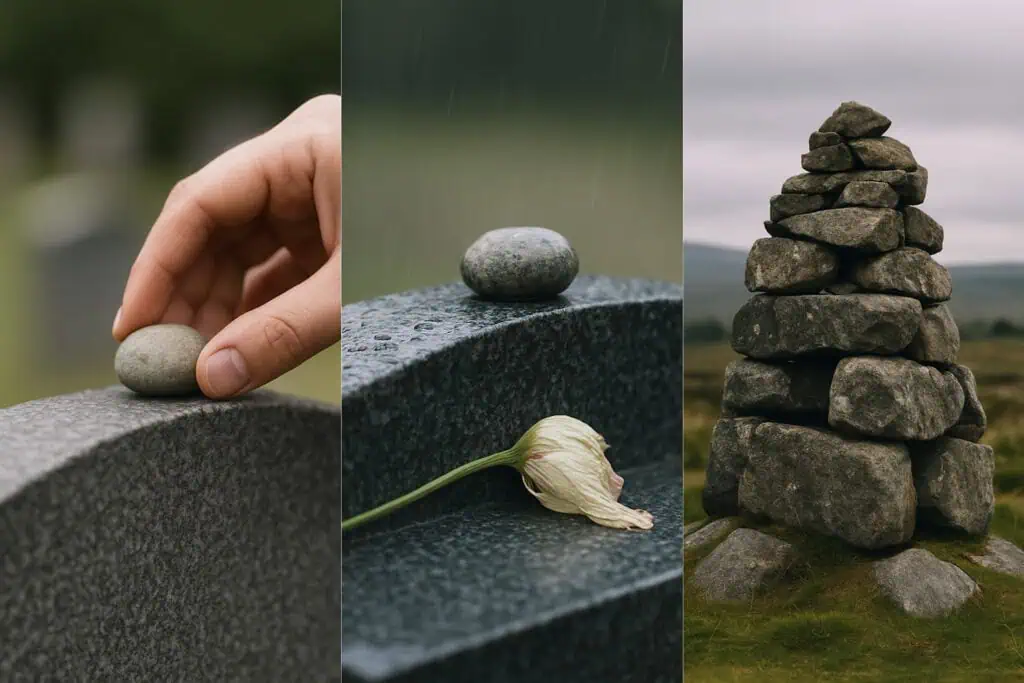
Now to the heart of it. People put rocks on graves for a few practical and spiritual reasons that work together:
I was here
A small stone is a quiet signature. It tells family and future visitors that someone came, stood, remembered, and cared. Many rabbis describe the stone as a respectful sign that a grave was visited—simple, humble, and clear.
Stones last; flowers don’t.
Cut flowers are beautiful but short-lived. A rock does not wilt or blow away easily. Because of that, some communities prefer stones over bouquets at graves. This idea of “lasting remembrance” also appears in popular guides that answer “why no flowers?” in Jewish mourning.
It’s part of visiting, not just decorating
In some traditions, laying a stone is built into the ritual of a cemetery visit. The act isn’t about “dressing up” the grave; it’s about taking part in the visit in a small, physical way. That is why you’ll sometimes hear the term “visitation stone.” The stone turns the moment of memory into something you can see the next day, next month, or next year.
Ancient roots and layered meanings
Over time, communities attached different meanings to the same simple act. Some point to very old practices of piling stones to mark a grave’s place on rugged ground. Others note stories tied to ritual caution in ancient times, or link the stone with the idea that memory and faith should be solid and lasting. A readable FAQ that rounds up a few classic explanations is My Jewish Learning’s “Stones on Graves” article.
Respect without clutter
Because rocks are small and simple, they usually fit cemetery rules. They don’t block names, they don’t shed petals, and they signal care without turning a grave into a display. That balance (respectful, minimal, enduring) is why a pebble works so well.
Put all of that together and you get a habit that is both old and very down-to-earth. A stone is humble, sturdy, and easy to carry. It says, “You matter, and I came.”
FAQs about Putting Rocks on Graves
Here are short, plain-language answers to the questions folks search most. (Details can vary by family, cemetery, and faith community.)
Is this only a Jewish custom?
No. People in many places have used stones to mark graves for thousands of years. That said, placing a small stone during a visit is especially common in Jewish life today.
Do stones replace flowers?
Sometimes. Some communities prefer no flowers at graves, choosing a simple stone instead because it lasts and keeps the focus on remembrance rather than display. Others do both. Always follow the family’s wishes and the cemetery’s rules.
What kind of rock should I bring?
Keep it small and safe: a pebble or smooth stone that won’t slide or scratch. Some people choose a stone from a meaningful place (a backyard, a beach you visited together), but a simple, clean pebble is just fine.
Is it okay for a non-Jew to leave a stone on a Jewish grave?
Generally yes, if done respectfully and allowed by the cemetery. The goal is remembrance, not copying for show. If you’re unsure, ask a family member or the cemetery office.
Where do I place it, and do I have to say something?
Set it gently on the top edge of the headstone where it sits securely. You don’t have to speak, but many people pause, reflect, or say a short prayer in their own words. If the stone might slip, place it lower so it stays put.
Is there one “official” reason everyone must believe?
No. Customs collect meanings over time. You’ll hear different explanations from different families and teachers. What matters most is the shared respect and the shared memory.
Bonus: Related Facts About the “Rocks on Graves” Tradition
- Cairns came first. Long before modern cemeteries, stone mounds marked burial places and honored the dead. That deep history is why stones still feel natural at graves today.
- Customs evolve, and that’s normal. Many Jewish sources explain that leaving a stone is a minhag (custom), not a law with one fixed origin.
- Rituals favor what lasts. The idea that memory should be “solid” shows up in modern guides too.
- Why not flowers? Some communities avoid flowers at graves because they fade quickly and can shift focus away from quiet remembrance.
- Education groups teach the symbol, not a single story. Organizations that teach about Jewish memory and mourning often mention stones as a sign that a grave has been visited—simple and enduring.
Final Word
Why do people put rocks on graves? Because a small stone quietly says, “You are remembered,” and it keeps that message in place long after the visitor leaves. The habit is old, humble, and deeply human. That’s why it endures.
Interested in exploring similar posts? Visit the Cultural Rituals & Society hub for more!