
Most people assume folks toss peanuts into cola as a quirky “sweet-meets-salty” stunt or a TikTok dare. However, the real reason is older and more practical, tied to blue-collar habits and a few simple tricks of taste and bubbles. Keep an eye out for three clues as you read: gustatory contrast, country-store foodways, and CO₂ nucleation—we’ll circle back to how they fit together.
Country stores and shifts
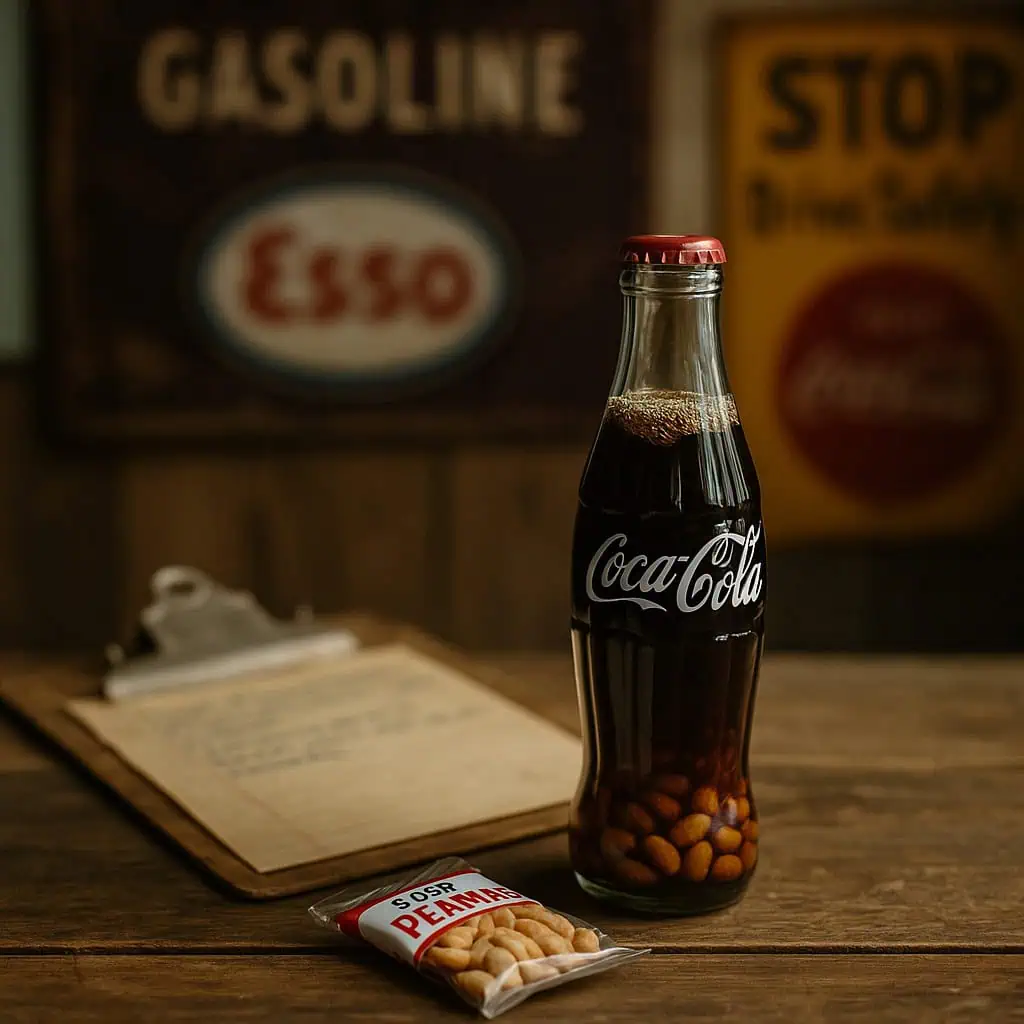
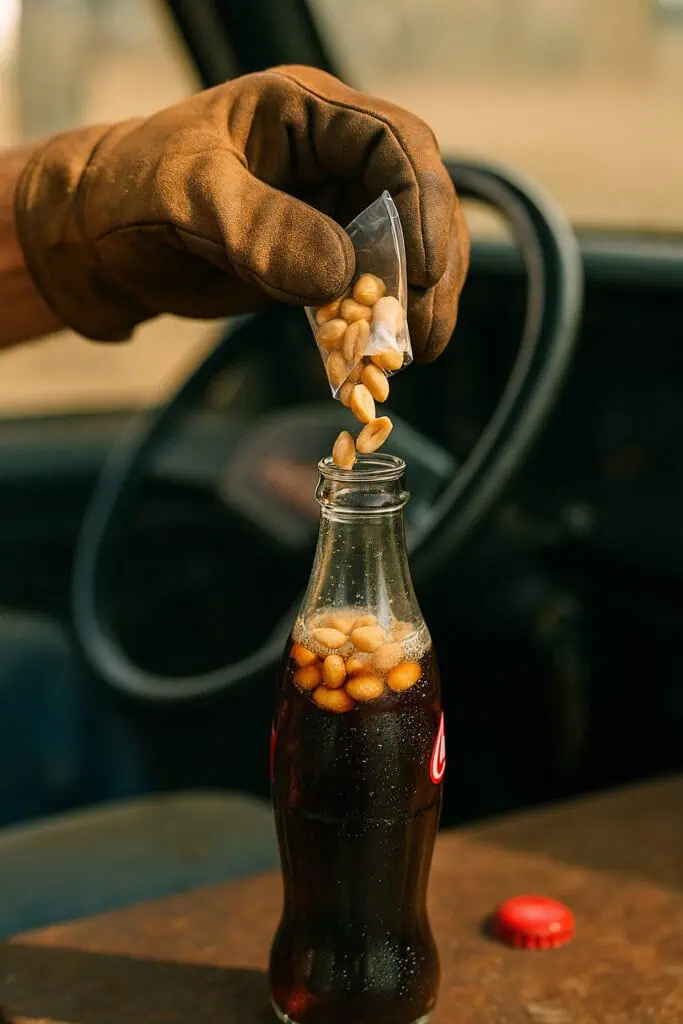
Before air-conditioned lunchrooms and plastic bottles, many rural Southerners grabbed two shelf-stable items from a counter: a cold glass Coke and a small sleeve of salted roasted peanuts. Stories collected by food writers place this pairing in the early 20th century, when a bottle could ride in a truck cab, and a peanut pack could sit in a shirt pocket. Historians note the mix shows up as a “working man’s” or “farmer’s” snack; oral histories and roadside memories tell the same tale of quick breaks, hot afternoons, and sticky hands kept clean by pouring the peanuts straight into the bottle instead of touching them.
Because it lived in gas stations and country stores, the habit traveled easily: a bottle in one hand, a wheel or wrench in the other. Over time, it settled into a summertime ritual, and now and then it resurges online, bringing fresh attention—and fresh confusion—about why people put peanuts in Coke at all.
Flavor, fizz, and habit
The “flavor bridge” effect
Taste works like a small team, not a single player. A little salt can lower bitterness while making sweet notes pop; meanwhile, fat and protein in peanuts give the tongue something heavier to hold onto between sips. Only after that balancing act kicks in does the cola seem rounder and less cloying, which is when a handful of salted peanuts ends up in the bottle—the combination creates a new flavor profile where the sharpness of the carbonation is tempered by the savory fat, altering the drinking experience entirely.
The “clean hand” protocol
Work gloves, motor oil, and dusty fields do not mix well with finger food. A narrow bottleneck can act like a funnel, letting you snack without grabbing each peanut. This hands-free mechanic turns a two-handed snack into a one-handed operation, allowing work to continue uninterrupted.
Physics of the pour
Anything rough—like a peanut’s surface—gives dissolved CO₂ tiny places to form bubbles. Those bubbles cling, lift the peanut, pop, and let it fall again. The cycle keeps a few peanuts bobbing and the aroma moving toward your nose while you drink, which subtly boosts flavor even before you swallow. That is why the combo feels more aromatic than either part alone; for the basic science on bubble “nucleation sites,” check this short activity guide from the American Chemical Society.
Quick calories, little mess
A bottle of sugared cola brings fast carbs; a small pack of peanuts adds salt and a bit of protein and fat. The mix is hardly a balanced meal, yet it steadies hunger and replaces some sodium on sweltering days. The mixture effectively functions as a liquid meal replacement, stabilizing energy levels during long shifts without requiring a seated break.
A small identity signal
Foodways carry meaning. Sharing the bottle—with peanuts swirling—can signal where you’re from, who taught you, and how you take your breaks. The act becomes a tiny badge of belonging. Over time, the ritual transforms from a curiosity into a regional shibboleth—a silent way of proving where you are from
Frequently Asked Questions
Does it only work with real-sugar cola?
Artificial sweeteners trigger sweet taste, but the classic experience came from cane- or corn-sugar cola, where salt tamps down harshness and lets caramel notes show through. You’ll still get some effect with diet soda; however, the old-timers usually insist on the sugared bottle, and modern testers have said the same.
Will the peanuts get soggy?
Roasted, salted peanuts pull in a little cola at the surface, so they soften slightly while the centers stay firm. Because bubbles lift and drop them, you keep a light crunch for several minutes, not a mush.
Is this safe for people with peanut allergies?
Peanut allergy can be severe. If there is any chance of exposure—your own or someone else’s—skip the practice entirely and keep containers clearly labeled. Cross-contact risk is the key concern, not the cola.
Why do some folks insist on glass bottles?
Tradition matters, but there’s also function: a glass contour bottle stays cold, vents aroma well at the narrow opening, and makes it easy to “sip-and-chew” without fishing in the liquid. The bottle’s shape supports the habit the way a funnel supports a pour.
Can other sodas stand in?
Plenty of people try Dr Pepper, Cheerwine, or even grape soda, which many describe as a “liquid PB&J.” The sweet-salt balance is what makes it work, so alternatives can be fun, even if they’re not the original. Food Republic provides a good roundup of modern variations.
Bonus: extra fun facts
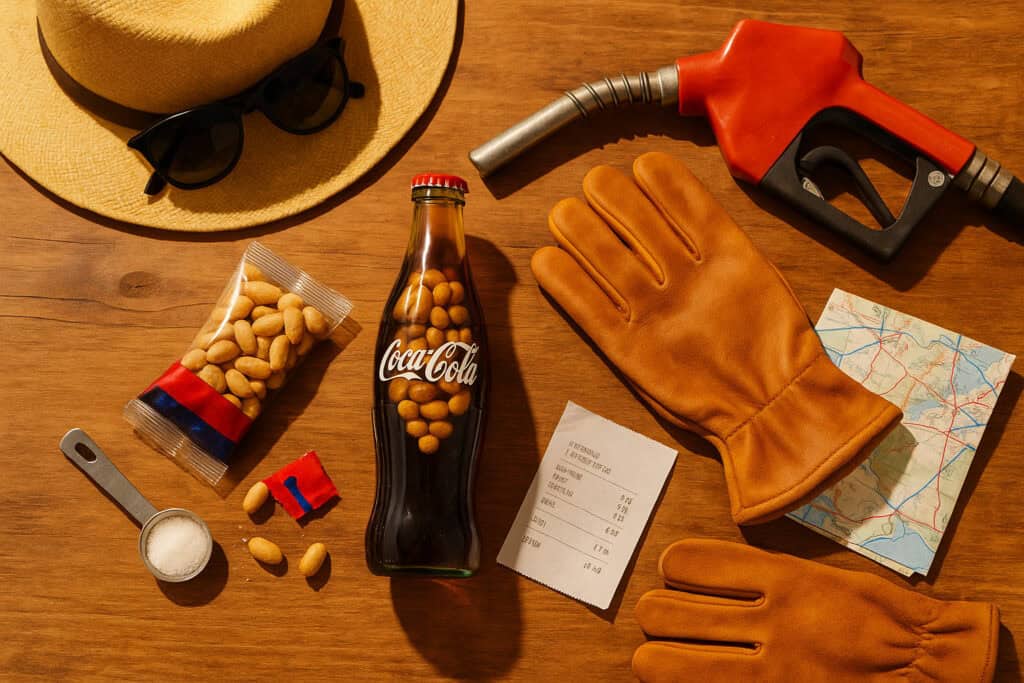
- Grocery packaging helped the custom spread. When small, sealed peanut sleeves met affordable bottled soda at the same counter, a portable two-item “kit” basically assembled itself.
- Salt doesn’t just “wake up” sweetness; at low levels, it can directly interact with sweet-taste pathways, which is one more reason the cola tastes rounder after the pour. For a plain-English note on the physiology, the NIH-hosted review above gives the key idea in a few pages.
- Online waves come and go, but the practice never really vanished in its home turf. When you see people asking why peanuts are put in Coke on social media, you’re watching a century-old habit get rediscovered by a new crowd.
- Bubbles ride the peanuts the way they ride raisins in sparkling water. That lift-and-drop keeps aroma lively; it’s also why you’ll notice the first few sips feel extra fizzy.
Final word
You can look at a bottle full of floating peanuts and see a prank, or you can see a clever tool built by need, taste, and place. Once you spot the pattern—fast breaks, clean hands, sweet-salt balance, and bubbles doing quiet work—you start recognizing similar “low-tech hacks” everywhere. What other odd food habits might turn out to be tidy solutions hiding in plain sight?
Interested in exploring similar posts? Visit the Cultural Rituals & Society hub for more!