
TL;DR: People put ducks in their Jeeps because it’s a friendly Jeep-community tradition called “ducking,” where owners leave a small rubber duck and a kind note on another Jeep to spread joy, signal “we’re part of the same tribe,” and start conversations. It’s harmless fun, it builds connection, and, when done right, it brightens someone’s day.
Putting ducks in Jeeps: a short background
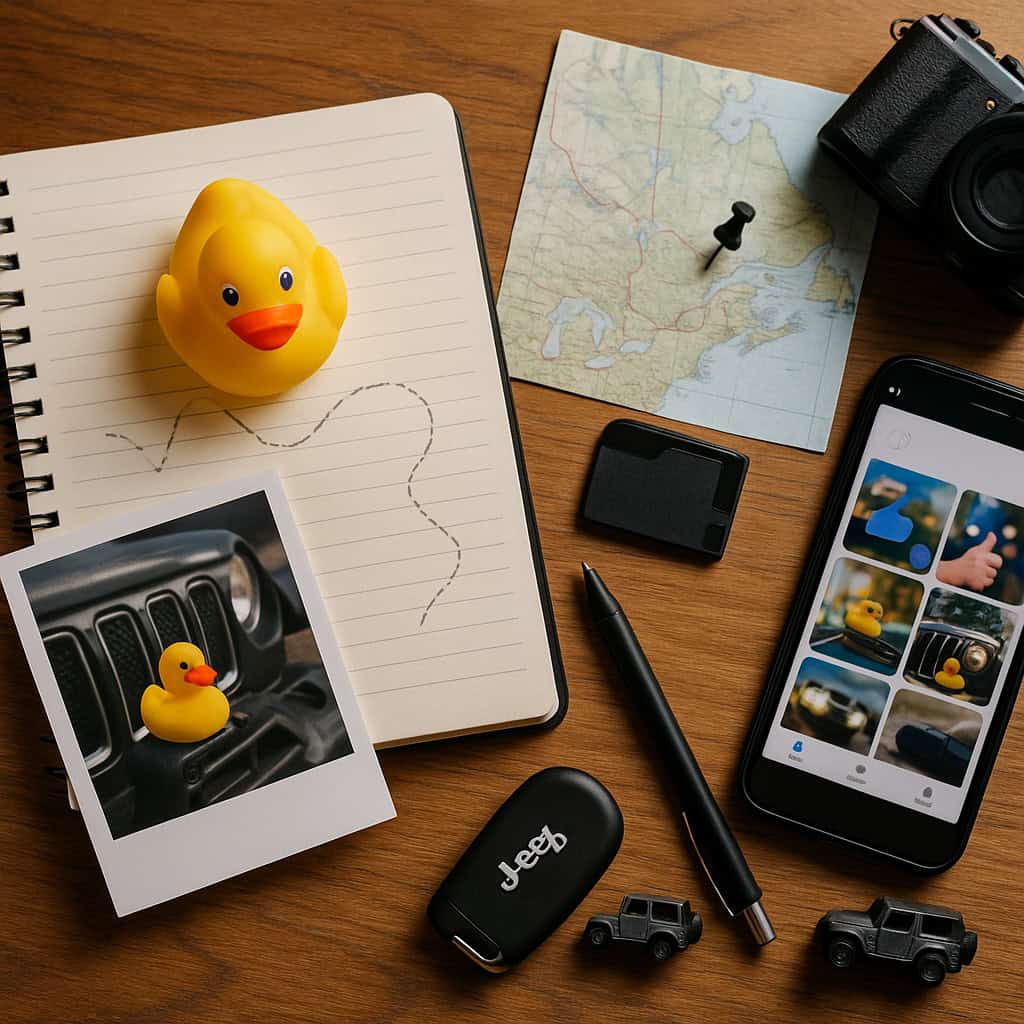
Before we get to the direct answer, it helps to know where the custom came from. In 2020, a Canadian Jeep owner named Allison Parliament placed a rubber duck on another Jeep as a small kindness; photos and posts then spread across social media and Jeep groups worldwide. News and community reports describe how the practice grew from a single parking-lot moment into meetups, hashtags, and dashboards full of colorful ducks.
Over time, the idea showed up in mainstream coverage and even on brand pages, which helped it spread beyond hard-core off-road circles to everyday drivers. For more background, you can read a plain-English overview on Wikipedia’s Jeep ducking page, a warm profile in Hagerty’s feature on the movement, and a brief explainer on the Jeep site describing the “ducking” tradition. Road & Track also revisited the origin story and how it touched many owners, underscoring that the core idea was kindness and community.
The 5 reasons people put ducks in their Jeeps
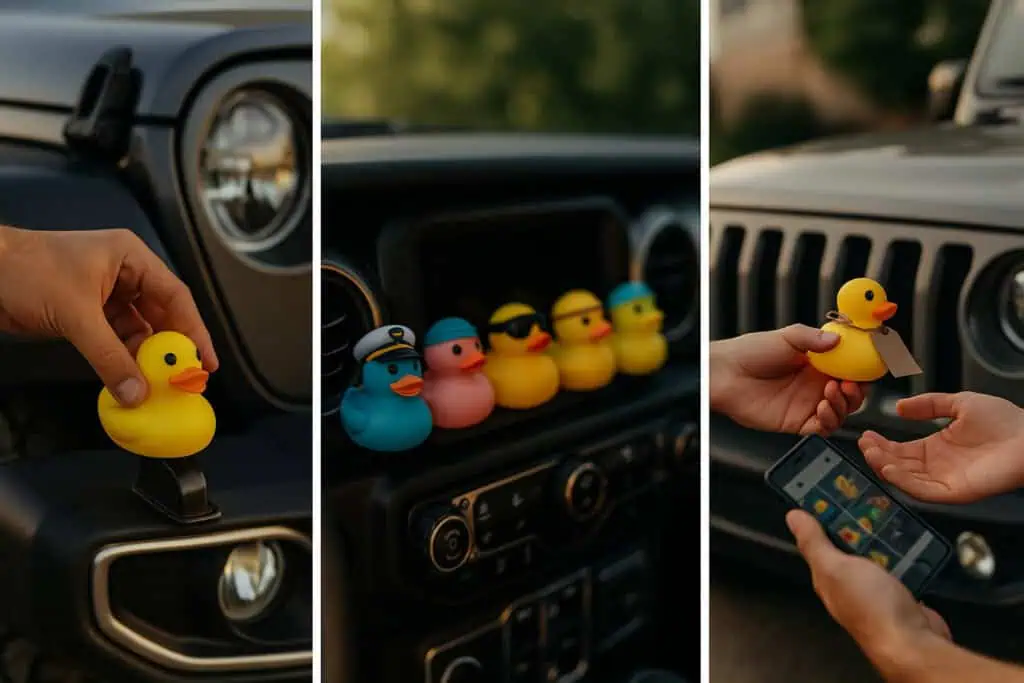
People put ducks in their Jeeps to share belonging, spread positivity, and spark friendly contact, all with a low-cost, zero-pressure gesture. Here’s how it works in real life:
- Tribe marker without words. Jeep culture already includes the “Jeep wave.” A duck is a small, fun way to say, “Hey, I see you,” even when you can’t wave or chat.
- Instant day-brightener. A tiny duck and a note like “Nice Jeep!” takes seconds and a couple of dollars, yet it often creates a big smile. Because it’s surprising, it lands even stronger.
- Conversation starter. Ducks on a dash invite stories: Where’d you get your first one? Do you trail? What year is your Wrangler? Because it’s playful, even shy folks find it easy to join in.
- Pay-it-forward energy. After getting “ducked,” many owners pass it on. The loop keeps going because it feels good, not because anyone is forced.
- Creativity and collection. Ducks come in themes (camouflage, glitter, pirate hats, mini helmet, etc.) Owners display them, swap them, or tag photos. It turns parking lots into mini scavenger hunts.
Put simply, people put ducks in their Jeeps because it’s a quick, kind, and fun way to build community, Jeep to Jeep, stranger to stranger.
FAQs: why people put ducks in their Jeeps
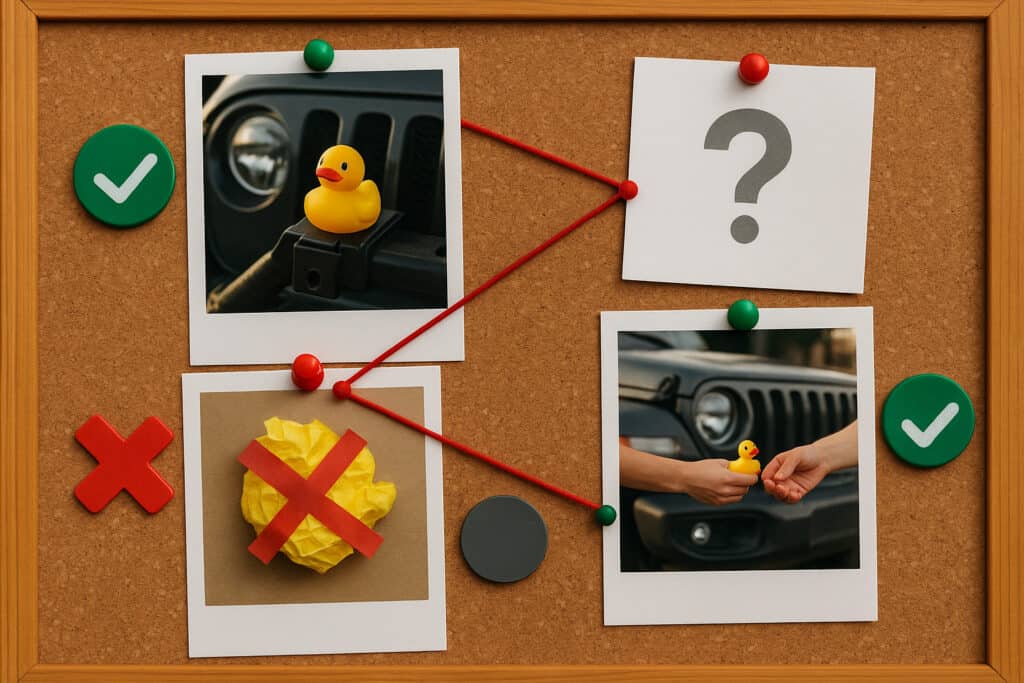
What does a duck on a Jeep mean?
It means a Jeep owner (or fan) left a friendly token. It’s not a sale pitch or a prank. Most folks read it as, “Love your rig! Have a great day.”
Is ducking only for Wranglers?
Originally, yes, Wranglers were the main target. However, the practice broadened. Many dealerships and blog explainers now treat it as a Jeep-wide tradition.
Is it okay to duck someone’s Jeep I don’t know?
Yes, if you’re respectful. Don’t touch paint more than needed; don’t block mirrors or vents; avoid private or posted-restricted areas. The point is kindness, not clutter or risk.
Do I have to write a note with the duck?
You don’t have to, but a note helps. “Nice Jeep!” or your first name plus city can turn a mystery duck into a clear compliment. The brand’s own page describing the ritual shows short, simple messages that keep the vibe friendly.
Where do people get the ducks?
Anywhere: party stores, craft shops, online bulk packs, or charity booths at Jeep events. Some groups print small cards and distribute duck bundles to newcomers at meets.
Is ducking controversial?
A small number of owners don’t like stuff left on their vehicle, and a few feel the practice belongs only to certain models. That’s why polite placement (and accepting a “no thanks”) keeps the tradition positive. If you want a broader context and how the story reached national attention, Road & Track’s recap gives useful background.
Bonus: fun facts related to putting ducks in Jeeps
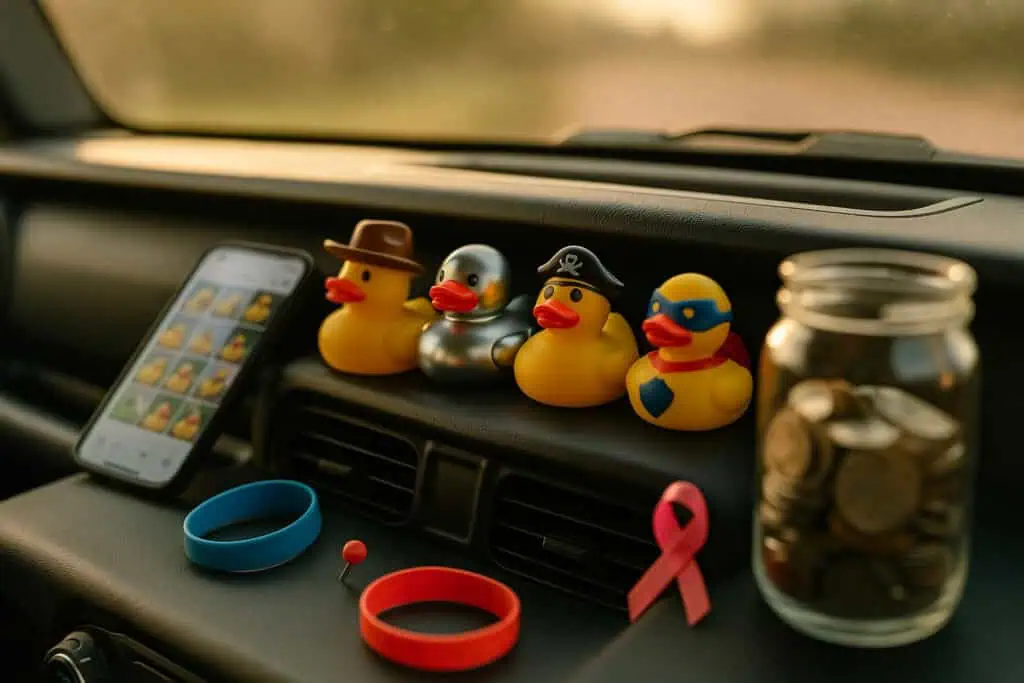
- Dash displays turned into mini galleries. Over time, some owners sort ducks by trail runs, events, or cities, like souvenirs on wheels.
- Themes exploded. There are rubber ducks with cowboy hats, superhero capes, chrome paint, and even tiny recovery gear. Creativity keeps the practice feeling fresh.
- Hashtags helped it snowball. Tags like #DuckDuckJeep linked strangers, and brand pages later described the ritual in simple terms, which gave it a softer on-ramp for newcomers.
- Media attention didn’t kill the vibe. Coverage from enthusiast outlets and newspapers documented its spread without turning it into a hard sell.
- Clubs made it social. Local Jeep groups host “duck drives,” give away starter packs, and run charity tie-ins. Stories like WUFT’s community feature show how easily the custom folds into helping others.
Final word (recap)
So, why do people put ducks in their Jeeps? Because a tiny duck is a big message: you’re part of the family, your ride looks great, and the world could use one more smile today. Keep it simple, keep it respectful, and, if you’re moved, pass it on.
Interested in exploring similar posts? Visit the Cultural Rituals & Society hub for more!