
TL;DR: Most people put a star on their house for meaning or looks: some stars are old folk-art symbols for good luck and identity, some are faith or holiday symbols, and some aren’t symbols at all—they’re metal plates that quietly hold old brick walls together. In other words, a “house star” can be a decoration, tradition, state pride, or simply structural support.
A short background on house stars
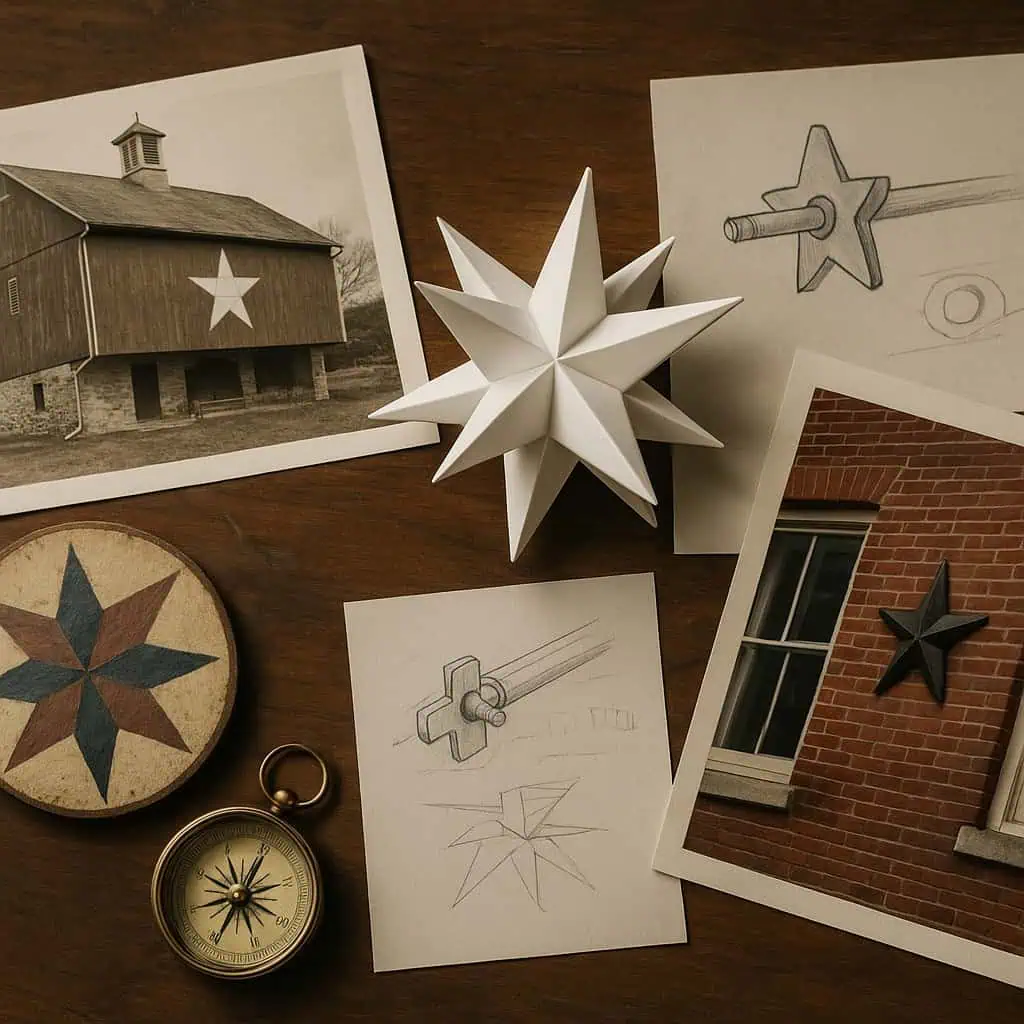
Long before social media trends, stars showed up on American barns, rowhouses, and winter windows. In Pennsylvania Dutch country, painted barn stars and “hex signs” became a local folk art in the 1800s, using bold star patterns and circles. Museums and historians have traced the designs and colors over time, noting how locals viewed them as part of daily life and craft rather than as magic charms. If you’d like a careful overview, the Glencairn Museum has a clear review of the tradition and its symbols in Pennsylvania Dutch barn art.
In old brick cities, a different “star” appeared: cast-iron star plates on building fronts. These weren’t just decorations; they marked where long tie rods ran through the floors to keep walls from bowing or pulling away. Preservation texts from the National Park Service explain how these star-shaped anchor plates spread force across masonry and help keep the façade in place.
Meanwhile, in church and home windows during Advent and Christmas, people hung bright, spiky Moravian stars. Their story dates back to 19th-century Moravian schools in Germany, where a math lesson turned into a beloved craft and a symbol pointing to the Star of Bethlehem; the Herrnhut makers still share that origin and tradition today.
Why do people put a star on their house? 4 Reasons
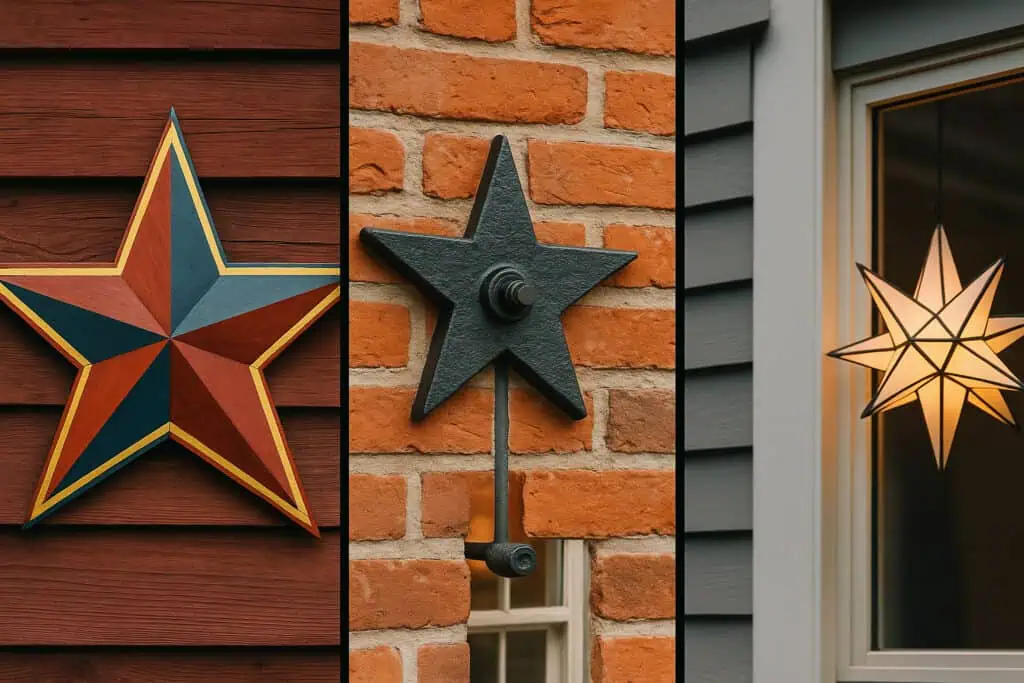
There isn’t just one reason. When you ask why people put a star on their house, you’re really asking which kind of star you’re looking at. Here are the most common answers:
Folk art and regional identity
In parts of the Northeast and Mid-Atlantic, especially Pennsylvania Dutch country, people hang or paint star motifs as a nod to local roots and craft. The stars feel homey, and they tie a house back to a well-known rural art style. Some buyers also see them as “good luck,” but museums stress the tradition is mostly cultural and decorative, not a strong magical system. If you’re curious about how those meanings developed, the museum write-up above gives useful context.
Structure disguised as style
On older brick homes (think Baltimore, Philadelphia, D.C., Boston), you may spot a metal star that’s actually a washer for a long tie rod. It helps hold the outer wall to the joists inside. Builders often chose star shapes because the points spread out the load and, yes, it looks nice. A clear, plain-English explainer shows how these “star bolts” work and why you still see them today.
Faith or holiday tradition
If you see a many-pointed spiky star in a window around December, it might be a Moravian star. People use it as a Christmas decoration that points to the Star of Bethlehem. It’s both pretty and meaningful, which is why it spread far beyond Moravian congregations.
State pride or personal style
In Texas, a big five-point “Lone Star” can simply mean state pride. The single star on the Texas flag stands for unity and the state’s independent spirit, and many Texans bring that symbol home as wall décor. In coastal towns, some people pick a “nautical” or compass-style star as a nod to navigation and the sea.
FAQs about the star on people’s houses
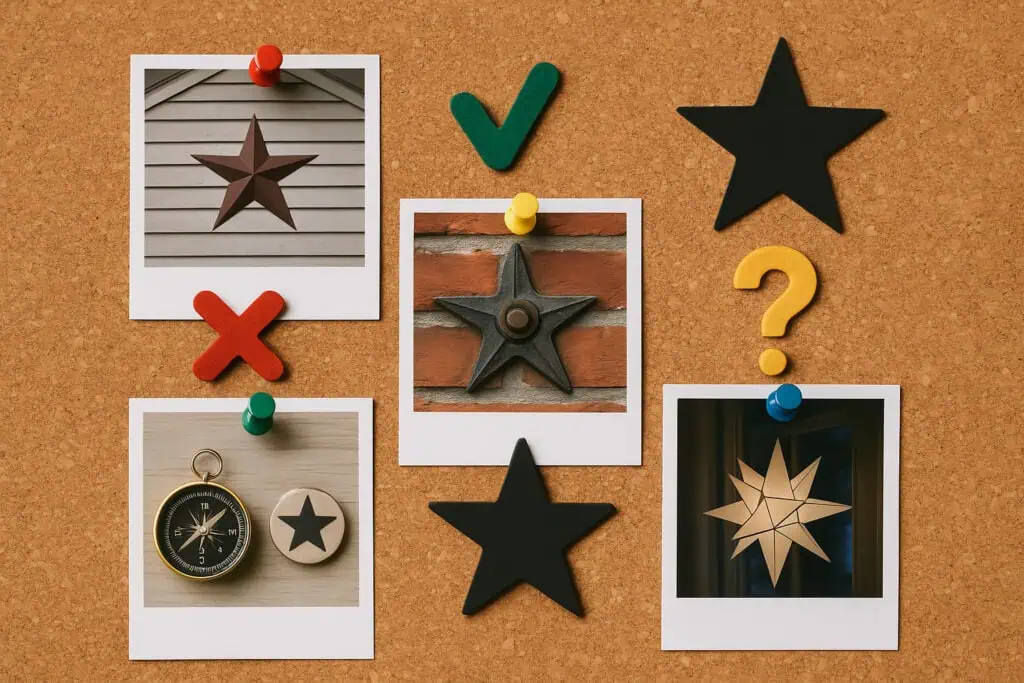
Is the “Amish star” really an Amish thing?
Not really. Many people assume the Amish make or use hex signs, but researchers and travel writers note that Amish and other “Plain” groups usually avoid them. The stars and hex signs are tied more to the “Fancy Dutch” tradition; neighbors with different practices.
Are metal stars on brick houses just decoration?
Often, no. Those are anchor plates tied to rods hidden inside the building. They help keep old masonry walls stable. Builders liked star shapes, but you’ll also see circles, S-shapes, and squares. A short piece shows the setup inside the wall.
Do nautical stars on houses have a special meaning?
A nautical star is a stylized nod to the North Star and compass rose. Sailors used the North Star to find their way, so the symbol came to stand for guidance and safe return. That’s why some coastal homes and beach cottages use it as a friendly, “may you find your way” sign.
Is a five-pointed star on a house a political or religious sign?
Usually not. In Texas, it can be state pride. In December, a many-pointed Moravian star is a symbol of the Christian holiday. In most other cases, it’s just design; a shape people like for its clean lines and strong look.
Do house stars have hidden codes or “secret groups” behind them?
That’s a common rumor, but there’s no solid evidence of a secret code. Most stars are either regional folk art, holiday décor, or structural plates you notice only after someone points them out. History sources focus on craft, preservation, and navigation, not secret signals.
Bonus: the star styles you might see
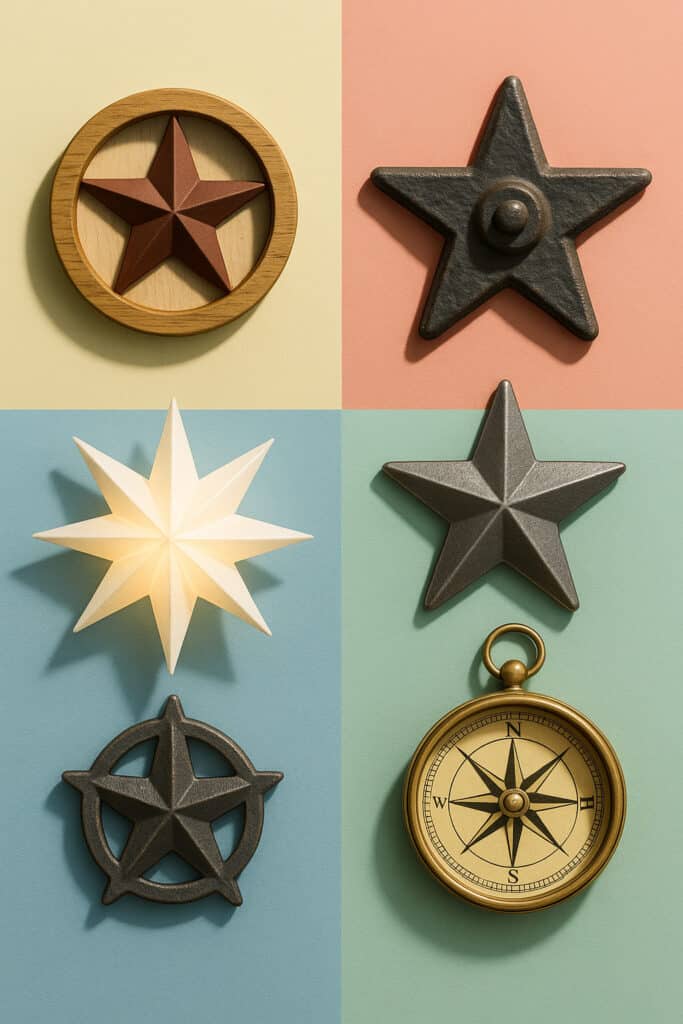
If you like the look but want to know what you’re buying, here’s a quick guide:
- Barn star / “hex sign” style: Often a flat, painted five- or eight-point star, sometimes inside a circle. People hang these on porches or garages for a farmhouse vibe tied to Pennsylvania Dutch folk art.
- Star anchor plate: Cast iron, bolted into brick. If it’s flush to the wall and aligned with floor levels, it’s probably functional. Don’t remove or loosen it without a pro; it could be part of the structure.
- Moravian (Herrnhut) star: A spiky 26-point (or more) 3D star, often lit and hung in windows during Advent and Christmas.
- Lone Star: A big, bold five-point star used in Texas décor. It signals state pride and a long history of the flag, not a secret society.
- Nautical/compass star: A five-point star shaded like a compass rose. Popular in coastal or lake towns because it hints at navigation and “finding your way”.
Final Word
So, why do people put a star on their house? Because stars carry easy-to-read meanings: home pride, faith, and heritage. They also just look good. Sometimes they even hold the wall together. When you spot one, ask which story it tells: folk art, structure, season, or simply style.
Interested in exploring similar posts? Visit the Hidden Histories & Origins hub for more!