
TL;DR: People in Japan wear masks because it’s polite, practical, and common. They put on masks to avoid spreading their germs, to get relief from heavy cedar pollen in spring, to feel comfortable in crowds, and to keep a low profile on days they don’t want attention. After COVID-19, the habit stayed strong, so you’ll still see masks in trains, shops, and streets—even when it’s not required.
The backstory: why people in Japan wear masks
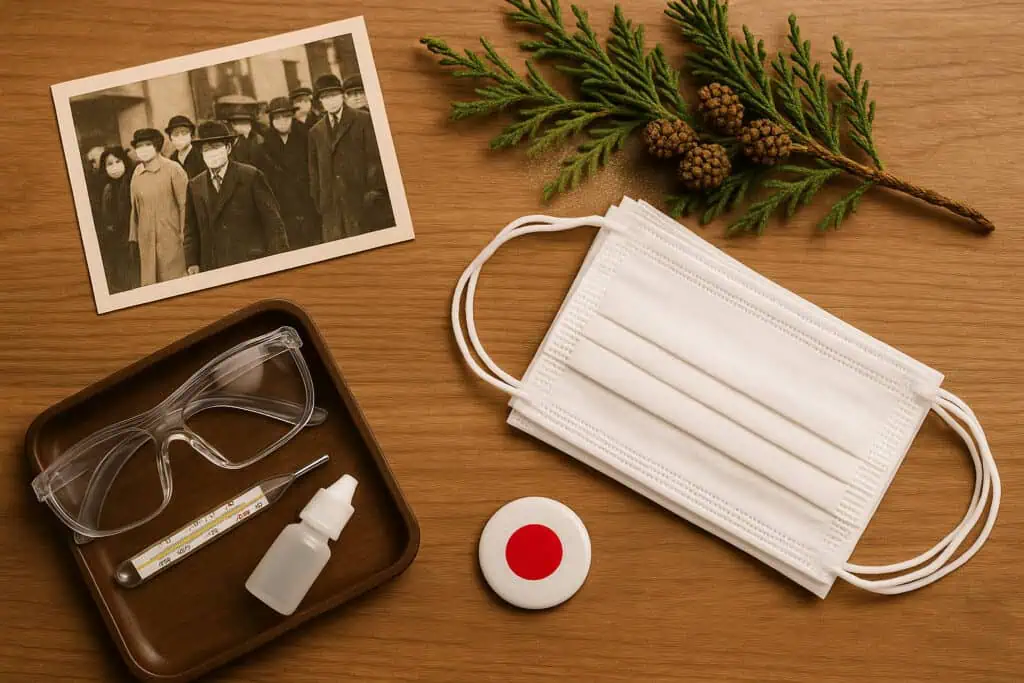
Before we answer the “why,” it helps to see the road that led here. A century ago, the 1918 flu pushed public health officials to promote face coverings, and masks began showing up in daily life. Over time, the look and use of simple paper and cloth masks spread through cities and workplaces. As decades passed, masks got cheaper, lighter, and easier to find. You can now buy a pack at any convenience store.
Later, another force shaped the scene: spring pollen. Large plantings of cedar and cypress after World War II created heavy pollen seasons, and many people started carrying tissues, eye drops, and yes, masks. That seasonal pattern trained people to expect masks in late winter and spring.
Recently, the habit has remained flexible. In March 2023, the government said mask use was each person’s choice, yet many kept wearing them in tight spaces or when feeling unwell. You can see this “use when it makes sense” approach across daily life.
For deeper background and timelines, see this short history of mask culture in Japan from Gavi and this overview from a government-backed culture site, Web Japan. As for a clear summary of the 2023 shift to personal choice, check this travel advisory page.
Why do people in Japan wear masks? The 6 reasons
Below are the plain reasons; nothing fancy, just what people say and do.
Courtesy when you’re sick
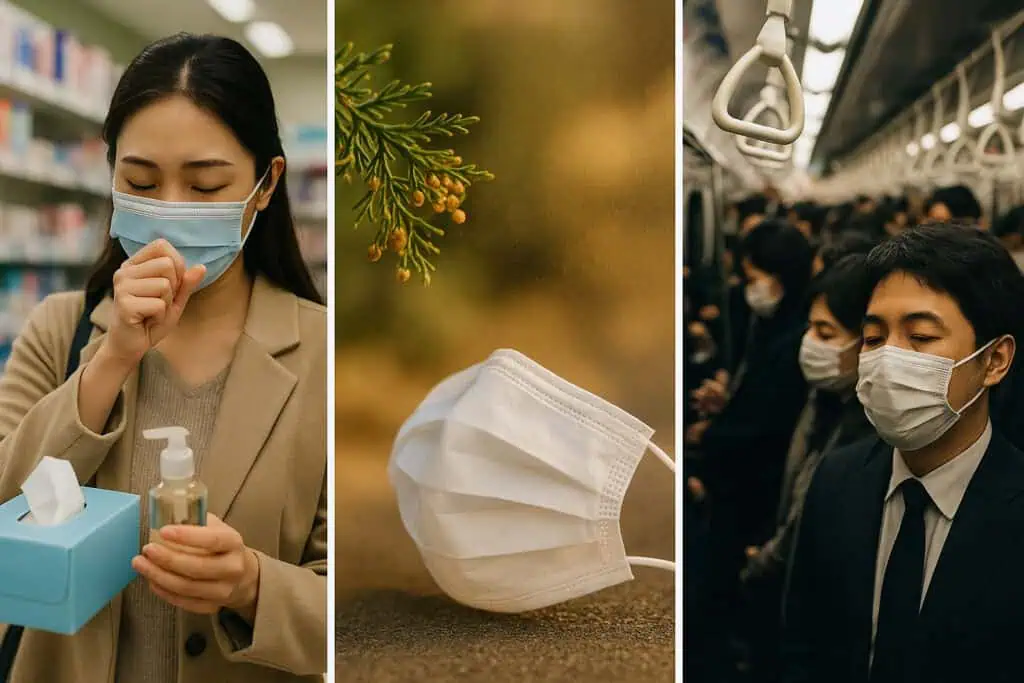
If you have a cough or a sore throat, a mask helps block droplets while you’re out. In crowds, this is seen as good manners. People do it for others, not only for themselves. After the pandemic, many kept this norm.
Pollen relief in spring
Cedar and cypress pollen can be brutal. A mask can cut the dust you breathe in, so it’s an easy tool. Surveys show a large share of the population deals with allergies each year.
Crowds and public transit
Trains get packed. During rush hour, people are shoulder-to-shoulder. A mask gives some peace of mind in close contact, especially in cold and flu season. It’s not a law; it’s a habit that helps people be considerate and feel safe.
Privacy, fashion, and “no-makeup” days
Some wear masks to feel less exposed. It’s a quick way to cover up acne, skip make-up, or stay low-key. For young people, certain mask styles can even be part of their look. In short, it’s practical and, sometimes, stylish.
Dry air, cold weather, and comfort
In winter, a mask warms the air you breathe. That can soothe a dry throat on long commutes. For people who talk a lot at work, that small comfort adds up.
The habit stuck after COVID-19
Even when rules eased, many people kept masking in certain spots—on busy trains, in clinics, or during a sniffle. Habits are sticky. Once a simple behavior feels normal, it’s easy to keep doing it during “high-risk” times like winter flu season.
FAQs: why Japanese people wear masks
Is it required to wear a mask in Japan now?
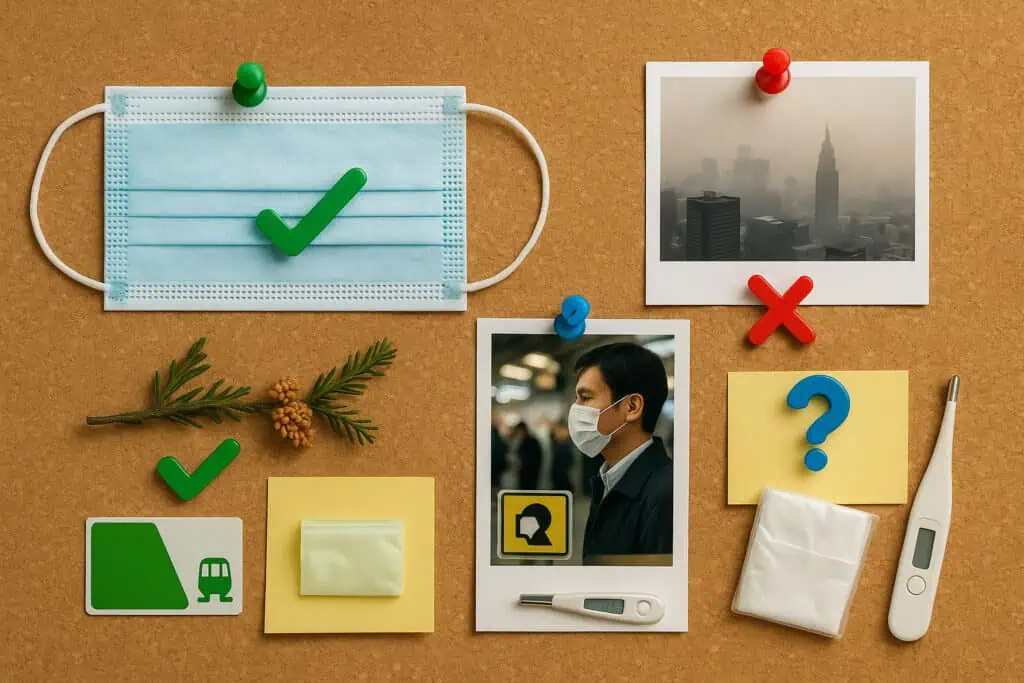
No. As of March 13, 2023, mask use is up to you. However, people still wear them in crowded places or if they have symptoms.
Do people wear masks mainly because of allergies?
Allergies are a big driver in spring. Cedar and cypress pollen are common triggers, and masks help reduce exposure.
Did people in Japan start wearing masks only during COVID-19?
No. The habit is more than 100 years old. The 1918 flu made masks visible in public life, and the idea never fully disappeared.
Is it rude not to wear a mask?
Not usually. Today it’s personal choice. Still, many people put one on if they’re coughing or will be in a packed train. It’s more about being considerate than about rules. For a cultural take on “civic duty” and norms, read the article published in the Electronic Journal of Contemporary Japanese Studies. It offers rich context.
Do people wear masks because of pollution?
Pollution is not the main reason in Japan’s cities today. Seasonal sickness and pollen are bigger. That said, masks are cheap and handy, so they get used for many small reasons.
Bonus: quick facts about mask-wearing in Japan
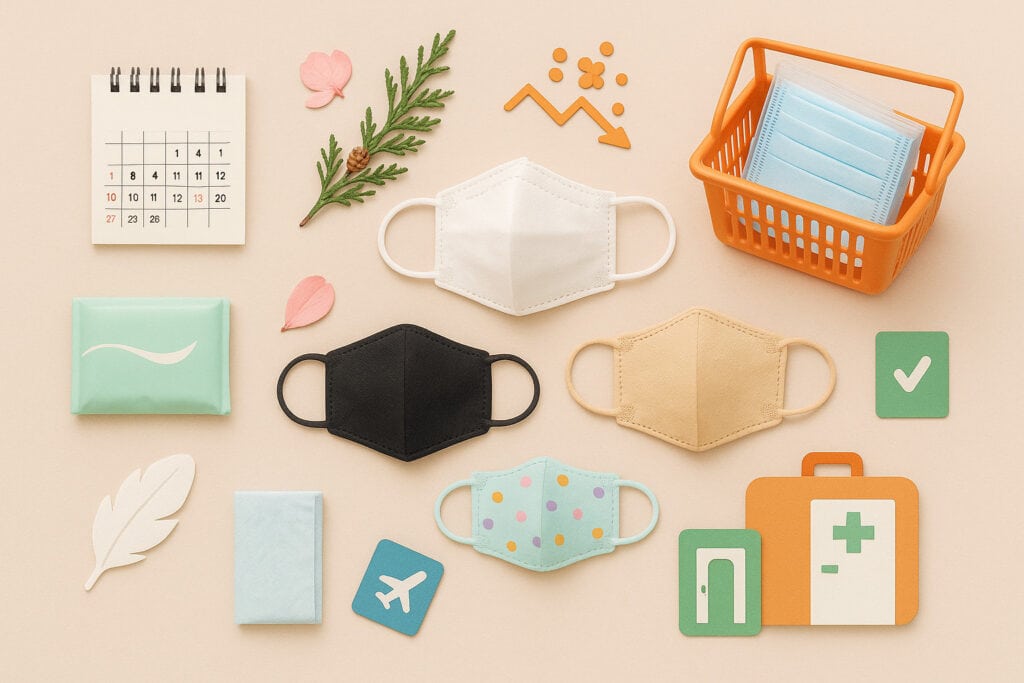
- Spring timing: Pollen levels usually rise from late winter through early spring, so you’ll see more masks then.
- Fit and feel: Many masks are soft, disposable, and sold in different sizes. That makes them easy to keep in a bag.
- Workplace impact: Hay fever can hurt productivity; some companies even sponsor temporary moves to low-pollen areas during peak season.
- Everywhere for sale: Convenience stores, drugstores, and supermarkets keep a wide range on the shelf all year.
- Polite signals: Putting on a mask before entering a clinic or when you have a cough signals ‘I care about others
- Variety: From plain white to designer styles, people pick masks the way they pick hats or scarves—simple items matched to daily life.
Recap: why people in Japan wear masks
Why do people in Japan wear masks? Because it’s a small act that solves a lot of everyday problems: spreading fewer germs, getting relief from pollen, and feeling comfortable in crowds. It’s not about strict rules now; it’s about respect, ease, and a habit that still makes sense.
Interested in exploring similar posts? Visit the Cultural Rituals & Society hub for more!