
Most people assume people choose shiny dental work just to flex wealth. However, the real reason is a mesh of medicine, materials science, and identity that reaches far beyond bling. Keep an ear out for one term as you read—occlusal wear—because it quietly explains more than any slogan about status ever could.
Deep roots, bright metal
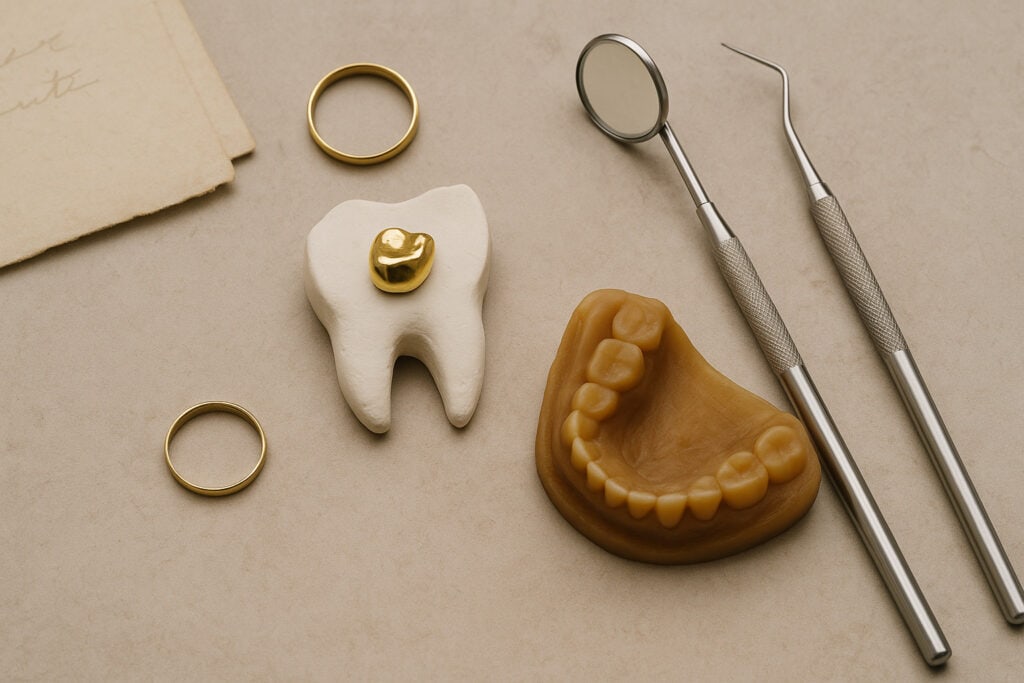
Long before selfies, craftspeople wrapped delicate bands around damaged teeth and laced in replacements. Archaeologists have traced sophisticated gold bridgework to the Etruscans, who used fine bands and pins to stabilize or adorn smiles among elites—technology dated to the 7th century BCE. Far away in time and place, other cultures modified teeth for beauty and meaning. Maya artisans inlaid jade and other stones, while Vikings etched grooves and Japanese ohaguro stained teeth black as a sign of maturity; these were social codes worn on the face, not throwaway fashion.
Centuries later, pop culture re-lit the glow. In the 1980s, New York’s removable “grills” jumped from neighborhood jewelers to music videos and red carpets, evolving as a living art form. The look eventually went mainstream, with makers and artists framing grills as both craft and cultural storytelling rooted in Black American style and history.
What gold does
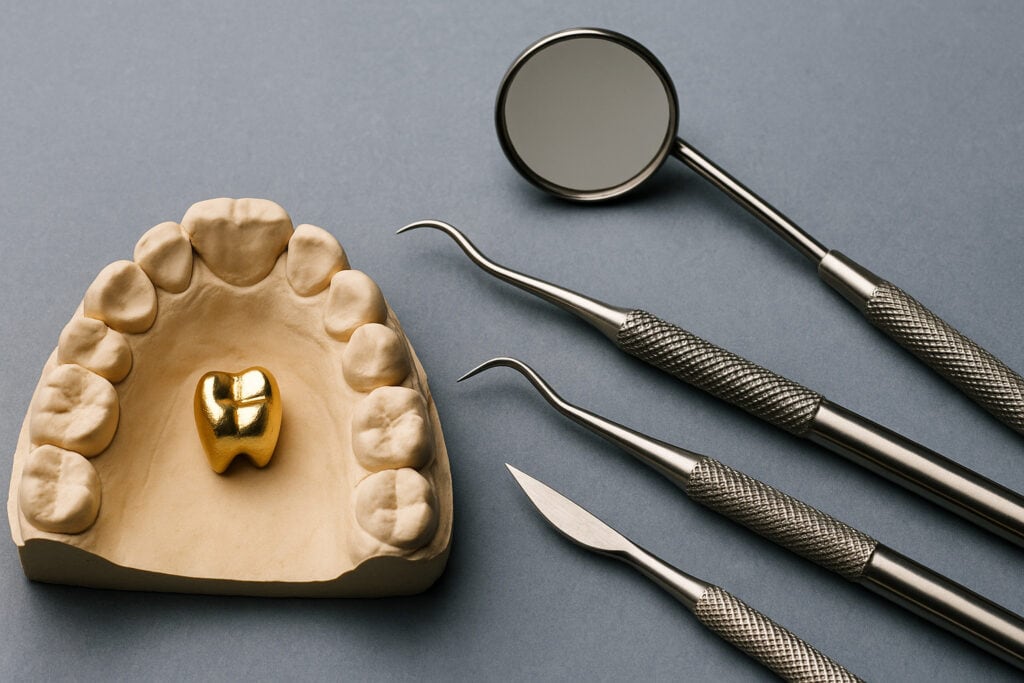
Before we answer why people have gold teeth, it helps to watch how the metal behaves in the mouth. Teeth survive by balancing force, friction, and biology; the material you add must play by those rules.
The Wear Match
Chewing pits one surface against another. When a crown is much harder than enamel, the opposing tooth can wear down. Gold alloys, though, tend to “play nice,” showing enamel-like wear behavior in lab and clinical studies. Because the contact is kinder, bite forces distribute more evenly; that’s why, for many patients, gold crowns feel good year after year—and this comfort is a practical reason people end up with gold teeth.
Surviving the Saliva Bath
Saliva is basically a warm electrolyte bath. Some metals pit or corrode in that environment, leaching ions and irritating tissues. Noble metal alloys (with a high gold content) resist corrosion and are widely regarded as biocompatible, which reduces the chance of sensitivity and keeps margins stable; so patients who need durable, tissue-friendly restorations sometimes choose, and thus have, gold teeth.
The “Marginal Seal” Advantage
Restorations fail most often at their edges or from recurrent decay. Because gold can be cast or milled to ultra-precise margins and withstands years of chewing without chipping, survival rates are high. Reviews report long service lives—often measured in decades—when placement and hygiene are solid; therefore, people who value “do it once, do it right” dentistry frequently end up with gold teeth.
How coverage works
A crown is a cap that redistributes force over a weakened tooth. Gold’s slight malleability lets a dentist burnish margins tightly, limiting microleaks where bacteria sneak in. Over time, that tight seal helps a cracked or heavily filled tooth survive heavy bites and night grinding; for patients needing reinforcement more than camouflage, this mechanical edge is a key reason they have gold teeth.
Signal and self-expression
Jewelry you can’t lose at a party is still jewelry. Removable grills and visible gold work can broadcast belonging, achievement, or sheer creativity. Because the mouth is always visible, the message is immediate; so some people have gold teeth to wear culture on the face, not just in a jewelry box.
Cost and access
Alloy composition, lab craftsmanship, and commodity prices push costs around. Insurance may cover medically necessary crowns but not cosmetic work; quotes vary widely by state and plan. When budget lines up with benefits, patients who prioritize performance over porcelain shade-matching often choose gold—one more reason you’ll see gold teeth.
Frequently Asked Questions
Are gold teeth made of pure gold?
Pure gold is too soft for chewing forces; dental “gold” is an alloy tuned for strength, corrosion resistance, and enamel-friendly wear. So gold teeth aren’t usually 24K, and that’s on purpose.
Do gold teeth rot your real teeth?
Decay happens where bacteria and sugar linger—at margins and between teeth—not because a crown is gold. With precise fit and good hygiene, failure rates are low, and service life is long. The material doesn’t cause rot; habits do.
Are they permanent or removable?
Many “gold smiles” are grills that pop out like jewelry. Fixed crowns and bridges are different: they’re cemented, shaped for bite, and meant for chewing, not just looks. The category is one word, but the functions are not.
Does gold damage the opposing teeth?
Hard ceramics can abrade opposing teeth if polished or glazed poorly. Gold’s wear is closer to natural enamel, which is easier on antagonists. That’s why many dentists still favor gold in heavy-bite zones.
When did the trend actually start?
Cultural uses long predate music videos: Etruscan gold bands, Maya inlays, and other traditions show deep timelines. Modern trends sit on ancient roots.
Bonus: Side facts worth knowing
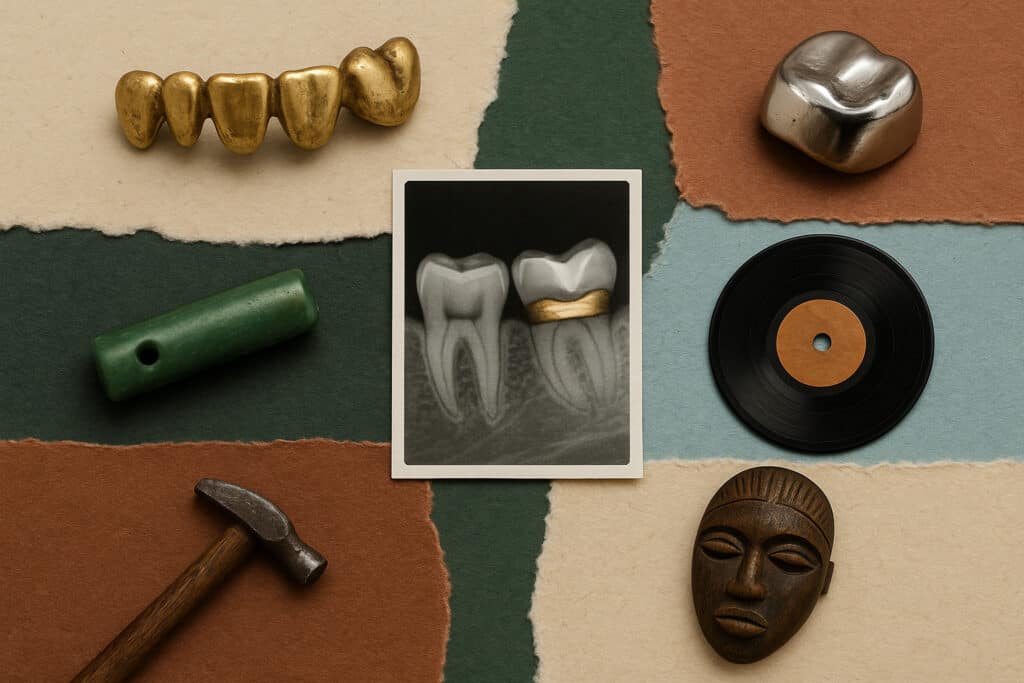
Beyond the main look, the metal has a few chemical and historical quirks that kept it relevant for centuries.
- Hammered gold fillings: A Renaissance physician, Johannes Arculanus (15th century), described packing thin leaves of gold into cavities—an early version of direct gold foil. It shows how long clinicians have trusted the metal’s stability in mouths.
- Radiograph friendly: Gold shows up clearly on X-rays, helping dentists spot gaps or decay creeping at edges—useful during checkups, especially under gumlines (general property noted across clinical literature).
- Alloys with a purpose: “High-noble” dental alloys mix gold with metals like platinum or palladium for strength and corrosion resistance; this tuning is why they perform differently from jewelry.
- Cultural continuity: From ancient status markers to today’s grills, the face remains a billboard. That continuity partly explains why searches for why people have gold teeth keep spiking during pop-culture moments.
- Repairability: Unlike some ceramics that can chip and require full replacement, small defects on a gold surface can sometimes be polished or adjusted chairside, extending service life.
Final Word
If you came in thinking the reason people have gold teeth was only about showing off, the mechanics tell a broader story. Materials that wear like enamel, seal like armor, and sit safely in a salty, sweaty environment give teeth a second life; culture then turns that utility into language. The next time a flash of metal catches your eye, consider whether you’re seeing a medical solution, a craft tradition, or a personal flag—maybe all three. What other things in plain sight carry both repair and meaning at once?
Interested in exploring similar posts? Visit the Cultural Rituals & Society hub for more!