
Most people assume people dislike communism because of Cold War propaganda or because Americans were taught to fear it. However, the real reason runs through how systems move resources, how power gets checked (or doesn’t), and how memories form after big social experiments. As you read, watch for three clues that will make the picture click later: the “knowledge problem,” one-party consolidation, and the gap between promises and results. We’ll name what these mean after we see them at work.
Paths, trials, and memory
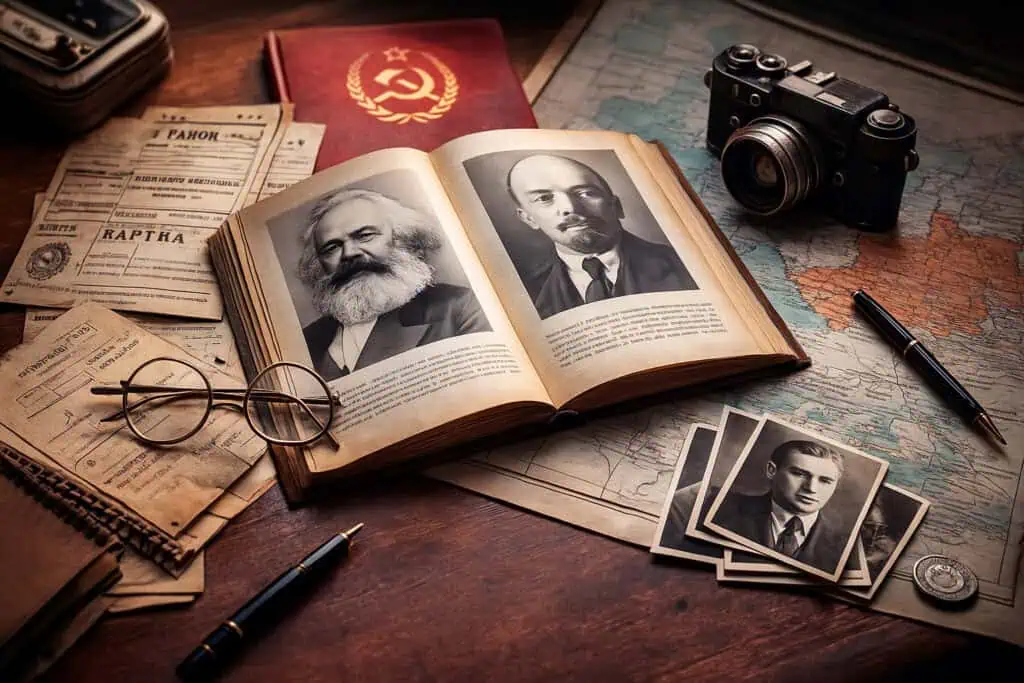
Karl Marx and others wrote a bold script for a classless society long before any country tried it. Across the 20th century, different governments adapted pieces of that script—from the Soviet Union to China, Cuba, Vietnam, and parts of Eastern Europe—and built systems that placed production targets and property under state control. If you want a plain-English overview of Marx’s ideas from a neutral source, the Stanford Encyclopedia of Philosophy’s entry on Karl Marx is a solid starting point. Later, many states adopted planning offices with five-year targets and nationwide quotas; this is part of what economists call “economic planning.”
As these systems spread, real people lived through ration cards, housing queues, new jobs, free schooling, secret police, party meetings, and big public campaigns. Some periods brought fast gains in literacy and heavy industry. Other periods brought shortages, surveillance, and mass exits. This lived history still shapes family stories today, especially for Americans who have neighbors from Cuba, Vietnam, Ukraine, or Poland.
Pressure points, not slogans
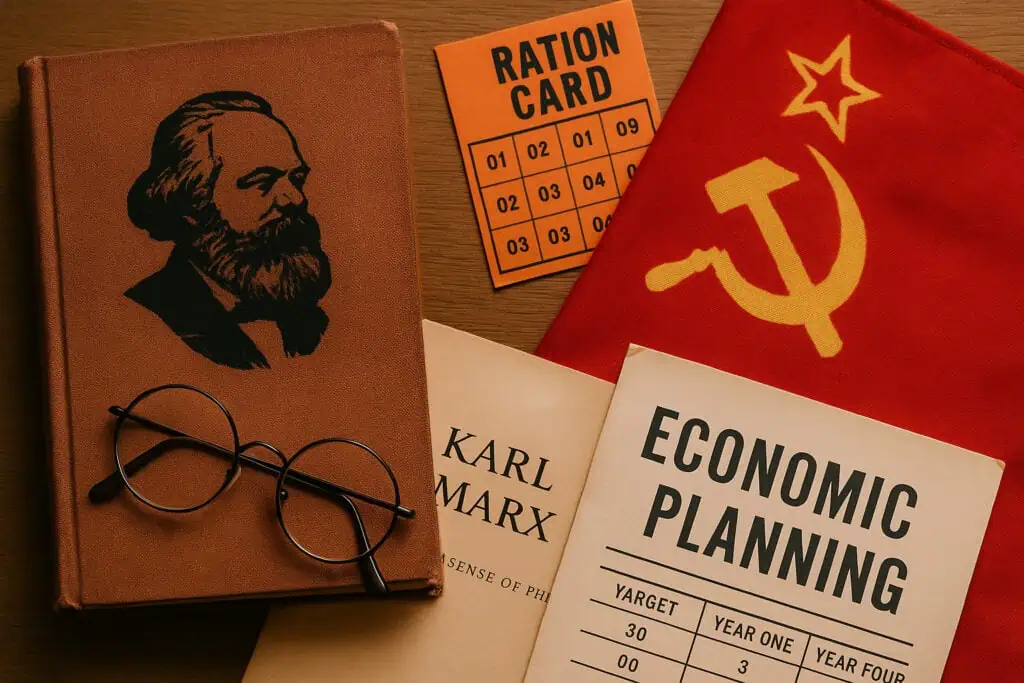
Prices without signals
Factories and farms need to decide what to make, how much, and when to switch. In markets, prices move like traffic lights—telling producers to speed up or slow down. Under centralized planning, managers often lack those quick signals, so the system leans on quotas and guesswork. Economists call this the “knowledge problem,” and F. A. Hayek’s classic essay, The Use of Knowledge in Society, shows how widely spread local knowledge is hard to gather from a single office. When price signals are weak, shortages and waste pile up first, and feelings about communism harden only later; this is one root of why people hate communism.
Power concentrated upward
Parliaments, courts, and a free press act like brakes on bad decisions. When one party rules, those brakes wear down. Over time, the same group writes the rules, polices the rules, and judges the rule-breakers. You can see the long-running pattern in country ratings for political rights and civil liberties tracked by Freedom House’s Freedom in the World series. As speech shrinks and oversight fades, daily fears grow; that felt reality, not just old slogans, explains a lot of why people hate communism.
Promises versus outcomes
The ideal says “no rich, no poor.” But human systems always create gatekeepers. In many places, a new insider class—the nomenklatura—got better housing, clinics, and stores while others queued. Britannica’s entry on the nomenklatura describes how party approval controlled key jobs and benefits. When fairness is promised but privilege appears, trust collapses, and the hate for communism shows up as a sense of betrayal, not just a policy disagreement.
Trauma in collective memory
Big policies can misfire on a massive scale. During the Great Leap Forward in China, farming rules and targets triggered a deadly famine; scholars often place the toll in the tens of millions, as summarized by the Association for Asian Studies’ overview of the Great Leap Forward. Earlier in Soviet Ukraine, the Holodomor left a scar that still shapes national identity and diaspora memory; the University of Minnesota’s Center for Holocaust & Genocide Studies provides a clear primer on the Holodomor. When a system is tied to events like these, public emotion builds first; and words like “hate” tend to follow later.
Every day surveillance, quiet self-censorship
Even without mass terror, a dense web of watchers can change how people act. In parts of the Eastern Bloc, neighbors, coworkers, or even spouses sometimes informed on one another. Files and phone taps made many people speak in whispers. That slow pressure trains citizens to keep their heads down. Over the years, that habit feels like a cage—and it feeds people’s hate for communism, even among people who once liked the ideals.
Exit as a verdict
When people cannot voice change at home, they vote with their feet. Long lines of defectors, boat people, and embassy seekers turned “system debate” into personal survival. For families split by exile, the issue is no longer abstract; it is the reason a grandparent never went back. That kind of experience makes people hating on communism less about ideology and more about loss.
Frequently Asked Questions
“Isn’t this just propaganda?”
Media spin exists everywhere, and the Cold War had plenty of it on both sides. Even so, independent archives, demographic studies, and survivor testimony (from scholars across many countries) confirm major failures and abuses under several communist governments. Because the record comes from multiple sources, the core critiques do not stand or fall on propaganda alone.
“But didn’t some places raise living standards?”
Some did, for a time, and often in basics like literacy, vaccination, and heavy industry. However, many of the biggest, sustained gains in China and Vietnam arrived after they loosened tight central control and allowed more market activity and trade. The World Bank notes how reforms helped transform Vietnam and China’s growth paths; see, for example, China’s poverty reduction overview. Those mixed models complicate simple claims on both sides.
“Is communism the same as socialism?”
They overlap but are not identical. “Socialism” spans a wide range—from welfare states with private markets to full state ownership. “Communism” usually describes a classless society with collective ownership, often pursued by a one-party state in the 20th century. Because people use these words loosely, arguments blur. Clear definitions reduce confusion about why people hate communism versus why they oppose other models.
“Is hate only from the wealthy?”
Resistance actually appears across all economic levels, from farmers facing forced deliveries to writers losing the right to publish. Their pushback often comes from daily limits on voice, movement, and belief. That is why people’s hate for communism shows up across many classes and professions.
“Could it work with better leaders?”
Better leaders help any system. Still, the price-signal problem and weak checks on power are design issues, not only personality issues. Unless those mechanics change, the same pressures tend to reappear.
Bonus: Extra notes on communism

- Nature as witness. The NASA Earth Observatory’s Aral Sea series shows how giant irrigation projects under Soviet planning shrank one of the world’s largest lakes. Environmental damage became a long-term, visible cost beyond politics.
- Good rules need good brakes. Even kind goals can cause harm if there are no independent courts, watchdog media, or free associations to say “stop.” This is why many critics focus on structure, not motives.
- Words versus lived meaning. Two neighbors can hear “equality” and think totally different things: equal rights or equal rations. That gap feeds cross-talk when people argue about communism online.
- Reforms blur labels. China calls its path “socialism with Chinese characteristics,” while Vietnam’s Doi Moi opened markets. Labels stayed; mechanics shifted. That mixed reality fuels new debates about what “communism” even means today.
Final word
If you strip away slogans, the question isn’t only “Is communism good or bad?” It’s, “What happens to information, incentives, and oversight when one center tries to steer a whole society?” Once you frame it that way, the reason people hate communism looks less like a Cold War reflex and more like a human response to design choices about prices, power, and voice. With that lens, the next time you hear a grand promise—of any system—you can ask the deeper question first: How will this actually work, and who can say ‘no’ when it doesn’t?
Interested in exploring similar posts? Visit the Cultural Rituals & Society hub for more!