
Most people assume folks eat caviar off their hands because it looks fancy—or because it’s a social-media stunt. However, the real reason lies in how delicate foods meet surfaces and how scent becomes flavor. Keep an eye out for three clues as you read: non-reactive contact, skin-temperature release, and retronasal aroma. We’ll circle back to how they fit, without rushing the answer.
Paths, tables, and tins
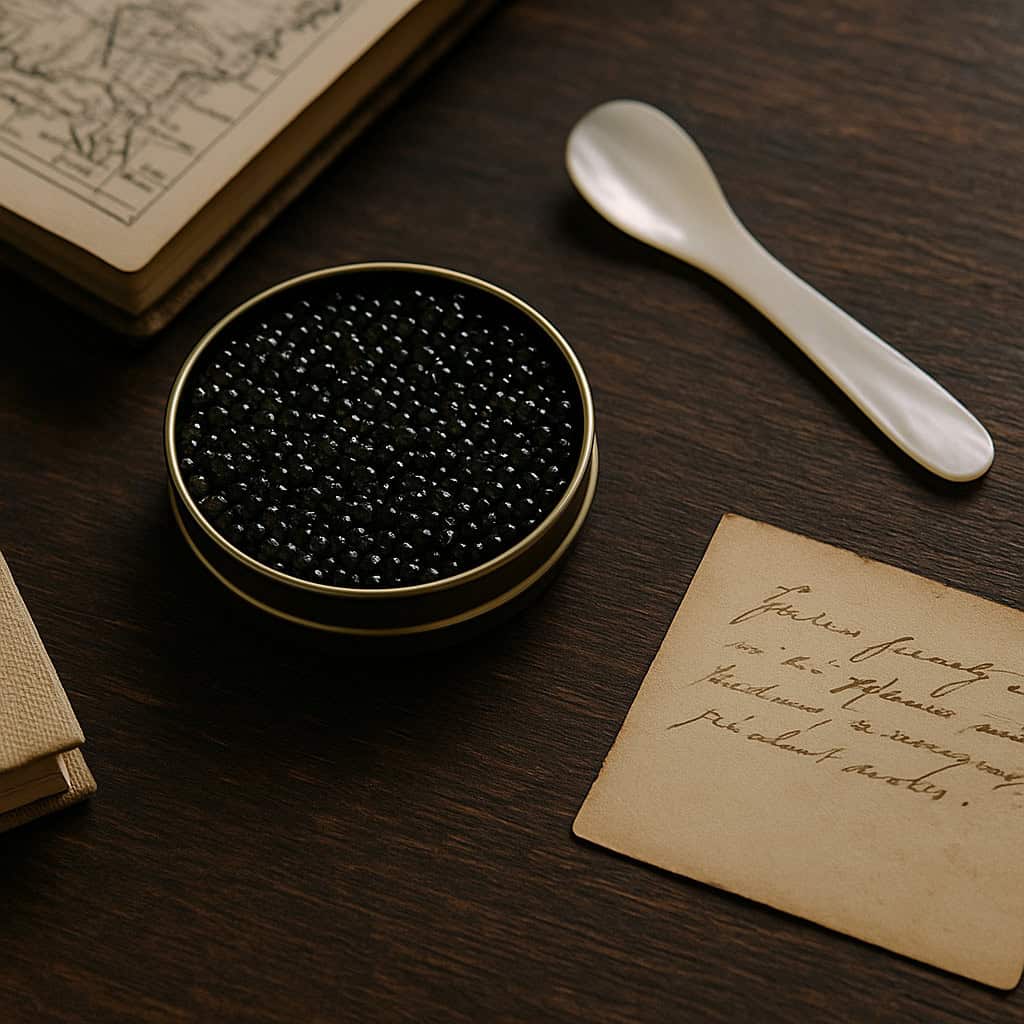
From royal banquets to cocktail carts, caviar has traveled a long road. In older sources, you see sturgeon roe salted, graded, and presented simply, then paired with blini, toast, or a cold shot of vodka. That heritage runs through Persia and Russia into modern tasting rooms, where tiny spoons and small tins still set the scene. For a quick primer on what “counts” as caviar and how it’s prepared, Britannica’s overview is a helpful reference, and Food & Wine offers a clear, modern definition of sturgeon-only caviar versus other fish roes.
Meanwhile, restaurants have turned caviar from a quiet garnish into a small event. A few years back, “caviar bumps” (a playful, back-of-the-hand taste) showed up in trend pieces and nightlife coverage. Whether you love the bit of theater or roll your eyes at it, the move kept an old-tasting habit in the spotlight.
Skin, heat, and purity
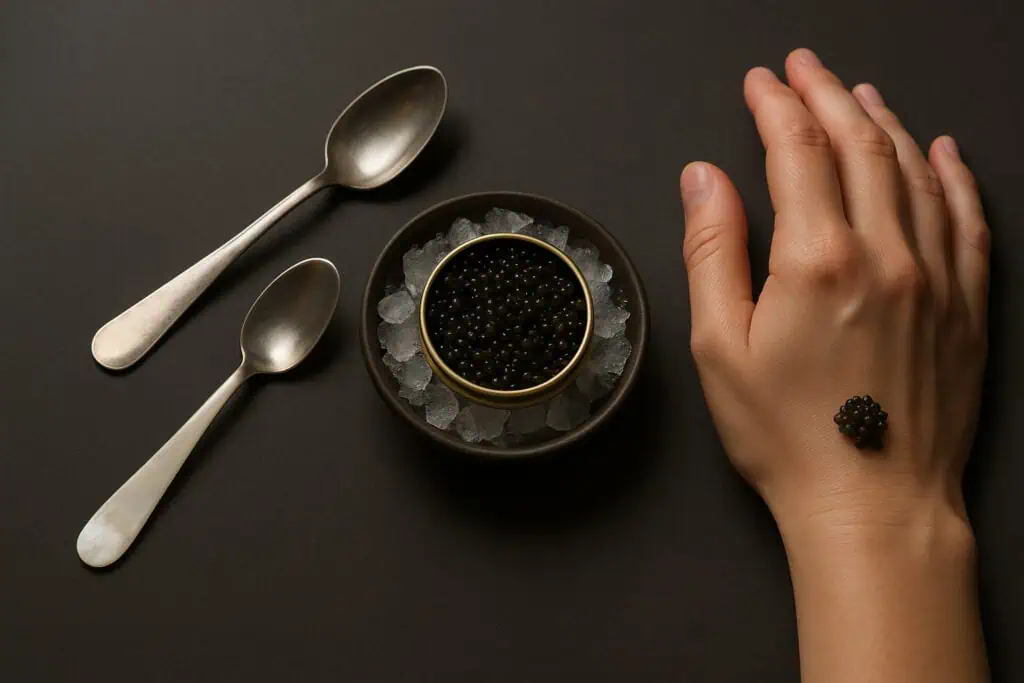
If you’re wondering why people eat caviar off their hands, the complete picture comes from mechanics first, labels second. Only after you understand what the skin changes, what warmth unlocks, and what your nose actually “tastes,” does the practice make sense.
The “reactive metal” problem
Before any flavor shows up, caviar touches something: a spoon, a cracker, a plate—or your skin. Different materials can nudge taste, especially reactive metals like silver, which can lend a metallic note. Professionals often prefer non-reactive tools (mother-of-pearl, glass, wood, high-grade plastic), and more than a few point out that silver is the main utensil to avoid. After you grasp that surfaces can color flavor, it becomes clearer why some tasters skip tools entirely and place the roe on clean skin for a neutral start.
The body heat catalyst
Caviar is stored and served cold to protect texture, but aroma molecules become livelier as the temperature inches up. Thermodynamics predicts (and sensory work supports) that a slight rise in warmth helps volatile compounds lift to your nose. Your hand sits warmer than a chilled spoon, so the pearls meet a thin “boundary layer” of mild heat; only then do you understand why the scent seems fuller when you take a bump off skin.
Retronasal mechanics
Flavor isn’t only on the tongue; it’s also what your nose senses from inside the mouth—that’s retronasal olfaction. When you skip bread, sour cream, and garnishes, your brain gets a cleaner signal: pop, butteriness, brine, nuttiness. Because the hand adds nothing aromatic of its own, you catch those notes without interference; only then do people eating caviar off their hand start to feel practical, not performative.
The chef’s workflow
In kitchens and caviar shops, speed matters. Tasters may sample several tins quickly, cleansing the palate in between. A tiny mound on the hand avoids carrying flavors from a utensil, and there’s nothing to wash or swap out. Only after you watch a pro compare textures and “pop” this way do you see how eating caviar off hands doubles as a quality-control workflow.
Ritual, cameras, spectacle
Luxury has always loved ritual. The hand-taste turned into a mini-ceremony partly because it photographs well and reads as “pure caviar.” As the bump moved from back rooms to bar tops, theatrics followed, which is why the sight of people eating caviar off their hands shows up in nightlife coverage as much as in culinary writing.
Frequently Asked Questions
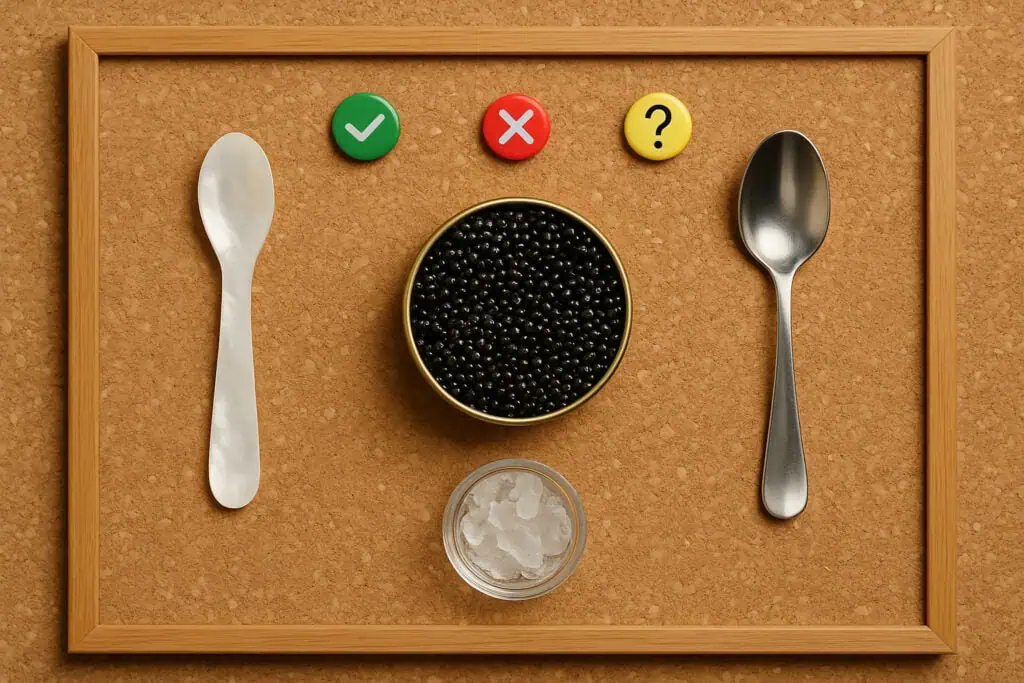
“Metal always ruins the taste.”
Reactivity depends on the metal. Silver can react and taste metallic; high-quality stainless steel is far less likely to affect flavor. Because tradition leans non-reactive, many still reach for mother-of-pearl or plastic—and some simply use the hand to remove doubt altogether.
“It should be warm to be good.”
Texture and safety prefer cold storage and service, yet a momentary touch of skin warmth can lift aroma without turning the roe mushy. Think “chilled overall, warmed at the surface for a second,” not “serve it hot.”
“It’s just a social-media trick.”
The camera helped, but hand-tasting predates the hashtag. Chefs and purveyors used it for quick, unmasked sampling; only later did it become a wink to nightlife and spectacle.
“Any fish eggs count the same.”
Sturgeon roe is caviar; other fish eggs are “roe.” The hand taste shows off subtleties best when you’re actually tasting sturgeon caviar—because its texture and delicate aromatics are the point.
Bonus: Side notes worth savoring
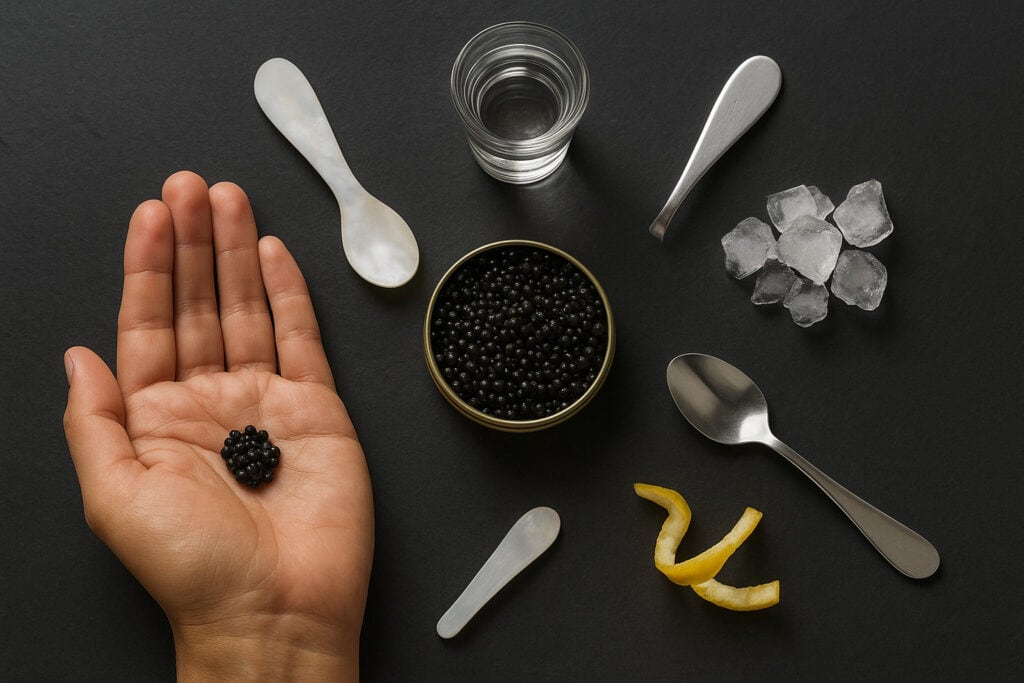
The hand-taste gets all the attention, but the surrounding details, from the specific tools to the temperature rules, are what actually make the flavor work.
- Mother-of-pearl isn’t just pretty. It’s non-reactive and traditional, which is why many formal services still choose it even if modern stainless steel is serviceable.
- History shapes the plate. The old zakuski spirit (simple bases, cold vodka) still guides today’s tasting etiquette, even when someone asks why people eat caviar off their hands in a bar instead of a parlor.
- Temperature is a tightrope. Service stays cold for texture and safety, but the instant of contact with skin can lift aroma just enough to feel more expressive without losing the “pop’’.
- Trends come and go; craft remains. Even as bumps trend, thoughtful guides still teach mindful tasting, sourcing, and storage so your tin sings on its own terms.
Final word
Once you notice how surfaces, temperature, and scent shape perception, a tiny mound on skin stops looking like a party trick and starts reading like a controlled test. The next time someone asks why people eat caviar off their hands, the better question might be this: what other foods would change for you if you adjusted contact, warmth, and aroma—just a little?
Interested in exploring similar posts? Visit the Cultural Rituals & Society hub for more!