
Most people think athletes bite medals to check if they’re real gold. However, the real reason hides in the dance between cameras, crowds, and a very soft metal. Keep an eye on three ideas as you read: malleability, photo-call choreography, and the facial-feedback effect.
From coin lore to podium pose
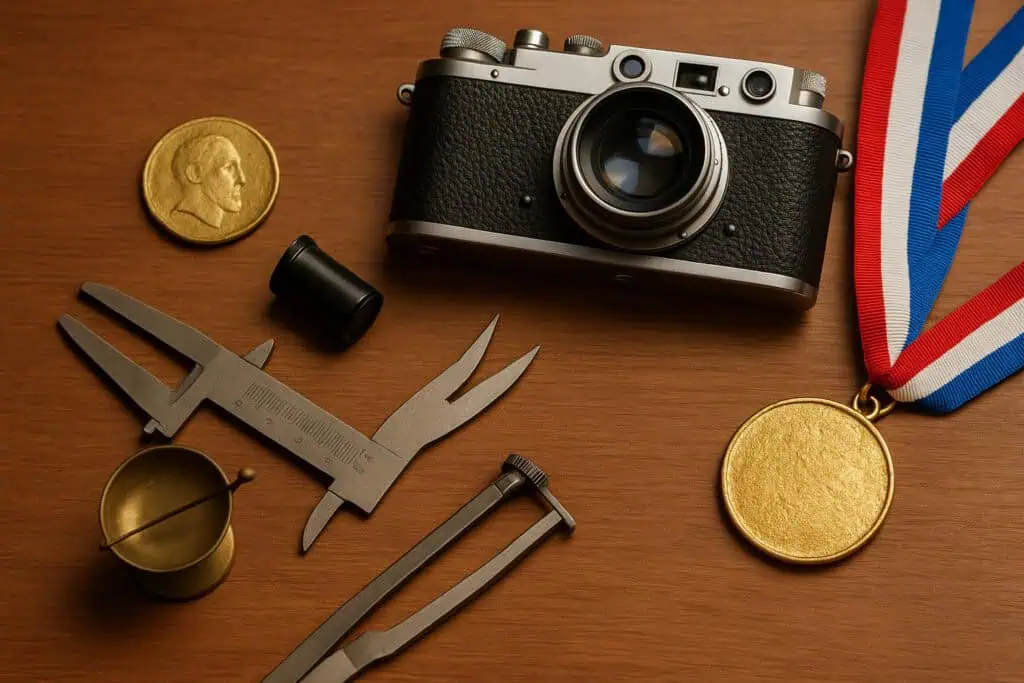
Long before podiums and flashbulbs, people handled gold because it was precious and easy to shape. Stories spread that you could “test” gold with your teeth. In reality, the science is simpler: gold is highly malleable, which means it bends and dents more easily than many metals. That softness made coin-biting sound believable, even if it wasn’t a great test in practice.
As modern sports grew, medal design changed too. Olympic “gold” medals haven’t been solid gold for a long time; they’re mostly silver with a thin gold layer. For example, Tokyo’s official specs listed pure-silver cores with more than 6 grams of gold plating on the first-place medal.
Meanwhile, photography turned winning into a global picture. Photo editors learned which poses “read” instantly: flags up, arms wide, and, yes, the playful bite. Over multiple Games, reporters and shooters began cueing the moment out loud on the photo line.
Finally, there’s a small mind-body loop to keep in the back of your head. Facial muscle positions can nudge feelings—an idea known as facial feedback. The effect is modest but real across many lab tests, which helps explain why “victory faces” amplify joy on camera (more on that in a bit).
Signals in a snapshot
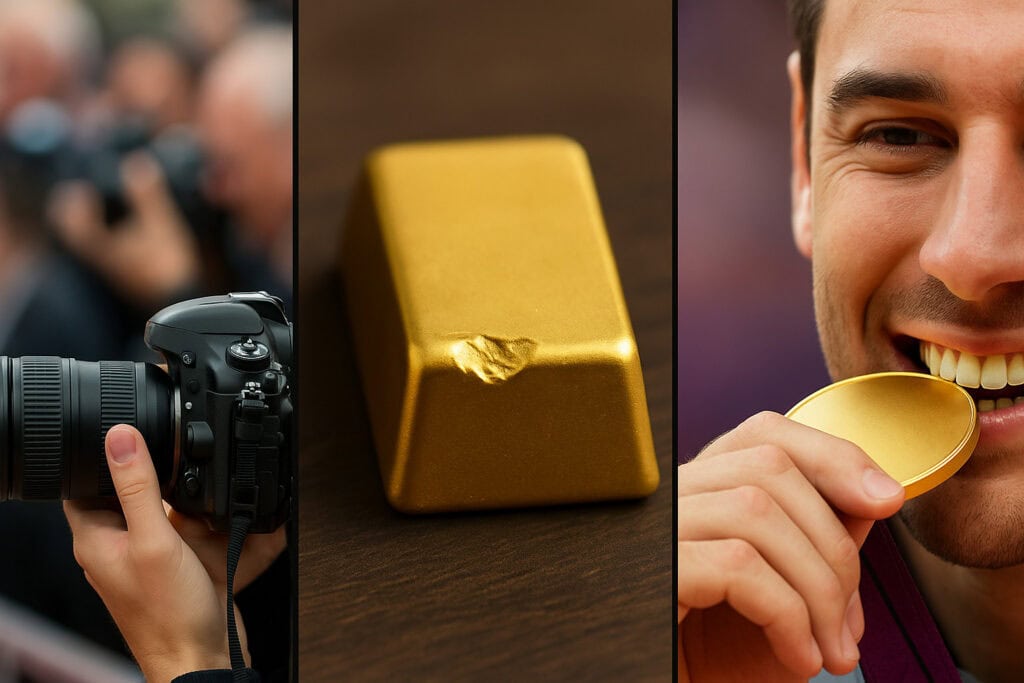
The camera moment works first. Photographers line athletes in a tight pack (medals front and center) so that one frame captures the whole story: effort, medal, nation. They call a few beats: “Hold it up… now bite!” The cue not only creates a fun pose; it also pushes the medal close to the face, which the lens loves. Only after that visual routine is in place does the reason become plain. The bite survives not as a test, but as a sales pitch: the photo looks iconic and sells the feeling of victory, not because anyone is testing the metal.
Soft metal, old habit
The “gold test” idea sticks because it has a mechanical hook. Pure gold is soft, and teeth are hard enough to leave a mark. But Olympic medals today have silver cores with a thin gold plating, so a bite proves nothing about purity and might even scuff the finish. The practical point lands at the end. Even though modern medals fail the tooth test, the old coin lore gives the pose a story, bridging the gap between ancient money and modern sports. (If you like official details, the IOC lists materials across editions; here’s a general explainer on Olympic medals and their history.)
Emotion that photographs well
Muscle patterns can echo feelings. When jaws clench and cheeks lift, the brain can read that state as “big emotion,” which enhances the on-stage high. The lab effect is small, but it helps explain why the pose looks and feels intense. After that context, the practical answer drops in: people bite medals because the expression sells the moment, and the picture is what reaches the world.
What the medal is, not what it means
Material rules are set well before the Games. Host committees design medals under IOC specs—diameter, thickness, and materials—so a champion’s “gold” is mostly silver with a bit of gold on top. That engineering choice keeps cost, weight, and durability in check. After all that, the key line is simple: the medal bite survives as a stage cue, which is why the question of why people bite their medals keeps being asked every Olympics.
Frequently Asked Questions
Do athletes bite medals to check if they’re real gold?
Mechanics come first: a thin layer of gold over silver won’t tell you much when you press with teeth, and you could mark the surface. The bite is for the photo, not for testing the medal’s purity.
Are Olympic “gold” medals actually solid gold?
Material rules require mostly silver with gold plating, which balances cost and durability across thousands of medals. Therefore, they’re not solid gold, even though they shine like it.
Who started the bite pose on the podium?
Photo-line choreography built it over time. Editors learned fans loved the playful “I could eat this win” shot, and shooters began prompting it during medal photos. That’s why the question of why people bite their medals pops up every four years: the image keeps being staged.
Could biting damage teeth or medals?
Hard enamel meeting a thick, plated disc can go wrong. There are reported cases of chips and scuffs after a staged bite on the photo line. Because of that risk, the pose is playful, not wise (and it’s optional).
If biting doesn’t test gold, what does?
Density checks, X-ray fluorescence, and assay methods read metal content far better than teeth. Since gold’s softness is the hook that made the myth popular, real testing uses tools, not bites.
Does biting make you feel happier?
Muscle positions can nudge emotion, but only a little. That small facial-feedback effect can add “spark” to a victory photo, though it doesn’t cause the tradition. So, the grin sells the story, and the bite just underlines it.
Bonus: Extra facts you’ll enjoy
Metal with a backstory
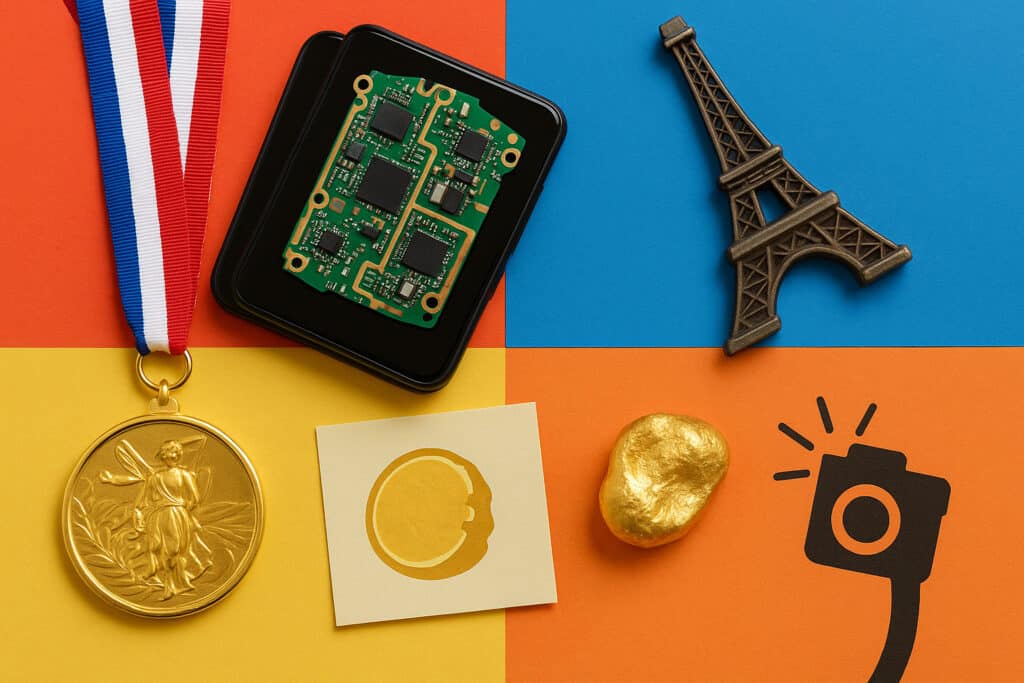
Organizers sometimes add history to the medal itself. Tokyo’s medals were made from metals collected from old electronics across Japan, turning e-waste into hardware. Paris added pieces of the Eiffel Tower’s original iron.
Why softness fooled folks
Gold’s physical behavior (bendable, dentable, and easy to work with) made the “bite test” sound logical for centuries. That’s why asking why people bite their medals feels like a fair question even now: the metal really is soft, just not in a way that proves anything on a modern, plated medal.
The picture that never gets old
Media departments adore repeatable rituals. A neat, readable pose becomes a template that travels from sport to sport and year to year. You can see that it is institutionalized in official explainers like Olympics.com’s take on the tradition, which treats the bite as part of the show rather than a serious test.
Final Word
When a champion bites a medal, you’re not watching a science check; you’re watching a tiny piece of stagecraft that tells the whole story in one frame: effort, joy, proof. Once you see the pose as a signal built for the camera, the image changes: it’s less “is it real?” and more “this is real.” And that lens isn’t limited to sports. What other everyday rituals look like tests on the surface, but are really signals built to be seen?
Interested in exploring similar posts? Visit the Cultural Rituals & Society hub for more!