
TL;DR: Why do mosquitoes bite ankles? Because many day-biting species hang low near the ground, our socks and shoes trap strong foot odors that guide them in, ankles are often the only exposed skin left unprotected by repellent, and dark footwear and movement help them zero in. These aren’t “dirty blood” issues, just how mosquitoes hunt and what your feet give off.
A Short History of Mosquitoes, the Ankle-Biters

For a long time, people swapped folk ideas to explain itchy lower-leg bites—“sweet blood,” “thin skin,” or “bad circulation.” As public-health teams started tracking nuisance species in cities, they noticed some mosquitoes were especially active around the legs and feet; local vector districts even nicknamed them “ankle-biters.” Today, public agencies warn that invasive Aedes mosquitoes bite during the day and commonly go for the lower legs. You’ll see this plain as day in many community alerts and city vector pages. For example, one district explains that Aedes “are also called ‘ankle-biters’ due to their behavior of biting people near the feet.” That nickname stuck because people recognized the pattern.
Meanwhile, scientists kept asking a bigger question: why are some humans mosquito magnets? Newer lab work shows that mosquitoes follow a scent trail: they detect carbon dioxide, then lock onto skin odors. A major body of research since 2022 shows that fatty acids and related “carboxylic acids” on human skin are a huge part of what pulls in Aedes aegypti. Separate studies also found that once they smell us, certain colors, especially black and red/orange, draw them visually, which helps explain why dark shoes and socks can become bull’s-eyes.
Why Do Mosquitoes Bite Ankles? The 5 Real Reasons
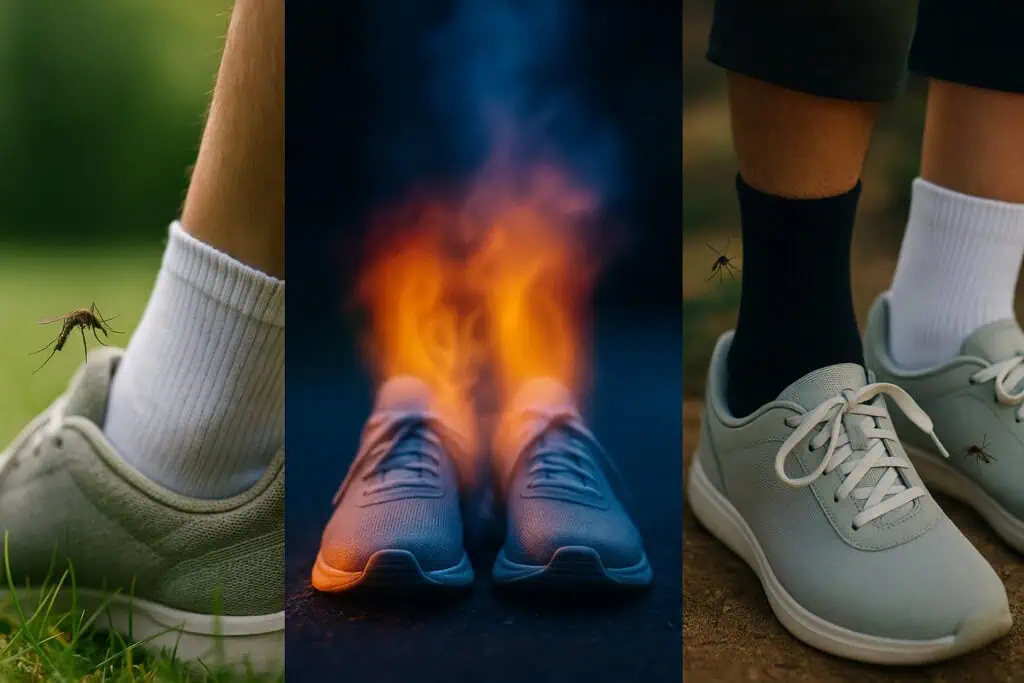
Mosquitoes don’t pick ankles out of spite. They’re following cues. Here’s what makes that spot so popular:
Low-flying “ankle-biter” species hang where your feet are
Several Aedes species (like Aedes aegypti) are day-biters that fly and rest close to the ground, so your ankles and calves are the first exposed skin they reach. Community vector pages and field notes highlight this behavior again and again, which is why they’re called “ankle-biters.”
Strong foot odors act like a scent signpost
Your feet build up a mix of sweat and skin oils that bacteria turn into smelly chemicals. Mosquitoes are tuned to some of these, especially carboxylic acids, and follow them right to the source. In a 2022 experiment, people who gave off more of these acids were consistently the biggest mosquito magnets. In short: the chemistry of skin odor matters, and feet have plenty of it.
Shoes and socks trap smells right at ankle height
Closed shoes and socks hold onto those odors, then leak them out slowly, creating a steady “scent plume” near the ground. That steady stream helps a hunting mosquito finish the job after it has already picked up a whiff of you.
Dark footwear makes you easier to spot
After smelling a host, Aedes aegypti tends to home in on darker hues like black and red/orange. Guess what color a lot of socks and sneakers are? Exactly. Once primed by our scent, those dark items help guide the final approach.
Ankle skin is often the only unprotected skin left
We usually spray our arms, neck, and face—but skip ankles, or we forget to treat socks. That gap makes ankles the easy target. To fix it, treat the lower legs and socks, and use an EPA-registered repellent with DEET, picaridin, IR3535, oil of lemon eucalyptus (OLE), PMD, or 2-undecanone.
FAQs: Mosquitoes and Ankle Biting

Do mosquitoes bite ankles because of blood type?
Blood type can play a role in overall attraction, though it’s not the main ankle story. In one classic study, Aedes albopictus landed on people with Type O blood more than those with Type A. It’s just one factor; skin odor chemistry is a bigger one.
Could these “mosquito” bites on my ankles be fleas or chiggers instead?
Sometimes, yes. Fleas often bite around the ankles, and their itchy bumps can look like mosquito bites. Chiggers can also cluster near sock lines. If bites keep showing up indoors or in clusters, check pets and carpets too.
Does beer make mosquitoes more likely to bite ankles?
Alcohol can increase your overall attractiveness to mosquitoes (more “you” in the air to follow), which can lead to more bites, ankles included. A controlled trial found beer consumption increased attractiveness to mosquitoes.
What color socks should I wear?
If you can, skip black and deep red/orange on high-bug days and choose light colors. Once mosquitoes smell you, darker colors help them finish their approach.
Why do mosquitoes bite ankles more than arms?
Why do mosquitoes bite ankles more than arms for some folks? Because the scent signal is strongest there for many of us (thanks to shoes/socks and skin microbes), and the most aggressive day-biters patrol low. Add dark shoes to the picture and the ankle becomes the easiest “lock-on” point.
Which repellents should I trust on ankles and feet?
Use EPA-registered repellents (DEET, picaridin, IR3535, OLE/PMD, or 2-undecanone). Reapply as directed, and don’t forget the tops of feet and around sock lines. For children under 3, avoid products with oil of lemon eucalyptus (OLE) or para-menthane-diol (PMD).
Bonus: Quick Facts That Surprise Most People
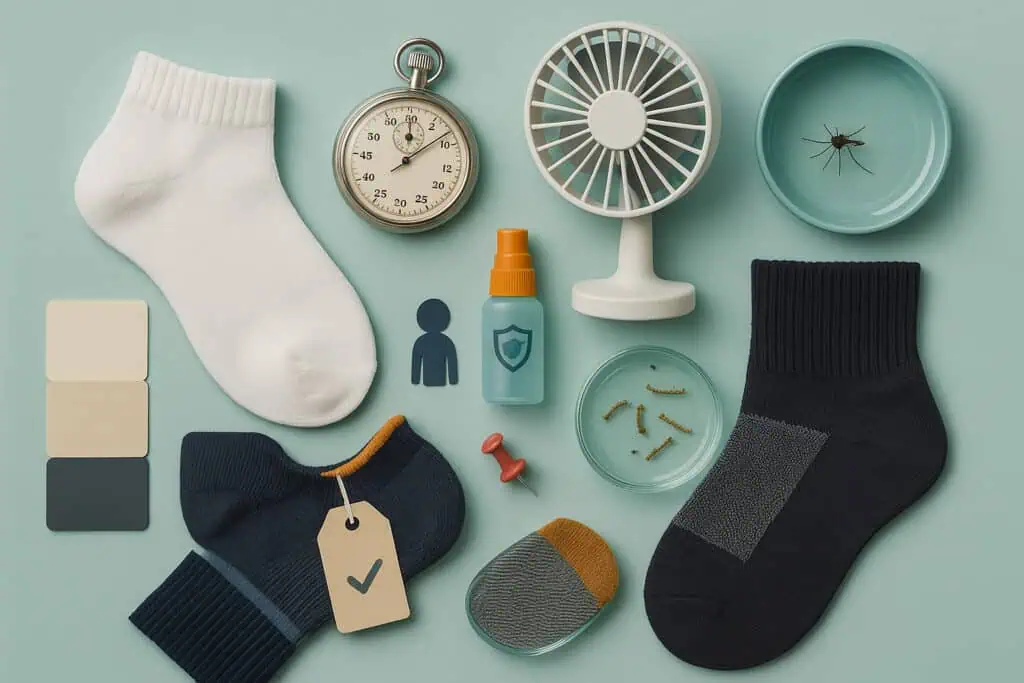
- Some “ankle-biters” bite multiple times in one session. That’s why you can get several welts on the same leg after only a few minutes outside.
- Your personal “mosquito appeal” can last for years. In lab tests, people who were highly attractive stayed that way over time, pointing to stable skin chemistry and microbes.
- Clothing color matters only after they smell you. Without human scent, colors don’t draw them in; once primed, darker hues help them find you.
- Treating socks and pant cuffs works. Permethrin-treated clothing can cut bites on the lower legs, especially for hikers and yard workers.
Bonus 2: Quick Fixes That Actually Help
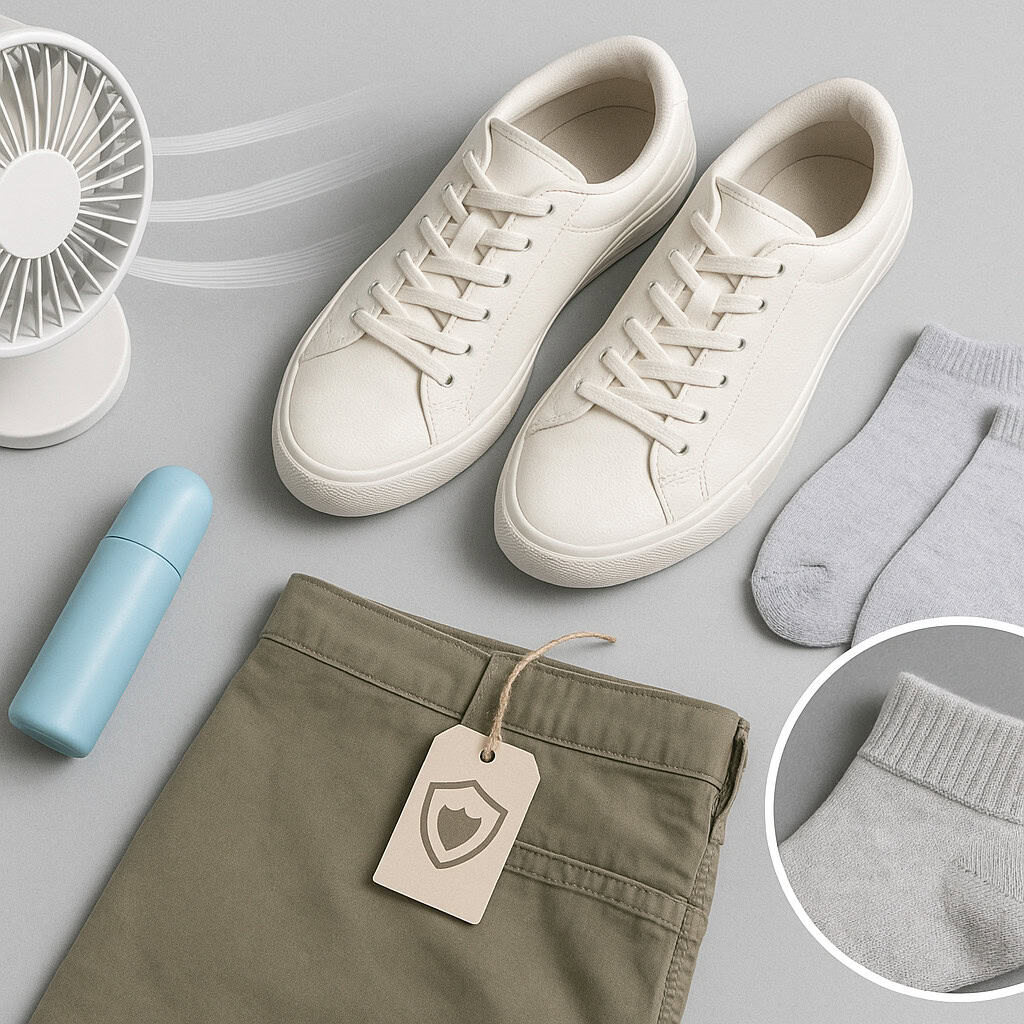
- Spray or roll on repellent to feet/ankles (not just arms).
- Wear light-colored socks/shoes when possible.
- Try a box fan blowing across your legs when you lounge outside.
- If you hike or do yard work, consider permethrin-treated socks/pants (treat clothing, not skin).
- Empty standing water around your home so fewer mosquitoes hatch.
Final Word (Recap)
Mosquitoes bite ankles because low-flying day-biters follow strong foot odors, dark footwear and movement help them aim, and ankles are often left unprotected. Cover the gap: treat feet and socks with proven repellent, wear lighter colors, and cut standing water. You’ll notice the difference fast.
Interested in exploring similar posts? Visit The Science of Everyday Life hub for more!