
Most people assume shaky legs afterward are either proof of an epic session or a red flag.
However, the real story is quieter…and more mechanical.
To unlock it, keep one term in mind as you read: myotonia. Understand what myotonia does during arousal and release, and the whole phenomenon clicks into place.
From notes to clinics
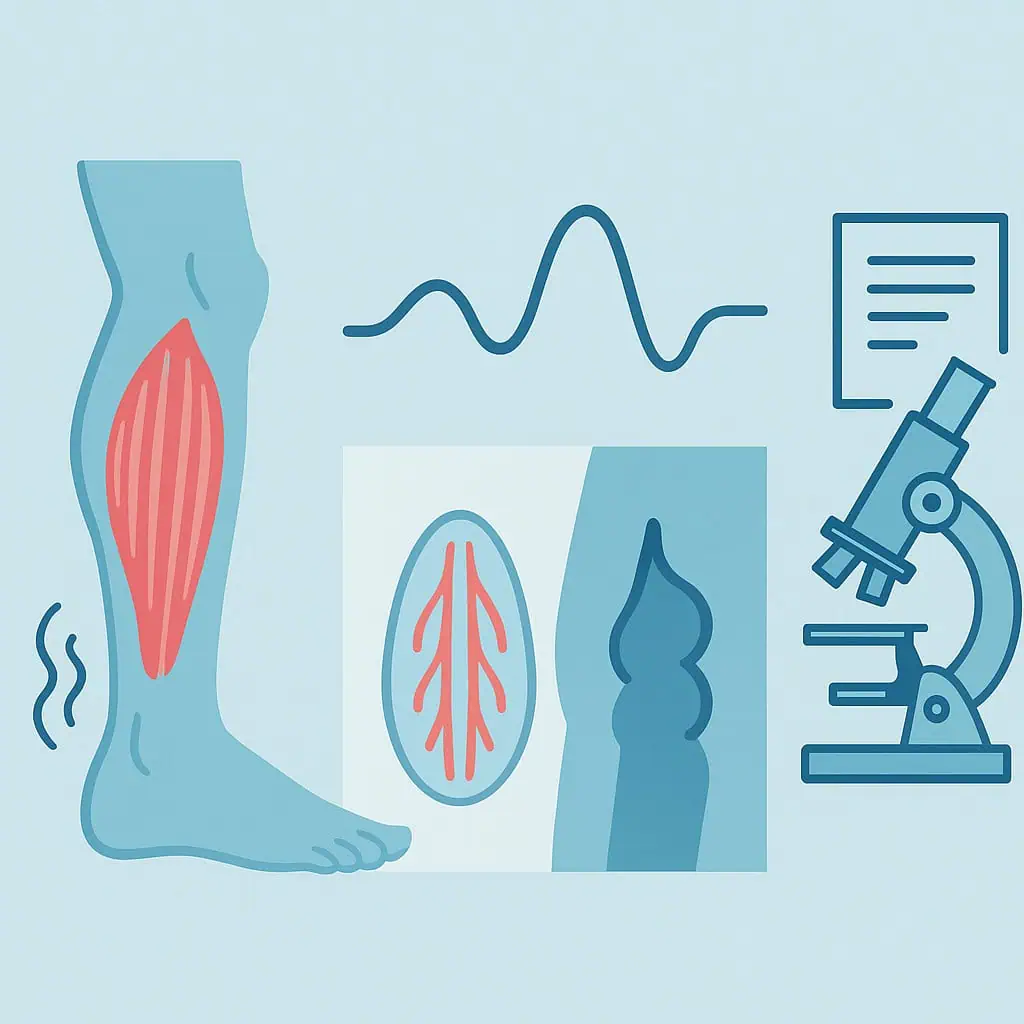
From early sex-research notes to modern clinic rooms, people have long described shaky legs right after climax. Over time, health writers called it “aftershocks,” “post-orgasm tremors,” or simply “the wobbles.”
The idea is simple: sex is physical, and orgasm is a full-body event. During orgasm, the body naturally has involuntary muscle contractions (the medical term is myotonia), heart rate and breathing spike, and tension releases quickly. That combination can make your thighs, calves, or even your whole body twitch for a short while.
Meanwhile, researchers measuring blood and brain changes around orgasm have found brief spikes in stress chemicals (like epinephrine and norepinephrine) and a post-orgasm rise in prolactin. Because those chemicals change quickly, your nervous system shifts from “go” to “slow,” and shaking can show up during that comedown.
Six converging mechanisms
Myotonia and fatigue
During arousal and orgasm, you unconsciously tighten many muscles: pelvic floor, butt, thighs, abs, feet, and sometimes even hands and face. Then, as the release hits, those muscles rapidly relax.
Just like your legs might tremble after squats, they can shake after sex because they’ve been working. In short, it’s the same biology as a hard gym set, only more fun. Medical guides to the sexual response cycle list those involuntary muscle contractions as a normal part of orgasm.
Adrenaline spike, prolactin sigh
Your “fight-or-flight” system revs during sex. Catecholamines (adrenaline and noradrenaline) spike, blood pressure and pulse climb, and after orgasm, your body flips back toward calm. As that shift happens, tiny tremors or a brief full-body shake can appear. Also, prolactin tends to rise right after orgasm; that’s part of the sleepy, satisfied feeling, and it marks the “cool-down” phase. These rapid changes can leave you momentarily shaky.
Gravity and the “depletion loop”
If your legs were holding weight (think squatting, standing, or edge-of-bed positions), they may quiver afterward. Because sex raises temperature and makes you breathe harder, you can also lose a bit of fluid; so, dehydration or low electrolytes sometimes add to the wobble.
Hyperventilation and arousal shakes
Because sex is exciting, some people inadvertently over-breathe. Hyperventilation can make muscles feel tingly or shaky. Alternatively, performance anxiety can fuel adrenaline, which also shakes muscles.
Pelvic pulses and aftershocks
The pelvic floor contracts in rhythmic bursts during orgasm. Those pulses can echo into the thighs as tiny tremors for a minute or two.
Less common drivers
Occasionally, shaking has a different driver: medication side effects, very low blood sugar, too much caffeine, or a neurological tremor that you’d notice at other times, too. If the shaking is new, extreme, happens outside of sexual activity, or comes with worrying symptoms, check in with a clinician.
Frequently asked questions
Is it normal if my legs shake after every orgasm?
Often, yes. Bodies have patterns. If your baseline is brief quivering with no pain, that can be your normal. However, if the shaking is new, severe, or accompanied by other symptoms, get it checked.
Does leg shaking mean the orgasm was “real”?
Not necessarily. Some people shake with strong arousal or effort, while others do not shake at all with intense orgasms. Shaking is not a reliable “truth detector.”
Why do my legs shake after sex but not after masturbation (or vice versa)?
Context matters. Position, duration, tension, hydration, and anxiety differ between partner sex and solo sex. As a result, the muscle load and nervous-system surge can differ, too.
Can low electrolytes cause shaky legs after sex?
They can add to it. Sweating plus muscle work can nudge electrolytes down. Because of this, a small snack and fluids may help. Nevertheless, most post-sex shaking is from muscle release and the adrenaline comedown.
Do hormones actually change that fast?
Some do. Adrenaline rises and falls within minutes, and prolactin rises right after orgasm before drifting down. Those quick shifts can feel like a sudden “shiver window.”
Can I stop the shaking completely?
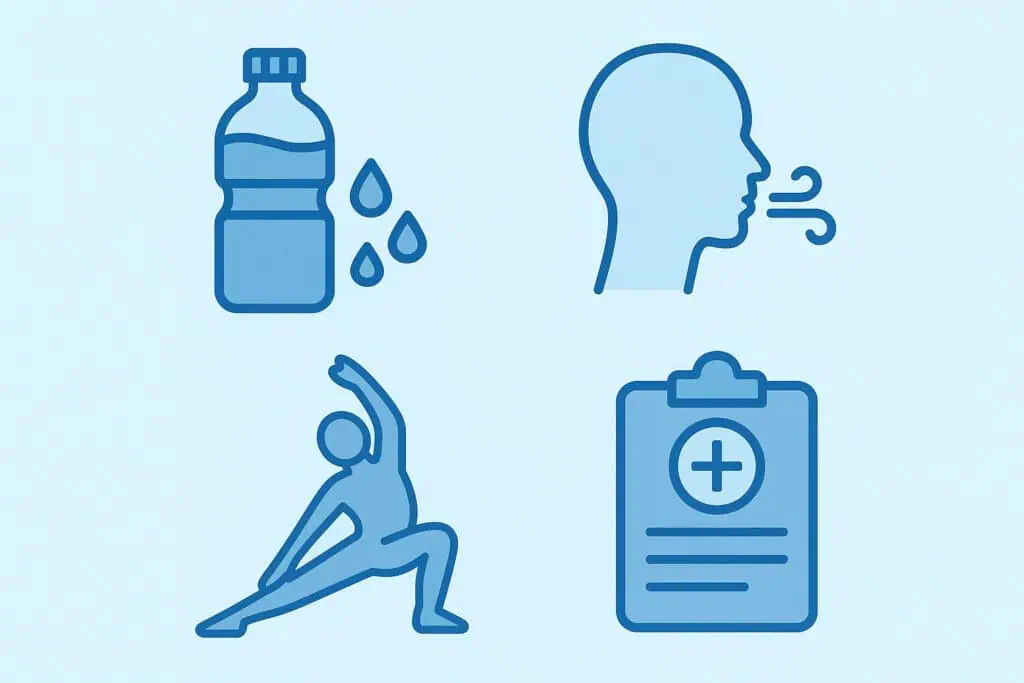
Maybe not always, and that’s okay. Because the shakes come from normal body processes, the goal isn’t zero tremor; it’s comfort. Hydration, breathing, position changes, and gentle stretching usually reduce it.
Bonus: extra body-science nuggets
A whole-body reflex
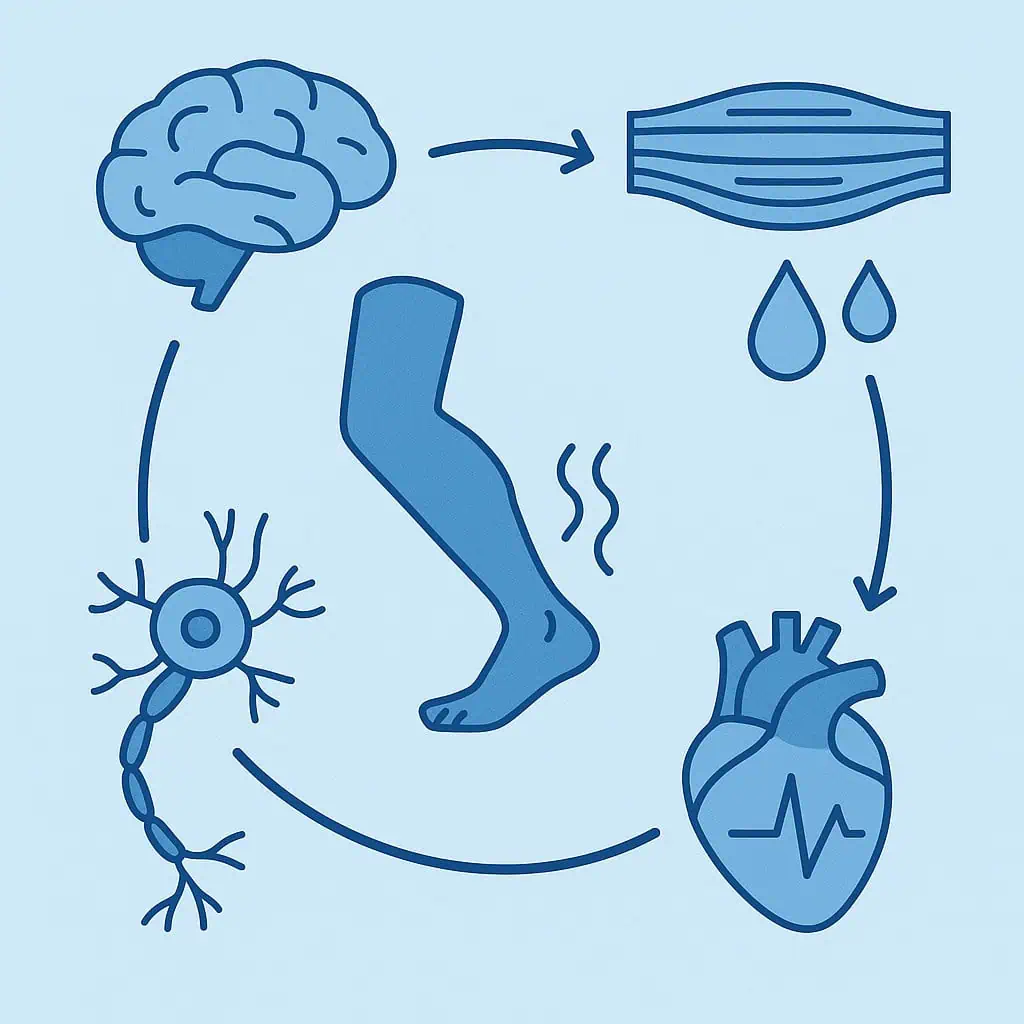
Guides to the sexual response cycle list not only genital changes but also involuntary body-wide muscle contractions, a “sex flush,” and big jumps in breathing and pulse. Because the entire system is involved, legs often join the party.
The sleepy switch
In lab studies, prolactin rises right after orgasm in many people and can stay up for a while. As a result, you may feel calm, drowsy, or briefly shaky while your system resets.
Aftershocks are common
Some people feel small rhythmic twitches for a minute or two after climax—tiny echoes of the orgasmic contractions. They’re usually harmless and can even feel pleasant.
Gym-triggered coregasms happen
Hard abdominal or hip-flexor effort during exercise can, in some people, mimic the muscle-tension-then-release pattern and cause orgasm-like spasms. The overlap helps explain why workout-style leg fatigue and post-sex leg shakes feel similar.
Breath shapes chemistry
A few deep, slow breaths change CO₂ levels and can steady tingling or tremors. Although this is simple, it’s surprisingly effective because breathing directly nudges your nervous system.
Make the wobble useful
Treat the wobble like a readout, not a red flag. It’s your body handing you data about effort, arousal, and recovery, all biofeedback you can actually use. If you’re curious, experiment: slow the pace, change the angle, drink a little water, breathe a little deeper, stretch afterward. Notice what steadies you and what amplifies the after-shivers. Instead of asking, “Is this normal?” ask, “What is this telling me about how my body likes to be treated?” That question turns a fleeting shake into a small skill you can refine…and a kinder way of listening to yourself.
Interested in exploring similar posts? Visit The Science of Everyday Life hub for more!