
TL;DR: Judges wear black robes mainly to signal neutrality, unity, and authority. In the U.S., the look solidified in the early 1800s and has stuck because it keeps attention on the law, not the person. Some legends say the black came from a royal mourning period in England, but historians disagree on the exact cause. Either way, the robe became a simple, shared uniform that tells everyone, “the rules come first.”
A brief backstory of black robes
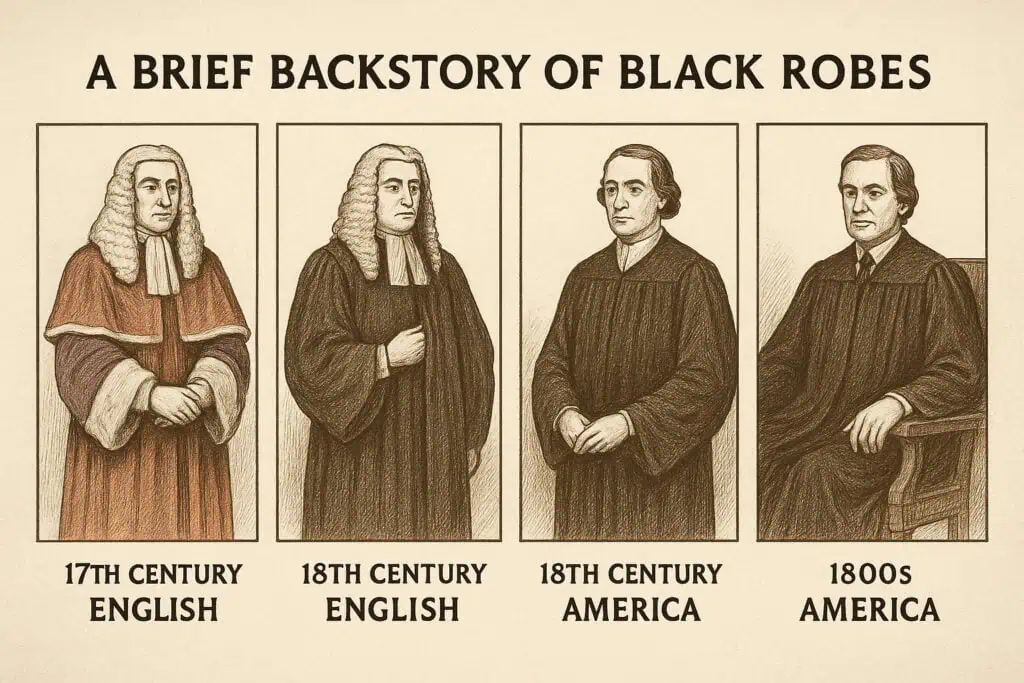
Before we answer the main question, here’s the stage set. Court clothing grew out of English tradition. For centuries, judges and lawyers wore robes and wigs like other learned professions. Colors once varied by season and occasion—violet or scarlet at times, with formal fur trims. Over the 1600s–1700s, styles shifted, and dark robes became common. In America’s early years, judges first looked very British; then the look simplified. By about 1800, U.S. Supreme Court justices were already wearing plain black in court.
What changed in England
A 1635 set of “Judges’ Rules” described court dress; later, black became more common, while brighter colors were reserved for special occasions. Stories link the shift to mourning for a monarch in the late 1600s, but records are mixed on exactly when or why the full change to black stuck.
What Americans did next
Early U.S. judges copied English fashion. Then the Supreme Court moved toward a plain black robe, and by the Marshall era (starting in 1801), that look defined the bench. The institution itself says justices have worn black “since at least 1800.”
So…why do judges wear black robes?
Here’s the heart of it—kept simple and clear.
Neutrality beats personality
A black robe hides the suit, the brand, and most of the body. Therefore, the judge looks like the office, not a private citizen with tastes or status. The outfit pushes attention toward arguments and evidence, not clothes. Former Justice Sandra Day O’Connor put it plainly: the shared robe shows judges’ common duty to the Constitution and the rule of law.
Authority and order
Courtrooms need calm, predictable rules. A uniform helps set that tone right away. The Supreme Court itself treats the black robe as a standing tradition of the institution, which frames the work as serious and formal.
Unity across courts
Because most American judges wear a similar robe, people walking into courtrooms nationwide see the same signal: “law first.” That continuity, reinforced by courts and legal culture over time, is stronger than any one statute.
A simple, American break from royal show
U.S. judges moved away from wigs and bright, ermine-trimmed robes. The black robe reads as plainer and more republican than monarchic. The story that Chief Justice John Marshall modeled and spread the plain style has truth to it—even if some justices were already wearing black.
Tradition that adapts
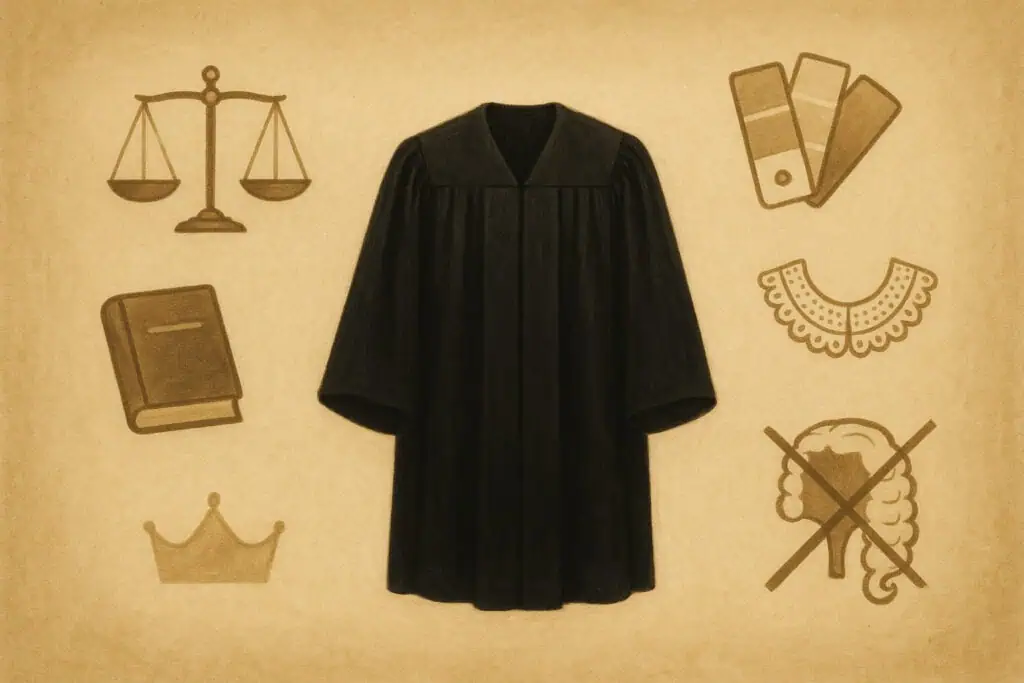
Although the robe is usually plain, small personal touches show up: Justice Ruth Bader Ginsburg’s collars, Justice Ketanji Brown Jackson’s symbolic neckpieces at major ceremonies, or the late Chief Justice Rehnquist’s gold sleeve stripes—his own flourish inspired by an operetta. The base stays black; the details sometimes speak.
FAQs: why do judges wear black robes?
When did judges start wearing black robes?
In England, dark robes grew more common in the late 1600s, with competing theories about mourning for Charles II (1685) or Queen Mary II (1694). In the U.S., the Supreme Court says black was standard by about 1800.
Are judges required to wear robes in the United States?
Not by one nationwide rule. Many courts expect or require it by their own traditions or local rules, but there’s no single federal dress code that binds every judge.
Do all judges wear black?
Mostly in the U.S., yes. However, there are exceptions and ceremonial variations—some state high courts have their own colors or details, and other countries use a rainbow of robes.
Is the color about mourning a queen?
That’s a popular story. Nevertheless, historians don’t agree on a single moment that “made” black the rule; the change likely happened over time. Treat the mourning tale as tradition, not settled fact.
Why do some judges wear special collars or stripes?
They’re personal or ceremonial touches on top of the basic robe. For example, Justice Rehnquist added gold sleeve bars; more recently, Justice Jackson and, before her, Justice Ginsburg used collars as quiet signals. The base still reads as standard black.
Do U.S. judges wear wigs?
No. Early Americans did, but the practice faded by the mid-1800s. Today, U.S. judges generally skip wigs while keeping the robe.
Bonus facts related to why judges wear black robes
“Since at least 1800”
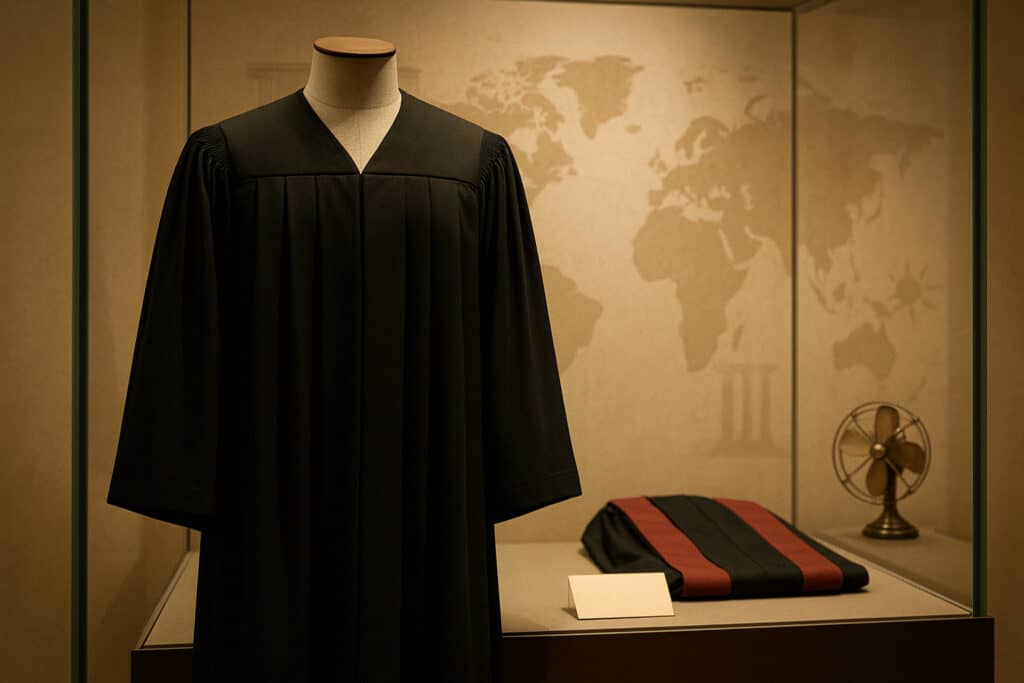
The Supreme Court’s own “Traditions” page notes black robes at the Court from around 1800, and a red-trimmed robe from Chief Justice Jay’s era lives in the Smithsonian.
An iconic garment survives
Chief Justice John Marshall’s black robe is preserved in Virginia collections, right down to fabric and construction details—proof of how simple the early U.S. look was.
Robes evolve with context
Around the world, dress rules keep shifting. For instance, some U.K. courts have periodically reconsidered wigs and formal wear, and even today, debates continue about what helps authority versus what hurts access. In India, extreme heat has led some courts to loosen robe requirements for lawyers during brutal summers—practical needs matter too.
Final word: why judges wear black robes
Why do judges wear black robes? Because the robe is a simple, shared uniform that puts law above personality. It signals neutral judgment, steady authority, and a common duty—values that took root centuries ago and still guide American courtrooms today.
Interested in exploring similar posts? Visit the Hidden Histories & Origins hub for more!