
TL;DR: The dot on the forehead is usually a bindi (a small dot) or a tilak (a mark). People wear it for faith, culture, identity, beauty, or all of these at once. Meanings vary by region, religion, family, and event. There isn’t one single reason, and not all Indians wear one.
The Dot on the Forehead: a quick history
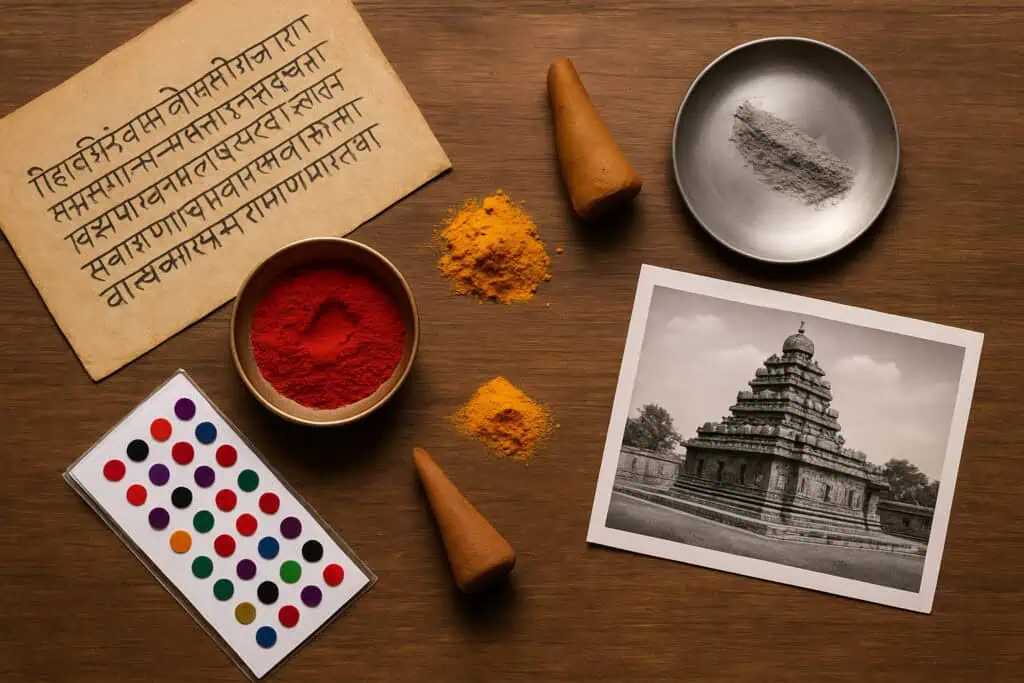
Long ago, people in South Asia began marking the space between the eyebrows. Over time, this became the bindi for many women and the tilak for both men and women during worship or festivals. Materials changed too: ash, sandalwood paste, turmeric, vermilion, and now even ready-made stickers. Because cultures are not fixed, meanings also change across centuries and regions. Today, the same dot can show devotion, marital status, community ties, or simply style.
Historically, a tilak could signal one’s Hindu tradition (such as Shaivite tripundra lines or Vaishnava “U” shapes), while the bindi often appeared as a round dot. Yet daily life blended these uses, so you’ll still see many overlaps. Meanwhile, modern media spread the look far beyond India, and some celebrities adopted it as fashion, which sparked debates about respect and appropriation.
Why do Indians Have a Dot on their Forehead? The short answer
The dot sits where many traditions place the “third eye” (ajna), a symbol of insight and focus. Therefore, some wear it to remember the divine or to aid meditation. Others wear it to mark a life event, like a wedding or a festival day. Still others like how it looks and how it links them to family and culture. Because India is diverse, all these reasons can be true at once.
Bindi vs. tilak vs. sindoor (plain difference)
- Bindi: a dot (or sticker) between the eyebrows; worn by many Hindu, Jain, and Buddhist women, and sometimes by men; used daily or for style.

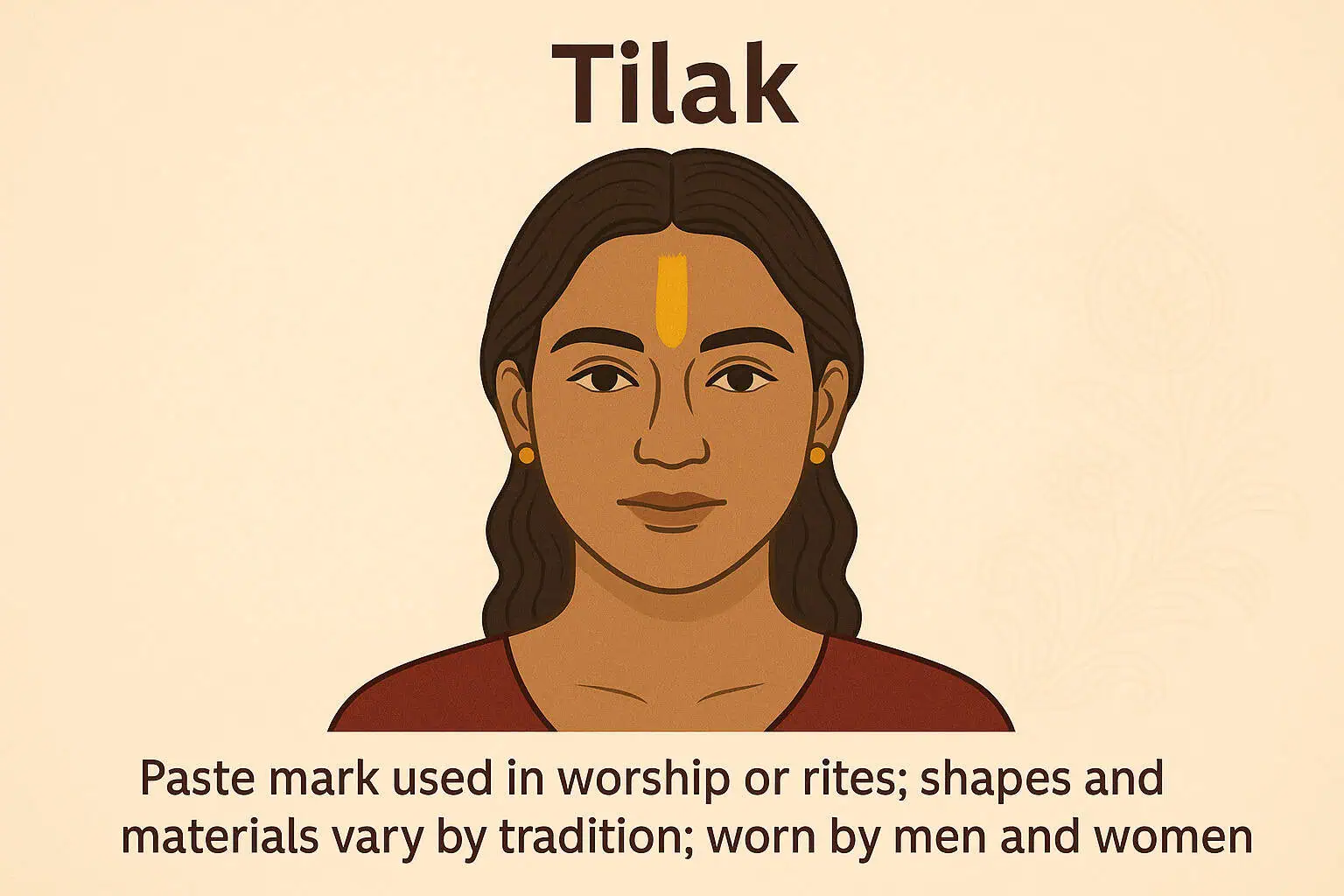
- Tilak: a paste mark used in worship or rites; shapes and materials vary by tradition; worn by men and women.
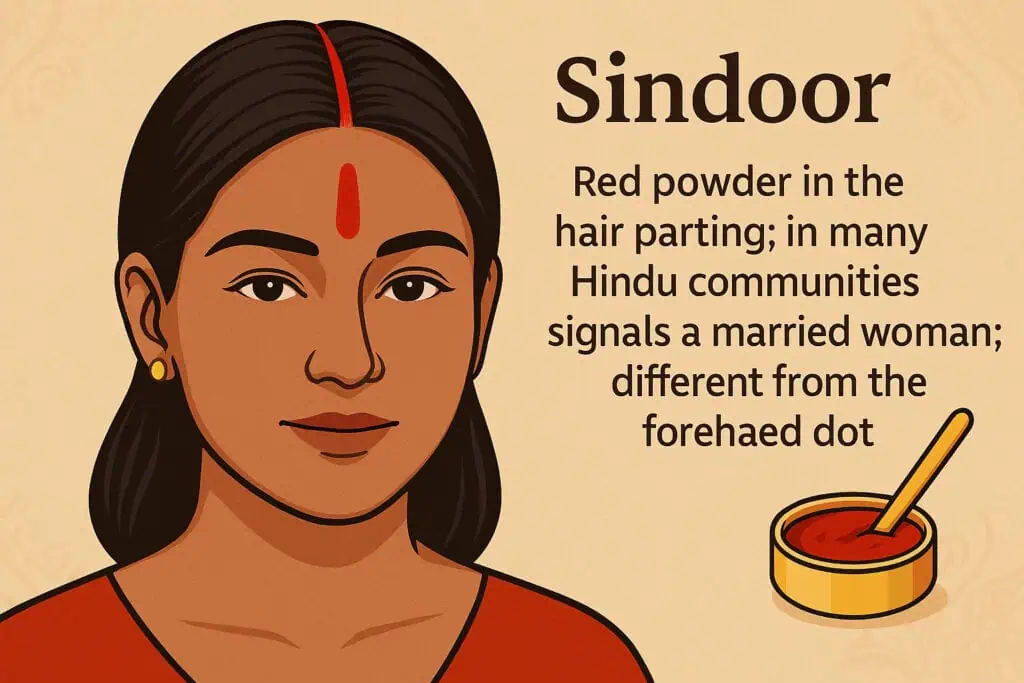
- Sindoor: a red powder placed in the hair parting; in many Hindu communities, it signals a married woman (different from the forehead dot).
Everyday wear vs. festivals
On ordinary days, the bindi can be simple or a tiny sticker. During weddings, temple visits, or big gatherings like the Kumbh Mela, you’ll see brighter bindis and tilaks made with sandalwood, turmeric, or sacred ash. Priests often apply these marks as blessings at festivals.
Colors, shapes, and materials
Red is common, yet black, maroon, gold, and jewel bindis are popular too. Paste marks can be round, vertical, or in three lines; the material and shape often carry community meaning. Even so, fashion and personal taste now play a big role.
FAQs about the Indian dot
Is it only for married women?
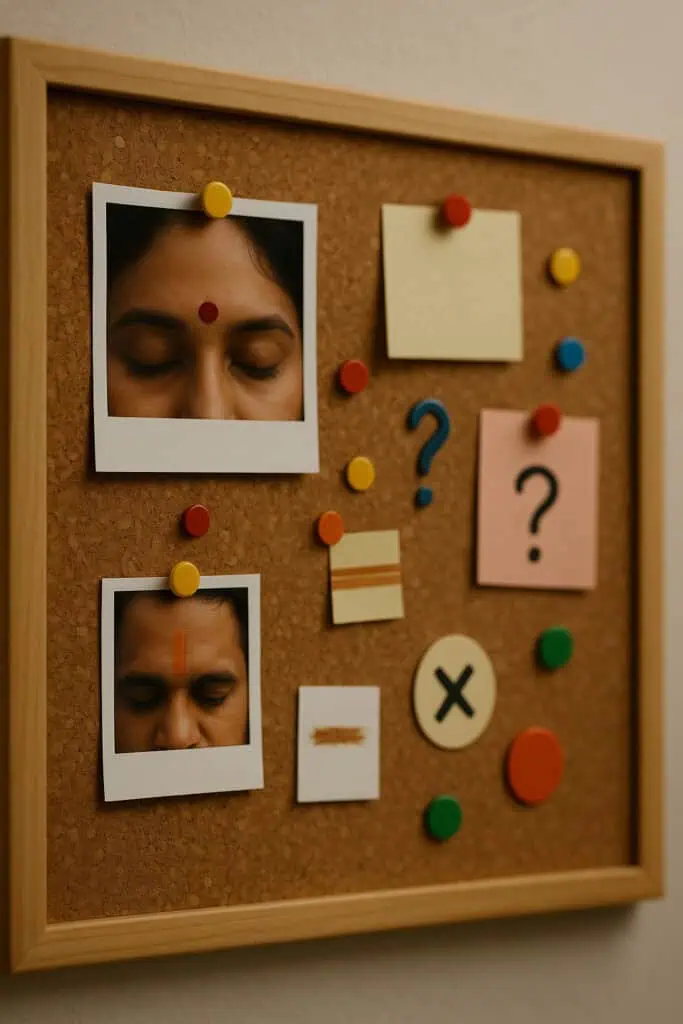
No. A bindi can be worn by married or unmarried women, and men can wear a tilak. Sindoor in the hair parting is the common married-woman sign, not the bindi itself.
Do men wear the dot?
Yes. Men often wear a tilak during worship, ceremonies, or festivals. The mark can show sect, occasion, or blessing.
Is it only Hindu?
Mostly, it is linked to Hindu traditions; however, history shows it was also used among Jain and Buddhist communities. In some places, it’s also a regional style, not just a religious one. Because India and its neighbors are diverse, practice differs widely.
Is the dot a fashion thing or a sacred thing?
Both, depending on the person and the moment. For some, it’s deeply spiritual; for others, it’s cultural or cosmetic. The global fashion industry has sparked debate; still, many South Asians are reclaiming it on their own terms, especially in the diaspora.
What’s the difference between the forehead dot and the red line in the hair?”
That red line is sindoor and, in many Hindu communities, signals marriage. The forehead dot (bindi) may or may not relate to marriage.
Why do babies sometimes have a black dot?”
Some families place a small black kala tika to ward off the “evil eye.” It’s a cultural practice and not the same as the religious tilak.
Why do Indians Have a Dot on their Forehead at weddings?
At weddings, the bindi can be larger and more ornate. The bride may wear red or jeweled designs to match her clothes and jewelry. Grooms and guests may also receive a tilak as a blessing during rites. Because weddings mix faith and family customs, details vary by region, language, and community.
Why do Indians Have a Dot on their Forehead if they are men?
Men often wear a tilak during temple visits, festivals, and life-cycle rites. For instance, a priest might draw three horizontal ash lines for a Shaivite devotee, or a “U” shape for a Vaishnava devotee. The materials (ash, sandalwood, turmeric) carry symbolic meanings in those traditions.
Bonus: Surprising facts about the Indian Dot

- The “third eye” idea: Many associate the spot with the ajna, or “third eye,” a symbol of insight and focus in several Indian faiths. This is a spiritual belief, not a medical claim.
- The medicinal dot: A few years ago, a project called the “Life Saving Dot” infused bindis with iodine to help fight deficiency in rural areas, showing how tradition can inspire public-health ideas.
- Debate and pride: Diaspora communities have both challenged the misuse of fashion and reclaimed the bindi with pride, especially among young women in cities like London.
Final word
If you’ve ever wondered why Indians have a dot on their forehead, remember that there is no single rule. Instead, think of the bindi or tilak as a small sign with many meanings (faith, family, identity, and beauty) woven into everyday life across South Asia and its diaspora.
Interested in exploring similar posts? Visit the Cultural Rituals & Society hub for more!