
TL;DR: Hamsters run on the wheel because the wheel lets a hamster act like it would in the wild—move a long way at night, burn energy, and feel busy. The steady spin also feels good and keeps the brain active. When the wheel is the right size and design, this habit is healthy. If your hamster runs so much that it stops eating, loses weight, or looks sore, change the setup and talk to a vet.
Why do hamsters run on the wheel? A short history

Hamsters became common pets in the 20th century. As more people kept them, owners noticed the same pattern: lots of nighttime movement in the cage. Early cages were small, so people added a spinning toy to give the animal something to do during the dark hours. Wire wheels were easy to make, so they spread fast. Over time, welfare groups advised safer, solid-running surfaces and bigger sizes to protect backs and feet, and those designs grew popular.
Scientists also used wheels to measure how active small animals are. That made wheels even more common in homes, because people saw that running was normal, not odd. Today, rescue groups and vets still suggest a good wheel as standard kit for a healthy cage.
For background on safe housing and wheel types, see the hamster care guidance from the RSPCA. And if you’re curious about wild behaviour, researchers have even filmed small animals choosing to run on a wheel outdoors, without cages, which shows the urge to run is natural and not only a “cage thing”.
The 5 reasons why hamsters run on the wheel
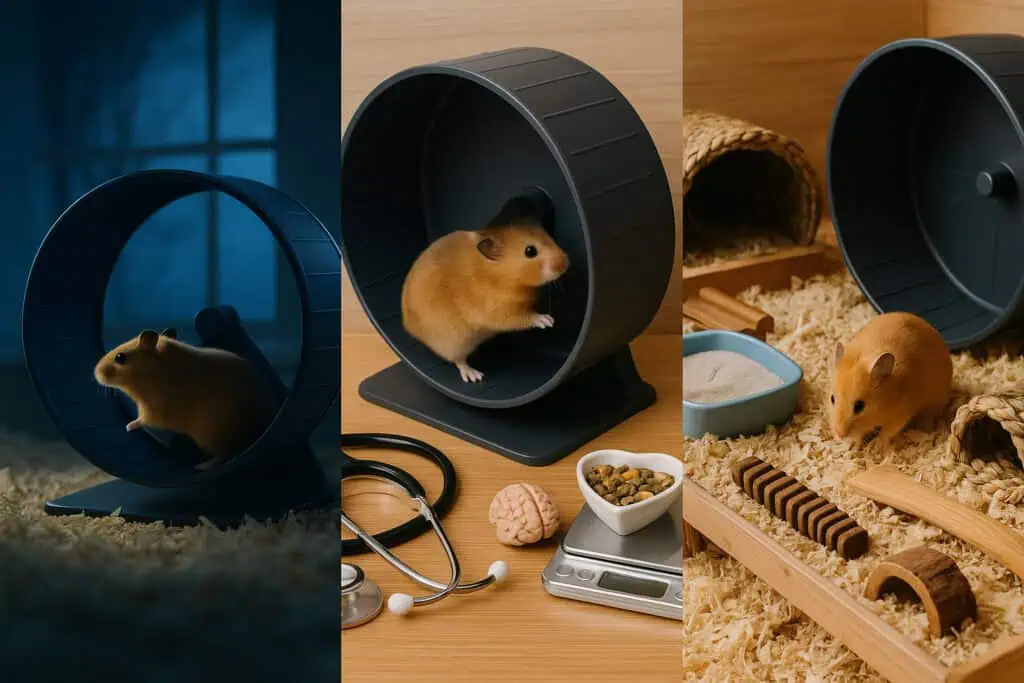
Running looks simple, yet several needs sit behind it. Taken together, they explain why hamsters run on the wheel so often and so fast.
Night miles are in their nature
In the wild, hamsters travel far to find food, avoid danger, and explore. Your pet still has that same body and brain. The wheel is a safe way to “go somewhere” even though the cage has walls. Because nights are when hamsters are most awake, the wheel usually spins after dark. Therefore, late running is normal.
Exercise keeps the body in balance
Like us, hamsters need movement to stay fit. Regular running helps weight control, keeps hearts stronger, and supports joints. It also helps prevent boredom nibbling. A well-sized wheel is a simple way to meet this need every single night. For practical tips on cage layout and activity, the PDSA’s hamster housing advice is a great starting point.
The spin feels rewarding
Repetitive, smooth movement can feel good. The brain releases “feel-better” signals after effort, so the wheel becomes a pleasant habit. Because the wheel responds instantly, the hamster learns, “I move, and the world moves with me,” which is very satisfying. That instant feedback helps explain why hamsters run on the wheel even when they already exercised earlier.
It fights boredom and stress
Hamsters are clever. If a cage is dull—no deep bedding to dig, no tunnels, no toys—the wheel can become the only fun thing around. So they use it more. Add sand baths, chew items, scatter-feeding, and proper space, and many hamsters split their time in a healthier way. You could check the Blue Cross’s care pages for a sense of good enrichment basics.
It’s the easiest “route” in the cage
Even in a rich cage, the wheel is always available, safe, and simple to use. It doesn’t depend on you hiding treats or changing layouts. So, of course, it becomes a daily go-to. This easy access is another reason why hamsters run on the wheel so reliably.
Quick setup checks
- Use a solid running surface (no rung gaps).
- Pick a large diameter so the back stays straight: big Syrians usually need 28–30 cm (11–12 in), many dwarf species need 20–28 cm (8–11 in).
- Make sure the axle is covered and the front is safe, so fur and feet don’t catch.
- Keep the wheel quiet; noisy cages can stress both pet and people.
FAQs: why hamsters run on the wheel
Is all-night running normal?

Yes. Hamsters are nocturnal or crepuscular. However, if you can’t sleep, place the cage in a room where the noise won’t bother you, or choose a silent-style wheel.
How long is “too long”?
There isn’t a single number. Instead, watch your pet. If it ignores food and water, looks very thin, or has sore feet, something is off. Improve enrichment, check wheel size, and consider a vet visit.
What wheel size should I get?
As a rule, bigger is safer. The back should look straight, not bent. Syrians often need 28–30 cm (11–12 in). Many dwarfs need 20–28 cm (8–11 in). Because brands differ, watch your hamster’s posture and upgrade if needed.
Could the wheel be harmful?
A safe wheel helps more than it harms. Yet wire rungs, sharp edges, or a tiny diameter can cause injuries. Solid, large, well-built wheels are best. If your hamster is ill, recovering, or pregnant, ask a vet whether to limit running for a short time. For health red flags (like sudden weight change or wet tail), the ”signs of illness” section of the MSD’s Veterinary Manual gives a clear overview.
Why does my hamster bite the bars but still run a lot?
Bar biting usually means the cage is too small or too empty. Add deep bedding for digging, hide food, and provide toys. Also, a larger, safe wheel can reduce stress because it meets the need to move.
Do dwarf hamsters run more than Syrians?
Some do, some don’t. Personal temperament matters. However, smaller bodies often mean more quick “bursts,” so it can look like more running. Either way, the same safety rules apply.
Bonus: fun facts related to why hamsters run on the wheel

- Hamsters store snacks in cheek pouches and may hop on the wheel after packing a “groceries run.” The pouches can stretch far but should stay clean and empty after eating.
- Running can lower stress if the cage is also rich in tunnels and bedding. Movement plus digging is a powerful combo.
- Some hamsters prefer a flat “flying saucer” style, while others like a classic upright wheel. Offering both types can spread wear and tear on paws.
- Good exercise supports healthy weight, which helps joints and may reduce risks linked with rich diets (for simple diet do’s and don’ts, check RSPCA‘s guide).
- Wheels help you spot problems early. A sudden drop in running can hint at pain or sickness. Because of that, daily notes about run time and appetite are a smart habit.
Final Word: why do hamsters run on the wheel
Why do hamsters run on the wheel? Because it meets natural needs—night travel, exercise, and mental comfort—in a small space. Choose a large, solid, quiet wheel; add deep bedding, tunnels, and chew toys; and keep an eye on weight and skin. With those basics, the wheel is not a sign of trouble. It’s a sign your tiny explorer has a safe road to run.
Interested in exploring similar posts? Visit The Science of Everyday Life hub for more!
They have lots of energy to burn from all the sleeping during the day