
Popular belief holds that the ring is just for show or to make a bull seem tough. But, as you will discover, it is more about a tiny spot in the nose that ”talks” to the brain about pressure and pain, how people use leverage to guide big animals, and how the “flight zone” shapes movement. Learn how keywords like septum, nociception, and bull staff all work together to answer today’s question.
Tools and traditions
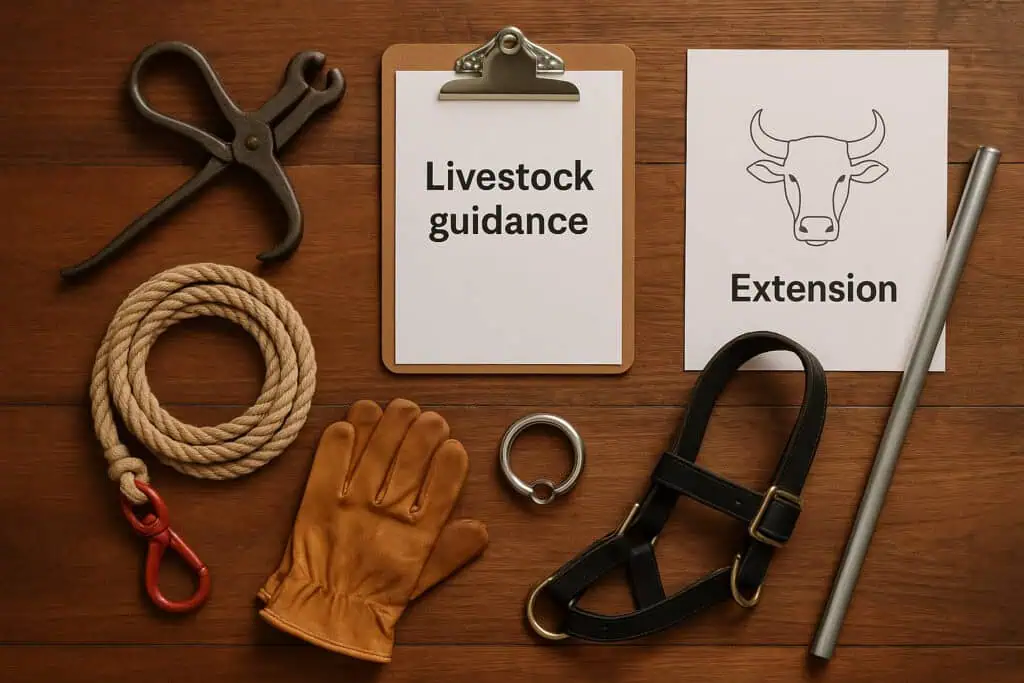
Across farms and fairs, people copied what kept them safe and in control, then passed it along. Handlers learned to pair a halter with additional tools that target the most responsive parts of the head and face. Safety agencies and stockmanship teachers later wrote those habits down, turning them into guidance and rules. In some places, official advice even names an age to ring a bull and reminds owners to check that ring often, because the goal is steady control, not force for its own sake.
Public shows took the same path. Organizers wanted a calm ring, steady animals, and safe crowds, so they added simple requirements for stronger control. Many show programs now expect bulls to be led with both a halter and a nose lead, treating the two lines like a team so pressure can be shared and released smoothly. Extension guides teach that method to kids and adults alike, not as a trick, but as a routine for safer, quieter stockmanship.
Welfare groups also weigh in. They do not treat the ring as a fashion item. Instead, they frame it as a control point that must be used with care, fitted by trained personnel, and handled properly. Some groups approve its use only when needed for safety, and they argue for training and facilities first. That welfare stance keeps the focus on calm, low-stress handling and on avoiding pain outside of brief, controlled cues.
Because this is so common, people often ask why bulls have nose rings at all, and the answer sits at the crossroads of animal behavior, simple physics, and basic nerve biology.
Force and feedback
Sensitive septum signal
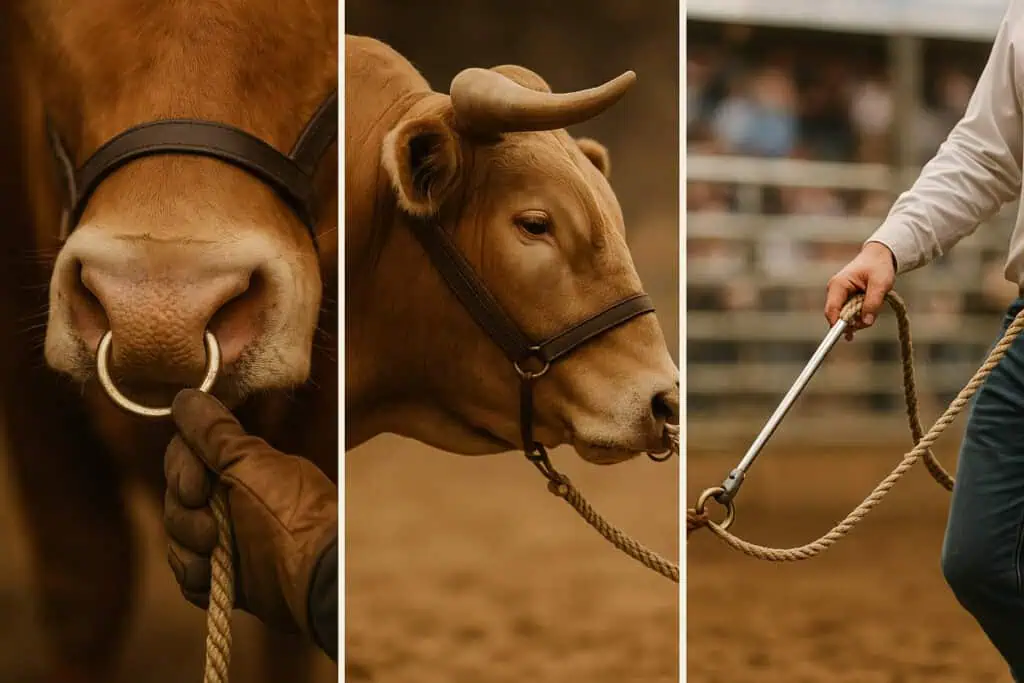
A bull’s nasal septum has many nerve endings, so even small pressure sends a clear signal. Handlers first guide the head with a halter, then, only as needed, add a light cue to the ring. That second cue is felt fast and specifically, which helps the bull choose the easy path and step with the handler. After all that, the reason becomes plain near the end: the ring gives a strong, low-force control point that the animal pays attention to right away.
Mechanical advantage at the head
The head steers the body, and the nose is far from the bull’s power center. When a lead is attached correctly, a tiny movement near the nose can redirect the whole frame. The leverage works because the head turn breaks momentum before the shoulders and hips can push through. With that setup, handlers can move a lot of bull with very little pull.
Two lines, one message
Good handlers rarely rely on a single line. They balance the halter and the nose lead so pressure is shared, then release it the moment the bull follows. That shared feeling keeps the head level and the steps calm, which protects people in close quarters, such as alleys and show rings. After watching the pattern, it becomes clear at the close: the ring is part of a two-rein system that turns a risky push-and-pull into a quiet, predictable walk.
Distance and safety devices
On some jobs, a bull staff or pole clips to the ring to keep space between the animal and the handler. Space buys time, and time prevents accidents. Museums and farm-safety resources describe how poles, tongs, and temporary nose leaders evolved to keep people out of striking range while still giving clear cues. Seeing how these tools maintain a safe radius makes the conclusion straightforward: the ring is the anchor that lets safer distance tools work when risk is highest.
Rules, venues, and calm crowds
Rules at shows and studs aim to make public spaces predictable. Organizers need bulls that can lead, stop, and stand quickly, even amid noise and with strangers nearby. So they require a permanent nose lead on bulls and expect handlers to use it with a halter. When you put those rules alongside crowd-safety needs, the endpoint becomes obvious: the ring is required in many venues because it reduces the risk of a hard-to-stop surge in a busy area.
Welfare and limits
Welfare policies emphasize training first, facilities that guide movement, and minimal force. They treat the ring as a last step in a chain of safer handling methods, and they call for skilled fitting and quick, calm use. That perspective leads to the final takeaway in this section: used with know-how, the ring is a brief, precise signal, not a constant source of pain.
Frequently Asked Questions
Do rings hurt all the time?
Pain comes from pressure on nerves, not from the ring’s presence alone. After healing, the ring sits quietly, and discomfort rises only when a handler adds a quick cue. Welfare groups still push for careful fitting and high handling standards so bulls do not feel pressure when standing around, which is why discussions about bulls with nose rings often include training and facility design, not just hardware.
Why not use a halter only?
A halter controls the head, but some bulls need a clearer signal in tight spaces. The ring gives a precise message that most bulls respect right away, and, when needed, it also lets a staff clip on to keep the handler out of reach. That extra layer of control and distance explains why bulls have nose rings in places where people and animals mix closely.
Are all bulls ringed everywhere?
Use varies by region and job. Range bulls that rarely see people may not be ringed, whereas show bulls and studs are commonly ringed. In some countries, safety advice even recommends ringing at a set age for bulls that will be handled frequently. The pattern shifts with risk and venue, which is why the practice is common in shows and busy facilities.
Is a nose ring a fix for aggressive behavior?
Temperament, training, and good facilities do the heavy lifting. The ring helps direct the head and add a quick, clear cue, but it cannot replace safe pens, calm handling, and a smart plan. Injury reports and safety guides keep pointing back to preparation and design as the main preventers, and to the ring as a helpful part, not a cure-all.
Is a bull’s ring the same as those flaps used on calves?
They are different tools. Calf nose flaps are temporary anti-suckling devices used during weaning; they work by blocking nursing rather than guiding movement. They have their own pros and cons and are not about leading adults at all. Knowing the difference helps keep the focus on why bulls have nose rings versus why calves wear flaps during weaning.
Bonus: Fun Facts
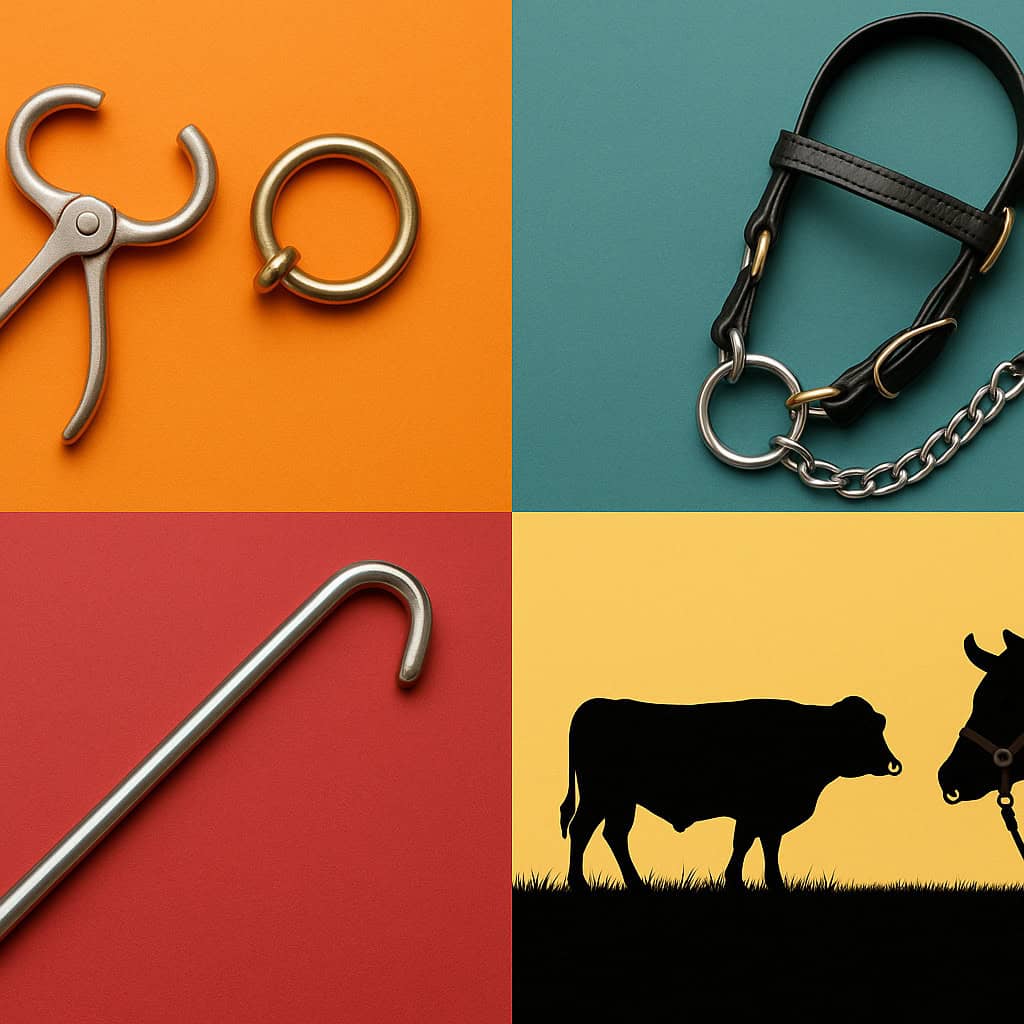
Beyond the basics, the evolution of stock handling tools reveals a few hidden details.
Temporary versus permanent
Vets and handlers sometimes use temporary “nose leaders” or tongs for short procedures. Permanent rings, by contrast, are fitted once, allowed to heal, and then used as needed, often alongside a halter. The same bull may see both tools in different settings, which keeps pressure brief and targeted.
Show-ring choreography
Show rules often require a halter plus a permanent nose lead on bulls. Handlers learn to blend the two lines so pressure turns into a quick step, then a release. That shared feeling calms the animal and protects everyone nearby.
Safety by distance
Bull staffs clip to the ring so a handler can steer without standing in the danger zone. The idea is simple: add a safe buffer that buys time if a bull swings or surges. Museum notes on the evolution of these tools show how farmers kept tinkering until the pole, clip, and ring worked smoothly together.
Country-by-country rules
Some official advice sets a typical age for handling bulls and stresses routine checks. Those guidelines tie the practice to training and safe facilities rather than to tradition alone. Because rules differ, traveling with stock often means reading local expectations in advance.
Final word
Seeing the ring as a gentle steering wheel instead of a badge changes the picture. It reframes a common sight as a small tool that helps a half-ton animal and a person move together with less force and more safety. With that in mind, what other farm tools seem harsh at first glance, yet, when used with skill, are really about clear signals and less stress?
Interested in exploring similar posts? Visit The Science of Everyday Life hub for more!