
Most people think a bull sees red and flips into instant rage. However, the real reason lies in how a prey animal’s vision and nervous system respond to motion, pressure, and crowding. Keywords to watch out for are dichromatic cones, flight zone, and muleta tradition. Let us begin!
Arena traditions and lore
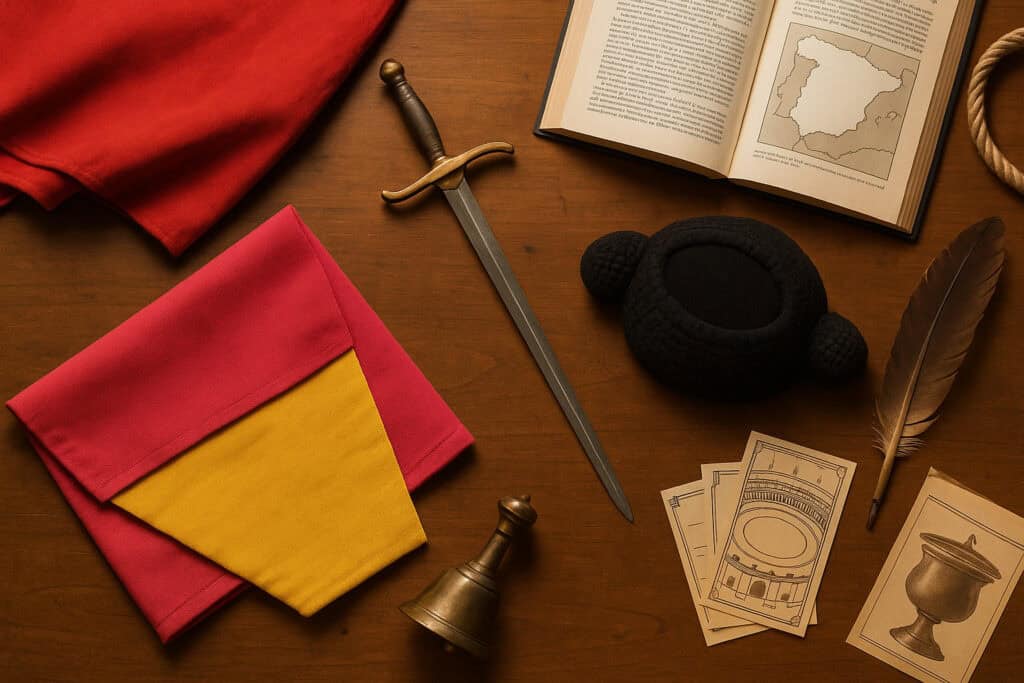
For centuries, the public image of the sport fixed one detail in everyone’s mind: a red cloth in a noisy ring and a massive animal trained on it. In Spain, the performance has featured named stages, specialized tools, and a style that has grown with culture and spectacle. The small cloth used in the final act is called the muleta, and it traditionally appears red, while the earlier, larger cape, the capote, often shows magenta on one side and yellow or blue on the other. That design choice came from custom and stagecraft, not from any proven color-trigger in the animal.
Because stories get repeated, the phrase why do bulls hate red stuck as a kind of shortcut answer. The ritual was easy to picture; it felt intuitive and carried well into cartoons and ads. That is how a show move became a “fact” in everyday speech.
Senses and signals combined
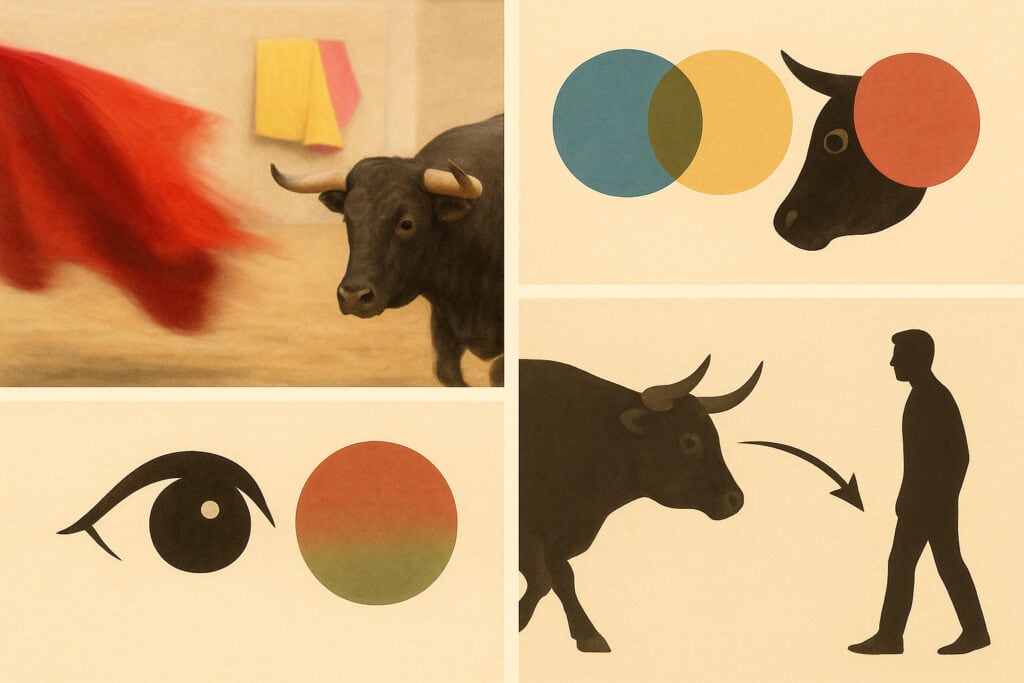
A big animal does not make a choice in a vacuum. It reads light, edges, and movement, it reacts to pressure on its personal space, and it carries a stress load from the crowd and the chase. When people ask why bulls hate red, the better path is to trace each part of that system before naming the outcome.
Motion over hue
Start with what the eye notices first when a body is under stress: change. As a large prey animal scans for danger, motion pops out more than any single color patch. Controlled trials in popular demonstrations and simple field tests have shown that stationary colored targets do not draw strong charges, while moving cloth or people do. That matches how working cattle respond on ranches when flags, paddles, or handlers step and turn. Put all of that together, and the animal’s aggression tracks movement far more reliably than pigment.
Dichromatic Vision
Next, look at the hardware. Cattle are dichromats, meaning they use two cone types rather than three, as most humans do. Lab work mapping bovine photopigments shows sensitivity peaks that support blue and yellow perception, with limited separation of reds and greens compared to us. In practice, long red wavelengths do not stand out as a special “rage signal.” Researchers have documented this photopigment basis in classic vision studies. Because those pigments do not carve out “red” the way a human retina does, the bull’s visual hardware simply does not flag long red wavelengths as a specific danger signal.
Near-360° Field of View
Then consider the layout. Cattle see almost all the way around their bodies, with a small blind spot directly behind them. That wide field makes sudden movement anywhere in that arc more important than the shade of a cloth. It also explains why a quick step into the wrong angle can trigger a spin or a rush. Handling experts have long taught that the wide-angle vision makes motion and angle the main drivers of balking and charges.
Visual Clutter Sensitivity
Depth perception is weaker when the head is up, and strong contrasts on the ground can look like holes or steps. In noisy, high-contrast settings, a nervous animal has even more reason to lunge past a fast-moving object than to fixate on a color patch. Extension educators coach simple facility tweaks to reduce stress, like smoothing color transitions on floors and eliminating harsh shadows. The University of Wisconsin’s livestock group gives a plain-language guide to these sight issues in their note on cattle senses and handling.
The Personal Space Bubble
Finally, pressure matters. Every animal has a flight zone, a personal space bubble that shrinks with calm handling and grows with fear. Step inside that bubble at the wrong time or angle, and you get movement, often fast. Learn to work the edge of that zone, and you can direct cattle quietly without drama. That basic rule explains a lot more charging than any cloth color does. Once you watch how pressure, motion, and angle combine, you see that pressure and timing are the real drivers of charging behavior.
Frequently Asked Questions
Do red clothes make me a target near cattle?
Clothing color rarely decides the outcome on its own, since an animal first reads motion, angle, and pressure. Calm stance, slow steps, and staying out of the blind spot matter far more than the color on your shirt, as basic handling guides and field tests suggest.
If bulls do not key on red, why is the muleta red?
Stagecraft, tradition, and the final act drove that choice. The small cape appears in the closing phase, and its color indicates cleanliness to the crowd. You can see the cultural background in Britannica’s overview of the spectacle.
Can cattle see any colors at all?
Color vision exists, just not like ours. With two cone classes, cattle sort some wavelengths but blur many reds and greens together. That is why scientists call their vision dichromatic.
What actually triggers the charge in a ring test?
Change and pressure do. When flags or people are still, charges are weak. When cloth whips or handlers move into the flight zone, charges rise.
Is there anything special about bright red light in barns?
Lab notes sometimes report arousal differences under different lights, yet that is not the same as a specific hatred of a red cloth. In handling, motion, and pressure, real-world behavior still dominates, which is why trainers focus on angles, pace, and quiet facilities.
Why do people still ask, “Why do bulls hate red”?
Because the picture is sticky. A red cloth in a dramatic setting is easy to remember, so the image beats the mechanism in everyday talk. Once you learn how vision and flight zones work together, the shortcut loses its shine.
Bonus: Fun Facts
Beyond the arena, the physics of bovine vision reveals a few surprising footnotes.
- The coat used earlier in the show is typically magenta on one side and yellow or blue on the other, underscoring that tradition, not animal optics, sets the color palette.
- Cattle can see nearly all around their bodies while grazing, which makes sudden movement anywhere in that arc more important than a single color patch.
- Photopigment studies in cattle, goats, and sheep reveal the same two-cone pattern across these ungulates, supporting similar color limits in related species.
- Extension teams teach low-stress handling to reduce injuries and speed work. Understanding the animal’s point of balance and flight zone.
- Behavior studies measuring color discrimination in cattle focus on controlled lights and brightness, reminding us that lab color tests and real-world charging are not the same problem.
Final word
Now that you have read this post, you will stop asking the wrong question and start watching space, steps, and stress, turning a myth into a checklist: where am I standing, how fast am I moving, and what is the animal seeing right now? Once you see behavior as a system, what other old “obvious truths” might be ready for an upgrade?
Interested in exploring similar posts? Visit The Science of Everyday Life hub for more!