
Most people think the mask is just a fashion moment or a tough-guy prop. The real story sits where broken bones, league rules, and smart materials meet. Keep an eye out for orbital fractures, clear-only approvals, and ultra-tough polycarbonate/carbon fiber—we’ll tie those threads together in a minute.
From Bruise to Blueprint
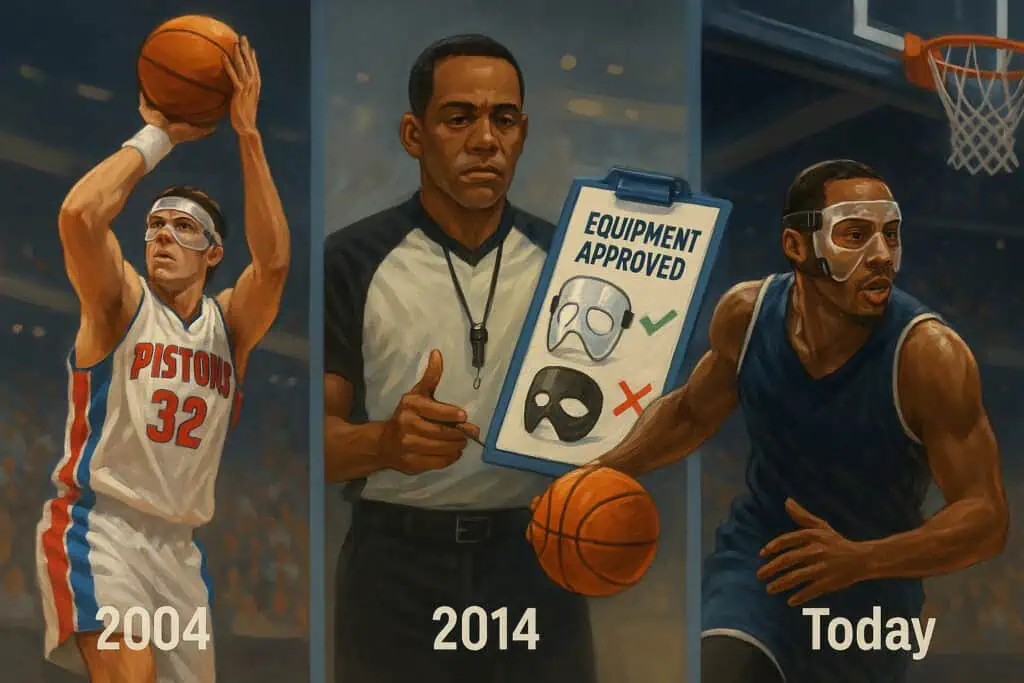
Basketball has always had elbows, tip-ins, and clashes under the rim, so facial injuries have never been rare. Over time, teams and doctors began using custom shields so injured players could keep competing while they healed. Fans noticed, too, because a mask instantly changes how a player looks on TV. Because the NBA approves what players can wear, certain styles—especially clear masks—became the norm. Meanwhile, some stars turned the look into a moment, which kept masks in the public eye. We’ll answer the “why” in the next section.
When Legends Went Clear
You may remember Richard “Rip” Hamilton, who broke his nose during the Pistons’ 2003–04 season and kept the clear mask for years. Later, Russell Westbrook wore a mask after a cheek fracture and hung 49 points in an OT win. These moments made the gear iconic, even if each case started with a medical need.
The Approval Gate
The NBA requires equipment to be appropriate and approved; historically, the league has asked players to switch from dark masks to clear ones during games. That’s why you usually see transparent guards instead of black versions.
Three Green Lights
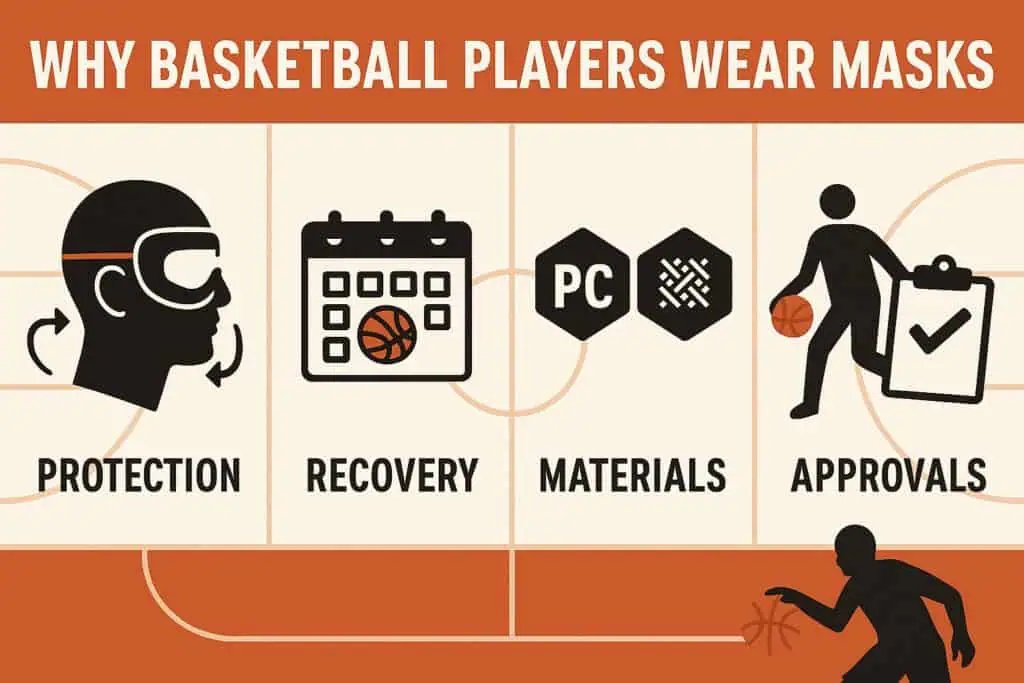
Now, let’s answer the core question in plain English.
Force Spread, Face Safe
A mask spreads out the force from a hit so the impact doesn’t land directly on a healing bone. Therefore, the shield lowers the chance of another break while bones knit. Medical reviews and case reports support mask use after nasal, orbital, and zygomatic (cheek) fractures, and many clinicians recommend weeks of protection while swelling and bone stability improve.
Back Sooner, Still Safe
Custom masks let athletes get back on the floor sooner without taking reckless risks. A consensus paper on elite sports notes players can return surprisingly fast after surgery when protected by a customized face mask. In the NBA, research shows most players with facial fractures return to play and do not see a major drop in performance.
Headspace Under Contact
Even when the bone is stable, a player who just took a shot to the face might be hesitant. A mask can reduce fear of contact, which helps an athlete drive, rebound, and defend with less second-guessing. And yes, sometimes the “masked” swagger becomes part of a player’s identity for a short stretch. (That said, the main purpose is still medical.)
Frequently Asked Questions

What injuries lead to masks?
Mid-face hits do the most damage, so guards usually follow nasal breaks, cheekbone (zygomatic) fractures, orbital injuries, or fresh facial cuts. Teams confirm with scans and exams, then build protection for the exact spot that took the hit.
How long do players wear the mask?
Healing drives the calendar. Some cases ride a few weeks of shielding (often quoted around three to six), but the real call comes from bone stability, swelling, and risk in that player’s role.
Are masks mandatory in the NBA?
Approval matters more than blanket rules. The player and medical staff make the case, the league signs off, and only gear that meets safety and visibility standards hits the floor.
Why clear vs black masks?
Visibility wins on court. Clear shields let refs, cameras, and opponents read the face, which is why dark versions often get swapped out once the league weighs in. The NBA famously told LeBron James to switch from a black mask to a clear one in 2014.
Do masks hurt performance?
Fit and confidence decide more than the plastic. Many players return near their baseline once swelling settles and the mask is tuned to their face and sightlines.
What are some well-known “masked” performances?
Hot nights happen—think big scoring bursts from stars who’d just protected cheek or orbital repairs (Russell Westbrook). The memorable part is the output; the mask is the green light that made it possible.
Bonus: fun facts about basketball and masks
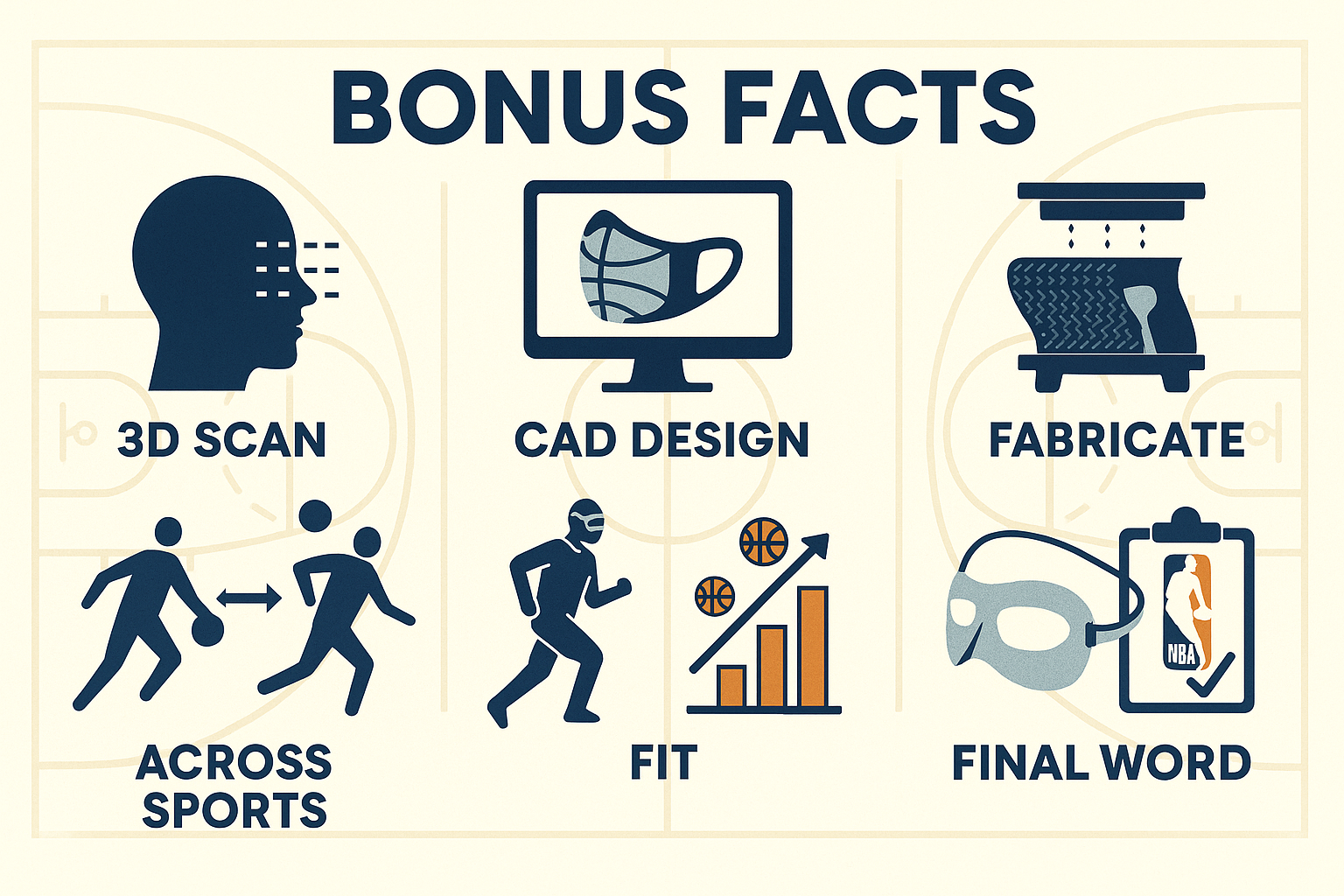
How custom happens, step by step
Modern protection relies on precision fitting before the mold is even cast. Clinics often 3-D scan an athlete’s head, design a guard on the computer, and fabricate a mask that targets protection to the exact injured area. Because the edges and padding are tuned, the device stays put during sprints and screens.
Masks are part of a wider sports trend
Across sports, face guards help athletes return earlier after mid-face fractures by moving impact forces to thicker, safer areas. Materials and methods are similar whether you’re on a soccer field or an NBA court.
Injury numbers in the modern NBA
A recent analysis reported hundreds of facial injuries across five NBA seasons, with fractures making up a notable slice. That’s one reason you still see masks pop up every year.
Final word
The mask isn’t a costume change; it’s a strategy. See it and you can read the whole plan: protect the hot zones, keep the rhythm, and borrow time while bone catches up. Once you view that clear guard like a throttle, not a prop, the comeback plays look different—and a lot smarter.
Interested in exploring similar posts? Visit The Science of Everyday Life hub for more!