
Most people assume those knee bands are just for style or a quick way to jump higher. However, the real story comes from sports-medicine basics: a small infrapatellar strap sitting under the kneecap and its relationship to the patellar tendon.
Once terms like patellar tendinopathy, strain mapping, and landing mechanics enter the picture, the choice to wear one starts to make practical sense.
From Courts to Clinics
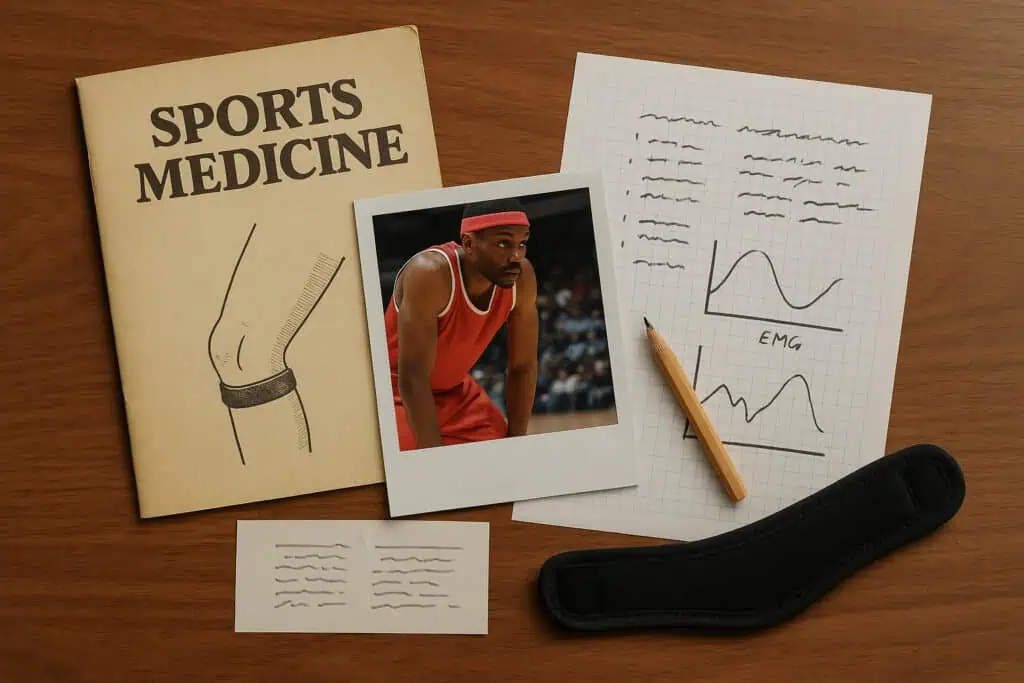
For decades, athletes in jumping sports—basketball and volleyball especially—have used simple straps, sleeves, and braces around the knee. Early “infrapatellar” (under-kneecap) straps showed up in the sports-medicine market more than 30 years ago as a low-cost add-on to rest, rehab, and strength work.
Meanwhile, researchers kept asking how these tiny bands might change forces at the knee and whether that change could matter for pain. Over time, lab and clinic papers explored effects on tendon strain, patellofemoral pressures, and muscle activation during landings. The science grew slowly, yet the bands stayed popular because they were cheap, easy to wear, and sometimes offered quick comfort on court.
Targeted Tendon Strategy
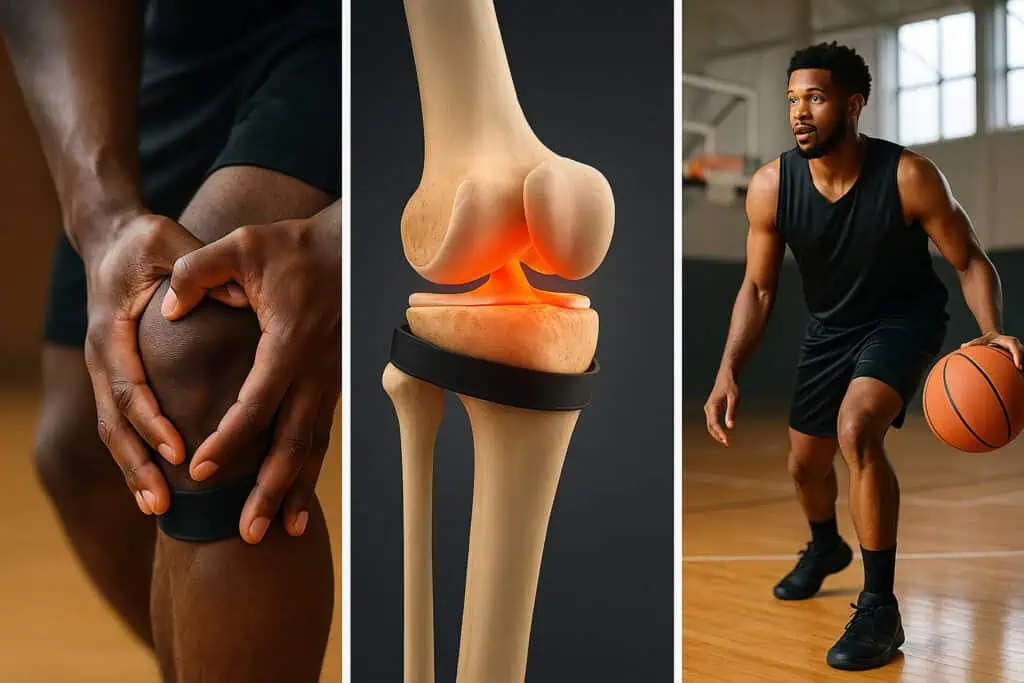
That little band isn’t actually supporting the knee joint like a big brace does. Instead, it’s doing a very specific mechanical job on the tendon right below the kneecap. By changing the angle of the stress during a jump, it acts like a shock absorber for the ‘hot spot.’ It’s a tool to keep you on the court, but it definitely doesn’t replace hitting the gym.
Use Cases on Court
These bands are most often used for patellar tendinopathy (a.k.a. “jumper’s knee”). They’re also seen with Osgood-Schlatter in youth athletes and with general front-of-knee pain from lots of running and jumping. Because hoops players load the tendon on almost every possession, many find the strap practical during games or intense practice, especially when pain spikes but performance still matters.
What the Strap Changes
Several studies suggest what’s going on under the hood. A computational and imaging study found that infrapatellar straps can reduce localized strain at the common jumper’s-knee hotspot by changing the patella–tendon angle and slightly shortening the tendon during knee bend.
In young athletes with patellar tendinopathy, another study reported less pain during jump tests while performance stayed the same. Additionally, work on landing mechanics shows altered quadriceps activation before landing, which may take a little stress off the tendon. Together, this points to a modest, situation-specific benefit for some athletes.
Frequently Asked Questions

Do these bands actually work, or is it placebo?
Evidence is mixed but promising for specific cases. Lab modeling shows reduced tendon strain with straps, and controlled tests in young athletes show less pain without hurting jump height. Still, straps don’t help everyone, and they’re not a long-term fix by themselves.
Will the band make me jump higher?
Studies isolate pain relief as the primary benefit rather than a boost in jumping performance. That’s useful during games, but don’t expect a vertical-leap upgrade.
Can the band prevent knee injuries?
A major review on front-of-knee pain (patellofemoral pain) found low-quality evidence that braces/straps don’t reliably improve pain or function when used alone alongside exercise. Prevention still leans on load management, strength, landing mechanics, and good footwear.
Is a knee sleeve the same as a patellar strap?
The mechanical difference is distinct: a sleeve gives general warmth and light compression to the whole joint. A patellar strap gives focused pressure to one tendon. Some players like a combo (sleeve + strap) for comfort, but the strap targets the patellar tendon more directly.
Do NBA or college players wear them for style?
Some do wear visible bands, but the main reason is comfort and pain relief during high-impact play. Athletes often report the strap helps them tolerate jumping and cutting after a flare-up. Style may be a bonus, yet function is the point.
Bonus: Names and Lab Notes
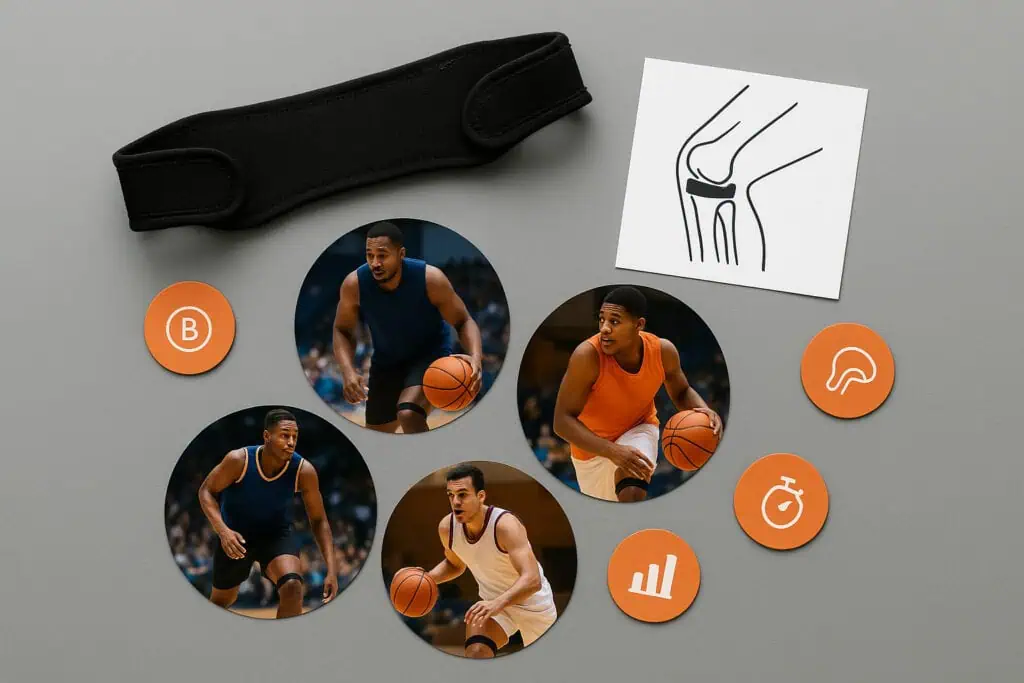
- They have many names. You’ll see “patellar strap,” “infrapatellar strap,” “patella band,” or even brand names like Cho-Pat in research papers and clinics. Different brands tweak pad shape and tensioning, but the idea is the same.
- They’re studied in labs, not just gyms. Beyond pain scores, researchers analyze how straps change tendon angles, muscle activation, and landing forces, using motion capture, EMG, and computer models. That helps explain why some people feel better in them.
- They show up outside basketball. Runners, volleyball players, and even dancers use them during high-load phases. That cross-sport use is one reason the evidence base keeps growing.
- They aren’t magic. Even supportive summaries point out that exercise therapy (like progressive quadriceps and tendon loading) remains the main pillar for patellar tendinopathy. The strap is an accessory, not the star.
Final word
Make a simple rule for yourself: the strap stays only if pain is lower and movement feels natural. Any numbness, pinching, or skin marks means it’s too tight or in the wrong place. Don’t wear it all day, don’t sleep in it, and don’t use it to push through sharp pain. It’s there to make practice manageable while you fix what needs fixing.
Interested in exploring similar posts? Visit The Science of Everyday Life hub for more!
Take care of your joints when you train, folks!