
TL;DR: why are there no snakes in Hawaii? Because the islands evolved without native land snakes and, today, Hawaii uses some of the strictest import rules in the U.S. to keep them out. A tiny, harmless “Hawaiian blind snake” does live in soil around gardens, and rare yellow-bellied sea snakes can wash ashore during storms, but there are no established populations of dangerous land snakes.
A quick backstory: how Hawaii ended up so different

Hawaii sits alone in the Pacific, thousands of miles from the nearest continent. For millions of years, plants and animals only arrived by wind, wings, or drifting across the ocean. That isolation shaped a wildlife mix unlike anywhere else. Scientists point out that Hawaiʻi historically had no native land reptiles, which helps explain why snakes never took hold naturally. You can see this bigger picture in a National Park Service note about terrestrial reptiles and introductions over time, including geckos arriving with early voyagers.
As human travel grew, more species rode in cargo and on ships, which raised alarms. Biologists in Hawaiʻi have studied how invasive snakes damaged nearby islands (like Guam) and built programs to stop those same mistakes from reaching Hawaii. For example, the U.S. Geological Survey runs a long-standing brown tree snake prevention and research effort in the Pacific.
Why are there no snakes in Hawaii? The 4 real reasons
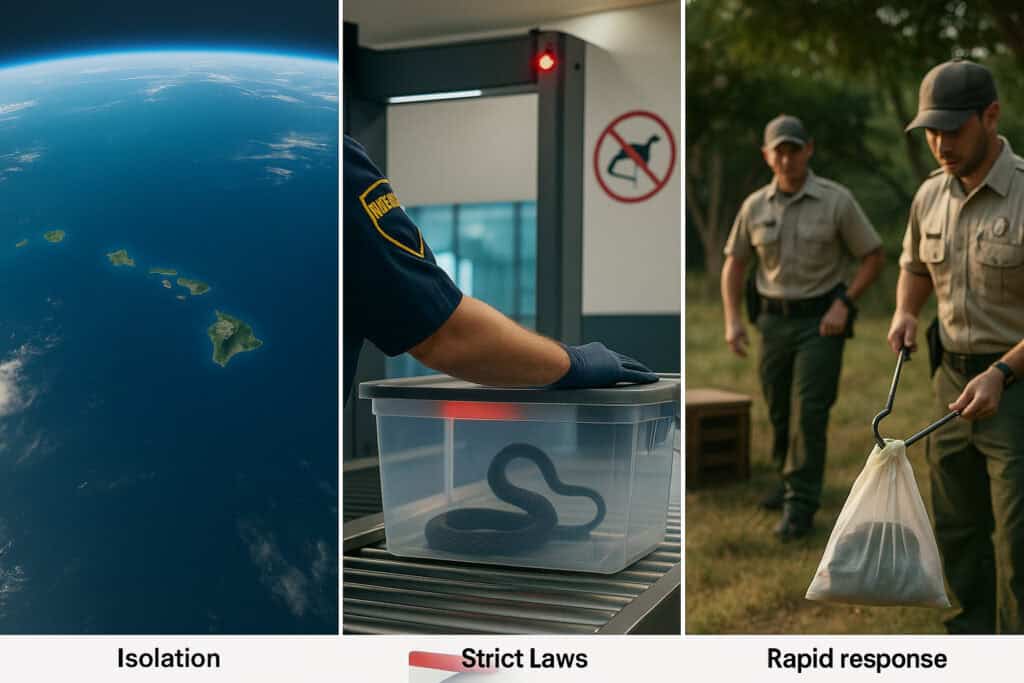
Short answer: nature plus hard rules.
Nature didn’t put them there.
Because of Hawaii’s isolation, no land snakes evolved on the islands. That lack of a native foothold still matters; there’s no long-standing “base” population. Researchers summarize this pattern across Oceania (Hawaii included) as a product of extreme isolation with no native, non-flying land reptiles to start with.
Hawaii’s laws keep them out.
Hawaii treats snakes as a major biosecurity risk. Importing or possessing snakes is illegal without special permits, and penalties can be severe (fines up to $200,000 and possible jail time). The state also runs an “amnesty” option so people can surrender illegal pets with no questions asked, which helps remove risks before they spread.
Daily screening and rapid response.
Inspectors constantly check incoming cargo, and teams respond fast when a snake is reported. Interceptions do happen—like non-native snakes found in shipments—and are quickly contained, which prevents a breeding population from forming.
The big “what-if” keeps everyone vigilant.
Guam’s brown tree snake disaster is the cautionary tale: the species devastated native birds there. Hawaii’s agencies maintain detection, training, and response systems precisely because one established invasive snake could rewrite the islands’ ecology
So, are there truly zero snakes? On land, there’s no established population of dangerous snakes. However, a tiny, earthworm-thin Brahminy blind snake (also called the “Hawaiian blind snake”) is widespread in soil and gardens. It eats ant and termite eggs and is not dangerous. It likely arrived through the plant trade decades ago.
Snakes in Hawaii FAQs:
Does Hawaii have any snakes at all?
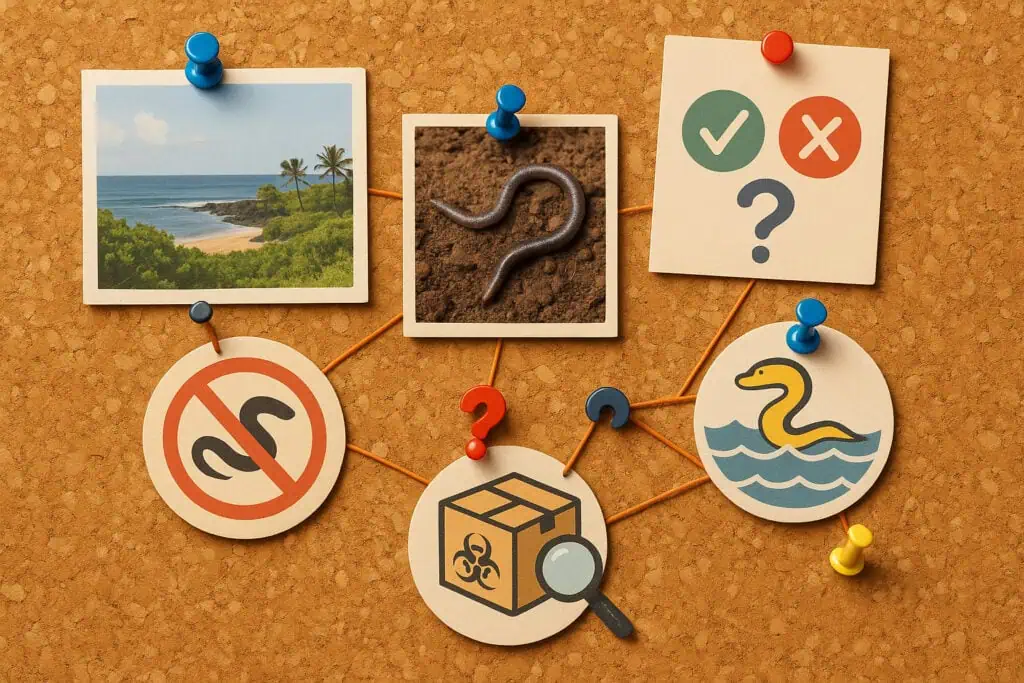
Yes, but not in the way most people imagine. The Brahminy blind snake is common in soil and mulch. It’s only a few inches long and harmless; many people mistake it for a worm. It’s not native, but it’s long established and not a threat like big constrictors would be.
Are there sea snakes in Hawaii?
Very rarely on beaches. The yellow-bellied sea snake lives in the open Pacific and sometimes washes ashore after strong winds or currents. If you spot one, don’t touch it and call the state’s pest hotline; it’s a marine species and can be venomous. State advisories make this clear during occasional beach incidents.
Why are snakes illegal in Hawaii?
Because they can crush native wildlife and agriculture. The law treats illegal possession and transport seriously, with big fines and possible prison time. Strict rules help keep any escaped pet or stowaway from starting a population.
What happens if someone brings a snake to Hawaii?
There’s an amnesty program. You can turn in an illegal animal to HDOA offices, certain zoos, or humane societies with no penalties. This “no questions asked” path is designed to protect the islands, not to shame owners. If a live snake is seen in the wild, the state moves fast to capture it and check for more in the area
Could a dangerous snake ever take hold in Hawaii?
That’s the worry. If a species like the brown tree snake slipped through and bred, the damage to native birds and small animals could be massive. That’s why prevention is constant—cargo inspections, rapid response, and regional cooperation across the Pacific.
Bonus: fast facts you probably didn’t know
- No native land snakes, period. Hawaii’s isolation meant land snakes never evolved there, and even today, “no native land reptiles” is the bigger rule behind the “no snakes” idea.
- The “worm snake.” The Brahminy blind snake is parthenogenetic (females reproduce without males), which helps it spread quietly in potted plants and garden soil worldwide.
- Storm surprise. Sea snakes don’t crawl well on sand; when they wash up, they’re usually stressed and short-lived onshore. Officials still advise caution and a quick phone call to report sightings.
- Why the rules are so tough. Hawaii’s laws aren’t just about fear; they’re about prevention. Once an invasive snake establishes, removing it is extremely hard and very expensive—something the Pacific has learned the hard way (USGS program background).
Final Word on snakes in Hawaii
Why there are no snakes in Hawaii comes down to isolation, strict laws, and constant prevention. That combination keeps dangerous land snakes from gaining a foothold—while a tiny blind snake and the rare sea snake sighting are the only exceptions most people will ever hear about.
Interested in exploring similar posts? Visit The Science of Everyday Life hub for more!