
TL;DR: Why are raspberries hairy? Because those “hairs” are natural parts of the fruit’s body. Most are the dried tips of tiny flower parts left after pollination, and the rest are fine protective hairs on the skin. They are normal, safe to eat, and part of what keeps raspberries healthy and fresh.
Background: Why Are Raspberries Hairy?
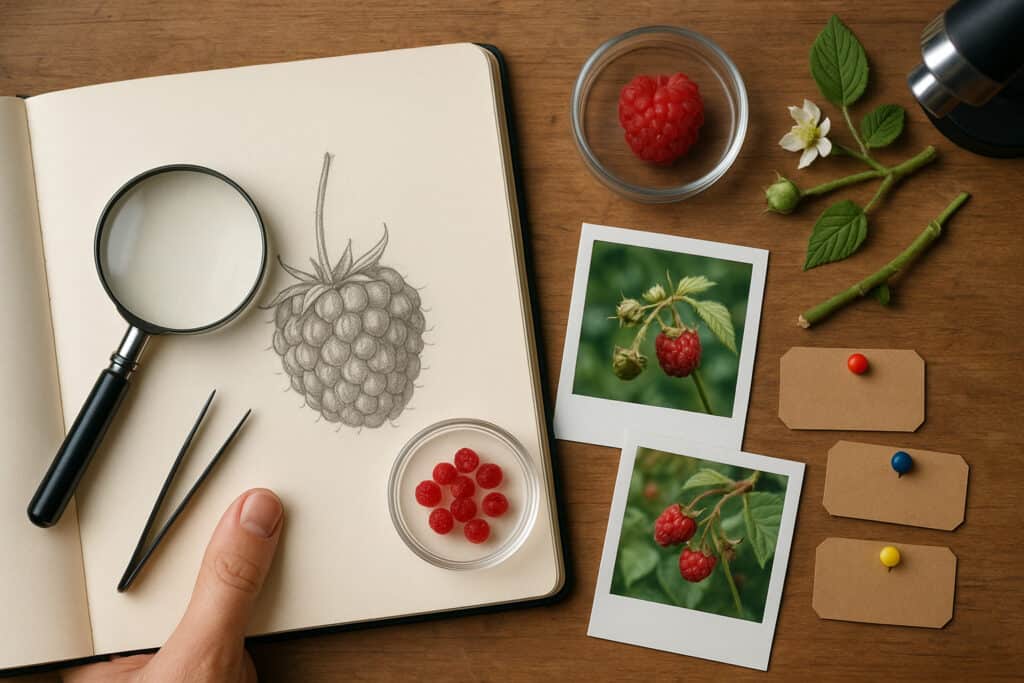
People have grown and picked raspberries for a very long time, so we’ve had plenty of time to notice the fuzz. Gardeners and market shoppers often comment on the tickly feel, especially when berries are very fresh. If you look closely, you’ll see that a raspberry is made of many little “beads” packed together. Each “bead” is a tiny unit with its own seed inside, and each one once had its own little flower part sticking out on top.
Growers also talk about the cane (the stem), the leaves, and the fruit surface having ultra-fine hairs. In plant science, these hairs are called trichomes, and they show up on many plants you already know. If you want the plain-language science, the short page on trichomes is a handy starting point. Meanwhile, home-growing guides such as the Royal Horticultural Society’s raspberries page or the University of Minnesota Extension guide help you see how the fruit is put together in real gardens and why that matters for care and picking.
Why are raspberries hairy? The 3 Reasons
Let’s answer it directly and clearly.
Leftover flower tips (the “styles”)
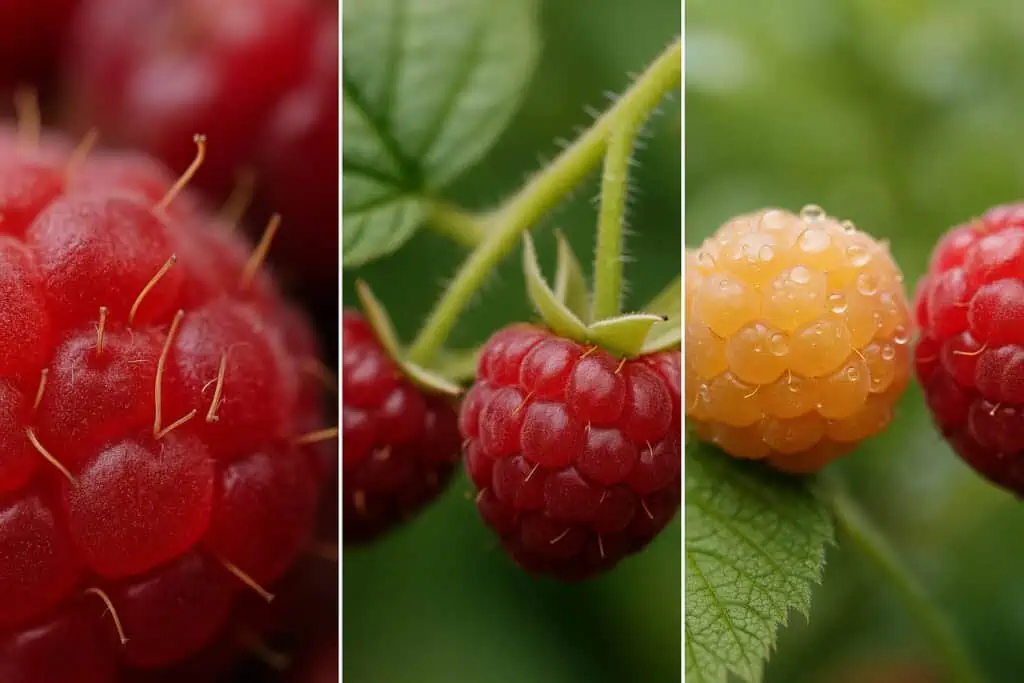
When a raspberry flower gets pollinated, each tiny part that will become a “bead” (called a drupelet) grows around a seed. The thin tip of the flower’s female part (the style) often dries and stays on the outside of the drupelet. Later, when the berry is ripe, those tiny dried tips feel like soft hairs. This is the main reason raspberries look and feel hairy.
Protective skin hairs (trichomes)
Raspberry fruit and canes can also carry very fine trichomes (plant hairs). These are not dirt and not mold; they’re part of the plant. Trichomes help plants in simple, practical ways: they make the surface a little less friendly to pests, they reduce rubbing damage when berries touch each other or leaves, and they can slow water loss from the fruit’s surface. In other words, some of the “fuzz” helps the berry stay in good shape from the field to your fingers.
Variety and growing conditions
Not all raspberries look the same. Some types naturally show more visible hair than others, and weather can change the look too. Dry, sunny spells can make dried styles and fine hairs stand out more. Cooler, wetter weeks can make them less obvious. This is why one box may look fuzzier than another even from the same farm.
It’s normal and safe
Because these hairs are the plant’s own parts, they are safe to eat. They are not a sign of chemicals, and they are not a flaw. If anything, they are a clue that the fruit was handled gently. Berries that are washed too hard or scrubbed may lose some hair, but they may also bruise more easily afterward.
To sum up: raspberries are hairy mostly because you’re seeing tiny dried flower tips plus the plant’s built-in fine hairs. It’s simple plant design, not a problem.
FAQs: why raspberries are hairy
Are the hairs on raspberries safe to eat?
Yes. The hairs are part of the fruit. They are either dried flower tips or natural plant hairs. If you want a quick cross-check on raspberry structure, the pictures on Wikipedia’s raspberry overview match what you see with your eyes.
Can I remove the hairs?
You can reduce how much you feel them, but don’t scrub. Raspberries are delicate. Rinse them gently in cool water, let them drain, and pat them dry with paper towel. Rough washing can crush the drupelets. For home growers, gentle handling like the RHS suggests helps keep texture nice.
Do blackberries have hairs like this?
Blackberries are close cousins. They can have fine hairs, but people notice them less because blackberries keep the core (the white plug) inside the fruit. Raspberries let go of that core when you pick them, so you see the inside and the tiny dried tips more easily. A short primer on the fruit types is in Britannica’s write-up.
Are the hairs a sign of mold or dirt?
No. Mold looks like fuzzy, spreading patches and smells off. The hairs on raspberries are thin and even, and they sit on each drupelet. If you see any berry with real mold, remove it and check the rest. For storage, the home-garden advice from University of Minnesota Extension is simple: keep them dry, cold, and eat soon.
Do the hairs mean pesticides?
No. The hairs are plant parts. Still, it’s always smart to rinse fruit. If you like to read a bit of botany on the hair idea itself, the short page on trichomes explains how common plant hairs are across many species.
Bonus: odd facts you didn’t know about raspberries
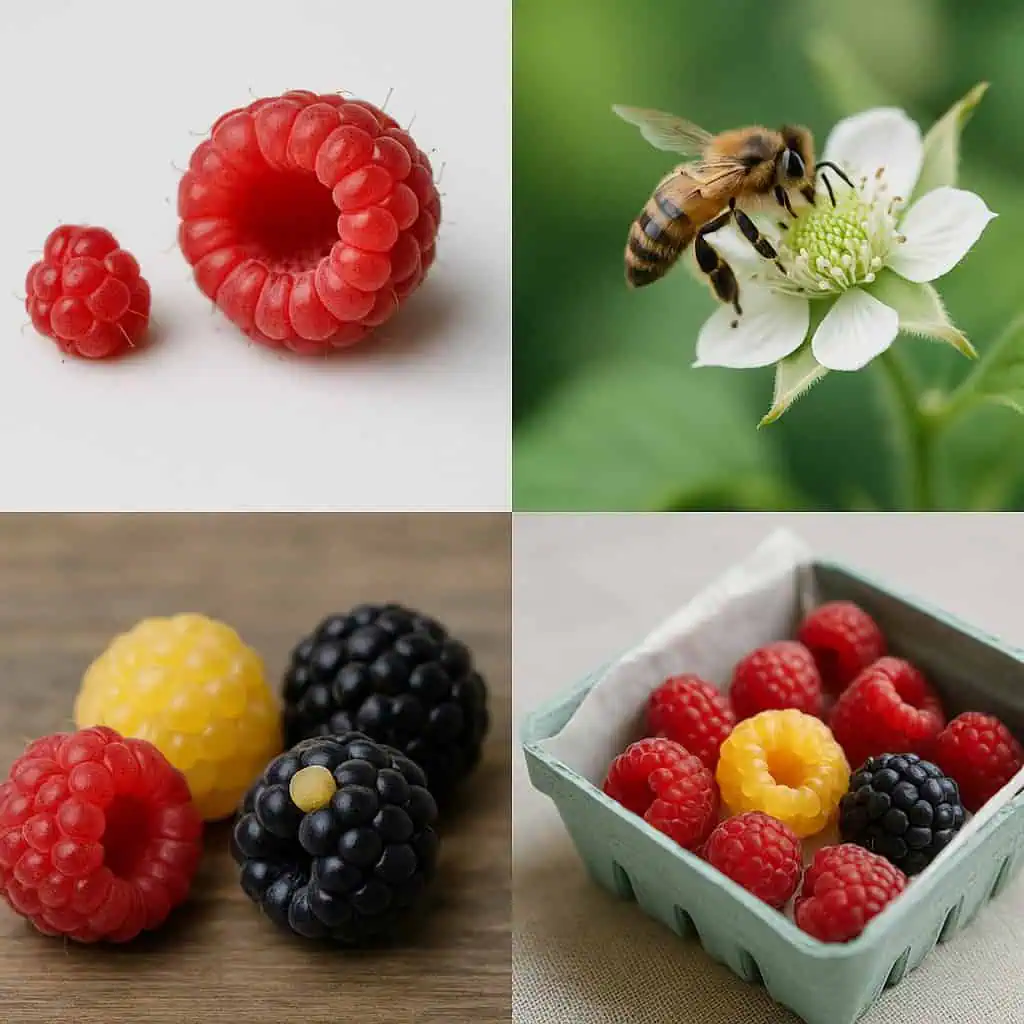
- Each “bead” is its own mini-fruit. A raspberry is an aggregate fruit made of many small drupelets. This is why it’s so soft and why it melts in your mouth.
- They are hollow by design. When you pick a raspberry, the cone-shaped core stays on the plant, so the fruit is hollow. That’s normal and helps the berry detach cleanly.
- Color isn’t just red. Yellow (golden), purple, and black raspberries exist. They may show the hairs differently because color and shine change what your eyes notice.
- Bees make a difference. Good pollination helps more drupelets develop, which makes berries fuller and more even. This also means more tiny dried tips, so well-pollinated berries can look a bit “fuzzier” yet taste better.
- Handle with care. Because the fruit is a bundle of many soft parts, pressing or stacking it too deep can crush it. Gentle handling—like many grower guides recommend—keeps shape, juice, and flavor.
Final word: Raspberries’ hair is nothing to worry about
Raspberries are hairy because you are seeing normal plant parts that help the berry grow and stay fresh. Enjoy the fruit, rinse gently, and taste it while it’s bright and firm.
Interested in exploring similar posts? Visit The Science of Everyday Life hub for more!