
TL;DR: Gymnasts are short because compact bodies offer clear mechanical advantages in artistic gymnastics (easier rotation, better power-to-weight), and the sport strongly selects for those traits; long-term stunting from training itself isn’t supported by modern evidence, though intense training with low energy intake can temporarily slow growth.
A quick history of body type in gymnastics
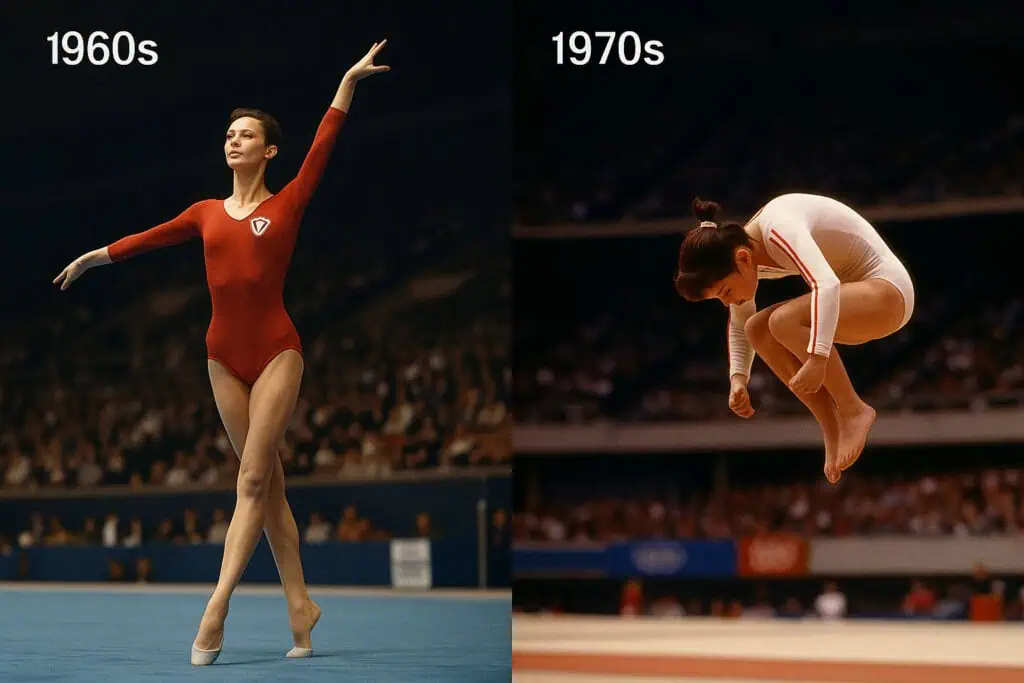
From the 1960s to the mid-1970s, many women’s champions were older and taller by today’s standards. Then, during the 1970s, the sport rewarded ever more acrobatic skills, and the average competitor became younger and more compact. That shift shows up in historical summaries of Olympic medalists’ ages and sizes. Meanwhile, over the next few decades, researchers documented that elite artistic gymnasts tended to be shorter than non-gymnast peers, which kept the “gymnast height” conversation alive. Nevertheless, those papers debated why this difference appears—whether it’s training, genetics, or selection.
Why are gymnasts short? The full answer
Why gymnasts are short — physics first
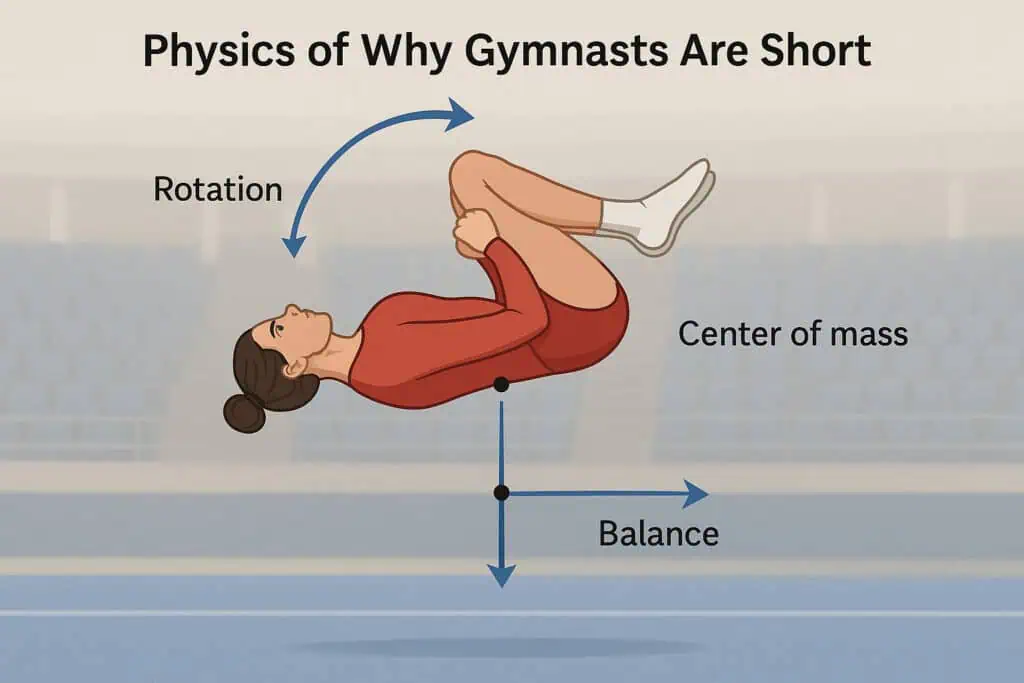
In artistic gymnastics, smaller athletes can rotate and twist with less effort because a lower moment of inertia and higher power-to-weight ratio make flipping and spinning more efficient. Additionally, a lower center of mass helps on balance-heavy events. Therefore, coaches and talent systems naturally favor compact athletes; those athletes in turn advance further, reinforcing the pattern spectators notice on TV.
Selection (and self-selection) matters most
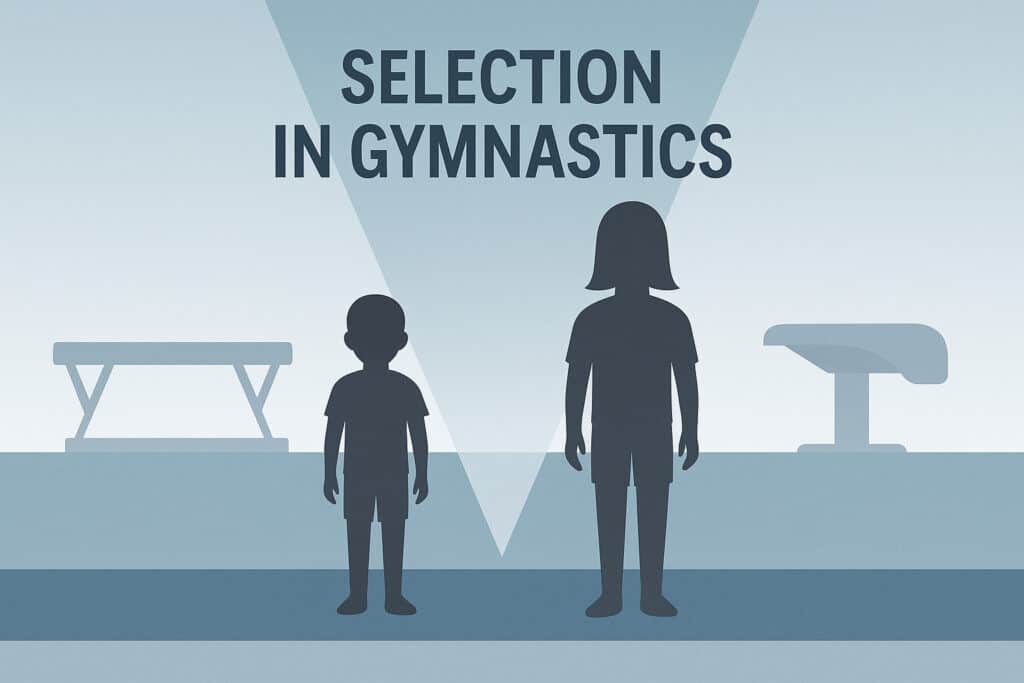
Studies in both boys and girls show that competitive artistic gymnasts are already shorter—often with relatively shorter legs—before or early in puberty. This points to selection (and self-selection) rather than height being reduced by training. Importantly, one influential study concluded that short stature in active gymnasts is partly due to selecting for reduced leg length, while trunk differences appear training-related but reversible after stopping. Other research in young male gymnasts also favored selection over development delays.
Training, growth, and the “stunting” myth
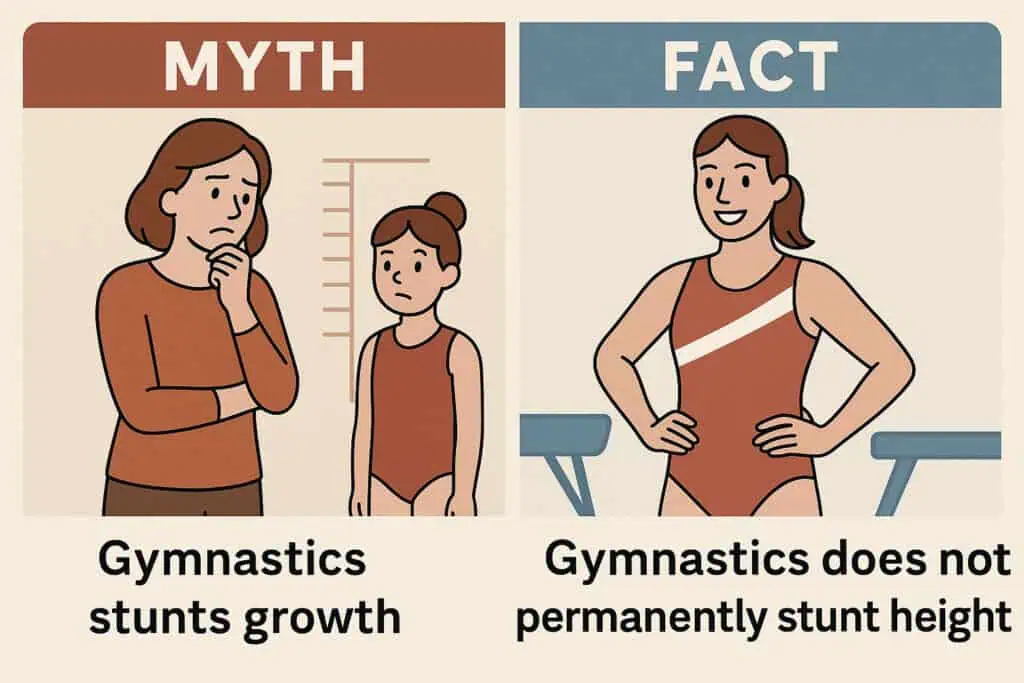
You’ll still hear that “gymnastics stunts growth.” Early papers in the 1990s did report slower growth during heavy, pre-pubertal training, raising concerns about adult height. However, follow-up work and broader reviews have not shown permanent height loss attributable to artistic gymnastics per se. Instead, growth usually “catches up” when training eases, and final adult height is not adversely affected in typical high-performance settings. Because energy availability and puberty timing complicate the picture, the best current view is: training plus low energy intake may slow growth temporarily, but modern evidence does not support inevitable, long-term stunting from the sport alone.
Nutrition and energy availability are key caveats

Low energy availability—now framed within “Relative Energy Deficiency in Sport (REDs)”—can delay puberty and reduce growth velocity across aesthetic and weight-sensitive sports, including gymnastics. Consequently, programs emphasizing adequate fueling and sensible training loads help athletes grow on their own trajectories while still performing at a high level.
Not all gymnastics is the same
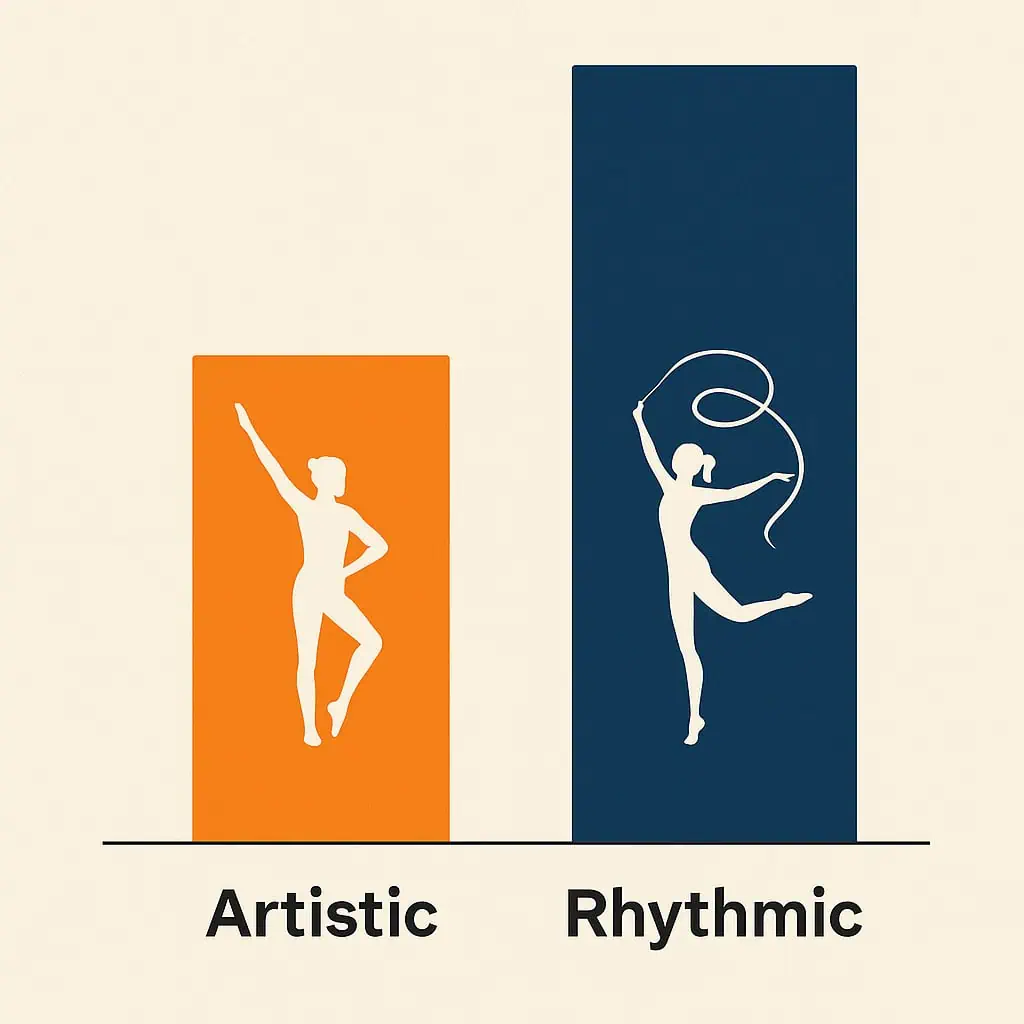
Artistic gymnasts trend shorter than average, but rhythmic gymnasts trend taller. In a study of 215 rhythmic vs 113 artistic gymnasts, rhythmic athletes exceeded average height for age and surpassed their target heights, whereas artistic gymnasts were below the 50th percentile and finished below target. Thus, “gymnast height” depends on the discipline.
Gymnasts and Height: FAQs and Myth Busters
What is the average height of elite female artistic gymnasts?
Ranges vary by era and team, but many sources place elite women around the mid-140s to about 160 cm (roughly 4’9″–5’3″), which is shorter than the average adult woman in many countries. Keep in mind that “average” hides wide individual variation.
Can you succeed if you’re tall?
Yes—especially on bars. Iconic uneven-bars champion Svetlana Khorkina stood about 1.65 m (5’5″), and she adapted her technique and skill selection to leverage her height. While the overall field trends compact, individual outliers can and do thrive.
Why are rhythmic gymnasts often tall while artistic gymnasts are short?
Rhythmic emphasizes long lines and flexibility, and its training pipeline draws taller athletes; evidence shows rhythmic gymnasts finish taller than average for age and even above target height, unlike artistic peers. Therefore, discipline-specific demands filter athletes differently.
Are male gymnasts also short—and for the same reasons?
Generally yes. Men’s artistic events still reward rotation efficiency and strength-to-mass ratios, so selection favors compact builds, though ranges vary by apparatus and country. Early-puberty studies in boys again point to selection rather than training-caused height loss.
Bonus facts related to gymnast height
- The 1970s marked a body-type pivot. After the Code of Points evolved toward higher acrobatic content, championship rosters skewed younger and smaller compared with the 1960s. That trend shows up clearly in historical competition summaries.
- Outliers shape apparatus design and skill names. Because she was taller than most peers, Khorkina innovated uneven-bars work that now bears her name, illustrating how individuals can stretch the sport’s norms.
- “Average height” headlines can oversimplify. Review papers combine different eras, nations, and selection pipelines; as a result, sensible ranges and context beat single numbers when discussing gymnast stature.
Final Word: why gymnasts are short
Why are gymnasts short? In artistic gymnastics, compact bodies confer mechanical advantages, and the sport’s talent pipelines strongly select for those bodies. Meanwhile, responsible training and fueling help safeguard normal growth; modern research does not support the idea that gymnastics inevitably stunts adult height. Finally, remember that “gymnast height” varies by discipline, and standout athletes succeed across a range of statures.
Interested in exploring similar posts? Visit The Science of Everyday Life hub for more!