
TL;DR: Why are cherries so expensive? Because they’re a fragile, hand-picked fruit with a short harvest window, high labour needs, strict cold-chain handling, and big weather risks that can wipe out crops. So supply stays tight, losses are common, and every cherry that reaches your bowl has already survived careful, costly steps.
Why are cherries so expensive? A short background

Cherries have been loved since ancient times. Traders carried them around the Mediterranean; later, orchards spread through Europe and then to the Americas. Over time, growers learned which climates worked best: warm days, cool nights, and gentle, dry weather near harvest. Today, major producers include Türkiye, the United States, Chile, Uzbekistan, and several EU countries. This spread did not make cherries cheap, though. It simply put more orchards in places with the right mix of sun, altitude, and wind. Meanwhile, growers kept refining varieties for taste, size, and colour.
Global output still moves up and down year to year. Storms, heat spikes, or late frosts can shrink the crop in a week. Because the fruit bruises easily, it also needs careful handling after picking. As a result, cherries behave like a small, premium crop even when many countries grow them.
Why are cherries so expensive? The real reasons
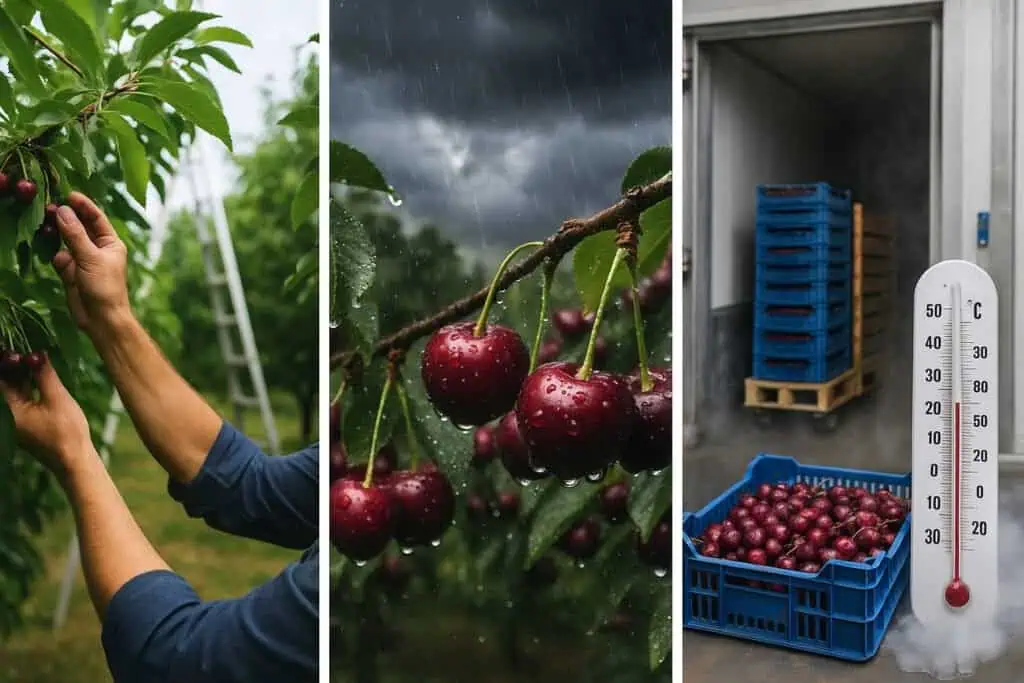
Here are the cost drivers, from the orchard to your shopping bag. Each one adds a little; together, they add a lot.
Hand picking and lots of people
Cherries are picked by hand so the skin doesn’t tear and the stems stay on. That means growers hire many seasonal workers at once. Labour is the biggest single bill for fruit farms, and specialty crops like cherries spend a much larger share of their cash on workers than field crops do. When wages, housing, and transport for crews rise, the price of each punnet rises too.
Very short season, very tight supply
Cherries ripen fast and all together. The sweet-spot for picking is brief. If heat arrives early or rain hangs around, the window shrinks further. Because the season is short, the market cannot spread fixed costs over many months. Therefore, each box must carry more of the yearly cost of running the orchard.
Delicate fruit and strict cold chain
A cherry scuffs, pits, and bruises easily. It also loses quality quickly if it sits warm. So, after harvest, it must be cooled within hours, kept near freezing, and moved gently. This cold chain uses special lines, hydrocoolers, chilled trucks, and careful packing rules—for example, recommended storage is around 0–1 °C with high humidity. Cold equipment and fast logistics are not cheap, but they are needed to keep fruit saleable.
Weather can destroy value in a day
One hard rain right before harvest can crack a big share of the crop. When skin cracks, fruit is rejected or downgraded, and the grower eats the loss. Researchers note that “rain-induced cracking” is a leading cause of culls in cherry regions; it happens as water soaks in and the skin bursts. Because risk is high, growers spend more on sprays, covers, and crop insurance. Those costs feed into retail prices.
Sorting loss and size grading
Even in a good year, many cherries don’t make top grade. Packers remove soft berries, short stems, and undersized fruit. That drop—called “shrink”—means fewer kilos to sell from the same trees. Bigger, darker, firmer fruit fetches more. However, getting that quality requires slower lines and more rejects, which again raises the cost of the good ones.
Off-season imports and speed
When local season ends, retailers fly or truck cherries from far regions. Off-season fruit often travels faster and colder, sometimes by air. Speed costs money. Therefore, winter cherries usually cost more than mid-summer cherries.
Shelf-life is short even in the fridge
Even with good cooling, standard storage life is roughly one to two weeks. Modified-atmosphere bags can stretch this to a month or more, but the gear and materials add cost. Because time is tight, any delay, mis-route, or warm display cuts saleable days and forces higher prices to cover waste.
Capital costs and slow payback
A cherry orchard takes years to bear well. Trees, trellis, netting, water systems, and packing tools all need cash up front. Growers recover that money over many short seasons. So prices include not only this year’s costs but also the long view of keeping the farm alive.
FAQs: why are cherries so expensive?
Are cherries more expensive than other fruits because they’re all hand-picked?
Often, yes. Many fruits are hand-picked, but cherries are both hand-picked and very easy to damage. That double hit (high labour + fragile handling) keeps costs high. On fruit farms, labour is a notably large slice of expenses compared with field crops
Why do Rainier (yellow) cherries cost even more?
Rainier-type cherries bruise and sunburn easily, and yields are often lower. Therefore, more fruit is lost and more care is needed. Extra care means extra cost, which shows up on the shelf. Grower and extension sources repeatedly note that gentle picking, careful sorting, and fast cooling are crucial for these delicate types.
Are prices high only because of “superfood” hype?
No. Health buzz helps demand, but the main drivers are hard costs: labour, weather risk, cold chain, short season, and shrink. Agricultural economists also point out that labour availability and cost are persistent challenges for specialty crops like cherries, which are hard to mechanise.
Why are cherries cheaper in the middle of summer?
Mid-season brings the biggest local harvests. So supply rises, transport is shorter, and losses fall. With more fruit moving quickly and nearby, per-box costs drop. That is why late June or July often shows the best deals in many regions.
Which countries grow the most cherries, and does that affect price?
Production leaders shift some from year to year. However, Türkiye, the U.S., and Chile are frequent leaders, and a few other countries contribute big volumes. But when one major region has a bad weather year, global supply tightens and prices can jump.
Are frozen or canned cherries a cheaper alternative?
Usually, yes. They’re processed near harvest when fruit is plentiful. They also skip the strict fresh-market standards for stem colour and firmness. So they often cost less per serving, especially outside peak season.
Bonus: interesting cherry facts
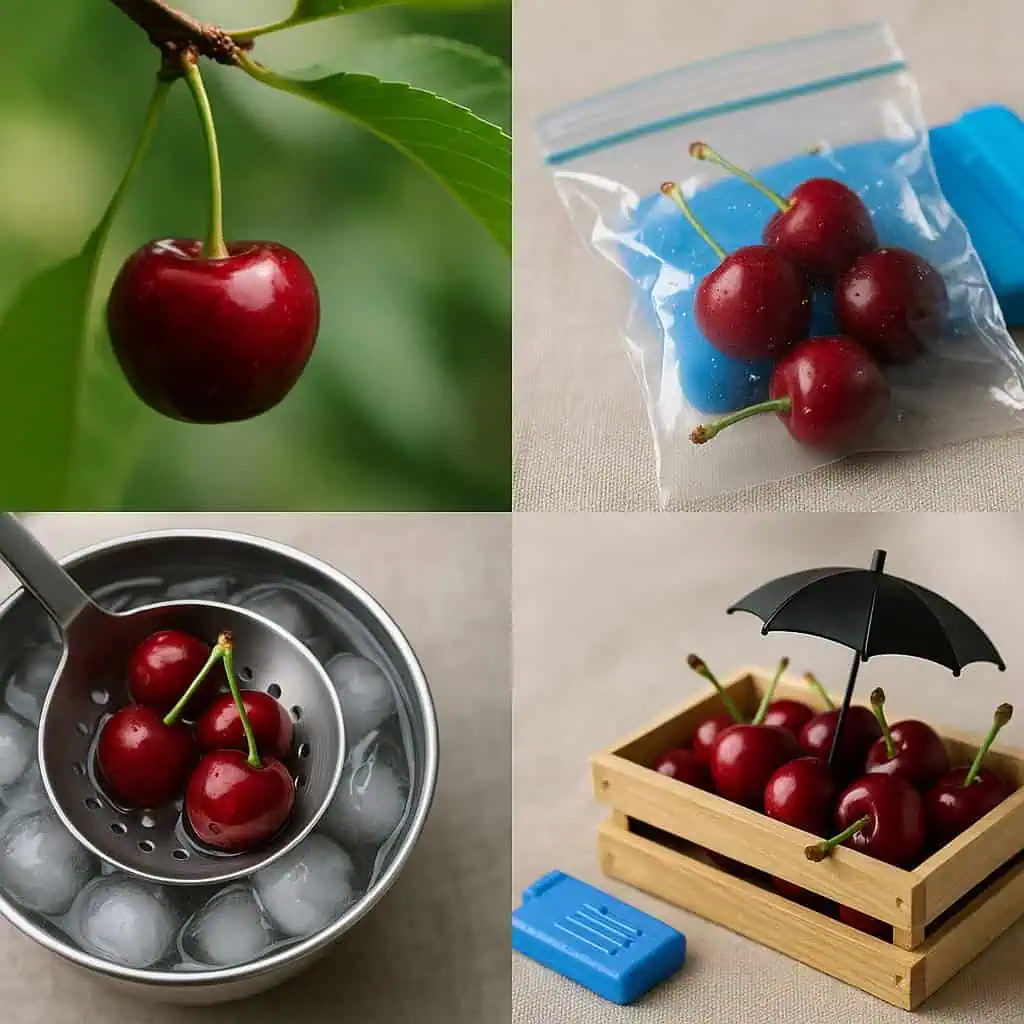
- Cherries don’t “ripen” much after picking. They are non-climacteric, so what you buy is what you get. That’s why pickers aim for perfect colour and sugars on the tree, and why timing is so touchy.
- Respiration speeds up as temperature rises. Therefore, fast cooling is vital to slow decay and keep stems green. Many packers aim to cool fruit to near 0 °C within hours of harvest.
- Smart packaging can help. Modified-atmosphere bags can extend storage from about 7–14 days to roughly 30–50 days under cold conditions, which can widen the selling window a bit.
- One storm can change the market. Rain cracking close to harvest can destroy a large share of a region’s fruit in a weekend, which is why growers watch weather like hawks.
- A good cherry looks simple, but the chain behind it is not. From ladders to hydrocoolers to chilled trucks, each step is designed to protect a thin skin and a tiny stem. That long chain is a big reason your cherries feel like a treat.
Final word
Why are cherries so expensive? In short, they’re costly to grow, risky to harvest, and tricky to ship. Because the season is short and the fruit is delicate, every step needs extra care. That care keeps the fruit sweet and firm—but it also keeps the price high.
Interested in exploring similar posts? Visit the Hidden Histories & Origins hub for more!