
TL;DR: What each finger represents: Thumb = will and approval (a “yes” or “good job” vibe). Index = pointing, guidance, and direction. Middle = self, balance, and boundaries (and yes, the rude gesture). Ring = commitment, partnership, and identity within relationships. Pinky = trust, communication, and social bonds (think “pinky promise”). These are common patterns in everyday life, though meanings can shift by culture and context.
Background: how cultures shaped what each finger represents
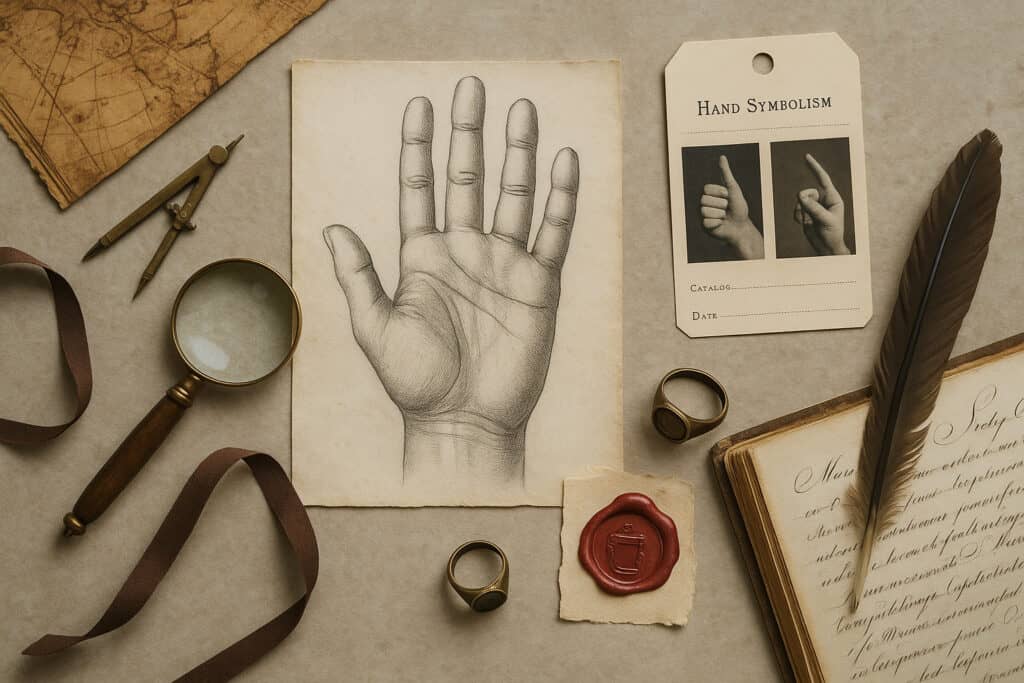
Across time, hands have been our first “tools” for signaling meaning, making oaths, and showing status. Rings, for instance, became public signs of union and promise; many societies placed them on one specific finger as tradition evolved. The popular “vein of love” story for the ring finger (vena amoris) is old and romantic, yet modern anatomy shows no special vein there; still, the custom stuck because the story felt right to people and spread with weddings and courtship over centuries.
Gestures add more layers. A thumbs-up may feel universal today, but its path is messy. The modern “approval” meaning grew over time and was helped by popular media and wartime usage; Roman arena myths are shakier than movies suggest, as historians have noted. Meanwhile, outside the West, sacred hand poses (mudras) encode spiritual ideas; museum guides such as the Smithsonian’s overview of Indian hand iconography show how a single hand shape can signal protection, teaching, or blessing.
Even the names of our digits hint at purpose. “Index” ties back to “indicate,” as dictionaries explain, and “pinky” likely comes from Dutch roots meaning “small,” which then settled into English as “little finger”. All in all, traditions, gestures, and words together shaped the modern sense of the hand as a map of meanings.
What does each finger represent?
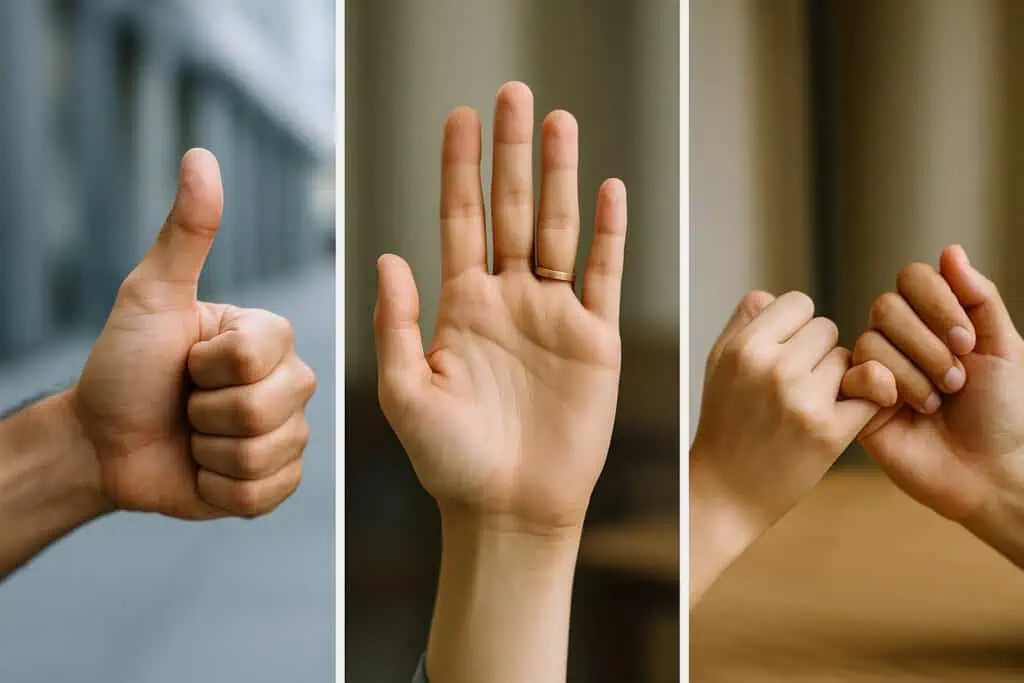
Below is the everyday, plain-language map many people use. It’s not a strict rulebook; it’s a helpful lens that explains why we point with one finger, wear rings on another, and seal promises with the smallest one.
Thumb: will, approval, and “go”
The thumb often stands for willpower and a simple “OK.” We stick it up to approve, hitchhike, or signal “good.” Because the thumb opposes the other fingers, it also suggests action and permission—your inner green light. Still, meanings flip by culture, so keep local norms in mind.
Index (Pointer): direction, guidance, and calling attention
We ask, “Where?” and the index finger shows the way. That’s no accident: the word “index” shares roots with “indicate,” or “to point out.” We also use it to count “one,” to press buttons, and to select, so it picks up themes of leadership, instruction, and focus. In groups, this finger can feel assertive; pointing too close to someone’s face, for instance, can read as bossy.
Middle: self, balance, and boundaries
Right in the center, the middle finger is the hand’s “axis.” In polite use, it can stand for personal balance, rules, and responsibility, holding things steady between impulse (thumb) and finesse (pinky). Of course, the extended middle finger is also a well-known insult in many places, which flips its polite meanings into a hard “no” or rejection of respect.
Ring: commitment, identity in partnership, and continuity
This finger holds the signal most people recognize: commitments. In many countries, weddings and engagements live here, not because the finger’s vein goes straight to the heart (that’s a myth), but because tradition made this placement the public face of union. The circle shape of a ring also adds the idea of continuity and belonging.
Pinky: trust, communication, and social bonds
Small but mighty, the pinky is where promises go low-key but deep (think “pinky swear”). It often stands for trust, subtle communication, and refined social cues. In some professions and clubs, pinky rings mark membership or achievement; in casual life, this finger can signal agreement between friends without a big show.
Quick note on both hands
You’ll hear claims that left-hand meanings are “inner” and right-hand meanings are “outer,” or that swapping hands flips the message. That’s popular in palmistry and personal symbolism, but everyday social meaning mostly follows custom: where people expect a ring, what gesture is polite, and which hand you naturally use to point or wave.
FAQs about what each finger represents
Is there really a “vein of love” in the ring finger?
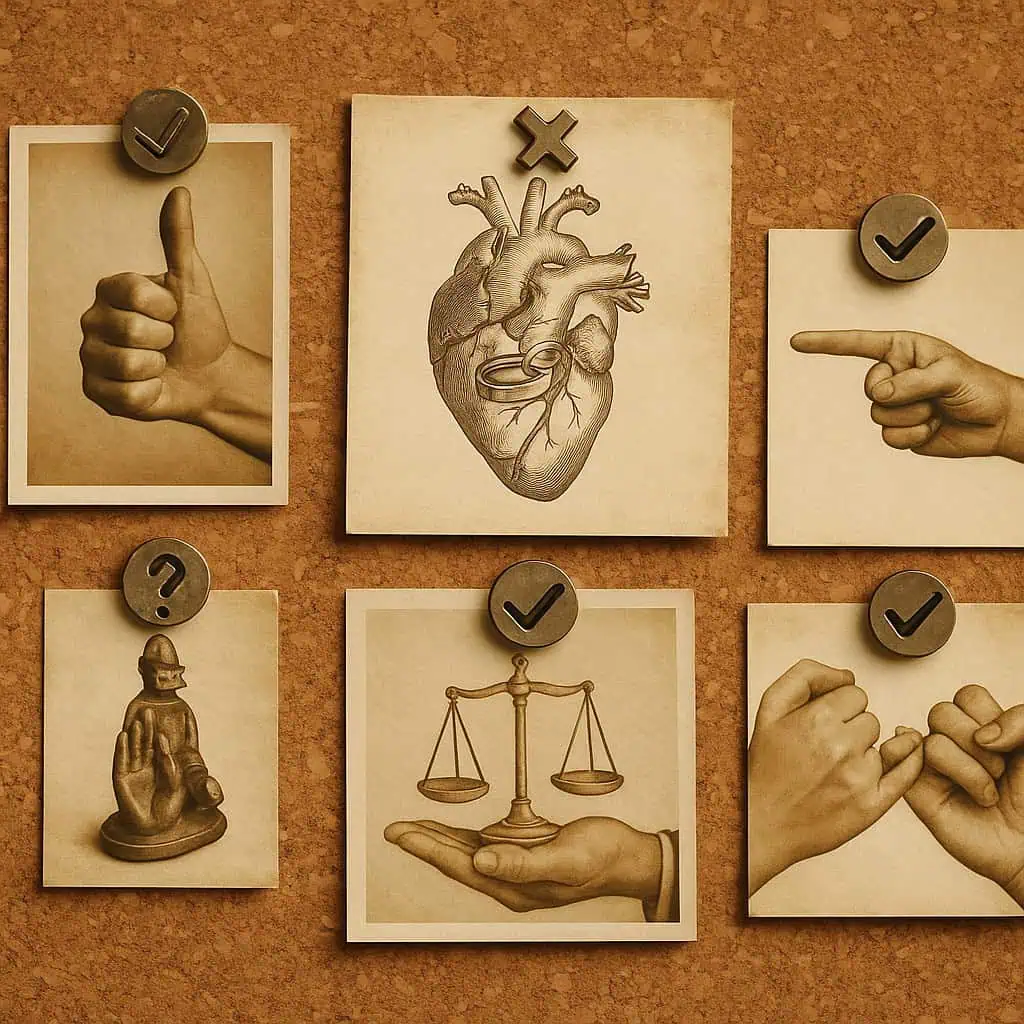
No. The romantic story helped fix the custom, but anatomy doesn’t support a special vein.
Did the thumbs-up come from Roman gladiators meaning “spare him”?
That’s the movie version. Historians argue the actual Roman thumb signals were different, and the modern “approval” meaning grew much later.
Which finger represents love?
Everyday culture puts love and commitment on the ring finger—that’s why engagement and wedding rings sit there in many countries. The idea spread with marriage customs and stayed, even after the “special vein” story was debunked.
Which finger represents power or leadership?
In daily life, the index finger takes this role because it leads (pointing, directing, and selecting). The name itself echoes “indicate.” Etymology and dictionary notes connect “index” with “to point out”.
Are finger meanings the same in spiritual or cultural arts?
Not exactly. Some arts (like Indian mudras) attach sacred meanings to hand shapes and finger positions. For example, a raised hand with an open palm can mean “no fear” or protection in classical iconography. So, everyday social meanings and sacred meanings can differ, and both can be valid in their own spaces.
Bonus: quick facts about finger symbolism
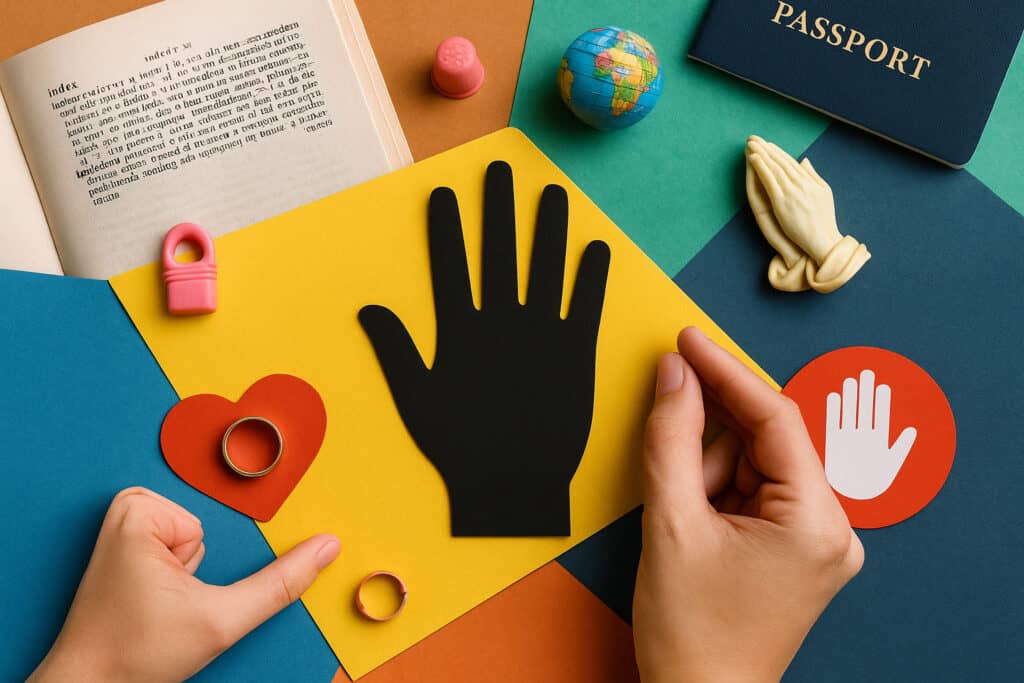
- Words reveal purpose. “Index” and “indicate” share Latin roots; the pointing job is built into the name.
- “Pinky” wasn’t about color. It likely comes from Dutch for “small,” then settled into English as the little finger; the color link is a later coincidence.
- The ring story is stickier than the science. The vena amoris is a myth, yet it made the ring finger the home of promises in many places, a nice example of stories shaping behavior.
- Gestures travel. The same thumb that means “OK” to you might be rude elsewhere; meanings can flip across borders, which is why context is king.
- Sacred hands, everyday hands. A single pose can carry prayer in art and “please wait” on a busy street.
Final word (recap)
Thumb = will/approval; Index = guidance/direction; Middle = self/boundaries; Ring = commitment/partnership; Pinky = trust/communication. Use these as helpful cues, not hard laws, then adjust for the people, place, and moment in front of you.
Interested in exploring similar posts? Visit the Cultural Rituals & Society hub for more!