
TL;DR: The ring finger often points to engagement or marriage, the pinky can show family or personal identity (and sometimes a professional oath), the index finger hints at status or affiliation, the thumb leans toward style, willpower, or function, and the middle finger usually has no fixed meaning and is mostly a balance or fashion choice. Left vs. right hand can change the message in some cultures, and sometimes a ring is just jewelry—no hidden code.
Background: what rings on fingers represent
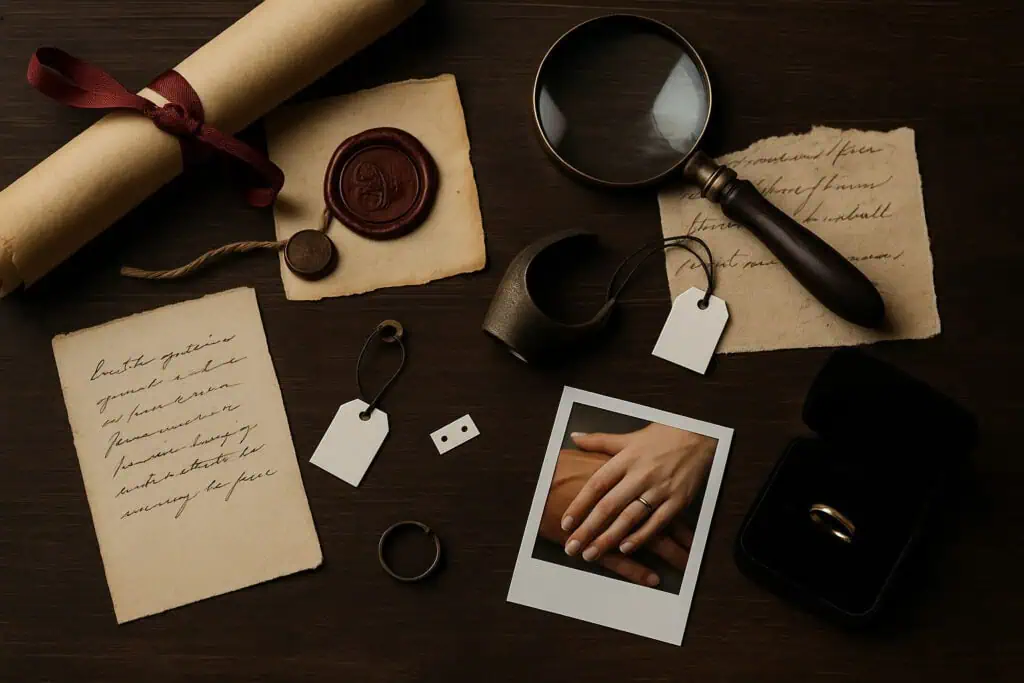
Rings have carried meaning for thousands of years. In many ancient cultures, a simple band stood for a promise, a pact, or a person’s rank. For example, long before modern weddings, people linked a certain finger to the heart through a romantic idea often called the “vein of love.” You’ll see this story widely repeated in overviews of wedding traditions.
Beyond romance, rings also worked like signatures. Sealed letters and contracts relied on carved stones and metals that pressed a unique mark into wax. Museums are full of these pieces; the Metropolitan Museum of Art has many examples, such as an ancient Egyptian signet ring used for identity and sealing, which shows how a ring could act as both jewelry and a personal stamp.
Meanwhile, in East and Central Asia, archers wore sturdy rings on their thumbs to draw bowstrings smoothly and protect the skin. That means some rings had a purely practical purpose before any “symbolism” came along. You can view this kind of piece in the British Museum, where curators describe how archer’s thumb rings helped with powerful bows.
These older uses set the stage for the modern question. Over time, rings gathered layers of meaning—love, faith, family, work, and style—which is why people still ask what each finger might say today.
What rings on fingers represent (by finger)
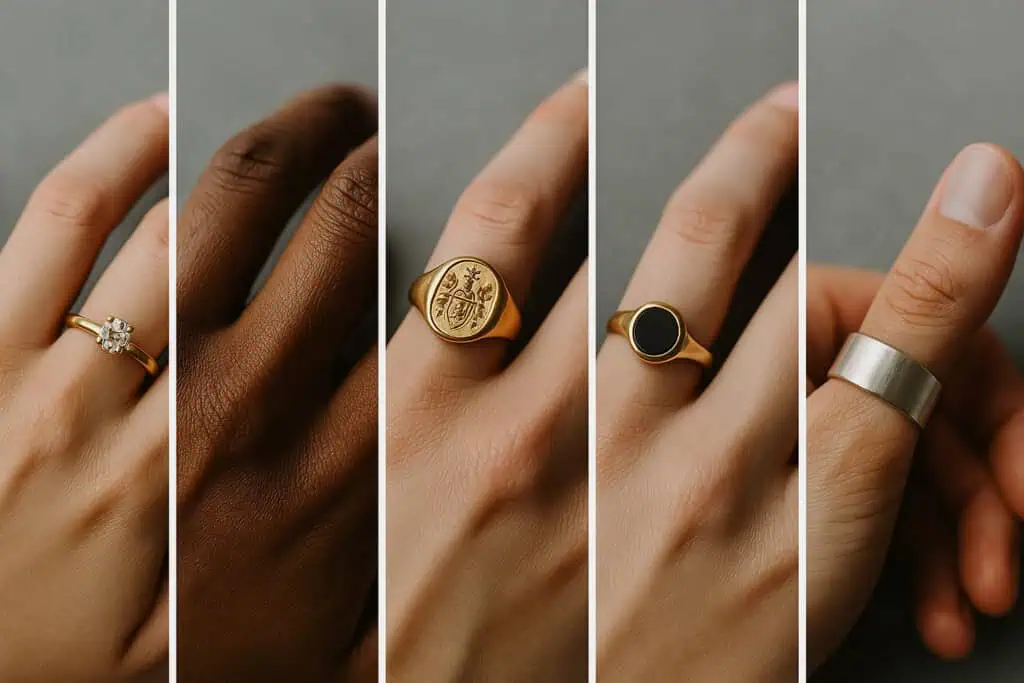
Meanings change by culture, religion, and personal taste. Still, there are common patterns. Below is a simple, modern guide. Use it to read general signals, not strict rules.
Left vs. right: does the hand matter?
Yes—sometimes. In the U.S. and much of Western Europe, the left ring finger is the usual home for engagement and wedding bands. In several other places, couples wear wedding bands on the right hand instead. Because practices vary, it’s best not to assume too much from hand alone. The style, stack, and context also matter.
Ring finger (fourth finger)
- Left ring finger: In many Western countries, this often signals engagement or marriage. The popular story behind it is the old “vein of love” idea; if you want a quick, clear overview of how that tradition took hold and evolved, the Gemological Institute of America (GIA) has a helpful review.
- Right ring finger: In parts of Europe and elsewhere, the right ring finger carries the wedding band instead. If someone has a stacked set, the order (engagement above or below) is personal and varies by tradition.
Pinky (little finger)
The pinky is a strong spot for identity and affiliation. Historically, signet rings lived here, carrying a family crest or personal emblem. Today, pinky rings can still hint at family, heritage, or a chosen group. They also show up in professional rituals: for example, in the U.S., many engineers take an ethics oath and wear a small stainless-steel ring on the pinky as a reminder of duty. Outside these contexts, a pinky ring can simply be a style statement or a nod to vintage fashion.
Index finger (pointer)
The index finger often reads as authority, membership, or status. In older portraits, you’ll see badges, crests, or signet-like designs here. Because the finger is so visible and active, it works well for pieces that “announce” something—a club, a family symbol, or a cause. However, in daily life today, many people just wear a favorite ring here because they like the look.
Middle finger
There is no standard, traditional meaning for the middle finger in most modern settings. People choose it for balance and symmetry, especially if they like a single bold ring centered on the hand. Some wearers also pick the middle finger when they want to avoid confusion with wedding symbolism. It’s practical and neutral: fashion first.
Thumb
Thumb rings are common in fashion and can read as confidence, willpower, or independence, mostly by modern interpretation. In history, though, thumb rings often had a job to do. As mentioned, many were archer’s rings designed for shooting heavy bows without injury.
What about material and design?
Metal and gemstones can add clues but don’t lock in meaning. A simple gold band can be a wedding ring—or a minimalist fashion piece. A crest can point to family or a school—or just a vintage style someone likes. Therefore, read the whole picture: the finger, the hand, the design, and the context.
Rings on fingers FAQs
Does wearing a ring on the ring finger always mean someone is married?
Not always. Some people wear a ring there out of habit, for balance with other jewelry, or while waiting to get engaged. Cultural practices also differ, and many folks move rings between hands for comfort or work.
Which finger should a promise ring go on?
There is no universal rule. Many people use the right ring finger to avoid confusion with engagement, but others use the left and later “upgrade” to an engagement ring. Talk it through and do what fits the couple.
What does a thumb ring mean on a woman or a man?
Mostly, it’s a style choice today. People often read it as bold or expressive. Historically, remember that some thumb rings were tools for archery, not symbols.
What does a pinky ring mean for men?
Often identity, family heritage, or membership if it’s a signet or crest. It can also reflect a profession. For a living example, engineers in the U.S. may wear a small ring on the pinky after taking an ethics oath.
Does left vs. right hand change the message?
For wedding bands, yes—hand choice depends on local custom. For other rings, hand choice usually reflects comfort, dominant hand, or stacking preferences rather than strict meaning.
Is it rude to wear a ring on the ring finger if I’m not married?
No. It’s your hand. That said, if you don’t want people to assume you’re engaged or married, you might choose a different finger—or a style that clearly looks like fashion jewelry, not a bridal set.
Bonus: fun facts related to rings and fingers
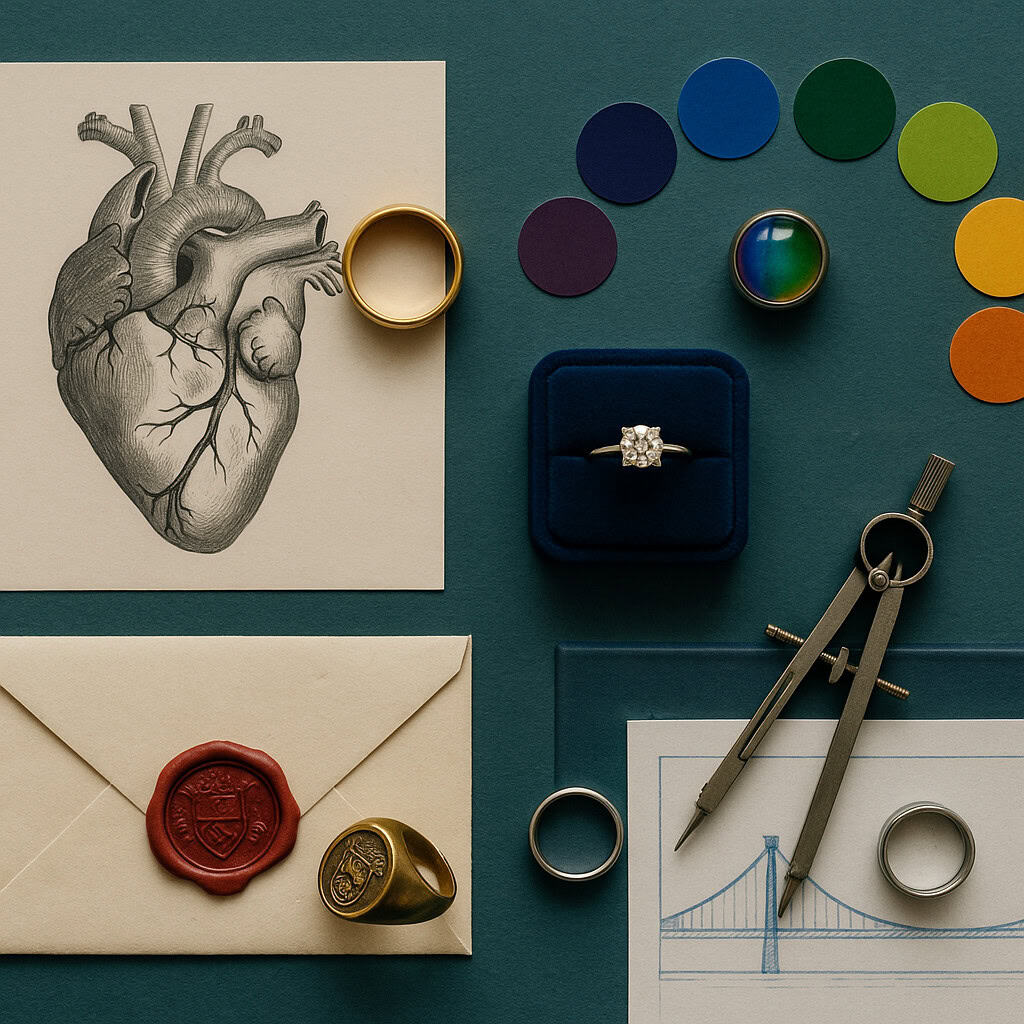
- The “vein of love” is a myth, but a powerful one. Medical science doesn’t support a unique vein from the ring finger to the heart, yet the story helped fix the ring finger as the romantic spot in Western culture.
- Mood rings were a real craze. In the 1970s, thermochromic stones that changed color with temperature (not emotions) took over jewelry counters and magazines.
- Rings once sealed your mail. Signet rings pressed into wax confirmed identity and protected privacy. Museum records of ancient signet rings show how common and serious this practice was in daily life.
- Wedding rings didn’t start as diamonds. Metals, bone, and iron all had their day, and the modern diamond push got huge after 20th-century marketing.
- Some rings still mark a pledge to the public. In addition to pinky signets, engineers’ rings serve as a daily reminder of ethics and duty, which shows how a small band can carry a big message.
Final Word
When people ask what rings on fingers represent, they’re really asking how to read a mix of tradition, culture, and personal choice. The ring finger often points to commitment; the pinky can nod to identity or profession; the index suggests status or membership; the thumb leans stylish and individual; and the middle finger is usually neutral. Still, context wins. Because customs vary and fashion evolves, the safest rule is simple: wear what you love—and let your own story give the ring its meaning.
Interested in exploring similar posts? Visit the Cultural Rituals & Society hub for more!