
TL;DR: At its core, the significance of koi tattoo lies in resilience through struggle, personal growth, and the hope of good fortune. Many people also map meaning to direction (upstream for facing challenges, downstream for moving on), colour (e.g., red for passion, black for overcoming hardship, gold for wealth), and pairings (lotus for purity, waves for life’s chaos). Still, your story comes first.
From Ponds to Legends: A Brief History of the Koi’s Journey Through Culture
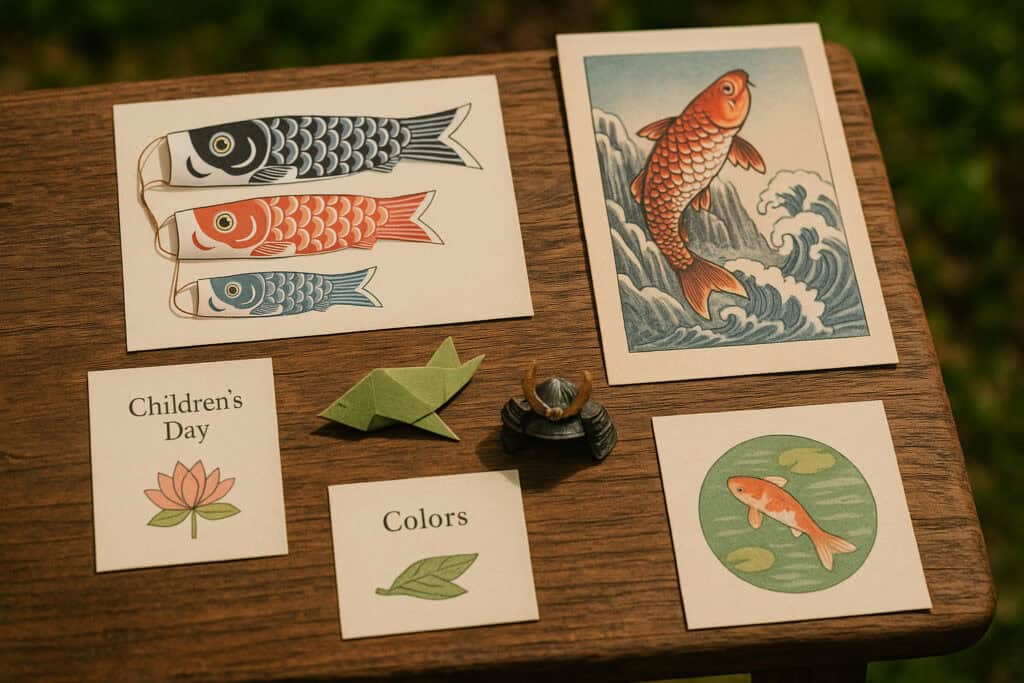
Koi are carp bred for beauty. In Japan, families fly koinobori (carp streamers) on Children’s Day to wish kids strength and success; colours and sizes can represent family members. The custom grew during the Edo and Meiji eras and is linked to a Chinese tale where a carp swims up the “Dragon Gate” waterfall and becomes a dragon. These threads—family, courage, and a hard swim—later fed into tattoo culture.
What Is the Significance of Koi Tattoo?
A koi tattoo usually marks a person’s will to keep going and change for the better. It can also signal luck or prosperity, but the most common theme is the fight and the growth that follows. Because koi show up in Japanese and Chinese stories about swimming against a strong current, the image feels like a simple, everyday promise: I’m still moving.
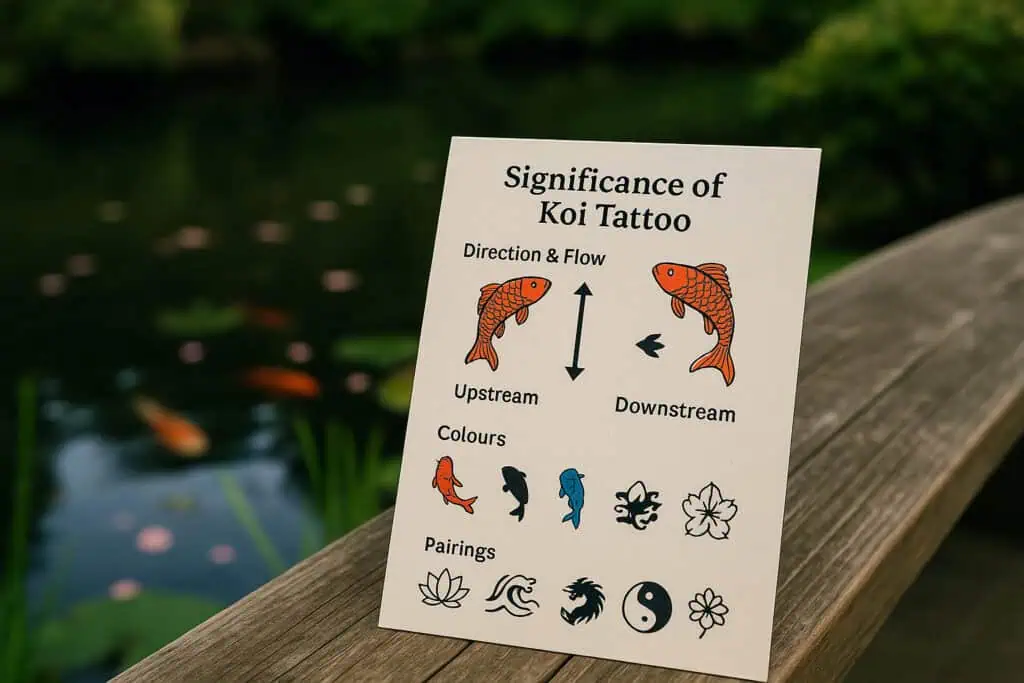
Direction and Flow
- Upstream: Many wearers use this to show they’re facing obstacles now and pushing on.
- Downstream: Others choose this to mean they’ve overcome a hard chapter and are moving forward with less resistance.
Both takes exist; choose the one that fits your life today.
Colours and Variations
People often tie meaning to colour. Here are common, not fixed, reads you’ll see in studios and culture notes:
- Red: deep love, energy, or bravery.
- Black: hardship overcome; strength after pain.
- Blue: calm, peace; sometimes linked with masculinity in some references.
- Gold/Yellow: wealth, success, and the “golden” dragon motif.
Use these as a guide, not a law. Your meaning can be personal and simple.
Pairings and Layout
- Lotus: growth from muddy water; hope and purity in hard times.
- Waves: life’s chaos; the water that makes the koi’s strength clear.
- Dragon / koi-to-dragon: the leap from struggle to reward; a transformation story.
- Yin–yang or cherry blossom: balance or the shortness of life.
These elements help you tell a cleaner story on skin.
FAQs on the Significance of Koi Tattoo
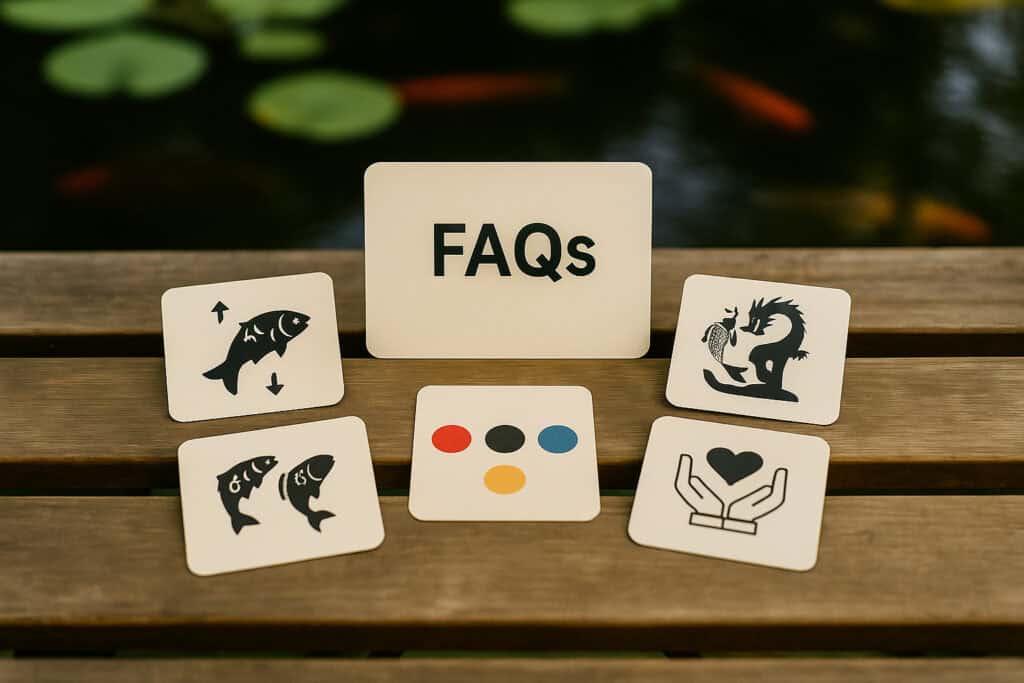
- Does upstream vs. downstream change the message?
Usually, yes. Upstream is used for facing trials; downstream for having overcome them. Still, you decide which story your tattoo tells.
- What does a koi turning into a dragon mean?
It points to transformation after effort—the leap from hardship to power, drawn from the “Dragon Gate” legend.
- Are koi tattoos Japanese or Chinese in meaning?
Both cultures shaped the symbol. The koinobori tradition is Japanese, while the Dragon Gate tale is Chinese; tattoo culture blends these streams.
- Do colours carry fixed rules?
No, they’re guides. Many people read black as overcoming struggle, red as passion, gold as wealth, and blue as calm or masculinity—but your meaning can be different.
- Is a koi tattoo disrespectful?
It doesn’t have to be. Be respectful: learn the basics, avoid mixing sacred symbols blindly, and, when possible, work with an artist trained in the style you want.
Myth Busters About the Significance of Koi Tattoo
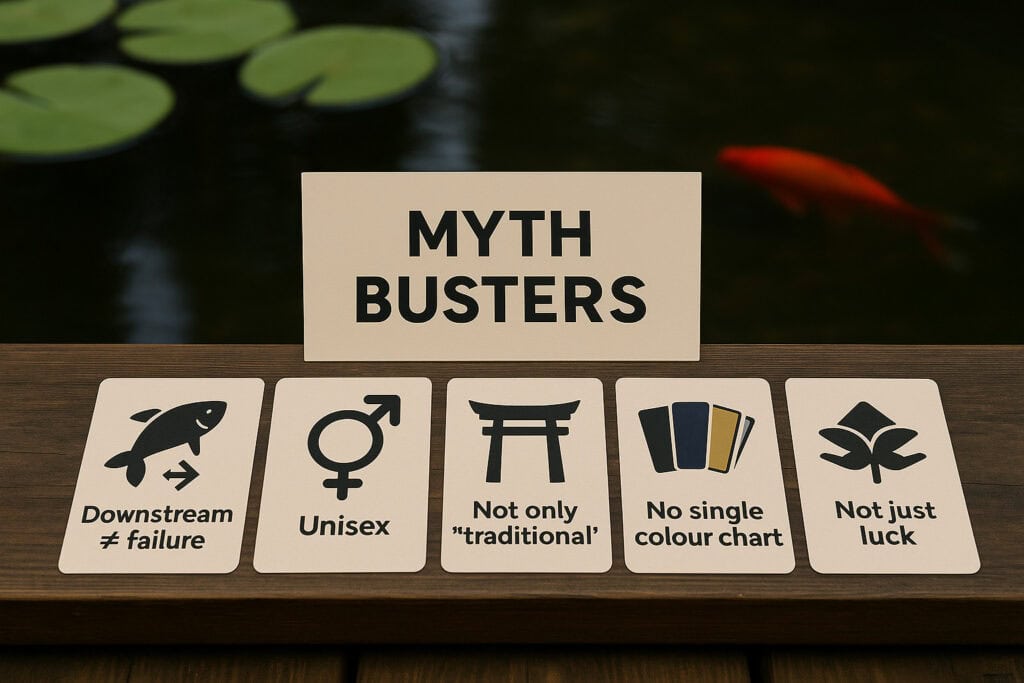
- “Downstream means failure.”
Not always. Many artists and wearers read downstream as moving on after a tough season. Context matters.
- “Only men should wear koi.”
No. Koi are unisex; anyone can own perseverance and growth.
- “If it’s not ‘traditional Japanese,’ it’s wrong.”
Authentic irezumi is its own art with rules and placement traditions, yes. However, outside that, meaning can be personal and respectful. Work with an artist who knows the style you want.
- “There’s one correct colour chart.”
Shops often share common meanings, but they differ by source. Pick the colours that match your message.
- “Koi always means luck.”
Sometimes it does, but often it’s grit and change, with luck as a bonus.
Bonus: Fun Facts Connected to Koi Tattoos
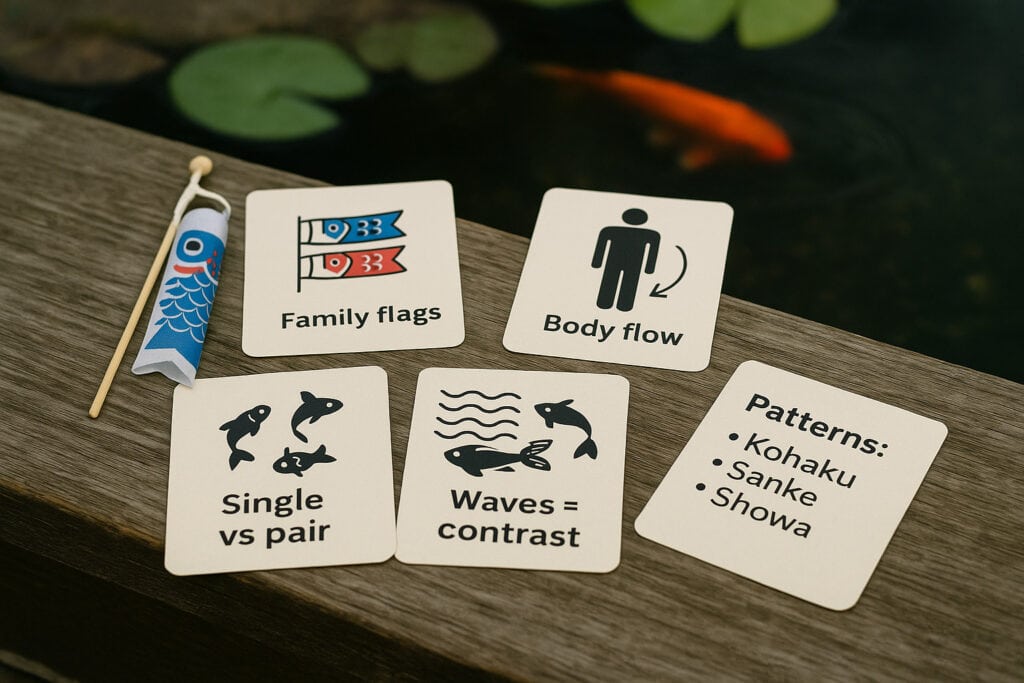
- Family flags: In Japan, carp streamers once marked each child in a home; sizes and colours signalled family members. This family link is why some people get matching koi tattoos today.
- Body flow matters: In larger pieces, artists often set the koi to “swim” with the body’s lines (for example, tail near the wrist flowing toward the elbow) so the motion feels natural.
- Single vs. pair: A single koi spotlights your inner fight. A pair can show balance, partnership, or two sides of you.
- Water tells the truth: Strong waves make the koi’s calm face pop—contrast helps the story read from a distance.
- From pet ponds to sleeves: Modern koi breeding (pattern names like Kohaku, Sanke, Showa) gives artists pattern ideas without copying a real fish.
Final Word on the Significance of Koi Tattoo
In short, the significance of koi tattoo is this: you keep going. The fish stands for effort, change, and the quiet hope of better days. Direction, colour, and pairings can sharpen that message; however, your lived story—past, present, and future—does the real work.
Interested in exploring similar posts? Visit the Cultural Rituals & Society hub for more!