
TL;DR: Significance of pearl necklace: It’s a quiet way to say “elegance, love, and transformation.” Pearls come from humble beginnings inside an oyster, so they’ve long stood for purity, patience, and turning struggle into something beautiful. A pearl necklace also signals care, often given for milestones, and, in many traditions, it shows respect and remembrance.
A brief history of pearls in culture

People have prized pearls for thousands of years, and debates about what pearl necklaces mean have echoed across eras. In the ancient world, rulers and traders valued pearls for their rarity and glow; they traveled along trade routes and appeared in royal courts, temple gifts, and heirlooms. Over time, pearls showed up everywhere from carved cameos to seed-pearl bridal ornaments. As techniques improved and cultured pearls became widely available in the twentieth century, the look moved from palaces to everyday wardrobes—yet the aura of grace stayed.
For deeper background on where pearls come from and why people treated them like treasure, see the Gemological Institute of America’s overview of pearl history and lore. For the basics, Britannica’s entry on pearl gemstones is a crisp starting point. As for a glimpse of how pearls touched fashion cycles (especially delicate “seed pearls” in the 1800s), The Met’s essay on nineteenth-century American jewelry is a useful window.
Pearl necklace: 5 layers of significance
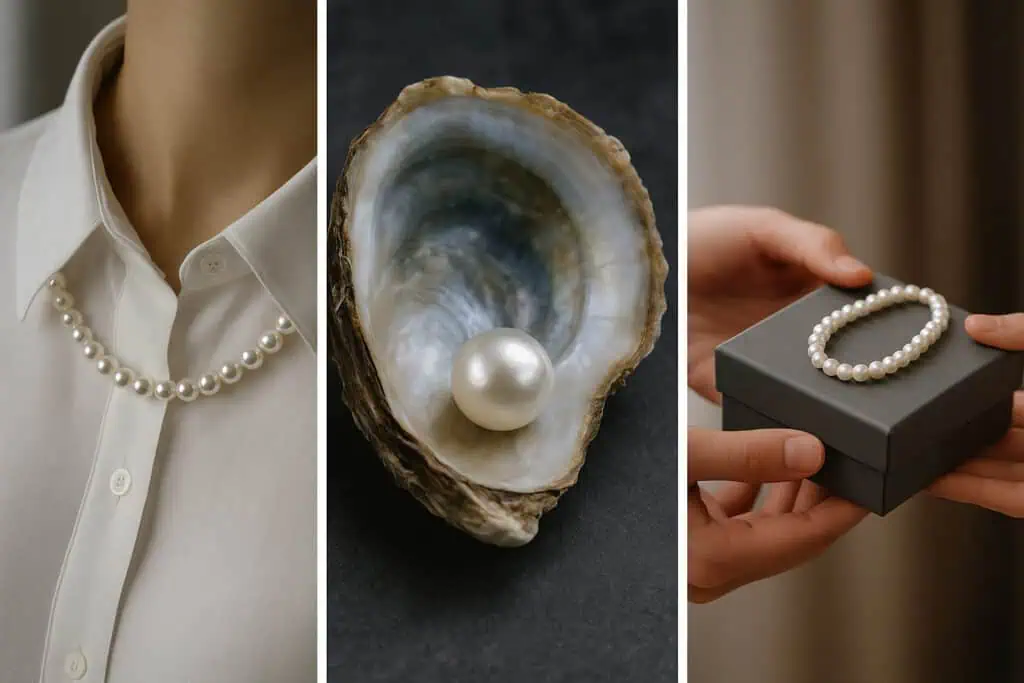
When people ask, “So what’s the significance of pearl necklace—what does it mean?”, the honest answer is: it carries a few simple ideas that travel well across time and culture.
Elegance and purity.
Pearls sit softly on the skin. They don’t shout. Because they’re smooth, round, and light-reflecting, many see them as clean and pure. Even if you don’t use words like “purity,” the look reads as refined and timeless. That’s why a pearl strand still works at a graduation, a wedding, or a boardroom meeting. It says, “I respect the moment,” without being loud.
Transformation through patience.
A pearl forms because a mollusk slowly coats an irritant with layers of nacre. That natural process—friction turned into glow—makes a strong symbol. So, its meaning often includes the idea of growth after struggle. People gift pearls to mark first jobs, anniversaries, or fresh starts because the story matches the milestone. And since pearls come in many natural hues and shapes, the metaphor fits many journeys, not just one.
Love, care, and connection.
A pearl necklace is a classic gift from parent to child, partner to partner, or grandparent to grandchild. The message is simple: “You matter, and I want you to have something lasting.” The piece becomes a small family story you can wear. Because pearls are gentle on the eye and easy to style, the necklace gets used often—so the meaning stays in sight.
Respect and remembrance.
In some traditions, pearls are linked with tears and the moon, so they are worn for solemn events. The calm sheen feels “right” when you want to honor someone without drawing attention to yourself. This is one reason the symbolism includes dignity and quiet strength, not only romance or luxury.
Status, but softer.
Yes, pearls have long signaled wealth. But unlike flashy stones, they signal taste over noise. Today, that “soft status” is part of the charm. A simple strand can lift a white tee; a multi-row choker can anchor black tie. Either way, the message is confidence, not show-off.
If you like a little science with your symbolism, it helps to know how pearls form. That backstory (an oyster layering nacre over time) grounds the meaning in nature. For an easy explainer on formation and color, National Geographic walks through how oysters build pearls and why some come out dark or iridescent. If you want to see how museums frame the cultural side, the Smithsonian’s exhibits show pearls as both natural wonders and social symbols.
Put simply, the significance of a pearl necklace blends nature’s patience, human feeling, and social signals into one quiet line of light at the neck. That mix is why pearls never really leave style; they just find new ways to speak.
Pearl necklace FAQs
Does “pearl necklace” have a slang meaning?
Yes. Outside jewelry, the phrase can be sexual slang in some contexts. In everyday fashion talk, though, “pearl necklace” just means a necklace made of pearls. If you’re shopping or gifting, most people will take it the normal way, especially when you show a photo or say “pearl strand.”
Do colors change the significance of a pearl necklace?
Often, yes—at least in how people read it. White is the classic “pure” and “fresh start” feel; black or dark pearls can suggest strength or mystery; pink can read as warm and romantic; gold can look prosperous. These meanings are cultural, not rules, and your style matters too. For a science-based view of pearl colors and overtones, see GIA’s page on pearl colors and types. Still, the significance of pearl necklace comes from the wearer and the moment more than any chart.
Is a pearl necklace a good gift?
It’s one of the most reliable milestone gifts because it’s simple to wear and carries care without being flashy. Think graduations, birthdays, weddings, promotions, or “just because.” Because pearls sit close to the face, they brighten skin and frame your expression, which many people love. If you’re unsure on style, a short, single strand in white or cream is the easiest choice.
Why do brides wear pearls?
Brides often choose pearls for calm, grace, and “new beginning” energy. The tradition goes back centuries, and museums still note how small seed pearls once decorated gowns and bridal sets. For a design-history note, the Cooper Hewitt explains how seed pearls came to signal both chastity and celebration in bridal pieces. So, the symbolism at a wedding is simple: respect for the day and hope for the life ahead.
Can men wear pearls? What’s the significance of a pearl necklace for men?
Absolutely. Men have worn pearls for ages—from royals to modern artists—because pearls read as confident and cool without noise. On men, the significance of pearl necklace often leans toward individuality and ease: “I know who I am, and I like clean lines.” A single strand, a baroque pendant, or a short choker can all work with tees, blazers, or knitwear.
Are pearls only about purity?
Not at all. That’s one thread in a bigger fabric. Today, the significance of pearl necklace can be about memory, power, calm, or personal growth. It can also be playful, mixing sizes and shapes, or bold, with oversized baroque pearls. Meaning shifts with the wearer and the moment.
Bonus: pearl facts that deepen the meaning
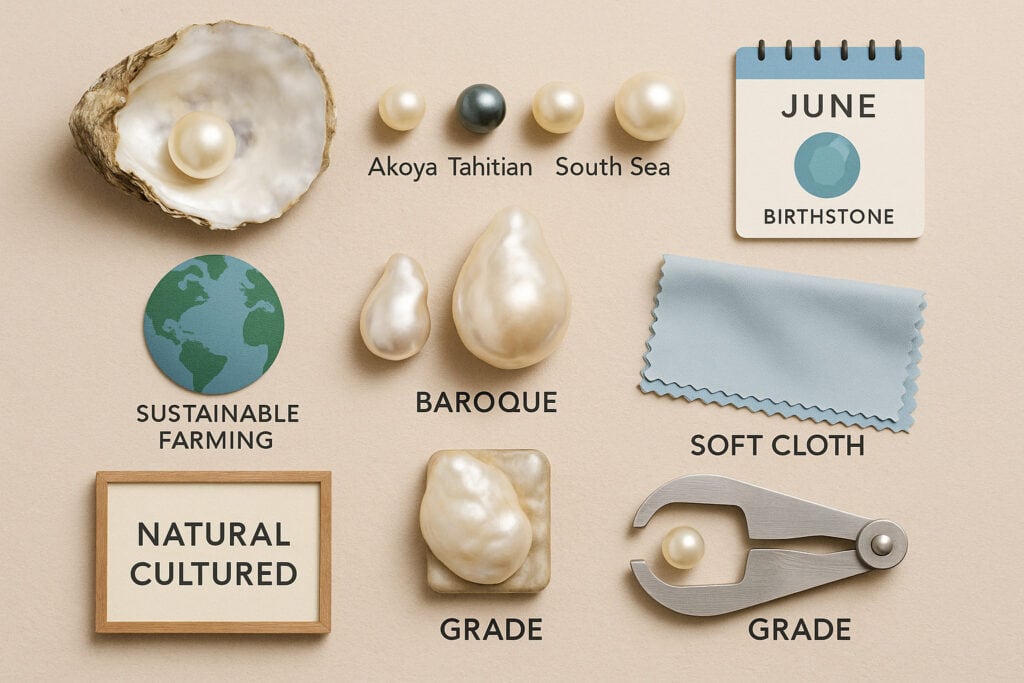
The story behind pearls adds layers of meaning to the significance of a pearl necklace.
- Pearls are organic gems. Diamonds and sapphires form in rock; pearls form in living creatures. That makes them feel more “human” to many people, and it explains their softer shine and lighter weight.
- Museums treat pearls like tiny time capsules. Exhibits have brought world-famous pearls together to show their pull across ages and cultures; the Smithsonian’s Allure of Pearls is one example of how curators place pearls at the crossroads of nature and society.
- Styles cycle, but the signal stays. In the 1800s, “seed pearls” on dresses and parures were huge; in the 1900s, cultured pearls made strands common; today, you’ll see everything from minimal chokers to chunky baroques. Through all those swings, the soft, respectful glow never goes out of style.
Final word on pearl necklace significance
In one line: the significance of pearl necklace is the meeting point of elegance, care, and transformation; nature turns pressure into beauty, and we wear that story close to the heart.
Interested in exploring similar posts? Visit the Cultural Rituals & Society hub for more!