
TL;DR: peace fingers symbol means “peace” or “victory” when you show two raised fingers in a V with your palm facing out. However, if you turn your palm in (especially in the UK, Ireland, Australia, and New Zealand), it can be rude. Context matters—sports, selfies, and protests can all use it a little differently.
A brief history of the V sign (‘peace fingers’)
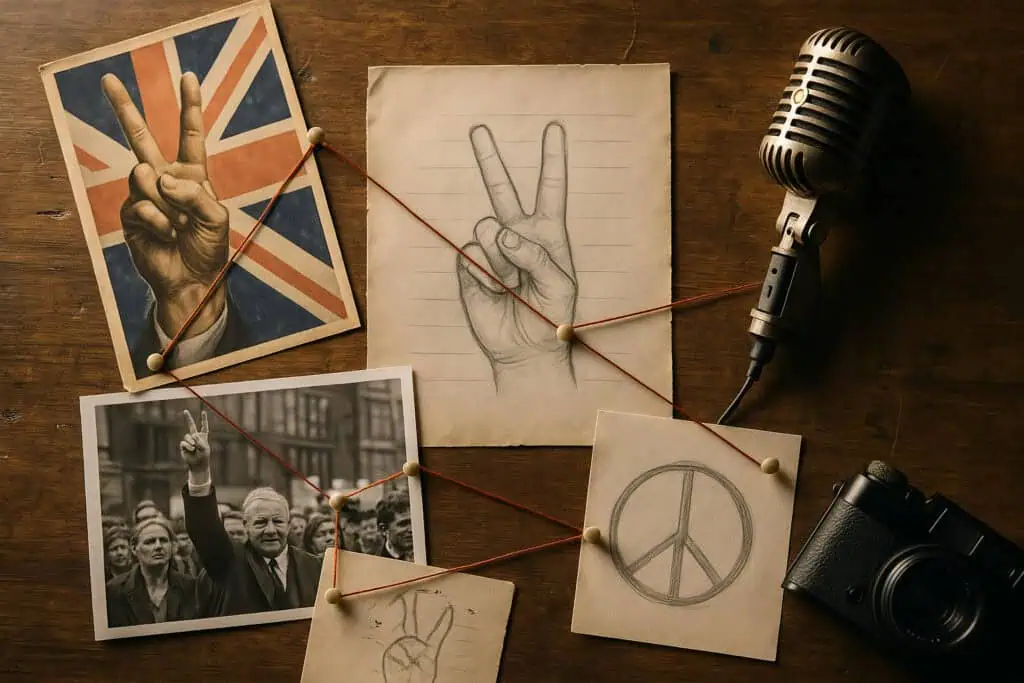
Before we talk meaning, it helps to know where the gesture traveled from. During World War II, the V-shaped hand sign spread across Europe in a “V for Victory” campaign, boosted by Winston Churchill’s public use. You can see how radio, posters, and leaders turned a small hand move into a mass signal of unity, as told by the Imperial War Museums.
Years later, the 1960s anti-war movement gave the V sign a new life. Protesters flashed it while saying “peace,” and it stuck in American pop culture. At the same time, a different symbol—the circle with three lines—rose as the modern “peace sign.” That round logo was designed in 1958 for Britain’s Campaign for Nuclear Disarmament and later spread in the U.S.
So, the hand V and the round peace logo grew side by side. They often appear together. Yet they are not the same thing.
What the peace fingers symbol means today
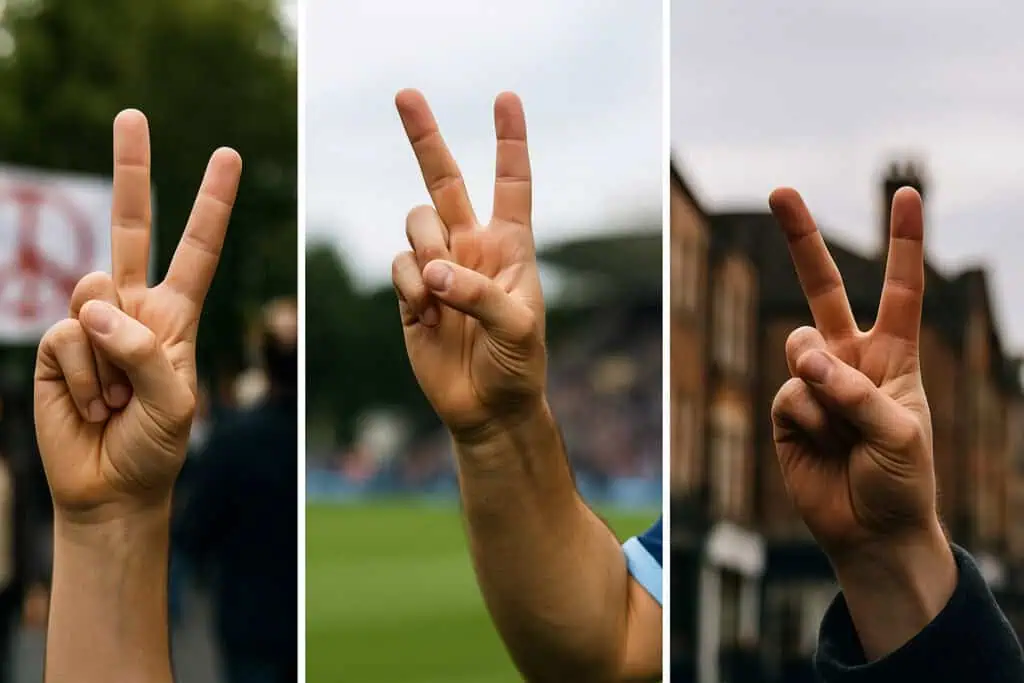
Now to the point. The peace fingers symbol most often means “peace,” “good vibes,” or “victory,” especially in the U.S. and online. Show your index and middle finger in a V, keep the rest curled, and turn your palm out toward others. People read that as friendly, casual, and positive. In sports or big wins, it still reads as “victory.” In photos, it reads as “all good” or “just having fun.”
However, the direction of your palm changes things. With the palm facing in, the same V can be offensive in parts of the English-speaking world outside the U.S. Because of this, travelers should be careful. If you’re unsure, turn the palm out.
The peace fingers symbol also shifts with the moment. In a protest, it signals “peace” or “end the war.” In a selfie, it’s playful. In a graduation photo, it can mean “we did it.” And online, it pairs with the ✌️ emoji to soften tone or show support. In short, the sign is simple, but the setting gives it color.
FAQs and common mix-ups
Is the peace fingers symbol the same as the round “peace sign” logo?
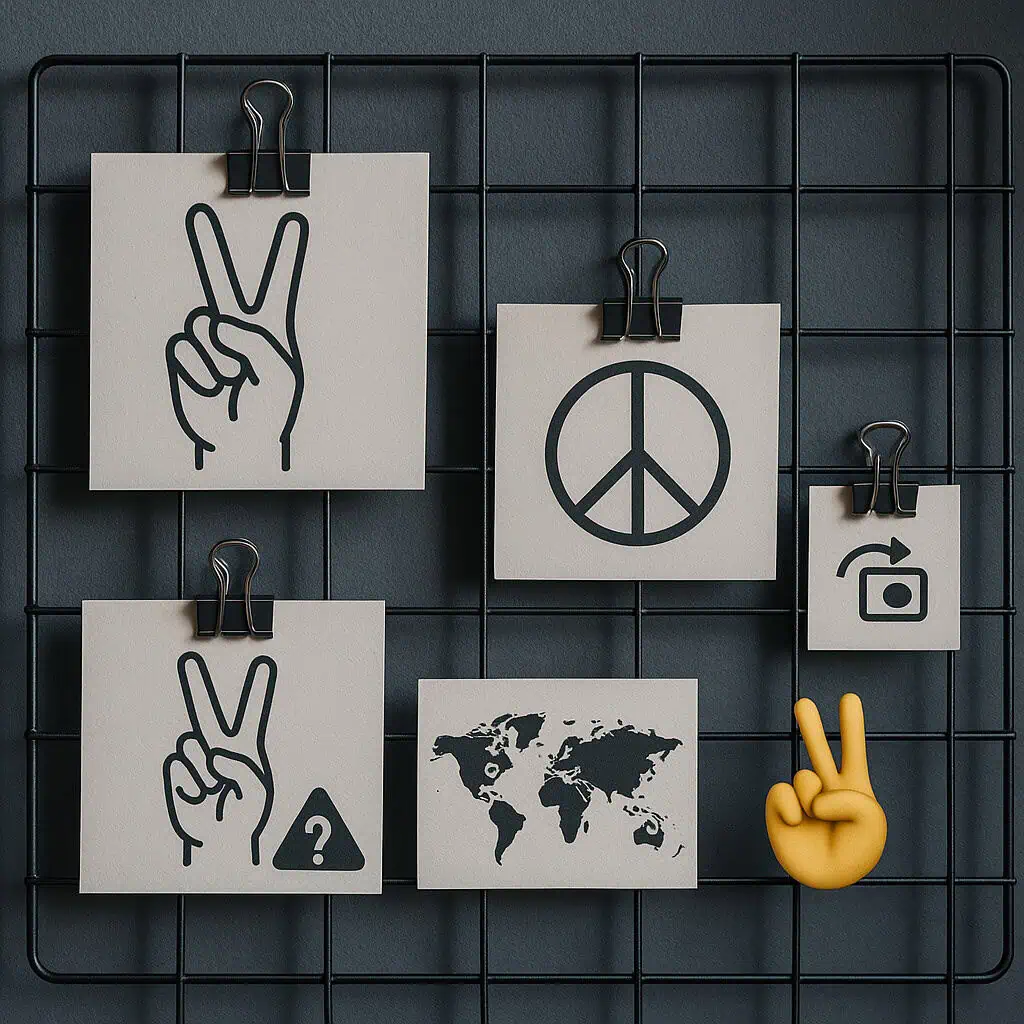
Not exactly. The hand V is a gesture. The round peace logo (☮️) is a design made in 1958 for nuclear disarmament. They often show up together in peace culture, but they are different symbols with different roots. You can read the origin story from the movement that created it at Campaign for Nuclear Disarmament.
Which way should my palm face?
For peace or victory, point your palm out. In several countries (like the UK and Australia), a palm-in V can be insulting.
What does the ✌️ emoji mean?
The ✌️ emoji is called Victory Hand. Most people use it as a peace sign, to show “victory,” “thanks,” or “all good.” It has been part of Unicode since 1993.
I heard the V sign comes from English archers at Agincourt—true?
That story is popular online, but it doesn’t hold up well. Fact-checkers keep finding no solid proof.
Why do so many people in Japan pose with a V in photos?
In Japan and parts of East Asia, the V pose became a friendly, cute photo habit through pop culture, sports, and ads from the 1970s onward. It doesn’t have the rude meaning there.
Does the peace fingers symbol always mean the same thing?
No. Like most body language, meaning shifts with place and situation. In the U.S., a palm-out V is safe and friendly. In some other places, a palm-in V can be a problem. So, think about where you are and who’s watching.
Bonus: quick facts that make you smarter about the V
- Two hands, double message: Politicians like Richard Nixon sometimes threw two V signs at once to hammer home “victory.” It’s dramatic and reads big on camera.
- Sign language is different: In American Sign Language, the V handshape appears in letters and words. However, ASL meaning comes from handshape and movement, not from the cultural “peace” reading people use in photos.
- Flip risk in mirrors and cameras: Front-facing cameras can mirror your image. If your selfie app flips the photo later, your hand may still look fine, but the pose can feel “off.” It won’t change meaning in the U.S.; it can just look a bit odd.
- Crowd energy matters: At rallies, the peace fingers symbol works as a quick, safe visual of unity from far away. Because it is high-contrast and simple, it photographs well.
- Travel tip: If you’re abroad and unsure, stick with a thumbs-up or a wave. Or, keep the V but make sure your palm is out. Small shift, big difference.
Final word
The peace fingers symbol is an easy, friendly sign when your palm faces out—people read it as “peace,” “victory,” or just “all good.” But context, country, and palm direction change the message. If you remember that one rule (palm out), you’ll be safe almost everywhere.
Interested in exploring similar posts? Visit the Cultural Rituals & Society hub for more!