
TL;DR: The butterfly tattoo significance most often points to transformation, fresh starts, freedom, and the soul’s journey. Because a butterfly changes so completely, many people use it to mark recovery, a new chapter, or remembrance. Color, species, number (one vs two), and placement all tweak the message, so your final design can quietly say “rebirth,” “love,” “lightness,” or “I’m still here” without a single word.
The butterfly tattoo significance: a short history
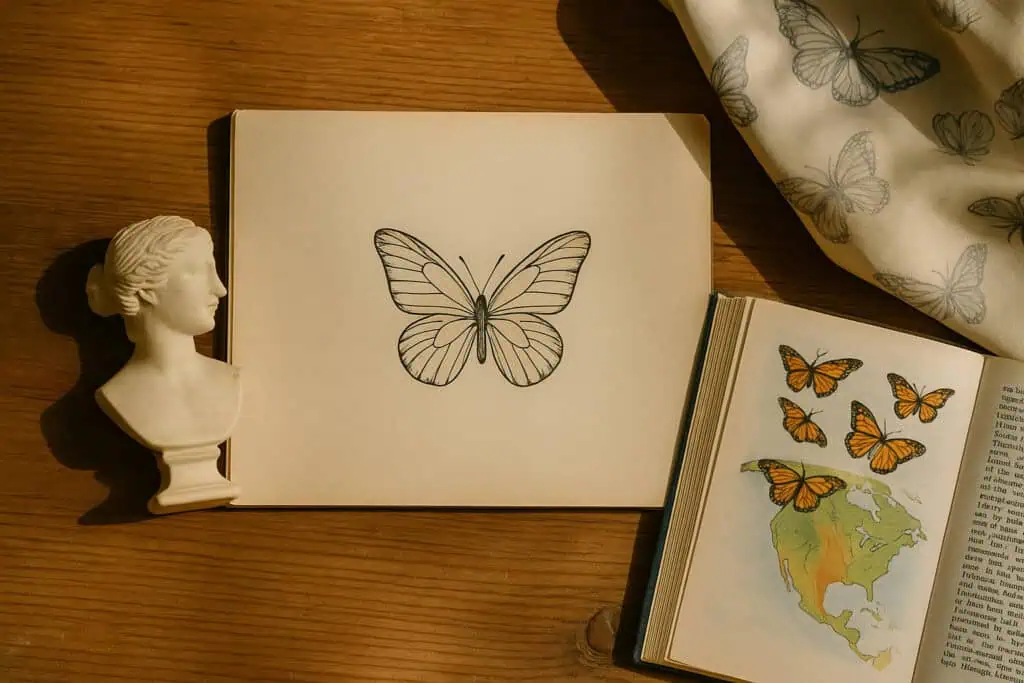
Across cultures, butterflies have been loaded with meaning for centuries. In ancient Greece, the word psyche could mean both “soul” and “butterfly,” and art often showed Psyche with butterfly wings. This linked the insect to life, breath, and the spirit long before modern tattoos existed.
In Japan, butterflies appear in textile art and wedding robes; paired butterflies can symbolise a long, happy marriage, and the motif is used for life passages like coming-of-age. Museums hold bridal over-robes and kimono decorated with butterfly forms that hint at longevity, union, and seasonal change.
In Mexico, the annual monarch migration arrives around 1–2 November. Because that timing overlaps with Día de los Muertos, many Indigenous communities see monarchs as visitors from the spirit world—ancestors returning home. This cultural thread is still taught and celebrated today.
Modern tattoo culture then layered style on top of symbolism—from bold Y2K butterflies to today’s fine-line, micro-realism, and watercolor looks. Pop culture keeps the image visible, but the older cultural roots keep it meaningful.
What is the butterfly tattoo’s significance today?
What the tattoo stands for
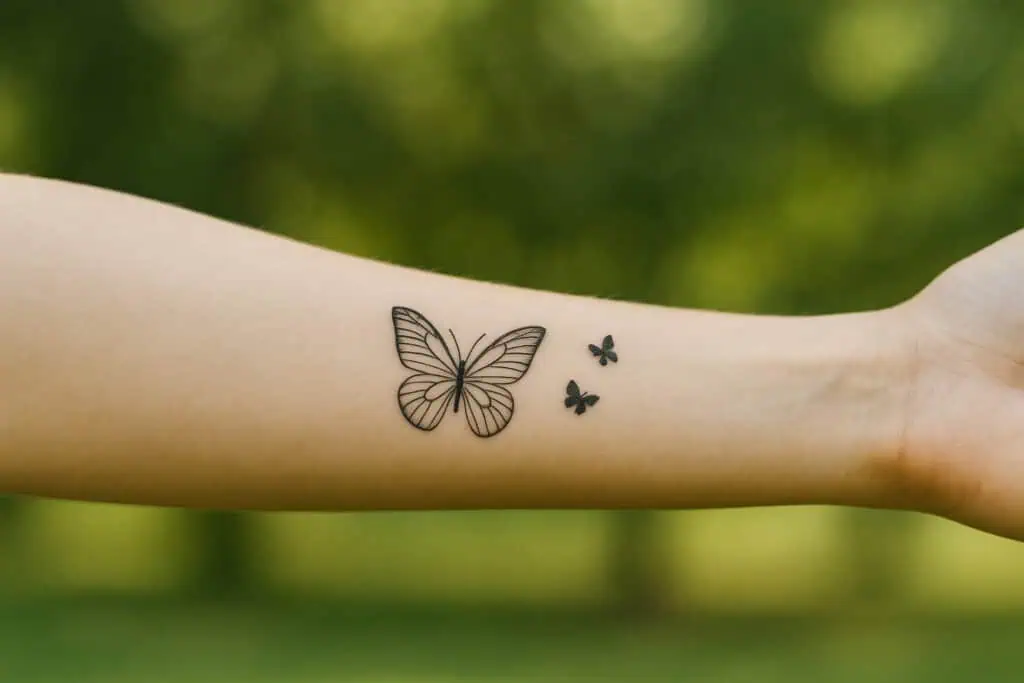
Put simply, here are the most common, plain-English meanings people choose—use one, mix a few, or write your own:
- Transformation & new beginnings. A butterfly is born twice. So, it’s the go-to sign for “I’m not who I was,” whether after illness, divorce, grief, or growth.
- The soul & remembrance. Many treat it as a gentle way to honour someone who has passed or to nod to spirituality without religious text. Cultural links—from Greek psyche to monarchs and Día de los Muertos—reinforce that idea.
- Freedom & lightness. Wings say “I move on,” “I let go,” or “I’m free to be me.”
- Beauty and fragility. It can whisper, “Life is short; enjoy it,” while still feeling hopeful.
- Love & partnership. Two butterflies often suggest union, paired journeys, or marriage. Japanese bridal garments even encode this motif.
- Resilience & recovery. The caterpillar does the ugly work before it flies. Many people use the image to mark healing and personal strength.
Design choices that adjust the tattoo’s significance
Colors and what they tend to say
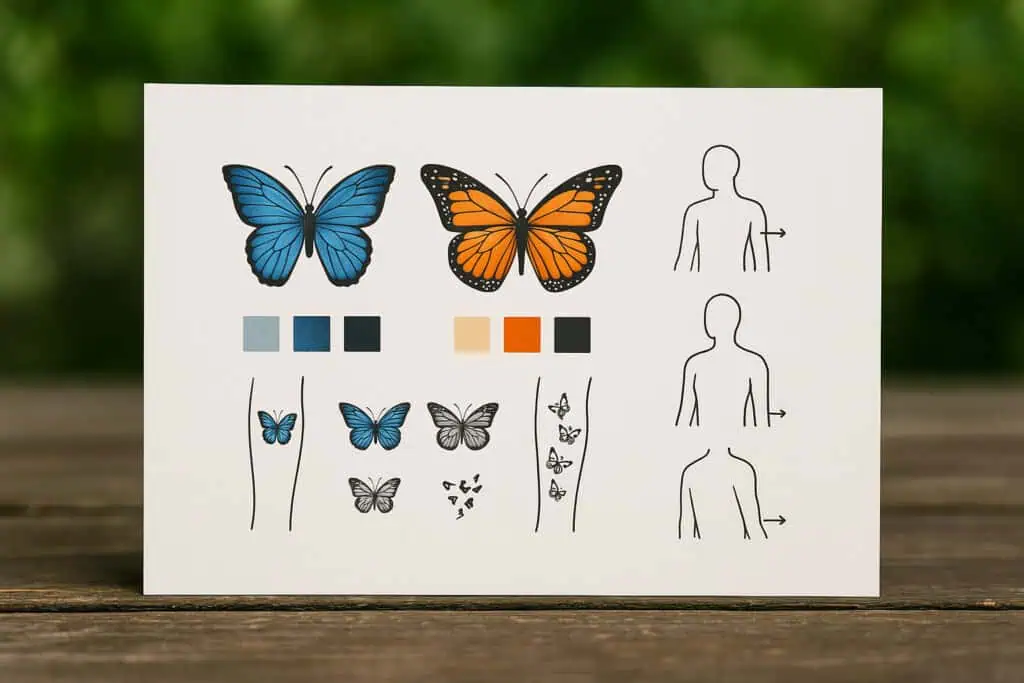
- Blue: Often read as luck, calm, or a peaceful reset. If you want “hopeful change,” blue works well.
- Black/greyscale: Strong, timeless, and good for memorial pieces.
- Orange/monarch: Some see endurance and the long road home; in Mexico it can quietly nod to remembrance season.
- Red or multicolor: Energy, joy, and “life is vivid now.”
(Color meanings aren’t laws; they’re gentle cues. Pick what fits your story.)
Species and style
- Monarch: Endurance, migration, memory; great if you like bold contrast.
- Swallowtail or morpho: Elegance or dream-like calm, especially in fine-line or watercolor.
- Realism vs. linework: Realism feels literal (“this exact butterfly mattered”); minimal linework feels symbolic and subtle.
Number and motion
- One butterfly: A personal journey.
- Two butterflies: Togetherness, marriage, or soulmates (a long-standing wedding motif in Japan).
- A swarm/flight path: Growth over time—each butterfly can mark a milestone.
Placement and scale
- Visible (forearm, wrist, collarbone): “I’m ready to show this chapter.”
- Quieter (rib, hip, back of arm): “This is for me” or “I’ll share when I choose.”
- Micro vs. medium: Tiny reads gentle; palm-sized reads confident; neither is “right,” only right-for-you.
FAQs about butterfly tattoo significance
Q: Is a butterfly tattoo only for women?
A: No. Style and placement can make any design feel feminine, neutral, or bold. Tattoos don’t have a gender; they’re personal artwork.
Q: What does a blue butterfly tattoo mean?
A: Common reads are luck, peace, and positive change. If “calm new chapter” fits you, blue matches well.
Q: Do two butterflies always mean love or marriage?
A: Not always, but many people use two as a symbol of partnership. Historic wedding textiles in Japan even use paired “butterfly” motifs for marital happiness.
Q: What do butterflies have to do with the soul?
A: In Greek, psyche means both “soul” and “butterfly,” and artists showed Psyche with butterfly wings. That link still shapes how people read the image.
Q: Is a butterfly cliché now?
A: Trends come and go, but meaning endures. If the story is yours, it won’t feel generic.
Q: Is a monarch butterfly tattoo cultural appropriation because of Day of the Dead?
A: No. The monarch carries special meaning in Mexico each autumn, but a respectful tattoo that honours loved ones or transformation is fine. Just avoid copying sacred altar imagery without context.
Bonus: surprising facts about the butterfly tattoo’s significance
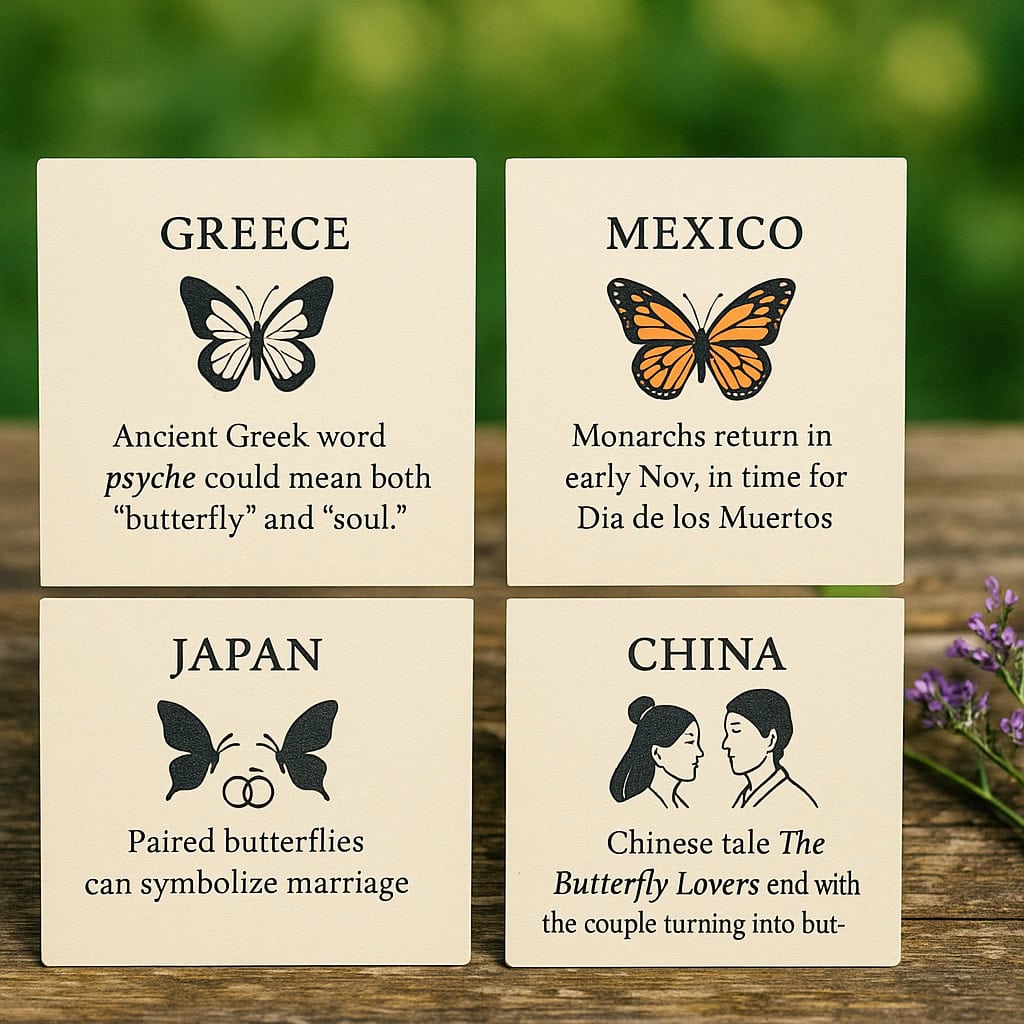
- Greek language roots: The ancient word psyche tied “butterfly” to “soul,” which is why many memorial tattoos feel natural with this motif.
- Wedding symbolism: Museum bridal robes include butterfly-shaped elements that point to a long marriage; paired butterflies can even be shown as male/female forms.
- A perfect calendar rhyme: Monarchs reach Mexico around 1–2 November—the very days families honour the dead—so the “souls returning” belief fits the season exactly.
- East Asian love story: The famous Chinese folktale The Butterfly Lovers ends with the pair transformed into butterflies, which is why two butterflies can read as “love beyond life.”
Final word on butterfly tattoo significance
Butterfly tattoo significance is simple to say yet deep to live: change, freedom, and the soul’s movement through hard times toward something lighter. If you want it to mean love, choose two. If you want resilience, choose a monarch. Calm hope? Go blue. Most importantly, anchor the design to your moment—then let it fly.
Interested in exploring similar posts? Visit the Cultural Rituals & Society hub for more!