
Most people think bats hang upside down because it is “just how bats sleep,” or because they like dark caves and creepy vibes. However, the real reason is not a vibe at all, because their bodies are built around a quiet mechanical trick that makes hanging feel almost like resting on a couch. The clue sits in one odd piece of anatomy called a tendon-locking mechanism, but it will only make sense after you see how humans slowly figured out what bats were really doing up there.
Night Roosting Through Time
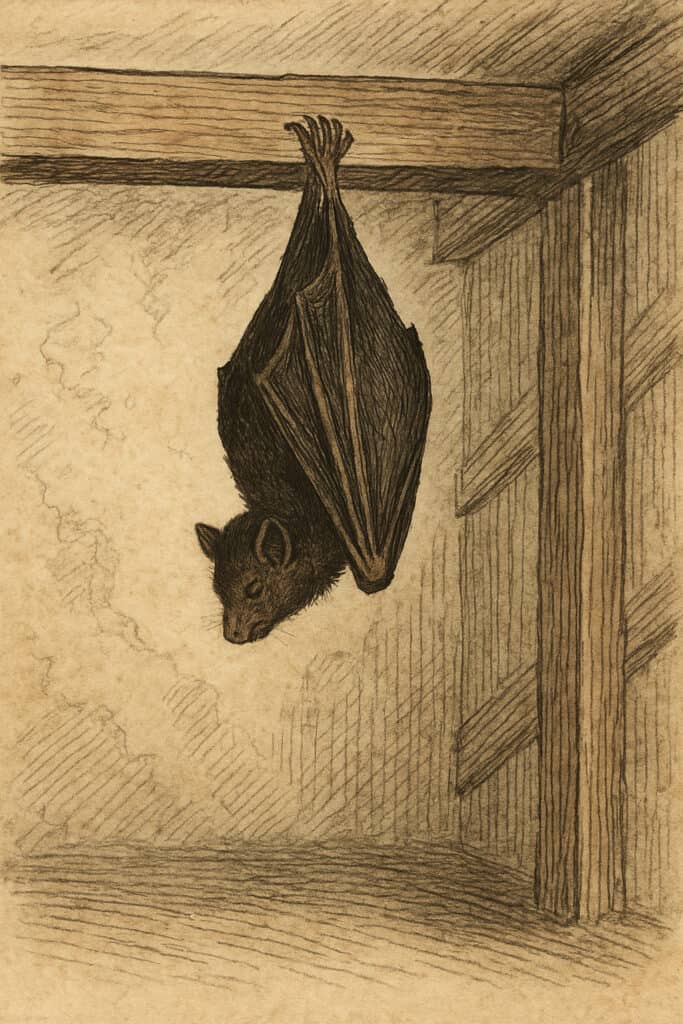
Long before anyone filmed bats in slow motion, people noticed the same pattern again and again: bats disappear by day, then return at dusk, and many of them reappear hanging from ceilings, beams, and tree cover. That repeated behavior shaped myths, fears, and many bad guesses. Some cultures treated bats like signs of sickness or bad luck, while others saw them as lucky. Either way, most early stories focused on the “spooky” setting, not the physical problem of how a small animal can stay suspended for hours.
As naturalists started writing careful notes, the focus shifted from superstition to habitat. Instead of asking whether bats were “good” or “bad,” researchers began mapping where they hide, how large their groups are, and which kinds of roosts they choose. Even today, the basic list is surprisingly broad: caves, rock cracks, trees, bridges, and buildings, depending on the species and season. The U.S. Geological Survey has a clear overview of these day-roost choices in its FAQ on where bats live, which helps explain why people find bats in so many different places.
Then, as camera tech improved, another question became hard to ignore. If bats often end up upside down, how do they even land that way without crashing? That problem pushed modern studies to focus on flight maneuvers and body control, setting the stage for the bigger question: how does this gravity-defying habit actually work?
Built-In Grip Without Effort
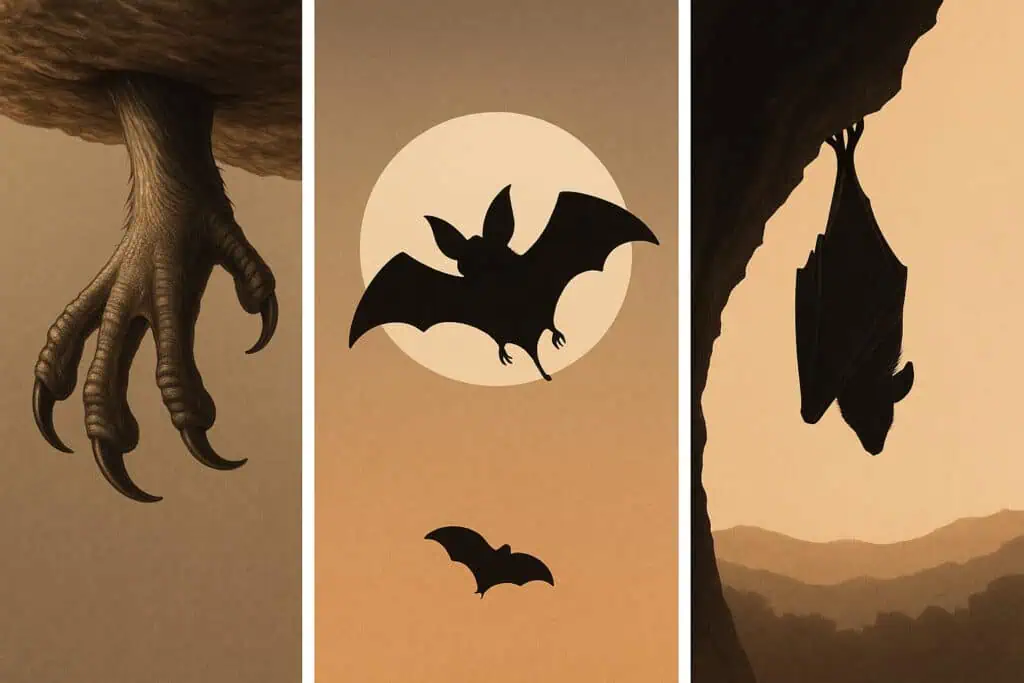
The upside-down pose looks hard because humans imagine it like a pull-up bar. Still, the bat version is closer to a “set it and forget it” latch than a constant workout.
The Biomechanical Lock
A bat’s feet are not built like your feet. They are built like small hooks with claws, and the joints are arranged so the toes can clamp down strongly. What matters most, though, is what happens when the bat relaxes. In humans, relaxing usually opens the hand, so a relaxed hang means you’re likely to fall. In many bats, relaxing does the opposite, because the tendons that run through the legs and into the toes can tighten under the bat’s own weight, which pulls the claws into a closed, locked grip.
That locking idea is not just a folk explanation; it has been described in anatomy research as a real structure that helps bats hang with very little muscle effort (one paper indexed by PubMed describes a “tendon locking mechanism” that assists hanging by reducing the need for constant contraction). Once you combine that latch-like setup with sharp claws, the big reveal becomes simple: for many species, hanging is the relaxed position, not the strained one.
Kinetic Assist
Flight is not just wings; it is timing and airflow. Birds often push off with strong legs or flap hard to get lift quickly, yet bats have a different challenge because their wings are skin membranes stretched over long finger bones. That design is amazing in the air, but it is not built for a powerful “jump up and go” from flat ground, as many birds can.
Because of that, getting an instant head start matters. When a bat is already above the ground, letting go creates immediate drop speed, and that speed turns into airflow over the wings. The bat can then open its wings, catch air, and enter powered flight. This is why a ceiling, beam, or cave roof is not just a sleeping spot; it is also a launch ramp. Put together, the practical payoff is clear: the position sets them up to drop into flight fast, instead of trying to “stand up” and sprint like a tiny dog with wings.
Vertical Defense
Most predators move along the ground or perch on branches, and many animals cannot reach a smooth ceiling or a narrow crack. Even if a predator can climb, an upside-down roost high above the floor is still harder to approach quietly, especially in a tight cave or a cramped attic space. On top of that, roosting above the ground lets bats use spaces that many competitors cannot use at all, which means less fighting over the “best bed.”
This matters because bats do not sleep like humans; they survive like small prey animals. They need a safe place to rest, digest, raise young, and sometimes hibernate. A ceiling spot can be safer simply because fewer things can get there, and because a bat can drop away quickly if disturbed. So, even when the foot latch explains how they can hang, the bigger lifestyle reason still shows up: it unlocks safer roost spots that are out of reach for many threats.
Thermodynamic Clustering
Bats live on a tight energy budget. They burn a lot of fuel in flight, and many species also manage their body heat in clever ways, especially in cooler seasons. That is why bats often choose roosts that protect them from wind, sudden temperature swings, and daytime disturbance. Inside those spaces, they may also cluster together, which helps them share warmth and reduce heat loss.
Hanging upside down fits these roost spaces because ceilings and upper walls often have the stable air pockets bats prefer. Also, being inverted can make it easier for a group to pack in without everyone needing a “floor spot.” The key point is not that upside-down is magic; it is that it works well with how bats rest, conserve energy, and use small, protected overhead spaces.
Myth Busters
Dizziness And Blood Flow
People imagine blood rushing to a bat’s head, as if it were a person doing a long handstand. Yet bats are not built like a person scaled down, so the same “head pressure” story does not map cleanly. Their circulation, body size, and posture all work together in different ways, and they spend their lives adapted to this one habit.
The practical takeaway is that bats generally do not hang upside down and “suffer through it” the way a human would. For most roosting species, the posture is normal, and the body is built to handle it.
Falling Asleep Concerns
A hanging bat can look like it is one loose muscle away from falling. However, the key detail is that the grip is not maintained by constant effort, as it is when you hang. The foot latch can remain engaged while the bat is relaxed, significantly altering the risk picture.
That is why healthy bats usually do not drop out of a roost while sleeping. Falls can happen if a bat is sick, injured, very young, or disturbed, but the normal roost posture is designed to be stable for long stretches.
Not Every Species Does
Bats are a huge group with many lifestyles, so behavior that looks universal is often just “common.” Some bats roost in leaves, some wedge into tight cracks, and a few are better at moving on the ground than you might expect. Even among those that do hang, the exact posture can vary, from tight curls to shoulder-to-shoulder clusters to a more open hang.
So, the phrase “bats hang upside down” is mostly true, but not a rule with zero exceptions.
Grounded Bat Encounters
A bat on the ground often signals a problem, like dehydration, injury, or illness, because many bats are clumsy at taking off from flat surfaces. Also, while most bats are not aggressive, they can bite if handled, and bat bites can be tiny. That is why public health advice focuses on avoiding direct contact and letting professionals handle indoor bats.
For U.S. guidance on safe steps, the CDC’s page on preventing rabies from bats explains what to do if you find a bat in your home and why you should not touch it with your bare hands.
Bonus: Fun Facts
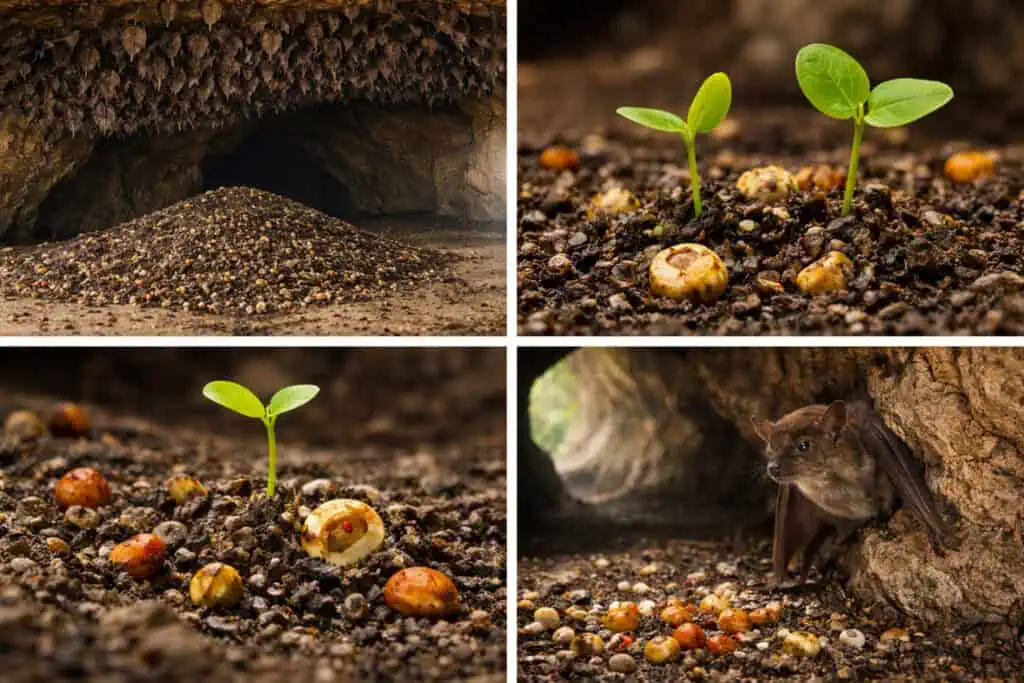
Bats are doing more in the background than most people realize.
- Ecosystem Fuel: Many cave ecosystems depend on bat guano, which feeds insects and microbes that, in turn, support other cave life. That means a bat roost is not just a sleeping area; it can be the start of an entire food chain.
- Night Shift Pollinators: Bats vary widely in what they eat. Plenty of species hunt insects, yet others pollinate flowers or spread seeds, especially in tropical regions. Their night work can support forests and crops in ways most people never notice during the day.
- Variety Rules: Some bats roost in leaves, some wedge into tight cracks, and a few are better at moving on the ground than you might expect. The exact posture can vary, from tight curls to shoulder-to-shoulder clusters to a more open hang. For more information on specific bat behaviors, check this bat facts page.
Final Word
Understanding the upside-down habit strips away the creepiness and reveals something far more practical: a smart piece of design tied directly to daily survival. It also gestures toward a larger pattern: nature addresses big challenges with small mechanical solutions, then builds entire ways of living around them.
The next time a bat-shaped silhouette appears under a bridge or along a roofline, the more interesting question may not be why bats hang upside down, but what other everyday behaviors around you are quietly functioning as engineering solutions in plain sight.
Interested in exploring similar posts? Visit The Science of Everyday Life hub for more!