
The popular belief is that fingers are there mainly so police can identify you, but there is more to the surface than meets the eye; your skin is built with tiny structures that change how your hands interact with the world. A strange little detail called volar pads is part of that story, but it will not make sense until we first look at how fingerprints became “important” in everyday life.
You notice fingerprints most when they get you into your phone, when they smear a window, or when a kid presses a sticky hand onto a table. Yet your body did not grow them for glass screens or ink pads. Instead, the clue is that the same patterns show up on every healthy fingertip, in every culture, in every climate, long before you ever touch a keyboard.
Marks That Became Evidence
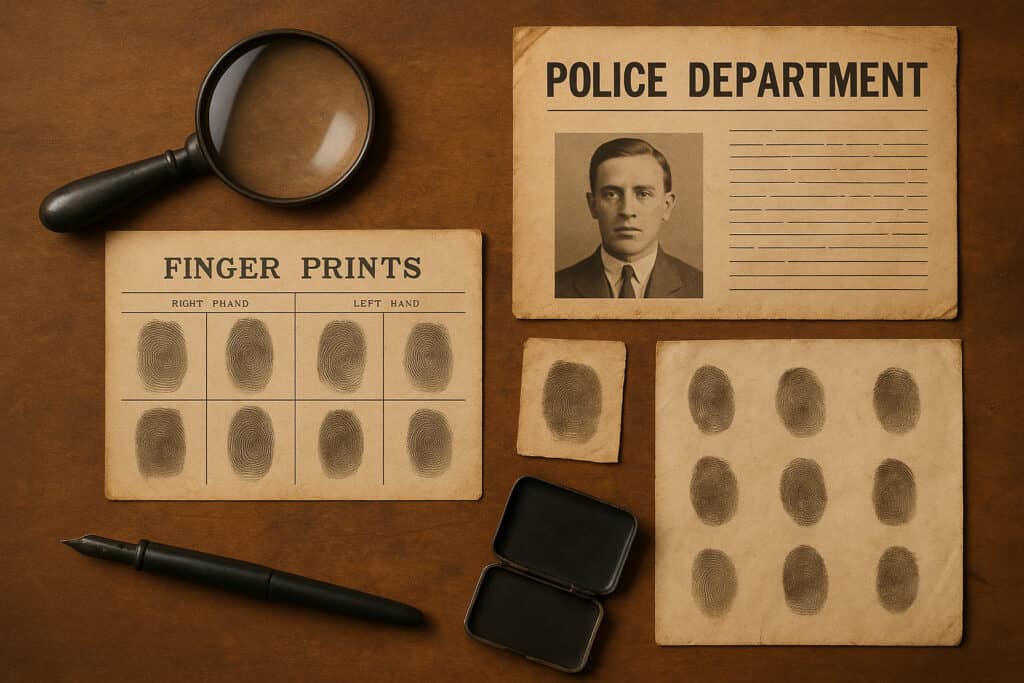
Long before science could explain skin patterns, people noticed that fingertips leave repeatable marks. Over time, those marks turned into a practical tool: signing, sealing, and later, identifying. Once governments and police forces began storing records, fingerprint collections grew from a curiosity into a searchable, comparable system.
In the late 1800s and early 1900s, fingerprinting moved from personal experiments into standard practice, especially as police departments needed better ways to tell people apart. A big step was creating shared methods and shared language, so one lab’s “match” meant the same thing as another lab’s “match.” The U.S. National Institute of Standards and Technology has pages on how modern fingerprint research is conducted and improved, which show how much effort goes into making this kind of comparison reliable and consistent in real-world cases.
Meanwhile, researchers also kept pulling on a different thread: not “how do we use fingerprints,” but “how do they form so consistently in the first place?” Large forensic references have compiled what is known about the growth and structure of ridge skin, partly because understanding the biology helps explain what stays stable and what can change at the edges.
That split matters because human history explains why fingerprints became famous, but it does not explain why they exist on your body at all.
A Surface Built For Contact
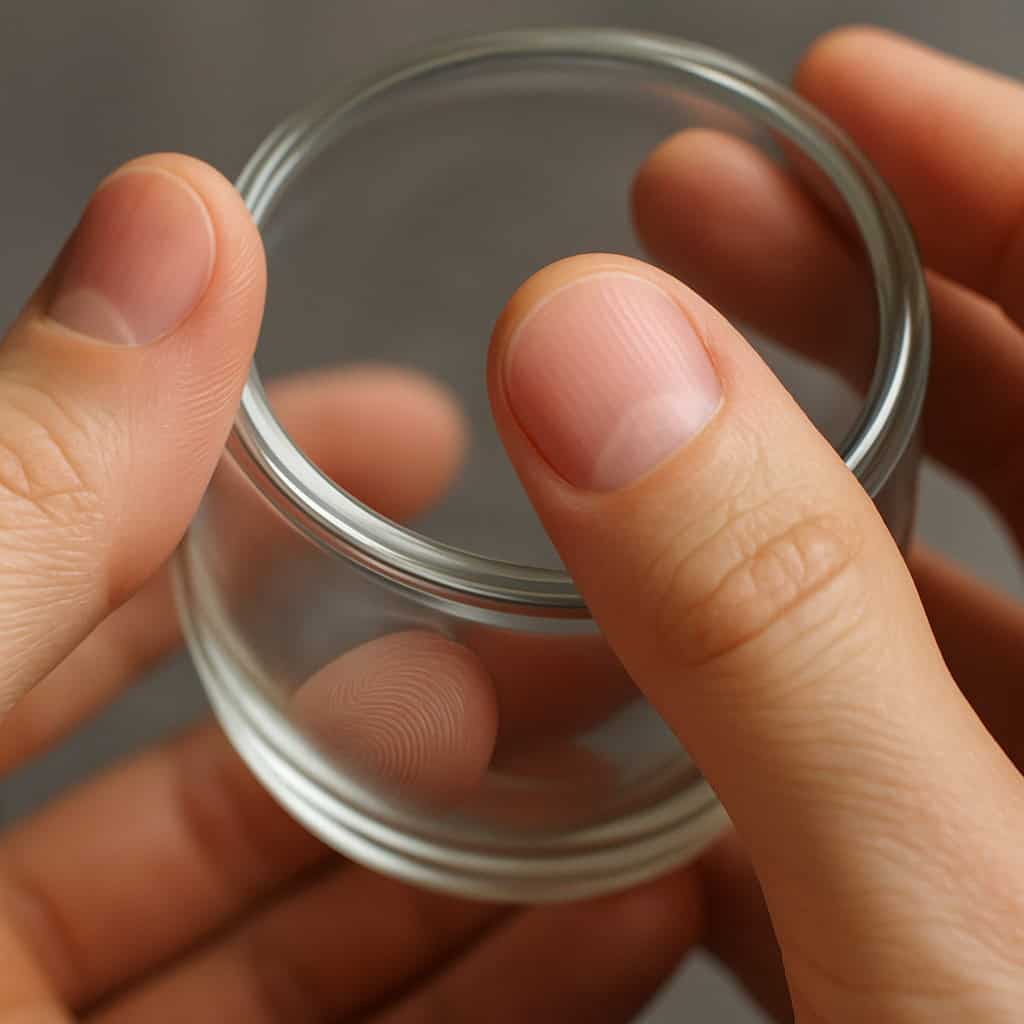
When you pick up a cup, open a jar, or feel for a key in your pocket, your fingers are doing two jobs at once: holding on and sensing. Your fingerprint patterns are part of a special kind of skin made for constant contact, and the “why” starts to make sense when you treat your fingertip like a tool, not like a name tag.
Friction Ridge Mechanics
A smooth rubber ball can feel “sticky” against your hand, but smooth human skin is not built the same way. As your fingertip presses against an object, the surface must withstand sliding forces, tiny vibrations, and rapid changes in pressure. Those raised lines and grooves change how skin contacts a surface, breaking the contact into many small zones instead of a single large flat patch. As a result, the skin can “bite” in a controlled way when you push or pull, especially during quick movements.
At the same time, your skin is not dry plastic. It sweats, it oils, and it can get wet. Under those changing conditions, a flat surface can lose reliable traction, whereas a ridged surface can manage moisture and contact in a more stable pattern. Once you zoom out from the swirl shape and focus on the ridged texture itself, it points to a job related to handling real-life objects. That is where the deeper answer to why the ridges exist begins: they are part of a contact system that helps your hands keep control during everyday force and motion.
Tactile Amplification
Holding on is only half of it. The other half is the information your fingers collect. When you rub fabric, twist a cap, or test whether something is slippery, your nervous system is reading fine surface details through the skin. The ridges and grooves create a steady pattern of pressure changes as you move across textures, and that motion feeds your touch sensors with rich signals rather than dull ones.
Because those signals depend on small changes, the design has to be consistent and durable. If the surface structure were random and fragile, your touch sense would be noisier. Instead, the fingertip surface is built like a tough “sensor pad” that remains stable while remaining sensitive. Therefore, fingerprints are not just marks; they are part of how the finger turns motion and pressure into clear touch information. That is another key piece of the tactile puzzle, even if you never leave a visible print.
Volar Pad Regression
Your fingerprints did not form because you “used” your hands as a baby. They form before birth, while the skin is growing and folding in a controlled way. During pregnancy, the fingertip has temporary swellings (called volar pads) that shape how stresses spread across the skin, and those stresses guide the direction of ridges as the layers develop.
Scientists have also modeled the formation as a physical instability in the growing skin layers, in which growth forces cause the surface to buckle into ridge patterns rather than remaining smooth. In other words, the body’s “build process” makes ridges a natural outcome of how the layers expand and resist each other.
So, when you ask how the design emerges, part of the answer is surprisingly mechanical: they are what you get when fingertip skin develops into a tough, contact-ready surface shaped by growth, stress, and timing.
Variation Without Losing Function
One last detail makes fingerprints feel mysterious: everyone’s patterns look different, yet the ridged surface itself stays useful for everyone. That combination is not an accident. Development follows shared rules, but small differences in timing, pressure, and growth can shift the final map, like ripples forming in slightly different directions on a similar beach.
Even when the overall pattern changes from loops to whorls, the practical feature remains the same: a dense field of ridges designed for touch and contact. Modern research continues to connect specific signals in skin development to the ways these patterns organize, helping explain both the shared structure and the personal variation.
Myth Busters

“Fingerprints Are Only For Identification”
Fingerprinting became famous because it works well for ID, so it is easy to assume that it is the whole point. Yet body features usually stick around because they help you function, not because they help a database. The ridged skin shows up where you need a steady grip and rich touch feedback, and that usefulness comes whether anyone records your prints or not. Therefore, identification is more like a human “use case,” while the biological story is about contact and sensing.
“Everyone Has Completely Unique Prints”
The big patterns can look similar across people, and certain pattern types are common, so “unique” does not mean “nothing alike.” What makes prints so useful is the fine detail across many ridges, not just the broad swirl shape. Because the skin develops with small variations in many places at once, the overall combination becomes extremely hard to duplicate in practice, even if some parts resemble someone else’s.
“Cuts And Scrapes Erase Them Forever”
Skin heals in layers, and the ridged structure sits deeper than a surface scratch. So, minor cuts often heal into the same ridge pattern, though small scars can add new features. However, more serious damage that reaches the parts of skin that “set” the ridge structure can permanently change sections. That is why some people keep a small, altered patch after a serious injury, even though most everyday damage does not wipe everything clean.
“Aging Makes Prints Unusable”
Time changes skin in general, so fingerprints can look less sharp, especially if the skin gets thinner or drier. Still, the core ridge map usually stays, even if the surface becomes harder to read. In real life, quality depends on moisture, pressure, and skin condition as much as age, which is one reason forensic work focuses heavily on print quality and careful comparisons rather than treating every mark like a perfect stamp.
“Other Animals Have Fingerprints Too”
Some animals have ridged skin for grip, but the details differ by species and by body part. What matters is the function: if a creature relies on contact surfaces for climbing, grasping, or traction, evolution often favors textures that improve that contact. So the surprise is not that ridge-like patterns exist elsewhere, but that many living things solve similar grip problems with similar surface tricks.
Bonus: Fun Facts
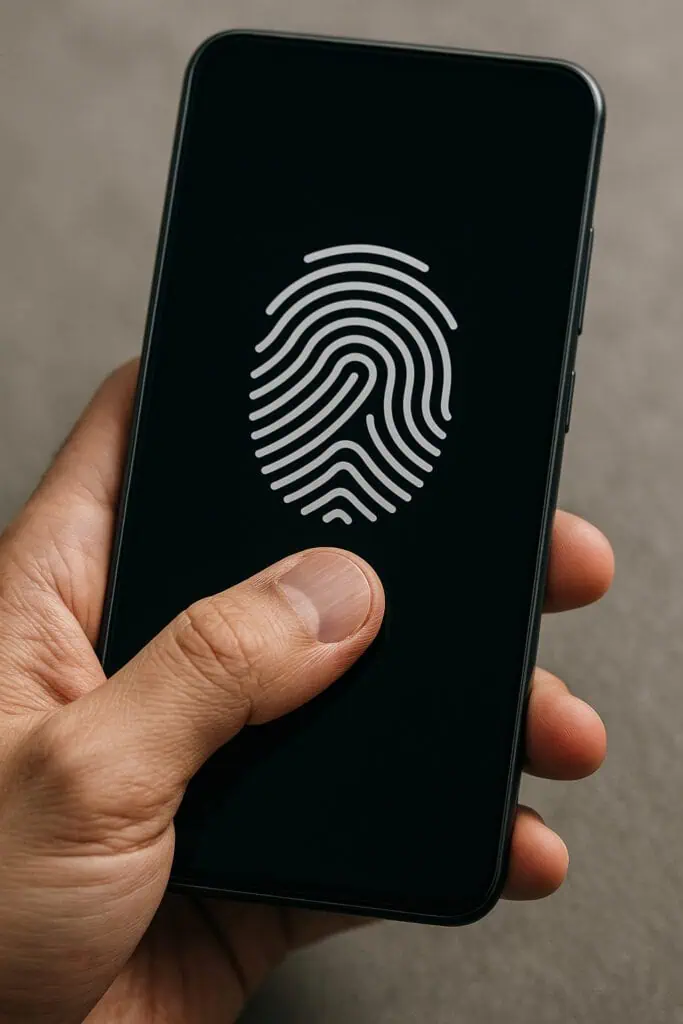
Fingerprints show up in tiny moments you do not usually connect to biology, and those moments reveal how practical the system is.
- Digital reading: Phones and scanners do not read “inked fingerprints” the way old paper cards did. Instead, many devices read a map of ridges using light, electricity, or tiny capacitance changes, and only work because the ridged surface is consistent enough to measure repeatedly. Although it feels like a modern feature, it is really a modern way of measuring a very old surface design.
- Hydrodynamic grip: Water changes how your fingertips behave. After a while in a bath, your fingers wrinkle in a pattern that is not random, and that change can improve handling in wet conditions. Even though wrinkling is different from ridges, it shows the same theme: your hands adapt their surface to manage grip under changing conditions.
- Occupational wear: Certain jobs and chemicals can make prints harder to capture, not because the ridges vanish, but because the skin becomes worn, dry, or irritated. In those cases, the ridges may be present but less clean, which can affect everything from unlocking a phone to leaving clear marks on smooth surfaces.
Final Word
Once you start seeing fingerprints as “working skin” instead of “identity marks,” your hands look less like labels and more like engineered tools. The ridges, the sweat, the sensitivity, and even the way your grip stays steady during quick movements all point to a body that is built for interaction, not just appearance.
That perspective can change a simple habit: paying attention to what your hands accomplish without thinking about it. If a tiny surface pattern can shape how you hold, feel, and handle the world, what other “background designs” are doing serious work every day, right under your attention?
Interested in exploring similar posts? Visit The Science of Everyday Life hub for more!