
You think a song from a caged bird means it is simply happy? Think again. The real reason extends beyond mood to built-in body clocks, brain circuits, and a special voice box. Terms like “photoperiod,” “HVC song nuclei,” and “syrinx” point to the deeper story, and they only make sense once you see how they all work together.
Early notes and study

People have kept songbirds for centuries, first for warning in mines and later for beauty at home. Over time, keepers noticed patterns, such as stronger singing in spring and quieter singing in months after molting. Scientists followed those clues into a careful study. They mapped the bird’s voice box, the syrinx, and showed how songbirds can control each side of it to shape complex sounds. A simple tour of the syrinx explains why small bodies can make big, fast songs, and why songbirds can even sing two notes at once.
As the field matured, researchers labeled songbirds as “oscines,” a group characterized by fine control of syrinx muscles and a large song library. This control helps them practice, copy, and refine what they hear, which is part of why certain pet species are such strong singers.
Through the 1900s and beyond, labs focused on easy-to-keep species, especially canaries and zebra finches. These birds helped reveal how seasons, light, and hormones change the brain areas that run song. In other words, the stage for explaining why caged birds sing was set long before smartphones could record a trill in the kitchen.
Underlying drivers
Photoperiodic Triggers
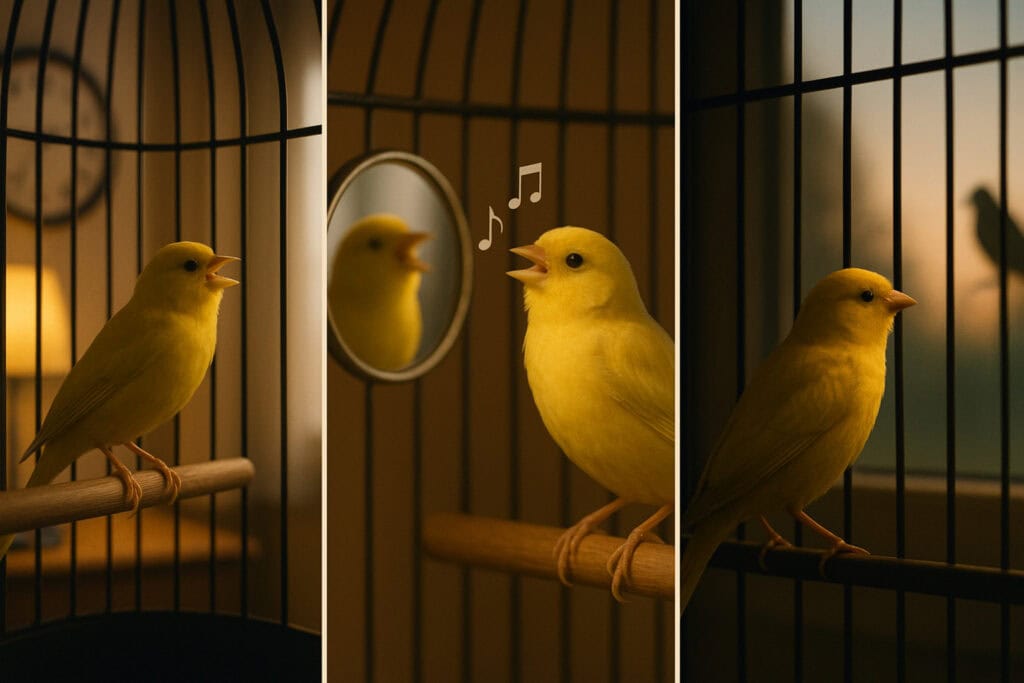
Inside a bird’s body, day length acts like a dial. As days grow longer, light hits sensors in the brain that crank up hormones. Those hormones, including testosterone and others, help grow and connect the brain’s song circuits, which boost song rate and structure. In controlled settings, scientists adjust the amount of daily light and observe canaries entering or leaving breeding condition, with matching changes in song. Because most homes still follow seasonal shifts in light, the longer “photoperiod” primes the system to sing.
The HVC Circuit
Young songbirds do not come with a perfect tune. First, they babble, then they practice while listening to themselves, and finally, they “crystallize” a stable song. Even adults engage in a form of practice called undirected singing. The brain’s learning loops reward accurate notes and nudge errors toward the target. In a quiet living room, the mechanism is an ongoing practice that keeps the song quality sharp. Research on the song’s “feel-good” side helps explain this steady drive to vocalize.
Miniature Home Range
In the wild, song marks space, warns rivals, and attracts mates. A cage does not erase those instincts. Many pet birds still treat the cage and the room as “home range,” so a tune in the morning can act like a small boundary flag. Sounds from outside, a mirror, or a television, a bird call can count as “nearby animals.” The end of the story is simple only at the end: territorial software is still running, only the map is smaller.
Internal Dopamine Rewards
Singing does not always need an audience. In several contexts, song seems to carry its own reward. Brain chemicals linked to pleasure and motivation rise when birds sing in a relaxed, social setting. Because that reward is internal, a safe pet environment often unlocks more casual singing. Part of the answer is that the behavior taps a built-in reward loop that encourages more practice and performance.
The Genetics of Song
Different species arrive with different song hardware and habits. Canaries cycle strongly with seasons, while zebra finches sing year-round. Even within one species, individuals vary. Some are bold and noisy, others are shy and sparse. These differences help explain why vocal rates are high in one home but lower in another.
The External Clock
The environment shapes the schedule. Early birds outside often sing more at dawn. Indoors, a reading lamp or streetlight can stretch “daytime,” which shifts vocal activity into early or late hours. Studies of city birds show that artificial light extends the window for birdsong, and similar cues in a home can nudge a pet bird’s clock in the same direction. The timing is not just random; the room’s light and noise cues often steer the internal clock.
Frequently Asked Questions

Is singing only a sign of happiness?
Mood can raise or lower song, but the engine is deeper. Light, hormones, brain circuits, and practice all push song along, so happiness alone does not explain it, although comfort can make singing more likely.
Does a mirror make them sing like crazy?
Reflections act like a weak social cue, and they may spark some extra song in certain birds. The long-term driver still comes from seasonal timing and internal motivation, so a mirror changes the surface, not the core reason.
Does covering the cage stop singing because it is cruel?
Darkness signals night, which tells the body to rest. A proper sleep window reduces the risk of mistimed songs without harm. The trick is to match a healthy light schedule, not to silence the bird for convenience.
Do female birds never sing?
Female song is common in many species, although the style and purpose differ. Pet trade history focused on males because they sing more in some species, but modern fieldwork has documented active female song in many places.
Does more singing always mean better welfare?
A strong, steady song usually shows a stable, unstressed bird, yet welfare has many parts. Health, diet, space, and social needs all matter. Use singing as one signal among many, not as the only test.
Bonus: Fun Facts
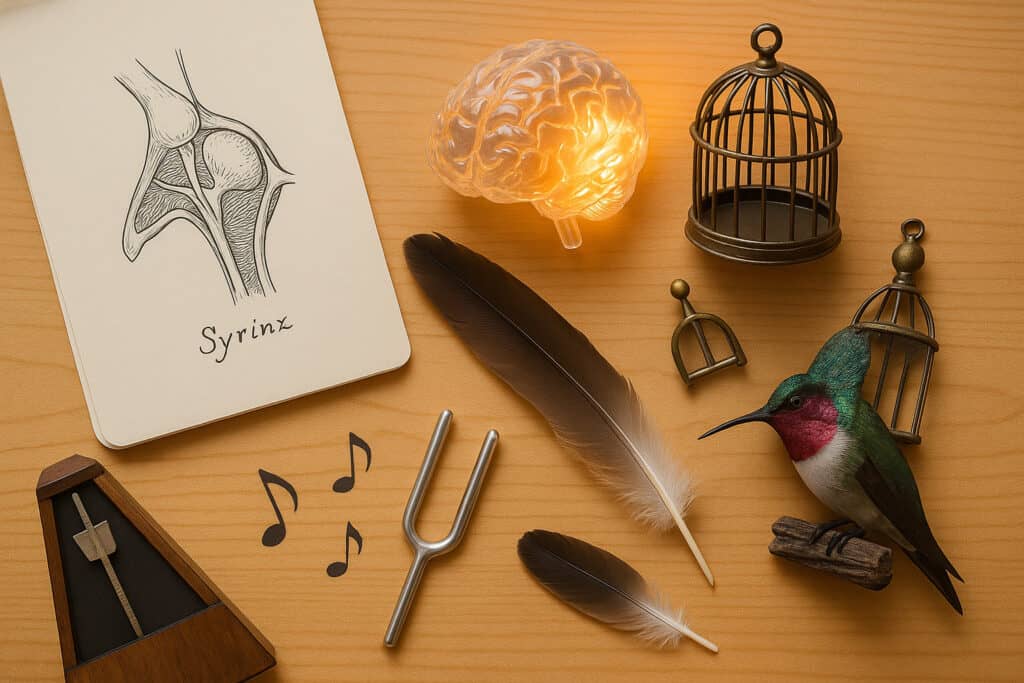
Beyond the clinic, the physical science of birdsong creates a few fascinating footnotes.
- Songbirds do not use vocal cords like humans; they sing with a unique organ called the syrinx, which sits where the windpipe splits into the lungs. This placement lets some birds control both sides at once for rich effects.
- Competitive singing can reshape the brain. In canaries, light and hormones change the size and wiring of song areas across the year, which lines up with rises and dips in singing effort.
- Not all music is voice. A few birds, like some hummingbirds and manakins, can make sounds with feathers during flight, which act like instruments rather than words. It is a good reminder that “song” in birds covers more than one tool.
- Scientists use canaries and zebra finches to study how practice, sleep, and feedback polish skills. These projects also teach us about human speech and learning because many of the same rules apply.
Final Word
The next time you hear that ripple of notes, try asking not only why caged birds sing, but what the room is telling the bird, what the season is doing to its body, and how the brain is tuning the next phrase. With that shift in view, the sound is still pretty, but now it is also a clock, a map, and a lesson in how behavior rides on hidden gears.
Interested in exploring similar posts? Visit The Science of Everyday Life hub for more!