
Owls are among the animals shrouded in mystery and myth. One of those myths is that owls hoot at night because they are out hunting and need to scare prey. The answer, though, lies in how sound moves through cool night air and in how owls talk to other owls. Keywords involve temperature inversion, duet calling, and individual vocal signature.
From Myth to Methodology
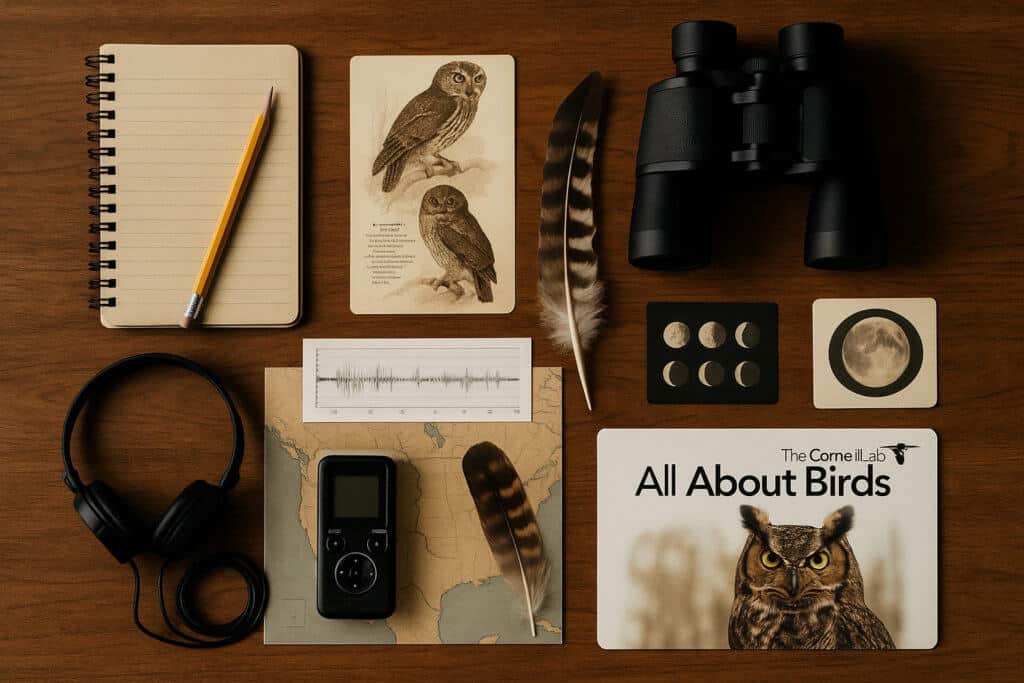
For centuries, people treated the hoot as a symbol in stories, from good-luck omens to warnings. Naturalists later began taking notes on when and how often owls called, and bird clubs turned those notes into checklists. Over time, careful listening became a method, not a myth. Field guides began labeling different call types, and teachers coached beginners to notice pitch, rhythm, and timing. Today, big bird programs collect recordings and tag them with species and behavior. Because of that, you can open a species page and compare a “song” to a “call,” and you can learn that duets often reveal a pair, not a single bird. Cornell Lab describes common patterns and explains how some hoots carry a long way and mark space in the dark night air, which already hints at the practical reasons for the nightly broadcast.
Researchers also study how the breeding stage changes calling. During nesting, vocal behavior can shift with guard duty, feeding, and fledgling care. Studies in avian journals compare call rates and note that breeding status shapes territorial beats and contact calls across owl species. These history and research threads set the stage, but they still do not answer our main question. For that, we need to look at the mechanics.
Signals after dark
Quieter air, longer reach
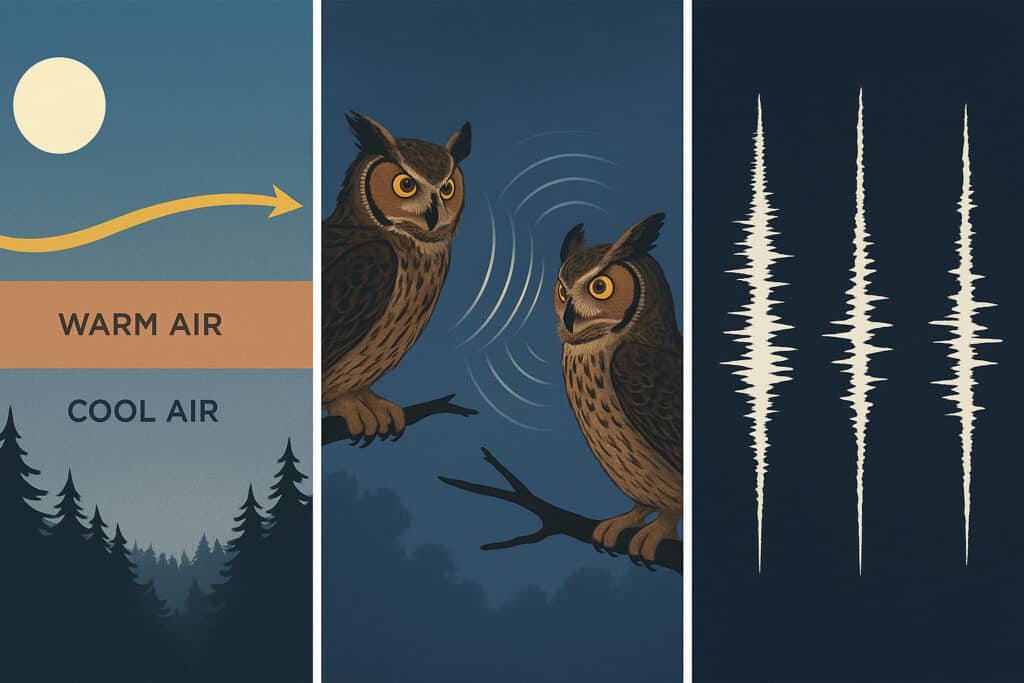
At night, the ground cools, and the air above can be slightly warmer. Because sound bends toward cooler, denser layers, hoots can be refracted back to the ground. As a result, low, steady notes travel farther with less loss. Road noise and wind often drop after sunset, lowering background noise. Because the medium is kinder and the noise floor is lower, a hoot covers more ground and stays clearer. That acoustic advantage ensures the signal travels the maximum distance with minimal effort, effectively turning the night air into a loudspeaker.
Borders and warnings
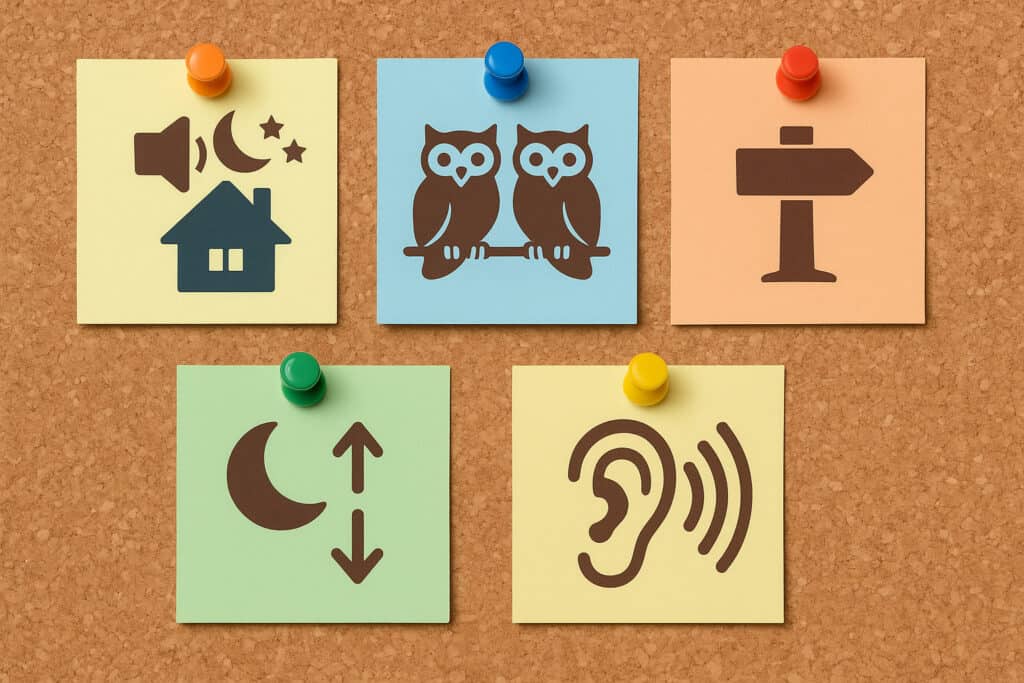
Owls do not own land, but they still draw invisible lines. A resident bird uses deep, patterned notes to say, “someone lives here.” Rivals listen for pitch, spacing, and reply timing to judge the occupant’s size and readiness. The pattern is not random, and neighbors learn it over time. Because the hoot deters intruders during the very hours when conflicts would happen anyway, the sound acts as a pre-emptive security system.
Pair bonds and timing
A duet is not a love song in the human sense. It is a tool. One bird calls, the other answers at a different pitch, and together they confirm their bond and coordinate duties like roosting or nest exchange. The timing of these back-and-forth calls follows daily rhythms, and the regular beat helps partners find each other in the dark. Because night is when they court, feed, and defend, the duet shows up more often then. In practical terms, the duet serves as a nightly maintenance check for the relationship.
Names in the hoots
To our ears, a hoot is a hoot. To an owl, the fine structure reads like a name badge. Tiny differences in pitch shape, spacing, and harmonics make a caller identifiable. Studies on tawny owls, for example, show that territorial hoots can be matched to individuals with high accuracy. This means a neighbor knows which bird is calling before it even sees it. Since identity helps avoid needless fights, it pays to “sign” your space digitally before a physical confrontation becomes necessary.
Body clocks and routine
Owls are mostly nocturnal or crepuscular, so their busiest hours fall in the evening, night, and early morning. Calling lines up with those hours, peaking around times when mates reconnect, and rivals check boundaries. Because activity, feeding, and movement all cluster after sunset, vocals do too. In other words, the timing is a simple synchronization between the bird’s biological clock and its social requirements.
Frequently Asked Questions
Is a hooting owl a bad omen?
Stories link hooting with death or misfortune, but biology points elsewhere. Calls serve jobs like claiming space, keeping contact with a mate, or responding to a threat. While culture adds meaning, the sound itself is ordinary owl talk, not a signal of human events.
Do owls hoot only at night?
Most species call more after dark, yet dawn and dusk can be lively, and some species will call during the day in certain seasons. We notice night calls more simply because the background noise of the human world has finally died down.
Are all owl sounds hoots?
Not at all. Many owls hiss, bark, wail, whistle, or screech. Barred Owls even have a classic pattern some people hear as words. The variety depends on the message and the species. You can sample different call types in an overview of Barred Owl vocalizations.
Do owls hoot while hunting?
Hunting favors silence. Specialized feathers quiet the wings, and most prey stay unaware until the last moment. Hooting is more about social signals than catching food, so you generally hear it away from the instant of a strike.
Does the number of hoots have a code?
Rhythm and count can carry information, but it is not a human-style numeric code. The pattern helps with identity and intent. For example, a fast series can feel urgent, while a spaced set can sound like routine border talk.
What does it mean if two owls call back and forth?
Mechanically, you are hearing a duet with different pitches. Socially, it is likely a pair keeping in contact or reinforcing a bond. Because night gives them privacy and reach, these exchanges often bloom after sunset.
Bonus: Fun Facts
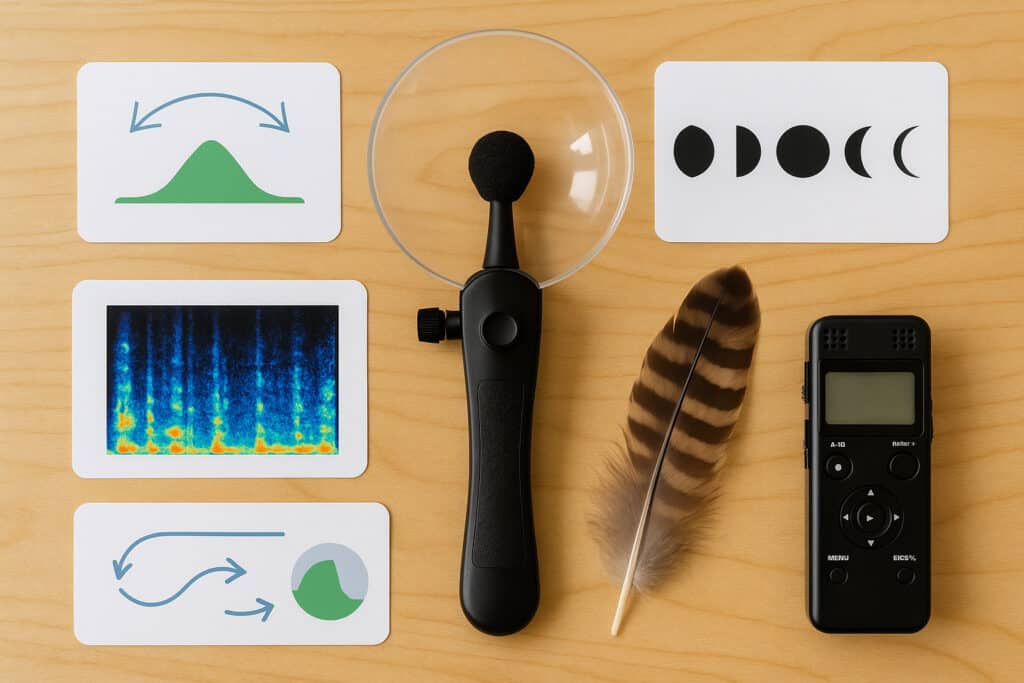
Beyond the basic call, the physics of owl communication reveals a few hidden details.
- Some hoots travel farther on calm, cool nights because the air bends sound back toward the ground, a physics trick that also makes thunder seem louder before sunrise. That same refraction helps an owl’s low notes cover distance without shouting.
- Owls can recognize neighbors by voice, as we do with faces, which reduces wasted fights. Individual signatures in hoots make that possible, as shown in studies that match calls to specific birds.
- Hoots are not the only tools. Many species shift to harsher calls during nest defense, while fledglings use begging cries that carry well but do not confuse adults with territorial notes.
- Owl hearing is off the charts. Asymmetrical ears and a “facial dish” of feathers funnel sound to the eardrums, which helps them find prey in the dark. This hearing edge explains why they can afford to keep most hunting silent while saving vocal energy for social tasks.
- Scientists use hoots to count owls. Because calls are individual and repeatable, surveys can map territories, track pairs, and study trends without seeing the birds. This turns the vocalization into a boon for research, not just a mystery for listeners.
Final Word
Now that you have seen how the air, the clock, and the social rules all fit together, a hoot becomes less spooky and more like a signpost. It tells you there is a neighbor out there with a life to run, a partner to call, and a corner to protect. The next time the night goes quiet and a low note rolls across your yard, consider not what it means for you, but what it proves about them: a voice built for distance, a plan built for darkness, and a world that speaks clearly when most of us are asleep.
Interested in exploring similar posts? Visit The Science of Everyday Life hub for more!