
One of the most common myths is that the after-sex cigarette is just a “relaxation thing,” or a cheesy movie habit that stuck around. But the real reason is usually not romance or style at all, because the urge is built on a repeatable brain pattern that links a powerful bodily moment to a quick chemical hit. A term called cue reactivity is the clue, but it will not make sense until you see how this smoking ritual got baked into daily life first.
Where the Script Came From
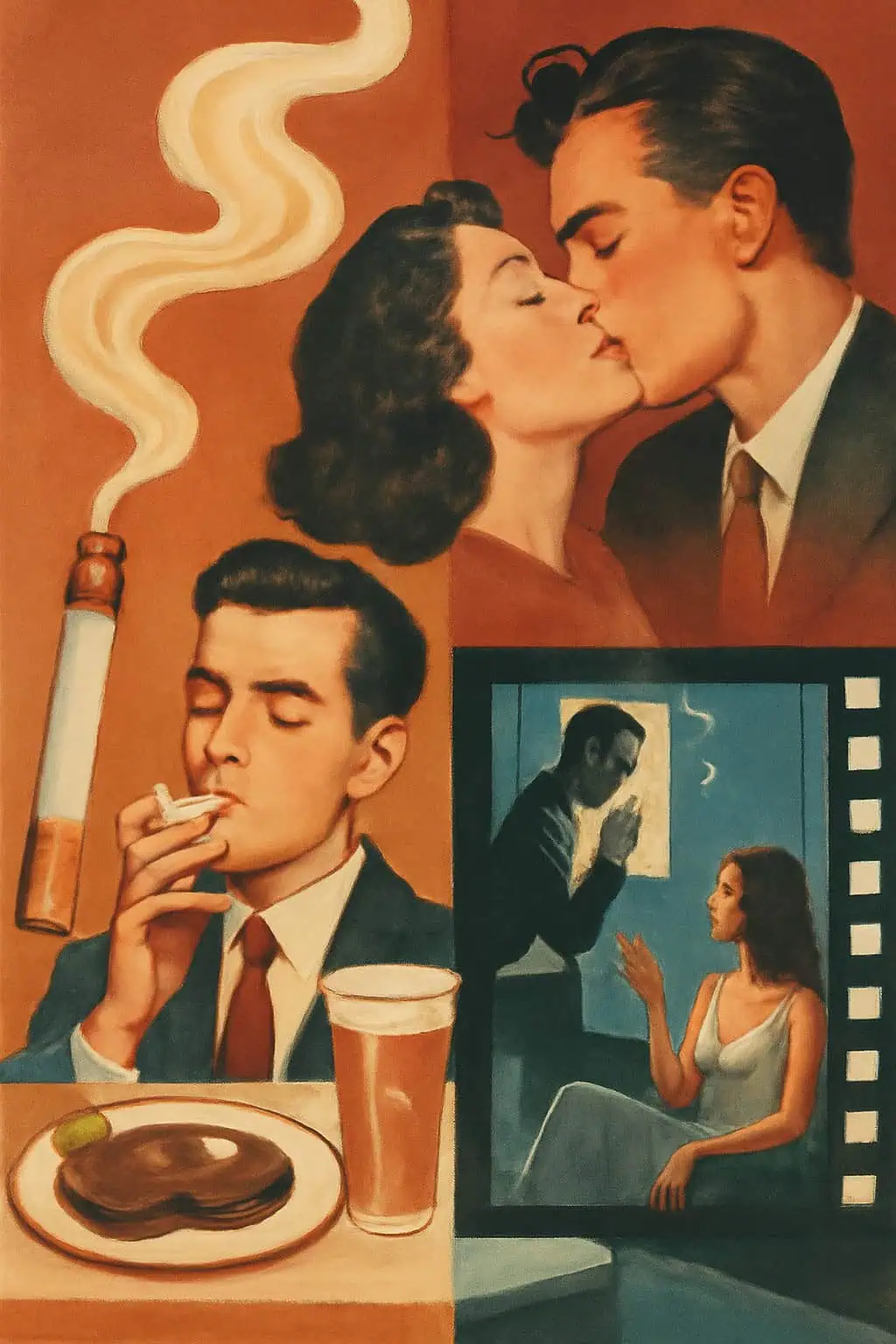
Long before anyone talked about dopamine or addiction pathways, cigarettes were already tied to “endings.” After a meal, after a drink, after a long talk, people learned that a cigarette could mark a transition. As smoking spread through the 1900s, that “closing ritual” became normal in many settings, and it kept showing up in stories, photos, and film.
Culture did a lot of heavy lifting here. Movies and TV often use smoking as a shortcut for mood: calm, confidence, rebellion, or intimacy. Even when real-life smoking rates began to drop, the image stayed, because it was simple and instantly readable. Meanwhile, tobacco marketing pushed cigarettes into every “moment,” turning smoking into something people could attach to routines, not just cravings.
At the same time, public health messaging had to catch up to how widespread nicotine use became. Global health organizations now summarize tobacco’s impact in blunt numbers, including how deadly it is and how hard it is to quit once it becomes part of someone’s life rhythm, not just their lungs. That broader background matters because the habit of smoking after sex sits inside the same larger story of nicotine use becoming routine in the first place, not a special case. You can see that big-picture framing in the World Health Organization’s tobacco fact sheet.
Another reason this topic stays confusing is that people mix up “the trope” with “the urge.” Plenty of non-smokers have seen the scene and never wanted a cigarette. On the other hand, plenty of smokers feel a real pull in that moment, even if they think the scene is cringeworthy. So, when someone asks why people smoke after sex, it helps to separate cultural scripting from what is happening inside the body and brain.
The Body’s Quiet Switch
Sex is not only pleasure, but it is also a full-body event. Heart rate climbs, breathing changes, muscles tense and release, and the nervous system flips from “go” to “downshift.” That shift is important because it creates a short window where the body is sensitive to anything that promises comfort, reward, or calm.
The Chemical Reset
During orgasm and the minutes after, the brain moves through a rush and then a reset. Chemicals linked to reward and bonding rise and fall, while the nervous system tries to stabilize. Even if someone feels satisfied, the brain can still be ready for one more “peak,” because it just learned that big peaks happen in this situation.
Nicotine fits that timing perfectly. It reaches the brain quickly, and it triggers signals that many smokers experience as relief, pleasure, or a “clean finish.” Over time, the brain starts to treat nicotine like a missing piece that completes the moment, so the desire feels natural instead of trained. That is one reason why people who smoke after sex can feel like a mystery to non-smokers but feel obvious to smokers. The addictive loop that makes nicotine feel necessary is described clearly by the National Institute on Drug Abuse, which explains how nicotine can produce brief euphoria and reinforce repeated use.
Cue Reactivity
Habits do not only form from “liking” something. They also form from pairing: doing two things together again and again until one starts to trigger the other. If someone often smokes right after sex, the brain begins to tag the afterglow as a cue. Then, later, the cue alone can spark craving.
This is where the technical idea matters. Cue reactivity is the body’s learned response to signals that predict a drug, like a place, a feeling, a time of day, or even a specific type of relief. In addiction research, cues can drive cravings even when a person is not in withdrawal, because the brain remembers the link and prepares for the reward. Large-scale evidence reviews describe this cue-driven pull as a measurable pattern, not just “weak will,” including how craving tracks with later use.
So, instead of sex “causing” smoking, the repeated pairing turns sex into a trigger for nicotine, and the trigger turns into a craving.
The Withdrawal Illusion
A lot of smokers describe the cigarette as calming, and that detail matters because nicotine dependence often runs on relief more than pleasure. When someone smokes regularly, their brain adjusts, and then “normal” can start to feel like it requires nicotine. Without nicotine, they may feel tense, restless, or slightly off, even if nothing is “wrong.”
After sex, people notice body sensations more. The sudden quiet can make small discomforts stand out, including mild withdrawal starting to creep in. Lighting up becomes a quick way to smooth that edge, so the cigarette feels like it is “for the mood,” even when it is partly for the brain’s balance.
Public health explanations of addiction emphasize that nicotine changes how the brain responds over time, which is why cravings can feel urgent and why quitting can be rough. The CDC’s overview of why quitting is hard lays out this cycle in plain language: repeated nicotine exposure trains the brain to expect it, and then absence feels uncomfortable.
That relief-seeking pattern is not poetic, but it is common, and it quietly answers a big part of why people smoke after sex.
Social Buffering
Not every reason is inside the brain. Some reasons are inside the room. Smoking can act like a signal that says, “We are done,” or “We are safe,” or “This is casual.” For some people, stepping outside for a cigarette also creates a buffer, because it gives them a task and a moment to regulate emotions.
In other cases, the cigarette is a shared routine. Couples build a “mini ritual,” and the ritual becomes part of what feels normal. Then, if the ritual disappears, the moment can feel unfinished, even if the sex was great. In that case, smoking is less about nicotine and more about a rehearsed script that the body expects to follow.
Even so, the social layer usually sticks best when nicotine is already doing its work. A ritual without reinforcement fades. A ritual with nicotine reinforcement tends to stay.
Myth Busters
“It means the sex was amazing.”
People often treat the cigarette like a rating system because movies trained us to read it that way. In real life, smokers can crave nicotine after good sex, mediocre sex, and even awkward sex, because the trigger is the pattern, not the quality. If smoking is part of their normal routine, the urge can show up simply because the body hits a familiar “end of activity” moment, and then the brain reaches for its usual reward.
So, while it can happen after great sex, the cigarette is not reliable proof of anything except that nicotine is part of the person’s habit loop.
“It helps you recover faster.”
People make a lot of claims about what nicotine does to performance, and many of them are wishful thinking. Nicotine can feel focusing or settling in the short term, because it hits the nervous system quickly. That feeling can be mistaken for “recovery,” especially if the person is calming down from intense arousal.
However, the body’s real sexual recovery involves hormones and nervous-system shifts that nicotine does not magically upgrade. Research does show clear changes in hormones after orgasm, like prolactin increases, but that is a different system than a nicotine hit.
“Only men do this.”
The stereotype sticks because older media leaned heavily on it, but smoking after sex is not limited to men. The habit tracks more with who uses nicotine regularly, who has strong cue-based routines, and who has learned the afterglow-cigarette pairing. Gender can shape how people talk about it, but nicotine conditioning does not need a specific gender to work.
“If you crave it, then you are addicted.”
Cravings sit on a spectrum. Some people smoke socially and still develop strong cue cravings, because the cue is tight even if daily use is low. Others smoke daily and crave it in many situations, not only after sex. Dependence is usually judged by patterns like tolerance, withdrawal, loss of control, and continued use despite harm, not by one craving in one moment.
Medical sources describe dependence using those broader signs, including how the brain adapts by changing receptors and reinforcing the cycle.
“Switching to vaping fixes it.”
Switching products may reduce exposure to some harmful smoke chemicals, but the craving pattern often stays if nicotine stays. The cue and the reward are still linked, so the after-sex pull can simply move from cigarette to vape. For many people, the habit is not “the smoke,” it is the fast nicotine reward attached to a specific moment.
Bonus: Fun Facts
Beyond the Hollywood trope, the mechanics of habit formation reveal some interesting details.
- Timing vs. Place: A person can quit smoking in one location and still crave it when a specific moment hits, like driving, finishing a meal, or lying in bed after sex. That is why relapse can happen even when someone avoids the usual smoking spots.
- Stress Regulation: Nicotine and smoking can be tied to stress regulation, even when the person is not stressed in the normal sense. Sex can bring up vulnerability, closeness, or performance worries, and a cigarette can function like a quick grounding tool.
- The Paradox: Long-term smoking is linked with sexual health problems in many studies, especially through blood vessel effects. So, the same substance that feels like it “fits” the moment can work against sexual function over time.
Final Word
The after-sex cigarette only seems romantic until the pattern becomes visible. What’s actually happening is a design problem in everyday life: the brain learns sequences and rewards those that end in relief. That’s how certain “choices” turn out to be loops wearing the costume of a mood. The better question isn’t whether a cigarette fits that moment, but how many other moments in your day are being shaped by cues you never chose on purpose.
Interested in exploring similar posts? Visit the Unspoken Psychology & Philosophy hub for more!