
You would think that a quick swirl is just a fancy flourish to look like you know what you are doing, but the significance of such a seemingly negligible act lies in how liquids trade molecules with air and how your nose reads those molecules.“Headspace’’, ‘’volatile compounds”, and “orthonasal olfaction” are terms you are going to get yourself acquainted with in understanding the big impact of the tiny wine swirl.
Rituals Into Habits
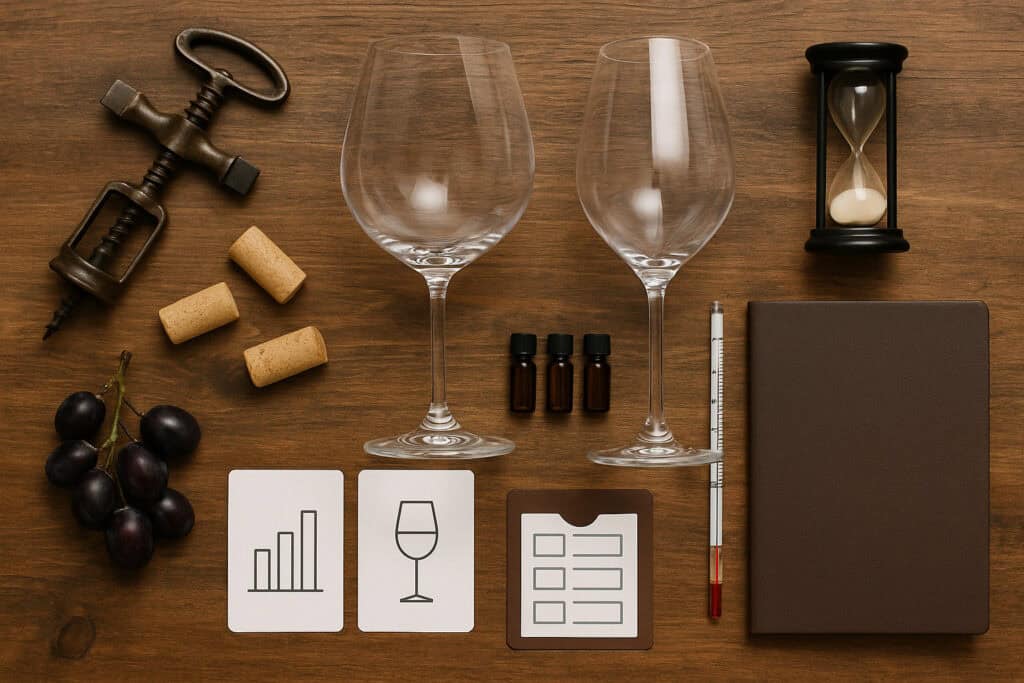
Wine service picked up small, repeatable moves because they helped tasters make sense of what was in the glass. As classes and exams spread, the same steps traveled with them: look, swirl, smell, then taste. Guides for students still teach that pattern today, showing people how a glass should never be filled to the brim so there is room to move the liquid and trap the aromas in the bowl.
As this routine spread, writers and educators broke down the physics and the glassware. Reports have shown that bowl shape matters because vapor rises in patterns that a rim can either focus or waste, which changes what you smell even before you sip. A clear example appears in a summary of lab imaging that shows where alcohol vapor sits versus aroma vapor in different bowls.
At the same time, casual guides for beginners popularized the swirl with short explanations about “releasing aromas.” A well-known primer explains that motion refreshes the air above the wine and spreads a thin film on the glass wall, both of which boost what your nose can detect.
What The Swirl Does
The Volatility Engine
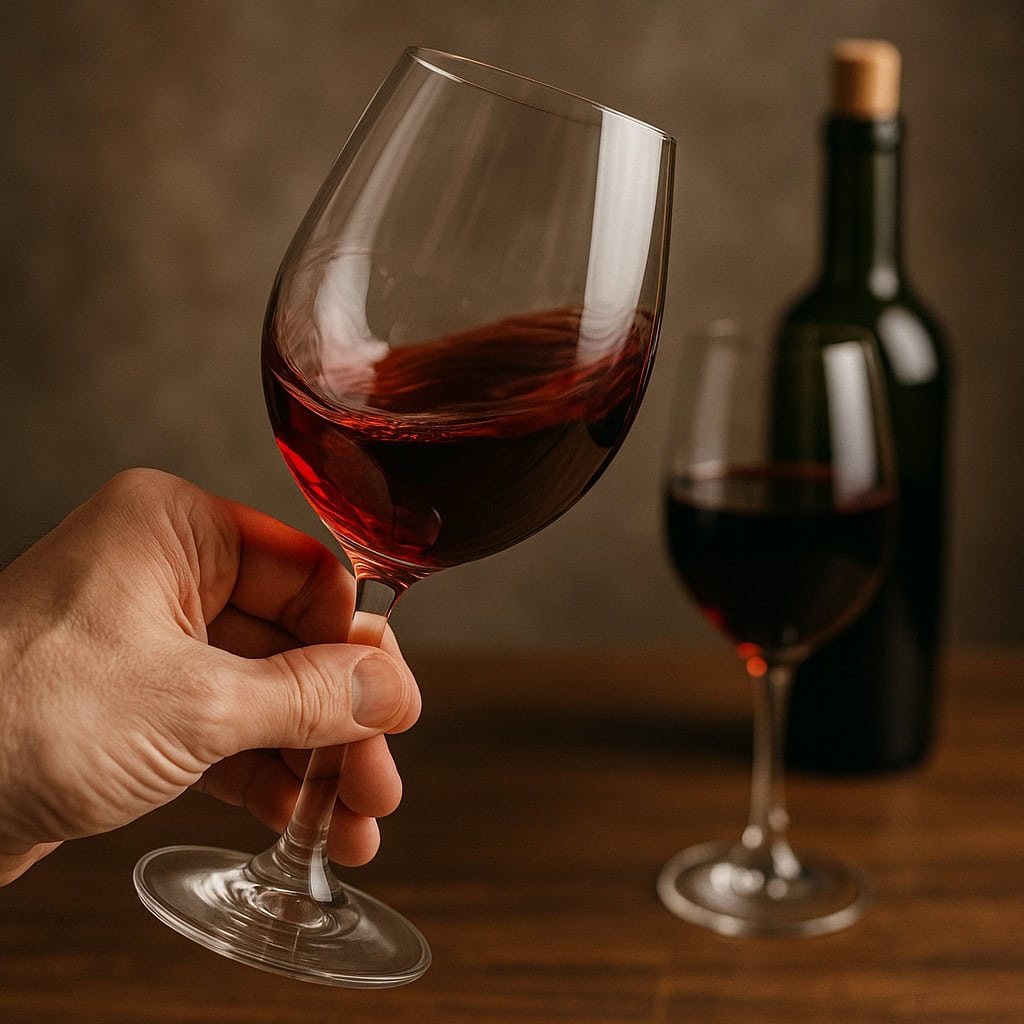
Before your brain can judge fruit, spice, or flowers, tiny compounds must escape the liquid and enter the air inside the glass. Swirling creates a moving surface and a thin film, opening more pathways for evaporation and lifting more molecules into the headspace. Because of that change in movement and surface, the logic of the motion becomes clear: more surface area equals a stronger signal for the nose.
Expanding the “Vapor Reservoir”
A still glass gives you a single small surface, but a moving wave and a coated wall multiply that surface many times over. As those fresh surfaces form and collapse, new molecules escape and collect under the rim. Only after this mass exchange builds up does the benefit show up as a stronger, clearer smell. This is why pros talk about “headspace,” because the zone above the liquid acts as a temporary storage tank for aroma.
Ethanol Dynamics
Alcohol does two opposite things at once. It can carry certain aroma compounds into the air, but it can also suppress others at high concentrations. Motion keeps the system changing, which can help the nose catch a better mix rather than a dull, alcohol-heavy whiff from a motionless glass. Only after ethanol’s pushing and pulling settle for a second does the true scent profile emerge. Studies that map these trade-offs explain why some wines smell more open after a gentle twirl.
The Oxidation Micro-Dose
Tiny amounts of oxygen get mixed in as the liquid moves. That contact does not “age” a wine in the glass, but it can soften sharp sulfur notes or wake up muted fruit by shifting short-lived equilibria near the surface. Once those quick reactions happen, the nose often gets a cleaner, more precise aromatic picture.
Thermal and Gas Regulation
Warmer liquid gives off more scent, and swirling helps even out the temperature in the small layer near the surface. Some young whites and sparkling styles also retain dissolved carbon dioxide, which can numb smell and taste if it pools on the tongue. A quick spin releases some of that gas. Only after those adjustments do many wines show their true character, proving that the habit is about physical comfort for the palate, not just showmanship.
The “Gibbs-Marangoni” Effect
A thin film creeps up the bowl as you move the glass. As it slides back down, new volatile compounds evaporate from a huge area, not just the top of the liquid. After that sheet drains, there is a brief window where the headspace is richest, and that is the best moment to smell. Practical guides call this out directly, explaining how coating the inside concentrates scents for your next sniff.
Visual Diagnostics
Old bottles can hide fine sediment that you do not want in your mouth. Motion helps you see movement in the liquid, check clarity, and judge how the wine sits in the glass. While those visual cues are not a quality scorecard, they prepare you to drink. Only after that quick check is done does a taster usually commit to the first sip.
Frequently Asked Questions
Do big “legs” mean better wine?
Those streaks, called tears or legs, result from changes in surface tension as alcohol evaporates from the film on the glass wall. They form patterns that can be striking, but they do not measure quality. After the physics runs its course, the legs tell you mostly about alcohol level and viscosity, not whether the wine is “good.”
Is swirling just for snobs?
The move helps your nose work the way it is built to work. Humans smell airborne chemicals that reach the upper nasal cavity; more vapor in the headspace means a stronger signal. That is physiology, not attitude, which is why educators still teach the motion as a basic mechanical step.
Does glass shape actually matter?
Bowl geometry changes how vapor rises and where ethanol concentrates. When the rim focuses aroma, and the bowl holds headspace, your sniff improves. Evidence from imaging and measurement backs this, which is why many tasting rooms use wider bowls for reds and narrower ones for certain whites.
Can you swirl too much?
Heat and strong alcohol fumes can drown out delicate notes. Motion can help at first, but overdoing it on very fragile or very old wines may push volatile compounds out too fast. After a few gentle circles, pause and smell. Guidance for beginners and pros alike stresses measured movement and a short wait before you sniff again.
Does any movement work?
A shaky slosh does not equal a controlled circle. The goal is to create a stable wave and a thin film, then capture the richest moment for your nose. That simple pattern, done lightly, is the reason restaurants and classes teach the tabletop swirl as a safe, steady option.
Bonus: fun facts
Beyond the basic swirl, the chemistry of the glass reveals a few specific timing tricks.
Aroma Families In The Glass
Fruity, floral, spicy, and oak-driven notes come from many different molecules with different weights. Because each group leaves the liquid at its own pace, a few gentle circles can change which notes stand out from one sniff to the next. If you want to go deeper, chemists keep mapping what makes wine smell like wine, including how groups of compounds build a style’s signature profile.
Timing Your Sniff
There is a sweet spot right after the swirl, when the headspace is densest. Smell then, take a short break, and repeat. This cadence often makes the utility of the gesture obvious, because the nose keeps getting a clean, renewed read.
Matching Motion To The Wine
Cool, tight wines may benefit from a touch more movement and a little warmth from the room. Warm, high-alcohol wines may need only a gentle swirl, or the first nose will feel hot. Learning that rhythm is part of tasting, not a party trick, and explains why the practice varies from bottle to bottle.
Final Word
The wine swirl is not about acting fancy; it is about setting conditions so your nose can do its job. That shift turns a habit into a choice. Next time you pick up a glass, ask yourself a new question: if a few quiet circles can change what you smell, what other tiny changes are hiding in plain sight on your table?
Interested in exploring similar posts? Visit The Science of Everyday Life hub for more!