
Questions about moaning during kissing usually get brushed off as learned behavior from movies. But if you zoom in on it, even a light kiss can activate a chain of signals in the body, and those signals often emerge as sound without planning. Keep three concepts in mind as you go through this post: breath-to-voice coupling, the vagus nerve, and the brain’s reward circuits.
Touch, Culture, and Sound

Kissing did not start as a Hollywood trick. Throughout history, people have used mouth-to-mouth contact to comfort, bond, and test chemistry, though not every culture kisses the same way. Writing on the human habit ranges from old poetry to modern science journalism, and much of it points to smell, taste, and touch as quiet messengers of attraction.
Touch itself is not just skin deep. Your lips and tongue are packed with tiny receptors that fire when they feel warmth, pressure, or movement. Some of these sensors, such as Meissner corpuscles, are tuned to light, fluttering contact. Their messages shoot to the brain’s emotional circuits, which is one reason a soft brush of lips can feel so intense. At the same time, we humans are vocal animals. We breathe, swallow, speak, and hum using the same throat muscles and the same “voice box,” the larynx. So when people wonder why moaning happens when kissing, they are really asking how all these systems start to run together.
None of these answers the main question yet, and that is on purpose. History shows that kisses have been about more than romance, touch science shows why they feel so strong, and anatomy shows why breath and voice are linked. Put those pieces together, and the sound begins to make sense.
Breath, Nerves, Feedback Loops
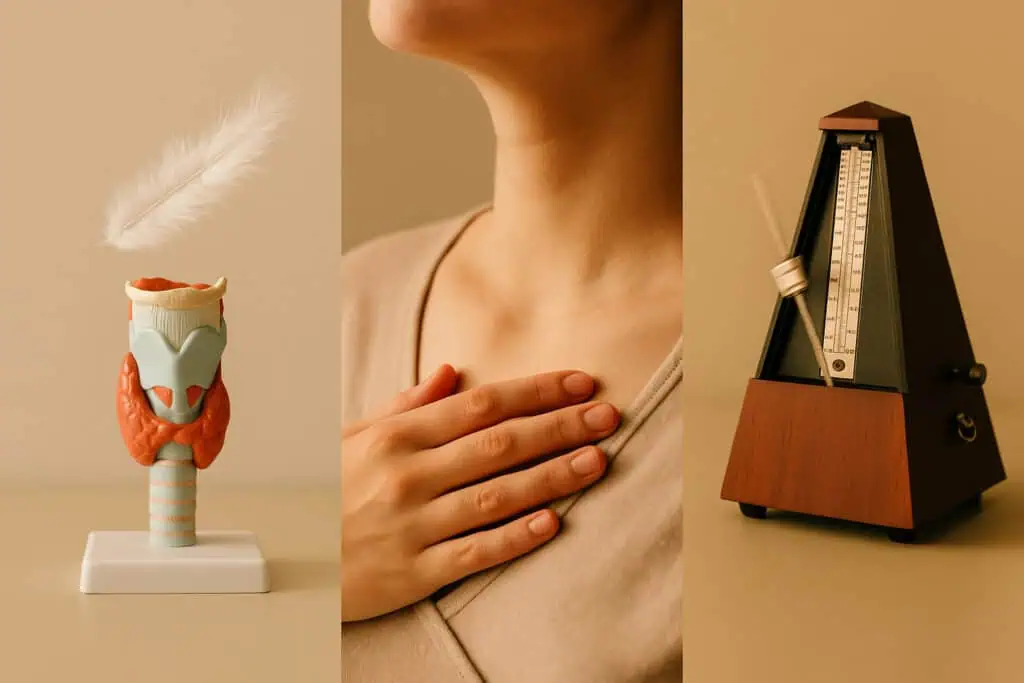
The “Voice-Coupling” Mechanism
First, think about air. A kiss often changes how you breathe: your mouth is partly closed, your lips are softly sealed, and your chest tightens or loosens with the moment. Air moving out meets the vocal folds in the larynx that vibrate when there is a little pressure and a relaxed throat. The lips and tongue then shape that soft vibration into a low tone. After this quiet chain of pressure, vibration, and resonance has already started, the faint sound leaks out simply because the plumbing is connected.
Dopaminergic Release
Inside the brain, touch on the lips, and the closeness of a partner nudge up the release of reward chemicals. Dopamine sharpens attention and makes the moment feel important, while oxytocin supports bonding and a sense of safety. When those systems warm up, people often stop overthinking and start to ride sensation. Only after this easing of self-conscious control does a person “let” a sound happen, proving that the vocalization is chemically driven rather than planned.
The Vagus Nerve Connection
Another path runs through the body’s calming nerve. The vagus nerve helps shift you toward rest-and-digest mode. Gentle lip pressure, slow breathing, and even near-silent humming can boost this calm state. With the throat softened and the breath lengthened, a murmured tone slips out more easily. In other words, once the vagus helps you settle, a quiet moan becomes the audible sign that your system is relaxing into safety.
Nasal Resonance Physics
When you make a sound with your mouth partly closed, the voice bounces inside your mouth and nose. This resonance can feel oddly good, like a tiny massage from the inside. Scientists have even shown that humming increases airflow through the nasal passages and can raise nasal nitric oxide levels, improving airflow comfort; see, for example, that humming greatly increases nasal nitric oxide levels. After those physical vibrations are already in motion, they naturally tip a breathy exhale into an actual tone.
The Feedback Loop
Kissing is a conversation without words. Small sounds can signal “this feels good,” “slow down,” or “keep going.” Humans naturally pick up each other’s emotions, a process psychologists call emotional contagion. Once one person relaxes and vocalizes, the other often mirrors that ease. The moan that comes at the end of this back-and-forth serves as a navigation marker, guiding the rhythm and closeness.
Mirror Neuron Scripts
Movies and social media also teach us how a “romantic scene” should look and sound. Over time, people may unconsciously copy those cues. Still, the copying lands on top of real body loops. Even if someone first tried a soft moan because they saw it on screen, the behavior sticks only because it matches built-in reflexes. Psychologists call this kind of copying observational learning, and it often blends with natural responses to shape what we do in close moments.
Frequently Asked Questions
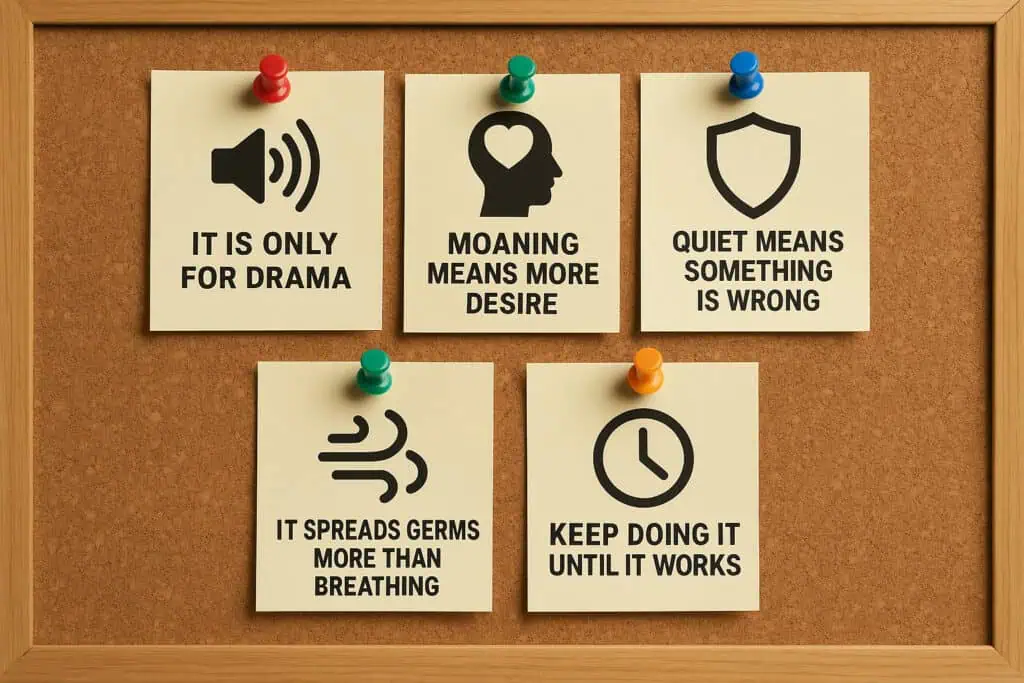
If someone moans, are they always extremely aroused?
Bodies make sounds for many reasons: breath patterns, throat vibration, and comfort can all play a part before desire peaks. After those pieces line up, the sound often indicates that the person is enjoying the moment, but it does not map one-to-one to a specific level of arousal.
Does a moan during a kiss mean “go further”?
Context matters more than any single sound. A warm tone can be as simple as saying, “Something feels nice.” Only after you pair the sound with clear body language and spoken consent can you treat it as encouragement to intensify.
Is moaning just for the movies?
Stories exaggerate, but they do not invent the mechanics. People were vocal long before cameras, because breathing, touch, and the larynx share the same pathways. Media may amplify the volume, yet the quiet version is a natural outcome of how we are built.
Do only women moan when kissing?
All humans have lungs, throats, lips, and the same basic chemistry. After breath pressure and soft tissue vibration set the stage, anyone can produce those low tones. Who does so, and how loudly, is shaped by personality, comfort, and culture.
Can you “learn” to stop moaning?
With attention and practice, many people can hold their breath or tighten their throat to reduce sound. However, that effort often dampens ease and pleasure too. Once the body is relaxed and the vagus nerve is active, a little sound tends to return when you stop trying to control it.
Why do people moan when they kiss in quiet places but not in public?
Privacy changes both stress and self-monitoring. In a quiet, safe room, the calming reflex has space to bloom, your throat and jaw loosen, and the breath turns musical. In public, the social “brake” stays on, so the same breath may come out silent.
Bonus: fun facts

Beyond the romance, the biology of the kiss reveals a few hidden sensory details.
- A kiss recruits an unusual mix of senses at once: temperature, pressure, taste, and smell. When those channels line up, the brain’s prediction systems calm down, which is one reason a small sound can feel as natural as blinking.
- Low, gentle vocal tones tend to feel more soothing than sharp, loud sounds. That is partly because soft, steady breath supports vagal calm, which prepares the body for rest and connection.
- Some people feel a pleasant “buzz” on their faces when they hum or moan quietly. Part of that may come from resonant airflow through the nose and sinuses, as suggested by studies like the nasal nitric oxide humming research.
- Not every kiss invites sound. Illness, stress, or even a very cold room can make the throat tight and breathing shallow. On another day, the same person may relax and find the sound returning on its own.
- If you still catch yourself asking why people moan when they kiss, try this simple experiment alone: breathe out slowly with your lips almost closed, let your throat soften, and notice how a tiny vibration appears before you even try to “make” a sound.
Final Word
As you have certainly concluded by now, the sound is not a performance; it is a sign that systems built for survival can also tune themselves to safety and warmth. It is a reminder that even our softest noises are the body’s way of saying, “I feel you.”
What other everyday sounds might be tiny maps of connection that we have not learned to read yet?
Interested in exploring similar posts? Visit The Science of Everyday Life hub for more!